The Kia EV6 arrived as one of the most technically ambitious electric crossovers on the market, built on Hyundai Motor Group's E-GMP platform with an 800-volt architecture that was rare at its price point. Now that the 2023 EV6 has been on roads for a few years, we have solid real-world data on its range, charging behavior, and ownership costs. Here's what buyers need to know before picking one up on the new or certified pre-owned market.
Range, Efficiency, and Real-World Expectations
The 2023 Kia EV6 offers three EPA range tiers depending on drivetrain and battery configuration. The long-range RWD model is the efficiency champion of the lineup, while the dual-motor AWD variants trade some range for all-weather traction and significantly more power.
| Configuration | Battery (usable) | EPA Range | MPGe (combined) | kWh/100 mi |
|---|---|---|---|---|
| Light RWD (Std Range) | 58.0 kWh (NMC) | 232 mi | 117 MPGe | 29 |
| Wind / GT-Line RWD (LR) | 77.4 kWh (NMC) | 310 mi | 134 MPGe | 26 |
| Wind / GT-Line AWD (LR) | 77.4 kWh (NMC) | 274–282 mi | 113–117 MPGe | 29–30 |
| GT AWD (Performance) | 77.4 kWh (NMC) | 206 mi | 85 MPGe | 40 |
Charging: 800V Architecture Pays Off at DC Fast Chargers
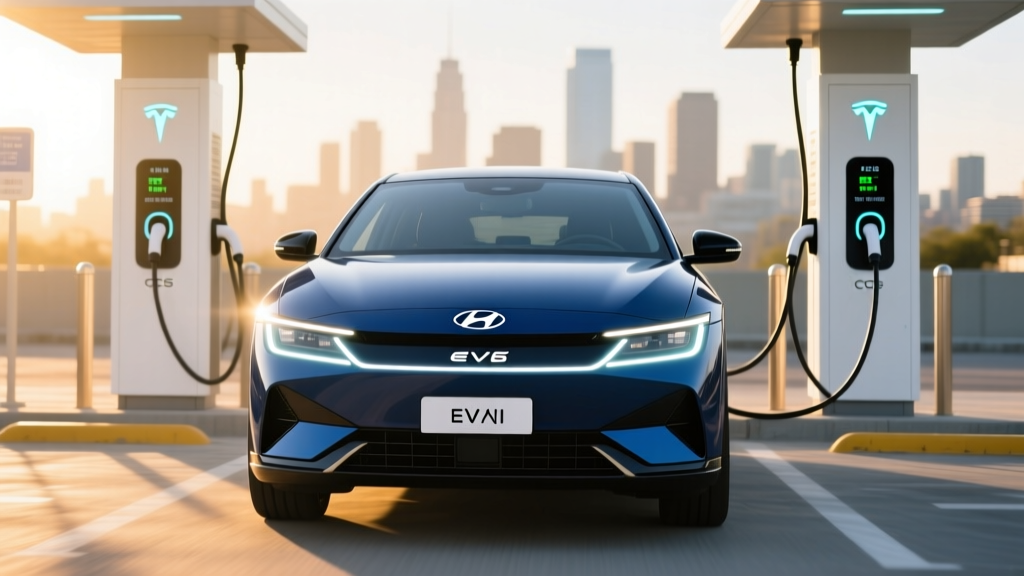
The EV6's headline engineering feature is its 800-volt battery architecture, which allows it to accept significantly higher DC fast-charge power than most competitors still running 400V systems. This translates to shorter charging stops on road trips — the single biggest practical advantage of the platform.
| Charging Level | Power / Rate | Time / Miles Added |
|---|---|---|
| Level 1 (120V household) | ~1.4 kW | ~3–4 mi/hr |
| Level 2 (240V home, 48A) | 10.9 kW (onboard charger) | ~34 mi/hr (LR); full charge ~7.5 hr |
| DC Fast Charge (800V/350 kW station) | Peak ~240 kW | 10–80% in ~18 min |
| DC Fast Charge (400V/150 kW station) | Peak ~100–120 kW | 10–80% in ~35–40 min |
A few real-world caveats on those DC fast-charge numbers: the ~240 kW peak only sustains briefly, typically between 15–40% state of charge. Above 60%, the charge curve tapers noticeably, and above 80% it drops sharply — this is normal lithium-ion behavior to protect cell longevity, but it means charging from 80–100% on a road trip can take nearly as long as the 10–80% session. Plan your stops accordingly: a 10–80% session at a 350 kW Electrify America or Ionity station takes roughly 18 minutes for the long-range pack, while the standard-range 58 kWh pack charges 10–80% in about 15 minutes due to its smaller capacity.
For home charging, the 10.9 kW onboard charger is competitive. A full Level 2 session from empty to full on the 77.4 kWh pack takes about 7.5 hours — easily an overnight charge. Most EV6 owners will need a 48-amp Level 2 home charger on a 60-amp circuit for optimal speed.
Performance and Drivetrain Breakdown
The 2023 EV6 spans a wide performance envelope, from the efficiency-focused RWD models to the GT, which competes with sports sedans costing twice as much.
| Trim | Drivetrain | Horsepower | Torque (lb-ft) | 0–60 mph |
|---|---|---|---|---|
| Light (Std Range RWD) | RWD, single motor | 167 hp | 258 | 7.7 sec |
| Wind / GT-Line RWD | RWD, single motor | 225 hp | 258 | 6.7 sec |
| Wind / GT-Line AWD | AWD, dual motor | 320 hp | 446 | 4.5 sec |
| GT | AWD, dual motor | 576 hp | 545 | 3.4 sec |
The AWD long-range models hit the sweet spot for most buyers: 320 hp provides confident highway merging and passing, while the dual-motor setup delivers genuine all-weather capability. The GT's 576 hp is thrilling but comes at a steep efficiency penalty (206 miles EPA range) and a firmer ride that compromises daily comfort. The RWD models are perfectly adequate for commuters who don't face heavy snow.
Pricing, Trims, and Federal Tax Credit Eligibility
When new, the 2023 EV6 started at $48,700 for the Light RWD and climbed to $61,600 for the GT. On the used and CPO market in 2026, expect to pay roughly $28,000–$42,000 depending on trim, mileage, and condition.
| Trim | Original MSRP | Approx. 2026 Used/CPO Price |
|---|---|---|
| Light RWD (Std Range) | $48,700 | $28,000–$32,000 |
| Wind RWD | $52,900 | $32,000–$36,000 |
| Wind AWD | $56,800 | $34,000–$38,000 |
| GT-Line RWD | $55,900 | $34,000–$38,000 |
| GT-Line AWD | $59,800 | $36,000–$40,000 |
| GT AWD | $61,600 | $38,000–$44,000 |
Federal Tax Credit (§30D): The 2023 EV6's eligibility for the federal tax credit has been complicated. When sold new, certain configurations qualified for up to $7,500 under IRS §30D rules, but eligibility depended on battery-component and critical-mineral sourcing requirements that shifted throughout 2023. For buyers purchasing a used 2023 EV6 in 2026, the Used Clean Vehicle Credit (§25E) may apply: up to $4,000 or 30% of the sale price (whichever is lower), provided the vehicle sells for $25,000 or less, the buyer meets income caps ($75,000 single / $150,000 joint), and the vehicle is purchased from a licensed dealer. Always verify current rules at IRS.gov and consult a tax professional before relying on credit eligibility.
Interior Space, Cargo, and Daily Practicality
The EV6's E-GMP platform yields a flat floor and a generous 116.7-inch wheelbase, which translates to interior volume that punches above its compact-crossover class.
- Cargo (behind rear seats): 24.4 cu ft
- Cargo (rear seats folded): 50.2 cu ft
- Frunk (front trunk): 0.7 cu ft (AWD) / 1.8 cu ft (RWD) — small but useful for charging cables
- Rear legroom: 39.0 inches — competitive with midsize SUVs
- Front headroom: 39.6 inches (without sunroof)
The cargo area is wide and flat, easily swallowing a week's worth of groceries or two large suitcases. The frunk on AWD models is disappointingly small — essentially a cable-storage cubby — while RWD models get a bit more space thanks to the absent front motor. Rear-seat comfort is a strong point, with ample legroom for adults on longer trips and available heated rear outboard seats on higher trims.
Tech, Driver Assistance, and Standout Features
The 2023 EV6 features dual 12.3-inch curved displays running Kia's UVO infotainment system with wireless Apple CarPlay and Android Auto. Notable tech includes:
- Vehicle-to-Load (V2L): An interior 120V outlet and exterior adapter allow the EV6 to power devices, tools, or even a small appliance at up to 1.9 kW — a standout feature for camping or emergency backup.
- Highway Driving Assist 2 (HDA2): A competent Level 2 driver-assist system (per SAE classification) combining adaptive cruise with lane-centering and lane-change assist. The driver must remain engaged at all times — this is not autonomous driving.
- Remote Smart Parking Assist: Available on GT-Line; lets you move the vehicle in and out of tight spots via the key fob.
- Augmented-reality HUD: Available on GT-Line AWD and GT, projecting navigation and speed onto the windshield.
Warranty and Long-Term Battery Outlook
Kia backs the 2023 EV6 with one of the strongest warranty packages in the industry:
- Battery & Drive Unit: 10 years / 100,000 miles (whichever comes first)
- Limited Vehicle Warranty: 5 years / 60,000 miles
- Powertrain Warranty: 10 years / 100,000 miles
- Roadside Assistance: 5 years / 60,000 miles
The battery warranty guarantees that the high-voltage pack will retain at least 70% of its original capacity during the coverage period. Early real-world data from high-mileage EV6 owners and fleet operators suggests NMC cell degradation on the E-GMP platform is tracking well — most vehicles are retaining 92–96% state of health after 30,000–50,000 miles, consistent with Hyundai Motor Group's strong thermal management system. The 10-year coverage window is among the best in the segment, surpassed only by Hyundai's identical coverage on the Ioniq 5.
Who Should Buy the 2023 Kia EV6?
Choose the EV6 if:
- You take regular road trips and want the fastest DC charging in the class (10–80% in ~18 min on 350 kW stations)
- You value a long warranty (10-year/100,000-mile battery coverage)
- You want V2L capability for camping, tailgating, or emergency power
- You prefer a sporty, low-slung crossover design over boxy SUV styling
Look elsewhere if:
- You need maximum cargo space — the Hyundai Ioniq 5 and Ford Mustang Mach-E offer more
- You live in a region with limited DC fast-charging infrastructure (the 800V advantage only matters at capable stations)
- You want the latest over-the-air software update ecosystem — Tesla and Rivian lead here
- You need a third row or serious towing capacity (the EV6 is rated for 1,000–2,700 lbs depending on trim)
Pros and Cons at a Glance
Pros
- Class-leading DC fast-charge speed (800V architecture)
- Up to 310 miles EPA range (LR RWD)
- 10-year / 100,000-mile battery warranty
- V2L power output capability
- Spacious rear seat for the segment
- GT variant offers supercar-rivaling acceleration
Cons
- Frustrating touch-capacitive climate controls
- No rear wiper
- Small frunk, especially on AWD models
- Wired-only CarPlay/Android Auto on higher trims
- GT trim range drops to 206 miles
- Infotainment responsiveness lags behind Tesla/Rivian
Frequently Asked Questions
What is the real-world range of the 2023 Kia EV6?
The long-range RWD model achieves 310 miles EPA, but real-world highway driving at 70+ mph typically yields 260–280 miles. In cold weather (below 30°F), expect 20–30% range loss across all configurations, putting the LR AWD at roughly 190–210 miles of usable winter highway range.
How fast does the 2023 EV6 charge?
At a 350 kW DC fast charger, the long-range EV6 peaks at ~240 kW and charges from 10–80% in approximately 18 minutes. At home on a 48-amp Level 2 charger (10.9 kW), a full charge takes about 7.5 hours for the 77.4 kWh battery. On a standard 120V outlet, expect roughly 3–4 miles of range per hour.
Does the 2023 EV6 qualify for the federal EV tax credit?
For original new-vehicle purchasers, §30D credit eligibility depended on battery-sourcing requirements that changed during 2023. For 2026 buyers purchasing a used 2023 EV6, the §25E Used Clean Vehicle Credit may provide up to $4,000 if the sale price is $25,000 or less and the buyer meets income caps ($75K single / $150K joint). Verify current rules at IRS.gov and consult a tax professional.
Is the 2023 EV6 worth buying vs. the Hyundai Ioniq 5 or Tesla Model Y?
The EV6 shares its E-GMP platform with the Ioniq 5, so range, charging speed, and warranty are nearly identical. The EV6 offers a sportier design and slightly more cargo space, while the Ioniq 5 provides a roomier frunk and a more upright seating position. The Tesla Model Y offers more cargo volume, access to the Supercharger network (though Kia now supports NACS adapters), and a more mature software ecosystem, but its ride quality and build finish don't match the EV6. For road-trip-focused buyers who prioritize fast charging and warranty coverage, the EV6 remains a top pick in the segment.
What is the EV6's towing capacity?
The 2023 EV6 is rated for 1,000 lbs on standard-range and RWD trims, and up to 2,700 lbs on AWD long-range trims when properly equipped. This is sufficient for a small utility trailer or a couple of dirt bikes but not for boat or camper towing.