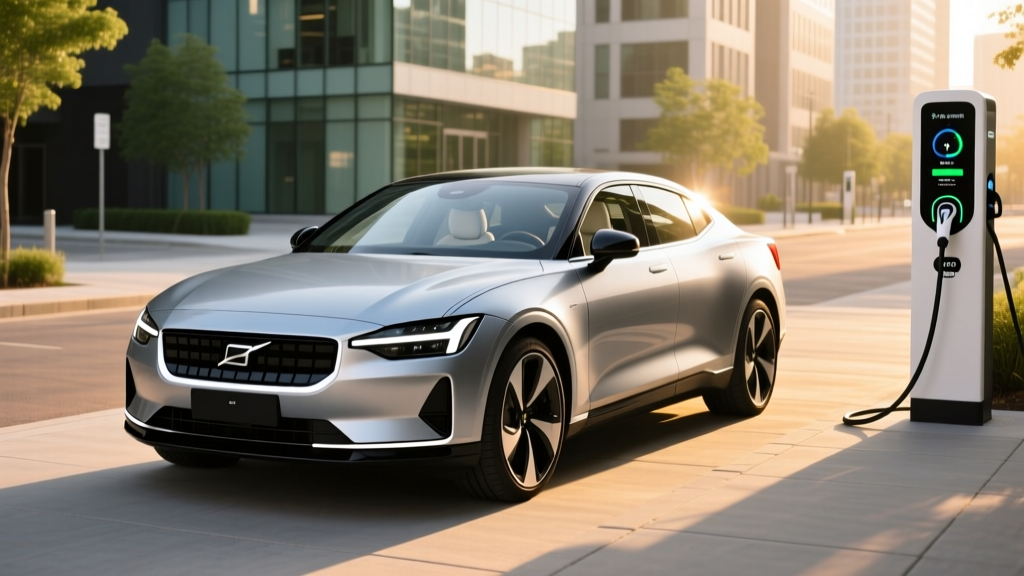
Quick Verdict: The Polestar 2 in 2026
The 2026 Polestar 2 occupies a precise niche: a premium electric fastback that undercuts the Tesla Model 3 Performance and BMW i4 on price while delivering Scandinavian design, Google-native infotainment, and competitive range. After a significant powertrain refresh that moved the standard car to rear-wheel drive and boosted battery capacity, the Polestar 2 is more efficient and more affordable than when it launched. But understanding the true polestar car cost requires parsing trim levels, the Performance Pack, and federal tax credit eligibility rules that change based on your income and the vehicle's battery sourcing.
This review covers every spec a buyer needs — EPA range versus real-world expectations, DC fast-charging curves, Level 2 home charging, battery chemistry, and the full ownership cost picture. If you're cross-shopping the Model 3, Hyundai Ioniq 6, or BMW i4, the data below will clarify where the Polestar 2 wins and where it falls short.
2026 Polestar 2 Specifications at a Glance
| Spec | Standard Range (RWD) | Long Range Single Motor (RWD) | Long Range Dual Motor (AWD) |
|---|---|---|---|
| Base MSRP | $42,100 | $47,100 | $52,100 |
| EPA Range | 290 miles | 340 miles | 310 miles |
| Battery (usable) | 69 kWh (LFP) | 82 kWh (NMC) | 82 kWh (NMC) |
| Horsepower | 299 hp | 299 hp | 421 hp |
| 0–60 mph | 5.9 sec | 5.9 sec | 4.2 sec (3.9 w/ Perf. Pack) |
| Drivetrain | RWD | RWD | AWD (Dual Motor) |
| Max DC Fast Charge | 135 kW | 205 kW | 205 kW |
| 10–80% DCFC Time | ~30 min | ~26 min | ~26 min |
| Level 2 (240V, 48A) | 11 kW | 11 kW | 11 kW |
| MPGe (combined) | 114 MPGe | 107 MPGe | 98 MPGe |
| Efficiency | 29 kWh/100mi | 31 kWh/100mi | 34 kWh/100mi |
| Cargo (rear seats up) | 14.4 cu ft | 14.4 cu ft | 14.4 cu ft |
| Cargo (seats folded) | 38.5 cu ft | 38.5 cu ft | 38.5 cu ft |
| Battery Warranty | 8 yr / 100,000 mi | 8 yr / 100,000 mi | 8 yr / 100,000 mi |
Real-World Range: What to Actually Expect
EPA Sticker: 340 miles (Long Range Single Motor)
Real-World Highway (70–80 mph): Expect 265–290 miles depending on temperature and elevation
Cold Weather (below 32°F): Range drops 20–30%, yielding roughly 240–270 miles on the Long Range RWD
City/Commuter Driving: Can meet or slightly exceed EPA estimates thanks to regenerative braking
The Polestar 2 Long Range Single Motor carries an EPA-estimated 340 miles, a strong figure for the segment. But the EPA test cycle includes low-speed urban driving and moderate highway speeds that don't reflect a 75-mph interstate cruise. In sustained highway testing, most reviewers and owners report between 265 and 290 miles before needing to charge — a 15–22% reduction from the sticker.
Cold weather amplifies this. The Polestar 2 uses a heat pump (standard on Long Range trims, optional on Standard Range), which mitigates cabin-heating energy draw. Even so, lithium-ion cells lose efficiency below freezing, and expect a 20–30% range reduction in sustained sub-32°F conditions. If you live in Minnesota or Maine and commute 60+ miles round-trip in winter, plan around roughly 240 miles of usable range on the Long Range RWD.
The Standard Range model uses a 69 kWh LFP (lithium iron phosphate) battery. LFP chemistry is heavier and less energy-dense than NMC, which is why the range is 290 miles despite the car being otherwise identical. However, LFP offers longer cycle life, can be charged to 100% daily without degradation concerns, and is less expensive — a trade-off that makes sense for commuters with home charging.
Charging Speed: DC Fast Charging and Home Level 2
| Charging Level | Power | Miles Added Per Hour | Notes |
|---|---|---|---|
| Level 1 (120V, 12A) | ~1.4 kW | ~3–4 mi/hr | Emergency/top-up only; overnight adds ~40 mi |
| Level 2 (240V, 48A) | 11 kW | ~30–35 mi/hr | Full charge in 8–10 hours (Long Range) |
| DC Fast Charge (Standard Range) | Peak 135 kW | ~170 mi in 30 min | 10–80% in ~30 min; LFP curve holds well |
| DC Fast Charge (Long Range) | Peak 205 kW | ~200 mi in 25 min | 10–80% in ~26 min; tapers significantly above 80% |
The Long Range trims accept up to 205 kW peak on a DC fast charger — a meaningful upgrade from the pre-refresh 150 kW cap. On a 350 kW Electrify America or Tesla Supercharger (with the included NACS adapter), the Polestar 2 will ramp quickly to its peak rate and hold it through roughly 40–50% state of charge before tapering. The 10–80% time of approximately 26 minutes is competitive with the Hyundai Ioniq 6 (which charges faster at up to 350 kW on its 800V architecture) but slower than the Tesla Model 3 Long Range's ~20-minute 10–80% window.
Charging curve reality check: The 205 kW figure is a peak, not a sustained rate. Above 60% SoC, the rate drops to roughly 100–120 kW, and above 80% it falls below 50 kW. This is normal lithium-ion behavior to protect the cells, but it means charging from 80–100% at a DC fast charger is painfully slow and wasteful. Plan road-trip stops to charge from 10–80% and move on.
At home, the onboard 11 kW AC charger is adequate. A 48-amp Level 2 wallbox (like a ChargePoint Home Flex or Tesla Wall Connector) on a 240V/60A circuit will add roughly 30–35 miles per hour of charging, fully replenishing the Long Range battery overnight in about 8–10 hours. Installation costs for a Level 2 home charger typically run $800–$2,000 depending on panel capacity and conduit distance — budget for a licensed electrician to assess your 200-amp panel headroom before purchasing.
Performance and Driving Dynamics
The Polestar 2's move to rear-wheel drive for single-motor trims was the right call. The RWD layout delivers 299 horsepower through the rear axle, yielding a 5.9-second 0–60 mph time — brisk for daily driving if not sports-car quick. The steering feel is direct and weighted, the chassis is firm but compliant, and the low center of gravity (battery pack under the floor) keeps body roll minimal on twisty roads.
The Dual Motor AWD variant bumps output to 421 hp and drops the 0–60 time to 4.2 seconds. With the optional Performance Pack ($5,000), which includes Öhlins dampers, Brembo brakes, and a software boost, the 0–60 drops further to 3.9 seconds. The Öhlins suspension is manually adjustable (22 positions) and transforms the car's handling at the cost of some ride comfort — a trade-off for enthusiasts only.
One-pedal driving is available with adjustable regen intensity. The Polestar 2's regen isn't as aggressive as a Nissan LEAF or BMW i4, so expect to use the friction brakes more often in stop-and-go traffic unless you set regen to its maximum level. The brake pedal feel, a common complaint in early Polestar 2 models, has improved with the refresh but still has a slightly artificial transition point between regen and friction braking.
Polestar Car Cost: Pricing, Trims, and Tax Credit Eligibility
| Trim | Base MSRP | Destination | Est. Federal Credit* | Effective Price |
|---|---|---|---|---|
| Standard Range RWD | $42,100 | $1,400 | Up to $7,500 | ~$36,000 |
| Long Range Single Motor RWD | $47,100 | $1,400 | Up to $7,500 | ~$41,000 |
| Long Range Dual Motor AWD | $52,100 | $1,400 | Up to $7,500 | ~$46,000 |
| Dual Motor + Performance Pack | $57,100 | $1,400 | Up to $7,500 | ~$51,000 |
*Federal tax credit eligibility depends on multiple factors. See checklist below.
The polestar car cost story in 2026 is more compelling than at launch. The Standard Range RWD at $42,100 (before incentives) undercuts the Tesla Model 3 Long Range ($44,130 in 2026) and significantly undercuts the BMW i4 eDrive40 ($55,900). The Long Range Single Motor at $47,100 is the value sweet spot — 340 EPA miles of range, RWD efficiency, and a price that lands around $41,000 after the full federal credit.
IRS §30D Federal EV Tax Credit Requirements (2026):
- MSRP cap: Sedans and hatchbacks must have an MSRP ≤ $55,000 (SUVs/trucks ≤ $80,000). All Polestar 2 trims qualify on MSRP alone, though the Dual Motor + Performance Pack at $58,500 total may exceed the sedan cap depending on IRS classification of options.
- Income cap: Modified AGI must not exceed $150,000 (single), $225,000 (head of household), or $300,000 (married filing jointly).
- Battery sourcing: A percentage of critical minerals must be sourced from the U.S. or FTA partners, and battery components must be manufactured/assembled in North America. These thresholds tighten annually. Check current-year rules at IRS.gov §30D.
- Point-of-sale transfer: As of 2024, you can transfer the credit to the dealer at purchase, reducing your out-of-pocket cost immediately rather than waiting for a tax refund.
- Not refundable: The credit can only offset tax liability. If you owe less than $7,500 in federal taxes, the credit is capped at your liability amount (unless transferred at point of sale, which changes the mechanics).
Critical caveat: Polestar is a Volvo/Geely subsidiary, and battery component sourcing for the Polestar 2 has historically involved Chinese-manufactured cells. The critical-minerals and battery-component sourcing requirements under §30D have tightened each year since 2023. Whether the Polestar 2 qualifies for the full $7,500, a partial $3,750, or no credit in 2026 depends on Polestar's current supply-chain compliance. Always verify eligibility using the VIN on fueleconomy.gov before purchasing, and consult a tax professional for your specific situation.
Interior, Cargo, and Daily Practicality
The Polestar 2's cabin is a study in Scandinavian minimalism. The 11.2-inch portrait-oriented touchscreen runs Google Automotive OS — meaning Google Maps, Google Assistant, and the Play Store are native. Navigation includes built-in route planning with charging stops, battery preconditioning for DC fast charging, and real-time charger availability. Wireless Apple CarPlay is also available for those who prefer their phone's interface.
Material quality is high: the standard textile upholstery is made from recycled materials, and the optional Nappa leather ($4,000) includes ventilated front seats. The panoramic glass roof (standard on Plus and Pilot packages) opens the cabin visually but does not open for ventilation.
Cargo space: 14.4 cubic feet behind the rear seats, expanding to 38.5 cubic feet with the 60/40 split rear seats folded. The liftback (hatchback-style) opening is wide and practical. There is no front trunk (frunk) — the space under the hood houses drive components on AWD models and a small storage cubby on RWD, but it's not a usable cargo area.
Passenger space: Front legroom is generous at 42.2 inches. Rear legroom, at 33.4 inches, is tighter than a Tesla Model 3 (35.2 inches) and noticeably cramped for adults over six feet tall on longer trips. The transmission tunnel hump (a carryover from the CMA platform's ICE compatibility) intrudes on the middle rear footwell. This is a four-adult car, comfortably; five is a squeeze.
Driver Assistance and Safety Technology
The Polestar 2 comes standard with a comprehensive ADAS suite: adaptive cruise control, lane-keeping assist, blind-spot monitoring, rear cross-traffic alert, and automatic emergency braking with pedestrian and cyclist detection. The optional Pilot Pack ($3,200) adds Pilot Assist — a SAE Level 2 system that combines adaptive cruise and lane-centering for hands-on, eyes-on highway driving.
Important: Pilot Assist is a Level 2 driver-assistance system. It requires continuous driver supervision — hands on the wheel, eyes on the road. It is not autonomous driving. The system performs well on well-marked highways but disengages in construction zones, on sharp curves, and in heavy precipitation. Never treat it as a substitute for an attentive driver.
The Polestar 2 earned a 5-star overall rating from NHTSA and was an IIHS Top Safety Pick+ in prior model years (check the current-year rating on iihs.org as test protocols update annually). The vehicle's structural safety is excellent, but the driver-monitoring system for Pilot Assist relies on steering-wheel torque sensors rather than a camera-based eye-tracking system, which means it's less sophisticated than GM's Super Cruise or Ford's BlueCruise in ensuring driver attention.
Pros and Cons
Pros
- Competitive pricing — undercuts Model 3 LR and BMW i4 by $2,000–$13,000
- Google Automotive OS is fast, intuitive, and includes native EV route planning
- Strong build quality and distinctive Scandinavian design
- 340-mile EPA range on Long Range RWD is segment-competitive
- Standard heat pump on Long Range trims preserves cold-weather range
- LFP battery on Standard Range allows daily 100% charging without degradation worry
- 8-year/100,000-mile battery and powertrain warranty
Cons
- Rear seat legroom (33.4 in) is tight for taller adults
- DC fast charging (205 kW peak) is slower than Hyundai/Kia's 800V architecture (350 kW)
- No usable frunk
- Federal tax credit eligibility is uncertain due to battery-sourcing rules
- Pilot Assist is competent but less advanced than Super Cruise or BlueCruise
- Dealer network is small — service access may require travel in rural areas
- Brake pedal feel has improved but still has an artificial regen-to-friction transition
Who Should Buy the 2026 Polestar 2?
The Polestar 2 is best suited for:
- Urban and suburban commuters who value design, build quality, and a premium cabin over maximum cargo space or rear-seat room.
- Two-person households (or families with small children) where the rear seat is used occasionally, not daily.
- Buyers who want a non-Tesla EV with a mature software platform (Google Automotive) and a distinctive road presence.
- Home-charging owners who can take advantage of overnight Level 2 charging and don't rely heavily on public DC fast charging for daily use.
Look elsewhere if you need maximum rear-seat space (consider the Hyundai Ioniq 5 or Kia EV6), the fastest possible road-trip charging (Hyundai Ioniq 6 with its 800V architecture), or the densest fast-charging network (Tesla Model 3 on the Supercharger network).
Frequently Asked Questions
What is the real-world range of the 2026 Polestar 2?
The Long Range Single Motor has an EPA-estimated 340 miles. In real-world highway driving at 70–80 mph, expect 265–290 miles. In cold weather (below 32°F), plan for 240–270 miles. The Standard Range RWD is EPA-rated at 290 miles, with real-world highway driving yielding approximately 230–250 miles.
How fast does the Polestar 2 charge at home and on the road?
At home on a 240V Level 2 charger (48A), the Polestar 2 charges at 11 kW, adding about 30–35 miles per hour — a full charge takes 8–10 hours. On DC fast chargers, the Long Range trims peak at 205 kW and charge from 10–80% in approximately 26 minutes. The Standard Range (LFP) peaks at 135 kW with a 10–80% time of about 30 minutes.
How much does a Polestar 2 actually cost after tax credits?
The base Standard Range RWD starts at $43,500 (including destination). If you qualify for the full $7,500 federal tax credit under IRS §30D (subject to income, MSRP, and battery-sourcing rules), the effective price drops to roughly $36,000. However, battery-sourcing compliance for the Polestar 2 is uncertain in 2026 — verify via VIN on fueleconomy.gov before purchasing. State incentives (like California's CVRP or Colorado's innovative motor vehicle credit) may reduce cost further but vary by jurisdiction.
Does the Polestar 2 qualify for the federal EV tax credit?
It depends. The MSRP of all Polestar 2 trims falls within the §30D sedan cap of $55,000 (except potentially the fully loaded Dual Motor + Performance Pack). However, the credit also requires compliance with critical-mineral sourcing and battery-component manufacturing rules that tighten annually. Because Polestar's supply chain involves Geely/Volvo and has historically used Chinese-manufactured battery cells, full $7,500 eligibility is not guaranteed. Always check the IRS clean vehicle credit page and verify by VIN before committing.
Is the Polestar 2 worth buying versus the Tesla Model 3 or Hyundai Ioniq 6?
It depends on your priorities. The Polestar 2 wins on design distinctiveness, build quality, and Google-native infotainment. The Tesla Model 3 Long Range offers slightly more range (~363 miles EPA), faster Supercharger access, and a more advanced driver-assist system (FSD Supervised), though at a higher price. The Hyundai Ioniq 6 SE Long Range offers 361 miles of EPA range and dramatically faster DC charging (up to 350 kW on 800V) at a lower starting price (~$42,000), but its interior materials and software are less premium. If design, cabin quality, and value matter most, the Polestar 2 Long Range RWD at ~$41,000 after credits is a compelling choice.
What is the battery warranty on the Polestar 2?
Polestar covers the high-voltage battery and electric powertrain for 8 years or 100,000 miles, whichever comes first. The warranty guarantees the battery will retain at least 70% of its original capacity during that period. This is standard for the industry and matches Tesla, Hyundai, and BMW. The LFP battery in the Standard Range model is expected to degrade more slowly than NMC over time due to its chemistry advantages, though long-term Polestar-specific data is still accumulating.