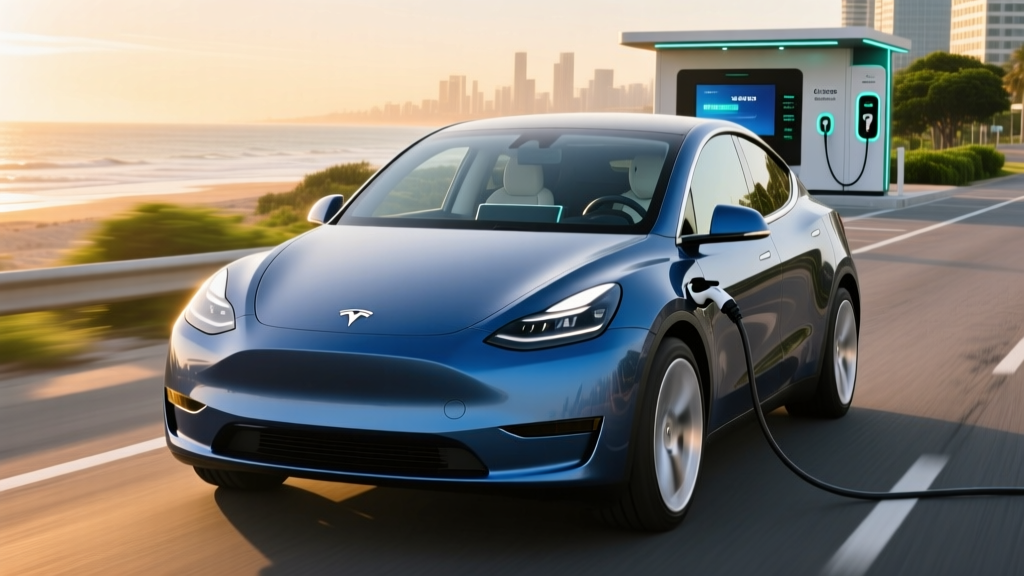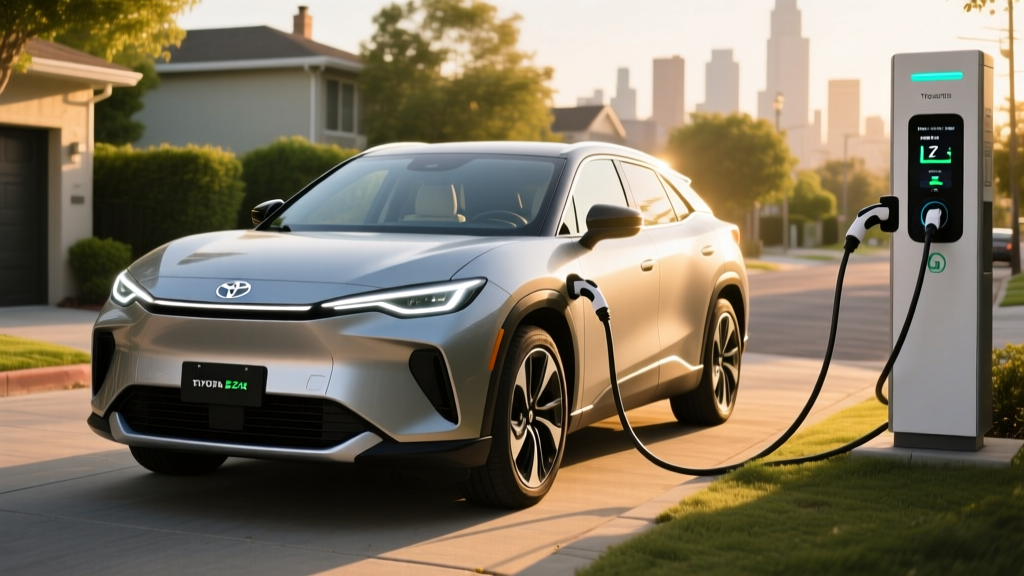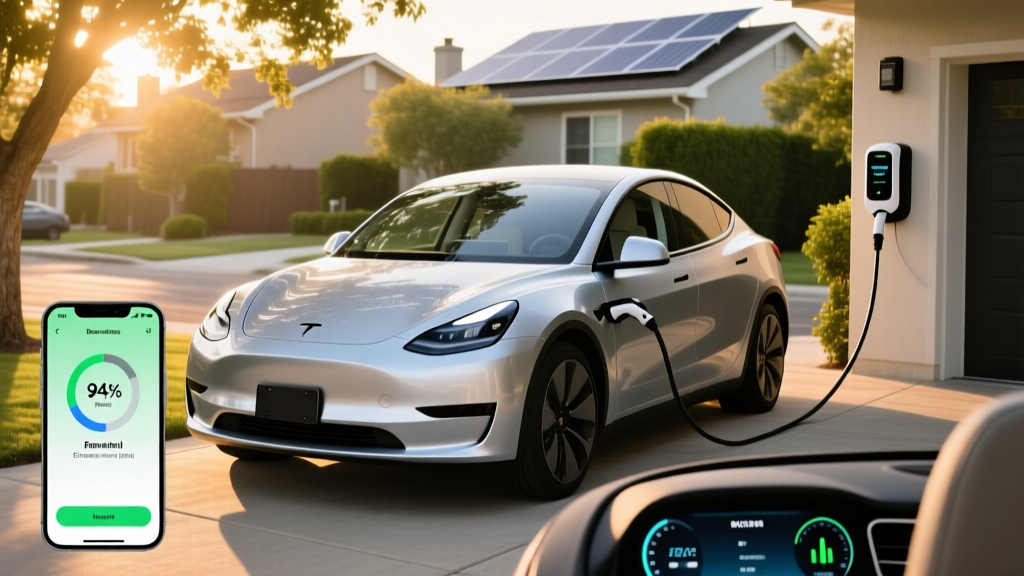
The short answer: The biggest pros of an electric car are dramatically lower fuel and maintenance costs, instant torque, home charging convenience, and zero tailpipe emissions. The biggest cons are higher upfront purchase prices, public charging unreliability in some regions, cold-weather range loss (typically 15–30%), and apartment/renter charging access challenges. Whether an EV is right for you depends almost entirely on your home charging situation, daily mileage, and local climate.
The Real Pros of Owning an Electric Car
Fuel Savings That Actually Add Up
The most tangible advantage of EV ownership is the cost per mile. According to fueleconomy.gov, the average 2026 EV achieves 100–130 MPGe combined, translating to roughly 3–4 cents per mile when charging at home on a national average electricity rate of $0.16/kWh. A comparable gas car at 28 MPG combined and $3.30/gallon costs about 12 cents per mile. Over 15,000 annual miles, that's a $1,200–$1,350 annual fuel savings.
Let's put concrete numbers on this:
| Metric | EV (e.g., Tesla Model Y LR) | Gas Equivalent (e.g., Toyota RAV4 AWD) |
|---|---|---|
| EPA Efficiency | 120 MPGe (28 kWh/100mi) | 28 MPG combined |
| Cost per mile (home fueling) | ~$0.045 | ~$0.118 |
| Annual fuel cost (15,000 mi) | ~$675 | ~$1,768 |
| 5-year fuel cost | ~$3,375 | ~$8,840 |
Maintenance: Fewer Moving Parts, Fewer Bills
EVs eliminate oil changes, spark plugs, timing belts, exhaust systems, and multi-speed transmissions. Regenerative braking extends brake pad life significantly — many EV owners report original brake pads lasting 80,000+ miles. Annual maintenance for a typical EV runs $300–$500 versus $800–$1,200 for a gas vehicle, based on AAA's Your Driving Costs data. Over five years, that's $2,500–$3,500 in maintenance savings.
Performance and Driving Experience
Electric motors deliver maximum torque from 0 RPM. A 2026 Hyundai Ioniq 5 (320 HP, dual-motor AWD) hits 0–60 mph in 4.5 seconds, while a similarly priced gas crossover typically runs 7–8 seconds. The low center of gravity from the floor-mounted battery pack also improves handling dynamics.
Tax Credits and Incentives
Under current IRS §30D rules, qualifying new EVs can receive up to $7,500 in federal tax credits, now available as a point-of-sale transfer to the dealer — meaning you can apply it directly to the purchase price. However, eligibility is not universal. You must meet income caps ($150,000 single / $300,000 joint MAGI), the vehicle must be under MSRP caps ($55,000 sedans / $80,000 SUVs, trucks, vans), and the battery must meet critical mineral and component sourcing requirements that tighten annually.
§30D Federal EV Tax Credit Checklist (2026):
- Vehicle MSRP under $55,000 (cars) or $80,000 (SUVs/trucks/vans)
- Buyer MAGI under $150K (single) / $225K (head of household) / $300K (joint)
- Battery meets critical mineral sourcing thresholds (escalating yearly)
- Battery meets North American component manufacturing thresholds
- Vehicle assembled in North America
- No foreign entity of concern (FEOC) battery components or minerals
The Real Cons of Owning an Electric Car
Higher Upfront Purchase Price
Despite price cuts across the industry, the average new EV transaction price in early 2026 hovers around $45,000–$50,000, compared to roughly $38,000–$42,000 for the average gas vehicle. Even after applying a $7,500 tax credit, you may still pay more upfront. The gap is narrowing — models like the Chevrolet Equinox EV (starting around $33,000) and base Tesla Model 3 (around $38,990) are competitive — but the entry point remains higher than budget gas cars.
Charging Access Isn't Universal
This is the single biggest barrier. If you own a home with a garage or driveway, installing a Level 2 (240V) home charger costing $500–$1,800 total (equipment plus electrician) unlocks the full convenience of EV ownership — waking up to a full battery every morning. But if you live in an apartment, rent, or park on the street, you're dependent on public infrastructure.
Public DC fast charging works, but adds cost and time. Electrify America and Tesla Superchargers charge $0.30–$0.48/kWh in most markets, eliminating much of the fuel-cost advantage. A 2026 EV with an 80 kWh battery charging from 10–80% at a 150 kW station takes roughly 25–35 minutes — manageable on road trips, but impractical as a daily routine.
Cold-Weather Range Loss
Lithium-ion batteries lose efficiency in freezing temperatures. Independent testing consistently shows 15–30% range reduction at 20°F, with the worst losses occurring in short-trip, city-driving scenarios where the cabin heater cycles frequently. A vehicle with a 310-mile EPA range may deliver 220–260 miles in deep winter. EVs equipped with heat pumps (standard on most 2026 models from Hyundai, Tesla, BMW, and others) mitigate this by 5–10 percentage points compared to resistive heating.
Charging Time on Road Trips
Even the fastest-charging 2026 EVs — like the Porsche Taycan or Hyundai Ioniq 5 with 800V architecture supporting peak rates of 240–350 kW — require 18–25 minutes for a 10–80% DC fast charge. That's compared to 5 minutes at a gas pump. On a 500-mile trip, expect 2–3 charging stops adding 45–75 minutes total. And peak charge rates aren't sustained: charging curves taper significantly above 50–60% State of Charge, meaning the last 20% takes disproportionately longer.
Insurance Costs Tend to Run Higher
EV insurance premiums average 15–25% higher than equivalent gas vehicles, driven by higher repair costs, specialized parts, and elevated vehicle values. A Model Y may cost $1,800–$2,400/year to insure versus $1,400–$1,800 for a comparable gas crossover. Always get a personalized quote before purchasing.
EV vs Gas vs Hybrid: Which Makes Sense?
| Factor | Battery EV | Plug-in Hybrid (PHEV) | Gas Vehicle |
|---|---|---|---|
| Upfront price | $33K–$80K+ | $34K–$55K | $25K–$50K |
| Fuel cost per mile | $0.04–$0.05 (home) | $0.04 electric / $0.12 gas | $0.10–$0.14 |
| Annual maintenance | $300–$500 | $600–$900 | $800–$1,200 |
| Daily range | 220–380 mi EPA | 25–45 mi electric + 300+ mi gas | 350–500 mi |
| Home fueling convenience | Excellent (if you have access) | Good (smaller battery, faster L2 charge) | N/A |
| Road trip ease | Good (plan charging stops) | Excellent (gas backup) | Excellent |
| Cold weather impact | 15–30% range loss | Mild (engine heat available) | Minimal |
| Federal tax credit | Up to $7,500 (§30D) | Up to $7,500 (§30D, if eligible) | None |
| 5-year total cost of ownership | Often lowest (if home charging) | Competitive | Highest fuel + maintenance |
The PHEV middle ground: If you can't install a home charger but want some electric driving, a PHEV like the Toyota RAV4 Prime (42 miles electric-only EPA range) or Jeep Wrangler 4xe (22 miles) offers electric commuting with gas-vehicle flexibility. You charge the smaller battery (typically 15–20 kWh) overnight on a standard 120V outlet in 8–12 hours, or faster with a Level 2.
Common EV Misconceptions — Corrected With Data
| Myth | Fact |
|---|---|
| "EV batteries need replacing every few years" | Modern EV batteries are warranted for 8 years/100,000 miles minimum (federal mandate). Real-world data shows most NMC and LFP packs retain 85–92% capacity at 100,000 miles. Full replacement, if ever needed, costs $8,000–$18,000 depending on the vehicle. |
| "EVs are worse for the environment because of electricity generation" | Even on the dirtiest US grids, EVs produce fewer lifetime emissions than gas cars per the EPA. On cleaner grids or with home solar, the advantage is massive. Battery manufacturing emissions are offset within 6–18 months of driving. |
| "You can't take an EV on a road trip" | The US now has over 200,000 public charging ports including 50,000+ DC fast chargers. Tesla's Supercharger network — now open to NACS-equipped vehicles from Ford, Rivian, GM, and others — covers all major highways. |
| "EVs are slow and boring to drive" | Even mainstream EVs like the 2026 Volkswagen ID.4 (295 HP AWD) hit 0–60 in 5.4 seconds. Performance EVs like the Tesla Model 3 Performance do it in 2.9 seconds. |
| "Charging an EV takes hours" | Level 2 home charging (7–11.5 kW) adds 25–44 miles per hour of charging — sufficient for overnight replenishment. DC fast charging at 150+ kW delivers 10–80% in 18–35 minutes depending on the vehicle's charge curve. |
The Real Costs: 5-Year Ownership Breakdown
Let's compare a realistic 5-year/75,000-mile ownership scenario for a popular EV versus a comparable gas crossover, assuming home charging access:
| Cost Category | 2026 Tesla Model Y LR AWD (~$44,990) | 2026 Toyota RAV4 AWD (~$35,000) |
|---|---|---|
| Purchase price (after incentives) | ~$37,490 (with $7,500 credit) | $35,000 |
| Fuel/energy (5 years) | ~$3,375 | ~$8,840 |
| Maintenance (5 years) | ~$2,000 | ~$5,000 |
| Insurance (5 years) | ~$10,500 | ~$8,000 |
| Home charger install (one-time) | ~$1,200 | $0 |
| Estimated depreciation | ~$18,000 | ~$14,000 |
| Total 5-year cost | ~$72,565 | ~$70,840 |
The gap narrows to roughly $1,700 over five years — and that's before factoring in state incentives, utility off-peak charging rates (which can drop fuel costs further), or potential battery-out-of-warranty risk. For buyers who drive more than 15,000 miles annually, the EV tips into clear savings territory.
Decision Framework: Should You Buy an EV?
Choose a Battery EV if:
- You can install a Level 2 home charger (garage, driveway, or workplace charging available)
- Your daily commute is under 80 miles round-trip (covers 90%+ of US drivers)
- You take fewer than 6 road trips over 300 miles per year
- You qualify for the §30D tax credit (check income and vehicle eligibility on irs.gov)
- You value lower running costs and instant acceleration
Choose a PHEV if:
- You want electric commuting but lack reliable DC fast charging for road trips
- You frequently drive 200+ miles in a day or tow heavy loads
- You live in a very cold climate and want engine heat as a backup
- Your daily commute is under 30–40 miles (covering most PHEV electric ranges)
Stick with Gas (for now) if:
- You live in an apartment with zero charging access and no workplace charging
- Your budget is firmly under $28,000 (limited EV options in this range)
- You regularly tow near maximum capacity over long distances
- You live in a rural charging desert with no planned infrastructure
What First-Time EV Buyers Must Know Before Signing
Get a charging plan before you buy. Confirm whether your home electrical panel can support a 240V/40-amp circuit (most can; older homes may need a $1,500–$3,000 panel upgrade). Use a licensed electrician for any Level 2 installation — never DIY high-voltage work.
Understand kW vs kWh. Kilowatt-hours (kWh) measure battery capacity — think of it as your "tank size." A 75 kWh battery holds 75 kWh of energy. Kilowatts (kW) measure power flow — your charge speed. A 150 kW DC fast charger delivers energy much faster than an 11.5 kW Level 2 home charger. Never confuse the two.
Budget for insurance. Get quotes from at least three insurers before committing. EV-specific insurers like Tesla Insurance (where available) or EV-friendly policies from major carriers can vary by $500–$1,000/year for the same vehicle.
Test the actual charging ecosystem. Download the PlugShare, ChargePoint, and EVgo apps before purchasing. Map out your regular routes and check charger density, reliability ratings, and connector compatibility. Most 2026 EVs from non-Tesla brands now use either CCS or the Tesla NACS connector — confirm what your vehicle needs.
Factor in tire costs. EVs are heavier (due to the battery pack) and produce instant torque, which accelerates tire wear. Budget for replacement tires every 30,000–45,000 miles, often 15–25% more expensive than equivalent gas-car tires.
Frequently Asked Questions
How long do EV batteries actually last?
Federal law mandates a minimum 8-year/100,000-mile battery warranty (10 years/150,000 miles in CARB states). Real-world degradation data from sources like Recurrent Auto shows most modern EV batteries retain 90%+ capacity at 50,000 miles and 85–92% at 100,000 miles. LFP (lithium iron phosphate) chemistry batteries, found in standard-range Tesla Model 3/Y and some Ford models, tend to degrade more slowly than NMC but offer slightly lower energy density.
Is a used EV a smart buy?
Used EVs offer significant value, but check battery State of Health (SoH) via the vehicle's diagnostics or a pre-purchase inspection. The federal used EV credit offers up to $4,000 (30% of sale price, capped) on vehicles priced under $25,000 from a licensed dealer. Verify the battery warranty hasn't expired — it transfers to subsequent owners.
Will an EV work in extreme cold?
Yes, but plan for 20–30% range loss below freezing. Preconditioning your battery while plugged in (a feature on virtually all 2026 EVs) warms the pack before driving, reducing the penalty. Vehicles with heat pumps recover more range than those using resistive cabin heaters. In Minnesota or Alaska, many EV owners drive successfully year-round — they simply plan around reduced winter range.
How much does it cost to charge an EV at home?
At the US average residential rate of $0.16/kWh, fully charging a 75 kWh battery (from near-empty to full) costs about $12. Most drivers use 20–30 kWh per day (60–90 miles of driving), costing $3.20–$4.80 daily. Utility off-peak or time-of-use rates can drop this by 30–50% if you schedule charging overnight.
What happens if I run out of charge on the road?
The same thing that happens if you run out of gas — you need a tow to the nearest charger. However, modern EVs provide extensive range warnings, navigation to chargers, and buffer miles below "0%" display. Running out is almost always a planning failure, not a sudden event. AAA and other roadside services now offer mobile charging or flatbed towing to the nearest station.