Quick Verdict: The Scandinavian EV That Punches Above Its Price
The 2024 Polestar 2 occupies a rare position in the premium EV market: it undercuts the Tesla Model 3 Long Range and BMW i4 on price while delivering competitive range, genuinely quick DC charging, and a build quality that feels a class above. For the 2024 model year, Polestar made the single-motor variant rear-wheel drive (a welcome change from the front-wheel-drive layout of earlier years), bumped battery capacity to 82 kWh usable on Long Range models, and pushed DC fast-charge capability to 205 kW. The result is an EV that finally feels optimized rather than compromised.
But the Polestar 2 isn't for everyone. Rear-seat headroom is tight for taller passengers, the Google-built infotainment system divides opinion, and the options structure can push the as-tested price uncomfortably close to Model 3 Performance territory. This review breaks down every spec that matters to an actual buyer — range, charging curves, tax credit eligibility under current IRS §30D rules, and how the 2024 Polestar 2 stacks up against the competition.
Range, Efficiency, and the Real-World Caveat
The 2024 Polestar 2 comes in three configurations with distinct EPA range ratings. Here's the breakdown:
| Trim | Drivetrain | Battery (usable) | EPA Range | MPGe (combined) | kWh/100 mi |
|---|---|---|---|---|---|
| Standard Range Single Motor | RWD | 69 kWh (NMC) | 276 mi | 114 MPGe | 29 |
| Long Range Single Motor | RWD | 82 kWh (NMC) | 320 mi | 119 MPGe | 28 |
| Long Range Dual Motor | AWD | 82 kWh (NMC) | 298 mi | 105 MPGe | 32 |
The shift to NMC (nickel manganese cobalt) chemistry across the 2024 lineup prioritizes energy density over the cycle-life longevity of LFP (lithium iron phosphate). This is a deliberate trade-off: NMC delivers more range in the same physical pack volume but requires more careful state-of-charge management for long-term health. Polestar recommends daily charging to 80% for NMC packs, reserving 100% for trips.
Charging: DC Fast, Level 2, and the Curve Reality
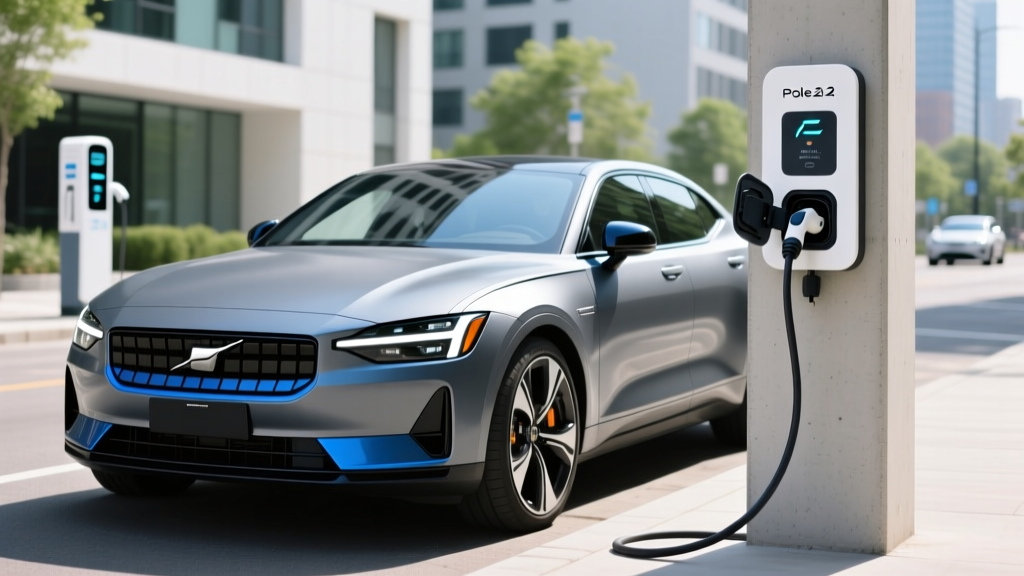
Charging speed is where the 2024 Polestar 2 makes a genuine leap forward. The Long Range models now accept up to 205 kW on a DC fast charger (up from 150 kW on pre-2024 models), while the Standard Range peaks at 135 kW.
| Charging Method | Long Range (82 kWh) | Standard Range (69 kWh) |
|---|---|---|
| DC Fast Charge (peak) | 205 kW (CCS1) | 135 kW (CCS1) |
| DC 10–80% time | ~26 minutes | ~34 minutes |
| Level 2 (240V, home) | 11 kW onboard charger | 11 kW onboard charger |
| Level 2 miles per hour | ~37 mi/hr | ~32 mi/hr |
| Level 1 (120V) | ~3–4 mi/hr | ~3–4 mi/hr |
| Connector | CCS1 (J1772 + DC pins) | CCS1 (J1772 + DC pins) |
A few things to understand about these numbers. The 205 kW peak only holds between roughly 10–35% state of charge on a sufficiently powerful charger (350 kW-class units from Electrify America or similar). Above 50% SoC, the charge curve tapers to ~120 kW, and above 80% it drops further to ~50 kW. This is normal for NMC chemistry — the 10–80% time of 26 minutes is what actually matters for road trips, and it's competitive with the Hyundai Ioniq 5 (~18 min on its 800V architecture, which is faster) and the BMW i4 (~31 min).
At home on a Level 2 wall connector (48A circuit, 11.5 kW delivery), you'll add roughly 37 miles of range per hour of charging. An overnight session from 20% to 80% takes about 5–6 hours, which is ideal for daily use. The 11 kW onboard charger is generous — many competitors cap at 7.2 or 9.6 kW, which means slower home fills.
Performance, Drivetrain, and What the Numbers Feel Like
| Spec | Std Range SM | Long Range SM | Long Range DM | DM + Performance Pk |
|---|---|---|---|---|
| Horsepower | 271 hp | 299 hp | 408 hp | 476 hp |
| Torque | 243 lb-ft | 361 lb-ft | 487 lb-ft | 502 lb-ft |
| 0–60 mph | 6.2 sec | 5.9 sec | 4.3 sec | 4.1 sec |
| Drivetrain | RWD | RWD | AWD | AWD |
| Top Speed | 100 mph | 100 mph | 100 mph | 127 mph |
The 2024 switch to rear-wheel drive for single-motor models transformed the Polestar 2's character. Where earlier front-wheel-drive versions felt torque-limited and prone to understeer under hard acceleration, the RWD layout delivers power more naturally. The Long Range Single Motor's 5.9-second 0–60 is genuinely quick for daily driving, and the instant torque delivery makes highway merging effortless.
The Dual Motor with the Performance Pack (Öhlins dampers, Brembo brakes, 20-inch forged wheels, gold seatbelts) is a legitimate sport sedan competitor. At 4.1 seconds to 60 mph with 476 hp, it trades blows with the Tesla Model 3 Performance while offering a more composed, European ride quality. The Öhlins dual-flow dampers are manually adjustable — a rarity at this price point — but require a wrench and some knowledge to tune.
Pricing, Trims, and Federal Tax Credit Eligibility
| Trim | Base MSRP | As-Tested (typical options) | §30D Credit Eligible? |
|---|---|---|---|
| Standard Range Single Motor | $49,900 | $52,000–$54,000 | Yes (see caveats below) |
| Long Range Single Motor | $53,400 | $56,000–$60,000 | Yes (see caveats below) |
| Long Range Dual Motor | $57,900 | $62,000–$68,000 | Yes (see caveats below) |
Destination charges add $1,400 to all trims. Key option packages include the Pilot Pack ($3,200 — adds Pixel LED headlights, 360° camera, Pilot Assist with adaptive cruise), the Plus Pack ($4,000 — Harman Kardon audio, panoramic roof, heat pump, heated rear seats and steering wheel), and the Performance Pack ($5,500 — Öhlins dampers, Brembo brakes, 20-inch wheels, software boost to 476 hp, available only on Dual Motor).
- MSRP cap: The Polestar 2 is classified as a sedan, so the MSRP cap is $55,000. The Standard Range Single Motor ($49,900 base) and Long Range Single Motor ($53,400 base) fall under this cap. The Long Range Dual Motor ($57,900 base) exceeds it and is NOT eligible unless options are structured differently at point of sale.
- Buyer income limits: Modified adjusted gross income must not exceed $150,000 (single), $225,000 (head of household), or $300,000 (joint filing).
- Battery sourcing: The credit is split into two halves — $3,750 for critical minerals and $3,750 for battery component manufacturing. Polestar has worked to qualify for the full $7,500, but sourcing requirements tighten annually. Always verify current-year eligibility on the IRS §30D page before purchase.
- Point-of-sale transfer: As of 2024, buyers can transfer the credit to the dealer at purchase, receiving the discount upfront rather than waiting to claim it on their tax return.
After the full $7,500 credit, the Standard Range Single Motor effectively starts at ~$42,400 (before destination), and the Long Range Single Motor drops to ~$45,900. At those prices, the Polestar 2 becomes one of the best value-to-range propositions in the premium segment.
Interior, Cargo, and Daily Livability
The Polestar 2's interior is where Volvo's design DNA shows through. Materials are genuinely premium — the standard textile upholstery (a recycled 3D-knit material) feels more upscale than many competitors' vegan leather, and the optional Nappa leather ($4,000) is ventilated and sourced with animal welfare traceability.
Dimensional specs:
- Front headroom: 39.4 inches
- Rear headroom: 36.7 inches (tight for passengers over 6'0")
- Front legroom: 42.2 inches
- Rear legroom: 34.0 inches
- Cargo behind rear seats: 14.4 cu ft (liftback design — practical opening)
- Cargo with seats folded: 38.7 cu ft
- Frunk (front trunk): 1.4 cu ft (small — fits charging cables, not much else)
The liftback tailgate is a major practical advantage over traditional sedan trunks. The opening is wide and deep enough for grocery runs or two large suitcases. However, the 34.0 inches of rear legroom is noticeably tighter than the Tesla Model 3 (35.3 in) and significantly less than the Hyundai Ioniq 6 (37.4 in). If you regularly carry adult rear passengers, test-fit them before committing.
The 11.2-inch portrait touchscreen runs a Google-based infotainment system with native Google Maps, Google Assistant, and access to the Play Store for apps. Apple CarPlay is wireless. The system is responsive but has a learning curve — climate controls are buried in menus rather than physical buttons, which draws consistent criticism. The available head-up display and 360° camera (in the Pilot Pack) are well-executed.
Driver Assistance and Safety
Pilot Assist includes adaptive cruise control with stop-and-go, lane centering, and speed-limit recognition. It's competent for highway cruising but doesn't offer the hands-free capability of GM's Super Cruise or Ford's BlueCruise. The system will nag you to keep hands on the wheel via a torque sensor, which is less sophisticated than the capacitive or camera-based monitoring in some competitors.
Standard safety features include automatic emergency braking with pedestrian/cyclist detection, blind-spot monitoring with steering assist, rear cross-traffic alert, and run-off-road protection (a Volvo-derived feature that pre-tensions seatbelts if the car detects it's leaving the road). The Polestar 2 earned a 5-star overall rating from NHTSA and was an IIHS Top Safety Pick+ in the year it was fully tested.
Warranty and Long-Term Battery Health
| Coverage | Term |
|---|---|
| Limited Vehicle Warranty | 4 years / 50,000 miles |
| Battery & Drive Unit Warranty | 8 years / 100,000 miles |
| Battery Capacity Threshold | 70% retention at 100,000 mi |
| Corrosion Warranty | 12 years (unlimited miles) |
| Roadside Assistance | 4 years / unlimited miles |
The 70% capacity retention threshold at 8 years/100,000 miles is industry-standard but worth understanding in practical terms. If your 82 kWh pack degrades to 57.4 kWh (70%), the Long Range Single Motor's range drops from 320 miles to roughly 224 miles. Real-world NMC degradation data from early Polestar 2 owners suggests 8–12% loss over the first 100,000 miles under normal use, which would keep most cars well above the warranty threshold.
To maximize battery longevity: avoid frequent DC fast charging when Level 2 is available, use the built-in charge limiter to set 80% as the daily maximum, and precondition the battery (via scheduled departure or the app) before fast charging in cold weather. The 2024 model's heat pump (included in the Plus Pack) significantly reduces cold-weather range loss by warming the cabin using waste heat from the drivetrain rather than resistive heating.
Pros and Cons
- 205 kW DC fast charging is competitive for the class
- RWD layout (new for 2024) transforms handling dynamics
- Premium build quality and materials at sub-$55K starting price
- Strong federal tax credit eligibility on two of three trims
- Liftback cargo versatility (14.4 cu ft + wide opening)
- Google-native infotainment with wireless CarPlay
- Available Öhlins dampers and Brembo brakes (Performance Pack)
- Rear headroom (36.7 in) is tight for taller passengers
- Climate controls buried in touchscreen menus
- CCS1 connector — no native NACS (Tesla Supercharger access requires adapter)
- Dual Motor trim exceeds $55K MSRP cap for tax credit
- Options can push price $10K+ above base MSRP
- Pilot Assist is capable but not class-leading among Level 2 systems
- Small 1.4 cu ft frunk
Who Should Buy the 2024 Polestar 2?
Best for: Single professionals or couples who want a premium EV sedan with genuine driving engagement, don't need spacious rear seats, and can charge at home. The Long Range Single Motor at ~$45,900 after tax credit is the sweet spot — 320 miles EPA, 5.9-second 0–60, and a luxury interior that outclasses most rivals at the price.
Consider alternatives if: You regularly carry adult rear passengers (look at the Ioniq 6 or Model 3), you need hands-free highway driving (GM Super Cruise or Ford BlueCruise vehicles), you want access to the Tesla Supercharger network without adapters (wait for NACS-equipped 2025+ models or buy a Model 3), or you need more than 38.7 cu ft of total cargo (consider an EV SUV like the Ioniq 5 or Model Y).
Not ideal for: Towing (the Polestar 2 is not rated for towing), road trips through charging deserts (CCS1 infrastructure is less ubiquitous than NACS in rural areas), or buyers who prioritize one-pedal driving (the Polestar 2's regen is moderate, not as aggressive as a Nissan LEAF or BMW i4's highest setting).
Frequently Asked Questions
What is the real-world range of the 2024 Polestar 2?
The EPA rates the Long Range Single Motor at 320 miles, but expect approximately 275–290 miles in real-world highway driving at moderate temperatures. In cold weather (below 30°F), plan for 240–260 miles. The Dual Motor delivers roughly 255–270 real-world highway miles in fair conditions.
How fast does the Polestar 2 charge at home and on DC fast chargers?
On a DC fast charger, the Long Range models peak at 205 kW and charge from 10–80% in approximately 26 minutes. At home on a Level 2 wall connector (240V, 48A), you'll gain about 37 miles of range per hour, meaning a full overnight charge from near-empty is feasible.
Does the 2024 Polestar 2 qualify for the $7,500 federal tax credit?
The Standard Range Single Motor ($49,900) and Long Range Single Motor ($53,400) fall under the $55,000 sedan MSRP cap and are eligible for up to $7,500, provided the buyer meets income requirements ($150K single / $300K joint) and the vehicle meets current-year battery sourcing rules. The Long Range Dual Motor ($57,900 base) exceeds the MSRP cap and does not qualify. Always verify on IRS.gov before purchasing.
Is the Polestar 2 worth buying over the Tesla Model 3 or BMW i4?
It depends on priorities. The Polestar 2 wins on interior material quality, design distinctiveness, and available Performance Pack hardware (Öhlins/Brembo). The Tesla Model 3 wins on Supercharger network access, efficiency, and software features. The BMW i4 wins on driving dynamics and brand cachet but costs more and charges slower. If you can charge at home and value build quality over ecosystem lock-in, the Polestar 2 is a compelling choice.
Does the Polestar 2 use NACS or CCS for charging?
The 2024 Polestar 2 uses the CCS1 connector. It does not have a native NACS (Tesla-style) port. Polestar has announced that future model years will transition to NACS, and current CCS1 owners will receive or be able to purchase a NACS adapter for Supercharger access. For now, public charging relies on Electrify America, EVgo, ChargePoint, and other CCS-compatible networks.
What is the battery warranty on the 2024 Polestar 2?
The high-voltage battery and drive units are covered for 8 years or 100,000 miles, whichever comes first. The warranty guarantees at least 70% of original capacity retention. If the battery falls below this threshold within the warranty period, Polestar will repair or replace it to bring it back above 70%.