The End of an Era: Tesla Stopped Production of the Model S and X
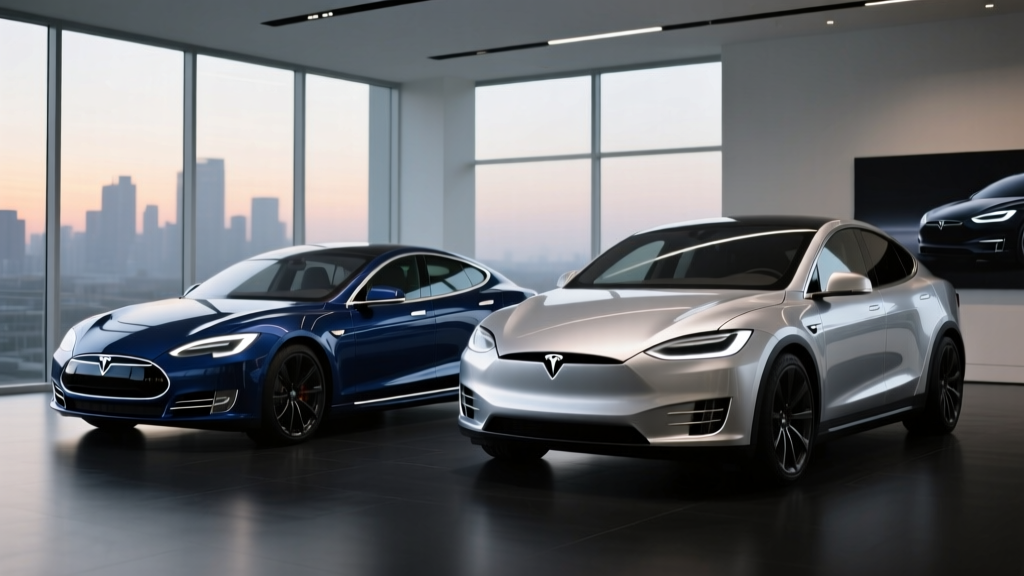
After more than a decade defining the premium electric sedan and SUV segments, Tesla stopped production of the Model S and Model X in early 2026. The move ends a run that began with the Model S in 2012 and the Model X in 2015 — vehicles that proved battery-electric cars could outperform combustion rivals on acceleration, tech, and daily usability. But declining sales volume, an aging platform, and Tesla's strategic pivot toward higher-volume, lower-cost vehicles sealed their fate.
For buyers who had these models on their shortlist, the news raises practical questions: What are the final specs worth chasing on the used market? How do they stack up against today's competitors? And which Tesla — or rival EV — should you buy instead? This profile covers the definitive final-year specifications, real-world ownership data, and a clear-eyed look at what comes next.
Final-Year Specs at a Glance
Before Tesla stopped production, the 2025 Model S and Model X received minor updates but rode on the same fundamental architecture introduced over a decade ago. Here's where the final models landed:
| Specification | Model S Long Range | Model S Plaid | Model X Long Range | Model X Plaid |
|---|---|---|---|---|
| EPA Range | 402 mi | 359 mi | 335 mi | 311 mi |
| Battery (usable) | ~95 kWh (NMC) | ~95 kWh (NMC) | ~95 kWh (NMC) | ~95 kWh (NMC) |
| Drivetrain | Dual-Motor AWD | Tri-Motor AWD | Dual-Motor AWD | Tri-Motor AWD |
| Horsepower | 670 hp | 1,020 hp | 670 hp | 1,020 hp |
| 0-60 mph | 3.1 sec | 1.99 sec | 3.8 sec | 2.5 sec |
| Peak DC Fast Charge | 250 kW | 250 kW | 250 kW | 250 kW |
| 10-80% DCFC Time | ~30 min | ~30 min | ~32 min | ~32 min |
| Level 2 Home Charge | 11.5 kW (~41 mi/hr) | 11.5 kW (~41 mi/hr) | 11.5 kW (~36 mi/hr) | 11.5 kW (~36 mi/hr) |
| MPGe (combined) | 120 MPGe | 116 MPGe | 102 MPGe | 98 MPGe |
| Efficiency | 28 kWh/100 mi | 29 kWh/100 mi | 33 kWh/100 mi | 34 kWh/100 mi |
| Cargo Volume | 28 cu ft (rear) + frunk | 28 cu ft (rear) + frunk | 88 cu ft (max) + frunk | 88 cu ft (max) + frunk |
| Final Base MSRP | $74,990 | $89,990 | $79,990 | $94,990 |
| Battery/Drive Unit Warranty | 8 yr / 150,000 mi | 8 yr / 150,000 mi | 8 yr / 150,000 mi | 8 yr / 150,000 mi |
Source: EPA fueleconomy.gov, Tesla final order configurator (archived).
Real-World Range: What Owners Actually Experienced
EPA Sticker vs. Real-World Expectation: The Model S Long Range carried a 402-mile EPA estimate — among the highest of any production EV sold in the U.S. But EPA tests include generous city-regen cycles. On sustained highway driving at 70-80 mph, expect 320-350 miles in moderate temperatures. In cold weather (below 32°F), range drops to roughly 260-290 miles due to cabin heating demand and battery resistance, even with Tesla's heat pump.
The Plaid variant's 359-mile EPA figure translated to approximately 280-310 highway miles and 230-260 miles in freezing conditions. The Model X, heavier and less aerodynamic, saw real-world highway figures closer to 260-285 miles (Long Range) and 240-260 miles (Plaid).
Tesla's NMC (nickel manganese cobalt) battery chemistry in these models delivers strong energy density but is more sensitive to high state-of-charge storage. Long-term data shows roughly 8-12% degradation over 100,000 miles, which is in line with industry norms for NMC packs. Owners who routinely charged to 100% and stored the vehicle hot saw slightly higher degradation rates.
Charging Speed: Still Competitive, but No Longer Class-Leading
One reason Tesla stopped production of these models is that the platform's charging architecture fell behind newer competitors. The Model S and X peaked at 250 kW on DC fast chargers (Tesla Supercharger V3 stalls), which was impressive in 2020 but has been surpassed by Hyundai/Kia's 800V E-GMP platform (up to 350 kW) and newer architectures from Lucid and Porsche.
| Vehicle | Peak DC kW | 10-80% Time | Level 2 kW | Connector |
|---|---|---|---|---|
| Tesla Model S/X (final) | 250 kW | ~30 min | 11.5 kW | NACS (native) |
| Lucid Air Pure | 200+ kW | ~25 min | 19.2 kW | CCS/NACS |
| Hyundai Ioniq 6 | 350 kW | ~18 min | 10.9 kW | CCS/NACS |
| Porsche Taycan | 320 kW | ~18 min | 19.2 kW | CCS/NACS |
| BMW i5 eDrive40 | 205 kW | ~28 min | 11 kW | CCS/NACS |
The Model S/X charging curve also tapered aggressively above 60% state of charge — a characteristic of the older pack design. While the 10-80% time of ~30 minutes was acceptable for road trips, competitors with 800V architectures could shave 10-12 minutes off that same session. On Tesla's own Supercharger network, however, the plug-and-charge convenience and stall reliability remained a strong advantage.
At home on a Level 2 (240V) wall connector, the 11.5 kW onboard charger replenished about 41 miles of range per hour for the Model S and 36 miles per hour for the Model X. A full overnight charge from 20% to 80% took roughly 5-6 hours — perfectly adequate for daily use.
Performance and Technology: Where the Legacy Still Shines
The Model S Plaid's 1.99-second 0-60 mph time remains one of the quickest production-car accelerations ever recorded, tri-motor torque vectoring providing relentless grip. Even the Long Range's 3.1-second sprint outpaces most sports cars. The Model X Plaid managed a 2.5-second run — absurd for a three-row SUV.
Inside, the final models featured Tesla's current-generation infotainment with a 17-inch center touchscreen, rear-seat 8-inch display, yoke or round steering wheel options, and a 22-speaker audio system. The glass roof, ventilated seats, and HEPA air filtration (Bioweapon Defense Mode on the X) were standard.
On the driver-assist front, Autopilot (SAE Level 2) came standard with adaptive cruise, lane centering, and automatic emergency braking. Full Self-Driving (Supervised) — still SAE Level 2 despite its name — was available as a $8,000 add-on or $99/month subscription, adding automated lane changes, traffic light recognition, and city-street navigation. Drivers must remain fully attentive at all times; this is not autonomous driving.
Important — SAE Level 2 Clarification: Tesla Autopilot and FSD (Supervised) are Level 2 driver-assistance systems per SAE International classification. The driver must keep hands on the wheel and eyes on the road at all times. Only fully driverless services like Waymo operate at Level 4. Tesla's naming conventions have drawn scrutiny from NHTSA — always understand what the system can and cannot do.
Pricing, Tax Credits, and the Used-Market Reality
When Tesla stopped production, final MSRPs stood at $74,990 for the Model S Long Range, $89,990 for the Plaid, $79,990 for the Model X Long Range, and $94,990 for the Model X Plaid. These prices placed both vehicles well above the IRS §30D federal tax credit MSRP cap of $55,000 for sedans and $80,000 for SUVs/vans/pickups.
| Model | Final MSRP | §30D MSRP Cap | New-Vehicle Credit Eligible? | Used-EV Credit Eligible? |
|---|---|---|---|---|
| Model S Long Range | $74,990 | $55,000 (sedan) | No — exceeds cap | Yes — if under $25,000 used |
| Model S Plaid | $89,990 | $55,000 (sedan) | No — exceeds cap | Likely no — used prices remain above $25K |
| Model X Long Range | $79,990 | $80,000 (SUV) | Potentially — at MSRP cap | Yes — if under $25,000 used |
| Model X Plaid | $94,990 | $80,000 (SUV) | No — exceeds cap | Likely no — used prices remain above $25K |
Key §30D rules to understand: For new vehicles, the credit (up to $7,500) requires meeting battery-critical-mineral and component-sourcing thresholds, buyer income caps ($150K single / $300K joint MAGI), and the MSRP limits noted above. For used EVs, the Used Clean Vehicle Credit offers up to $4,000 (or 30% of sale price, whichever is less) on vehicles priced at $25,000 or less, with lower income caps ($75K single / $150K joint). Always verify current rules on IRS.gov and consult a tax professional.
On the used market, post-production Model S and X values have held reasonably well for Plaid variants (collector appeal) while Long Range models are depreciating more steeply as buyers gravitate toward newer platforms. A 2024 Model S Long Range with ~20,000 miles trades in the $48,000-$55,000 range as of early 2026.
Why Tesla Stopped Production: The Business Case
The decision wasn't sudden. Tesla's Fremont factory had been reallocating capacity from Model S/X lines to Model Y and the next-generation compact platform for years. Several factors converged:
- Volume decline: Combined Model S/X deliveries had fallen below 50,000 units annually worldwide — a fraction of Model Y volume (over 1.2 million in 2024).
- Platform age: Despite refreshes, the underlying architecture dated to 2012 (S) and 2015 (X), limiting efficiency gains and manufacturing cost reductions.
- Competitive pressure: Lucid Air, BMW i5/i7, Porsche Taycan, Mercedes EQS, and Hyundai Ioniq 6 all offered newer platforms with faster charging, more refined interiors, or better value.
- Strategic pivot: Tesla's capital is directed toward the affordable compact model, Cybertruck ramp, Optimus robotics, and energy storage — higher-growth bets than low-volume luxury sedans.
In short, Tesla stopped production because the Model S and X no longer fit the company's volume-driven, cost-reduction strategy. They served their purpose: proving EVs could be desirable, fast, and practical. That mission is complete.
What to Buy Instead: Competitors and Alternatives
If you were considering a Model S or X, here's where to redirect your search based on your priorities:
Choose the Lucid Air if you want the most range (516 mi EPA on Air Grand Touring), a spacious luxury sedan interior, and don't mind a smaller service network.
Choose the BMW i5 or i7 if you value traditional luxury build quality, a refined ride, dealer service infrastructure, and are willing to trade some range for comfort.
Choose the Tesla Model Y if you want the Supercharger network, strong value (starting ~$44,990), and can accept a crossover instead of a sedan.
Choose the Hyundai Ioniq 6 if you want the fastest DC charging (350 kW capable), strong efficiency (140 MPGe), and a sub-$45,000 starting price with tax credit eligibility.
Choose a used Model S Plaid if you want unmatched acceleration, Supercharger access, and can accept the depreciation risk of a discontinued model.
Pros and Cons: The Final Verdict
Pros
- Class-leading EPA range (402 mi on S LR)
- Access to Tesla Supercharger network (most reliable in U.S.)
- Plaid acceleration is unmatched (1.99 sec 0-60)
- Over-the-air updates keep software current
- Strong cargo versatility (frunk + hatchback/liftgate)
- 8 yr / 150,000 mi battery warranty
Cons
- Platform is aging — 250 kW peak charge rate trails rivals
- Interior build quality inconsistent vs. BMW, Lucid, Porsche
- No longer in production — parts/service uncertainty long-term
- Ineligible for new-vehicle federal tax credit (most trims)
- FSD naming remains misleading (still Level 2)
- Yoke steering divisive; not all buyers adapt
Frequently Asked Questions
What is the real-world range of the final Model S and X?
The Model S Long Range delivered roughly 320-350 miles on the highway in mild weather, dropping to 260-290 miles in freezing temperatures. The Model X Long Range achieved about 260-285 highway miles. Cold weather, high speeds, and elevation changes all reduce range below the EPA sticker.
How fast do the Model S and X charge at home and on the road?
On DC fast chargers, both peaked at 250 kW with a 10-80% session taking approximately 30 minutes. At home on Level 2 (240V, 48A), the Model S added about 41 miles of range per hour (11.5 kW), while the Model X added about 36 miles per hour due to lower efficiency.
Does the Model S or X qualify for the federal EV tax credit?
As new vehicles, most trims did not qualify for the §30D credit because they exceeded MSRP caps ($55K sedans, $80K SUVs). The Model X Long Range at $79,990 was at the SUV cap and could have qualified if battery-sourcing and buyer-income requirements were met. On the used market, any variant selling for $25,000 or less may qualify for the up-to-$4,000 used-EV credit, subject to income caps. Verify at IRS.gov.
Is it worth buying a used Model S or X now that Tesla stopped production?
It depends on your risk tolerance. Tesla is obligated to support parts and service for these vehicles, and the Supercharger network remains a major advantage. However, depreciation may accelerate, and some body/trim parts could become harder to source over time. A certified pre-owned or low-mileage example with remaining warranty is the safest play.
Will Tesla still service the Model S and X?
Yes. Tesla has confirmed it will continue to provide parts, service, and over-the-air software updates for the Model S and X. The company maintains service infrastructure for discontinued vehicles (as it did with the original Roadster), though turnaround times for body-specific parts may lengthen over the years.
What's the best alternative if I want a Tesla but these are discontinued?
The Tesla Model Y is the logical in-brand alternative — it offers Supercharger access, similar tech, AWD, up to 320 miles of range, and starts around $44,990. For a sedan experience, the Model 3 Highland (310-363 mi range, from ~$38,990) is the closest current Tesla, though it's a segment below the Model S in size and luxury.