Verdict: Two EV SUV Philosophies Collide
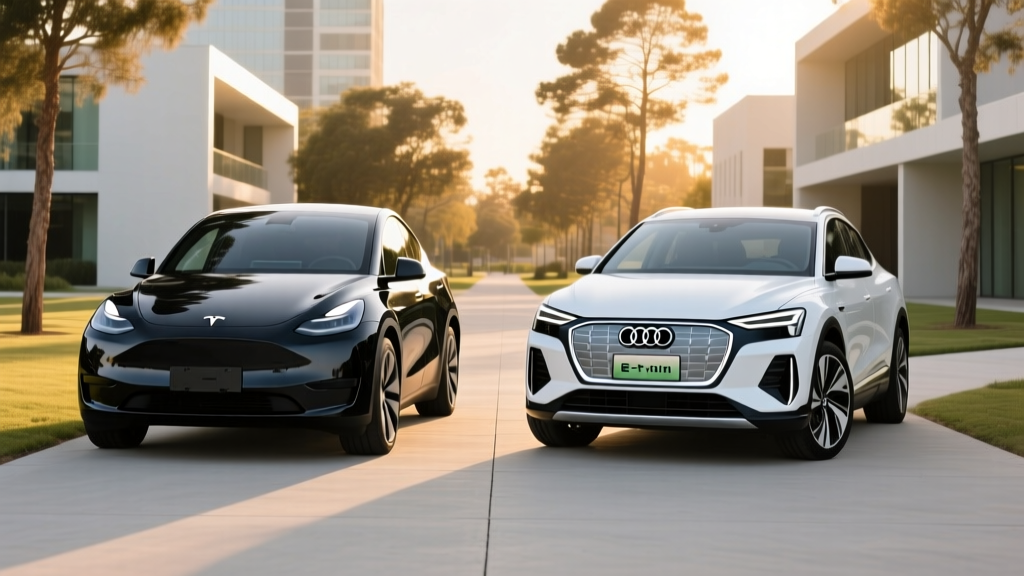
Search for "q4 tesla" and you'll find buyers cross-shopping two fundamentally different approaches to the electric compact SUV. The 2026 Tesla Model Y prioritizes efficiency, software, and Supercharger access. The 2026 Audi Q4 e-tron leans into build quality, ride refinement, and a traditional luxury driving experience. Both seat five, both offer over 250 miles of EPA range, and both compete fiercely in the $45,000–$60,000 electric SUV segment. But the numbers tell a nuanced story that marketing brochures won't.
| Spec | 2026 Tesla Model Y Long Range AWD | 2026 Audi Q4 55 e-tron quattro |
|---|---|---|
| EPA Range | 320 mi | 258 mi |
| Battery (usable) | 75 kWh (NMC) | 77 kWh (NMC) |
| Peak DC Fast Charge | 250 kW | 175 kW |
| 10–80% DC Charge | ~25 min | ~28 min |
| Level 2 Home Charge | 11.5 kW (~44 mi/hr) | 11.5 kW (~35 mi/hr) |
| 0–60 mph | 4.8 sec | 5.8 sec |
| Horsepower | 384 hp | 340 hp |
| Drivetrain | Dual-motor AWD | Dual-motor AWD (quattro) |
| MPGe (combined) | 117 MPGe | 95 MPGe |
| Efficiency | 28 kWh/100 mi | 35 kWh/100 mi |
| Cargo (behind 2nd row) | 30.2 cu ft | 24.8 cu ft |
| Rear Legroom | 41.6 in | 38.5 in |
| Battery Warranty | 8 yr / 120,000 mi | 8 yr / 100,000 mi |
| Base MSRP | $48,990 | $55,300 |
Range and Efficiency: The Model Y's Clear Edge
Tesla's efficiency engineering remains the benchmark. The 2026 Model Y Long Range AWD achieves an EPA-estimated 320 miles from a 75 kWh usable NMC battery. That's 28 kWh per 100 miles — meaning Tesla extracts roughly 20% more distance per electron than the Q4 e-tron.
Tesla Model Y: EPA 320 mi. Expect ~270–290 mi on sustained highway driving at 70+ mph. In freezing temperatures (below 30°F), plan for 220–250 mi without preconditioning. Tesla's heat pump helps mitigate cold-weather cabin draw, but battery chemistry still loses ~15–20% in deep cold.
Audi Q4 e-tron: EPA 258 mi. Expect ~220–235 mi highway, and roughly 180–200 mi in freezing conditions. The Q4's heavier curb weight (4,800 lbs vs. 4,400 lbs) and less aggressive aero work against it at speed.
The Q4 55 e-tron's 77 kWh usable pack (NMC chemistry) delivers 258 EPA miles — adequate for most commutes but noticeably short on road trips. If your daily drive is under 60 miles round-trip and you charge at home nightly, the gap matters less. For anyone regularly driving 200+ miles between charges, the Model Y's 60-mile advantage is tangible.
Charging Speed: Supercharger Network vs. CCS Reality
Charging speed is where kW (power — how fast energy flows) and kWh (energy — what's stored in the battery) diverge, and it's the single most common EV buyer confusion. Here's the breakdown:
| Charging Level | Tesla Model Y | Audi Q4 e-tron |
|---|---|---|
| Level 1 (120V, ~1.4 kW) | ~3–4 mi/hr | ~3 mi/hr |
| Level 2 (240V, 11.5 kW) | ~44 mi/hr | ~35 mi/hr |
| DC Fast Charge (peak) | 250 kW (NACS) | 175 kW (CCS1) |
| 10–80% DC Time | ~25 min | ~28 min |
| Connector | NACS (native Supercharger) | CCS1 (adapter for Superchargers) |
The Model Y peaks at 250 kW on V3 Superchargers, though sustained rates taper after ~50% state of charge (SoC). The Q4 e-tron peaks at 175 kW on Electrify America or compatible CCS networks. In practice, the 3-minute gap in 10–80% time is small — but the network difference is large.
As of 2026, Tesla has opened its Supercharger network to non-Tesla EVs via NACS adapters, but CCS-equipped vehicles like the Q4 e-tron still rely on third-party networks (Electrify America, EVgo, ChargePoint) for the majority of DC fast charging. Reliability on those networks has improved, but Tesla's plug-and-charge Supercharger experience remains more consistent. Audi Q4 owners planning frequent road trips should budget for a NACS adapter (~$200–$250) or accept that CCS station availability varies by region.
Performance and Driving Dynamics
The Model Y Long Range AWD hits 0–60 mph in 4.8 seconds with 384 hp from its dual-motor setup. The Q4 55 e-tron quattro manages 5.8 seconds with 340 hp. On paper, the Tesla is quicker. On the road, the difference is more pronounced than the numbers suggest — the Model Y's instant torque delivery and lower center of gravity make it feel sportier in corners, while the Q4 e-tron prioritizes ride comfort and isolation.
Where the Audi wins: cabin quietness at highway speed, suspension tuning over rough pavement, and steering feel that reads more like a traditional luxury crossover. The Q4 e-tron's adaptive damping (available on Prestige trim) absorbs imperfections the Model Y transmits directly to occupants. If you prioritize a plush, German-engineered ride over outright acceleration, the Q4 delivers.
Both vehicles include Level 2 driver-assist systems — meaning the driver must remain engaged at all times. Tesla's Autopilot (with optional FSD Supervised) offers strong lane-keeping and adaptive cruise. Audi's Adaptive Cruise Assist with lane guidance is competent but less aggressive in its automation claims. Neither system is self-driving; both require hands on or near the wheel.
Pricing, Tax Credits, and Total Cost
Under current IRS §30D rules, federal EV tax credit eligibility depends on MSRP caps, buyer income limits, and battery critical-mineral sourcing requirements. Here's where each vehicle stands for 2026:
| Tesla Model Y LR AWD | Audi Q4 55 e-tron Premium | |
|---|---|---|
| Base MSRP | $48,990 | $55,300 |
| As-Tested (typical options) | $52,000–$54,000 | $59,000–$63,000 |
| MSRP Cap (SUVs: ≤$80,000) | ✅ Passes | ✅ Passes |
| Income Cap (MFJ ≤$300k) | Buyer-dependent | Buyer-dependent |
| Battery Sourcing (§30D) | Partial credit likely ($3,750) | Partial credit likely ($3,750) |
| Estimated Federal Credit | $3,750 | $3,750 |
| Effective Price After Credit | ~$45,240 | ~$51,550 |
Important caveats: The §30D credit is non-refundable but can be transferred to the dealer at point of sale as an instant rebate (if the dealer is registered with the IRS). Battery sourcing and critical-mineral requirements change annually — always verify current-year eligibility on irs.gov or consult a tax professional. Neither vehicle is guaranteed the full $7,500 in 2026 due to evolving supply-chain rules.
On a 5-year total-cost basis, the Model Y's superior efficiency (28 vs. 35 kWh/100 mi) translates to roughly $400–$600 less in electricity costs over 60,000 miles at the national average rate of $0.16/kWh. Insurance premiums for both vehicles are above segment average — expect $1,800–$2,400/year depending on your profile and state.
Interior, Cargo, and Daily Usability
The Model Y offers 30.2 cubic feet behind the second row and 72.1 cu ft with seats folded — class-leading for the segment. Rear legroom measures 41.6 inches. The minimalist interior centers on a 15.4-inch touchscreen controlling nearly every vehicle function. Love it or hate it, the lack of physical buttons means a learning curve for new EV adopters.
The Q4 e-tron provides 24.8 cu ft of cargo space (57.1 cu ft max) and 38.5 inches of rear legroom — tighter than the Tesla, but the cabin materials are a tier above. Soft-touch surfaces, physical climate controls, and Audi's MMI infotainment with a 10.1-inch touchscreen feel more conventional. Wireless Apple CarPlay and Android Auto are standard; the Model Y doesn't support either natively (Tesla's proprietary system only).
For families: the Model Y's cargo advantage matters for strollers and gear. For commuters who value cabin ambiance and physical controls: the Q4 e-tron feels more premium. Neither offers a front trunk (frunk) of meaningful size.
Warranty and Long-Term Ownership
Tesla covers the Model Y battery and drive unit for 8 years or 120,000 miles (whichever comes first), with a capacity retention threshold of 70%. Audi provides 8 years or 100,000 miles on the Q4 e-tron's battery, also with a 70% retention floor.
Both use NMC (nickel manganese cobalt) chemistry, which offers high energy density but is slightly more susceptible to calendar degradation than LFP (lithium iron phosphate). Real-world data from 2022–2025 model-year vehicles suggests 8–12% capacity loss over 100,000 miles for NMC packs charged primarily to 80% daily. Neither manufacturer has widespread battery-replacement cost data for these specific platforms yet, but industry estimates place out-of-warranty NMC pack replacement at $12,000–$18,000 for this class.
Pros, Cons, and Who Should Buy Which
- 320 mi EPA range; best-in-class efficiency (28 kWh/100 mi)
- 250 kW peak DC charging; Supercharger network access
- 30.2 cu ft cargo; spacious rear seat
- OTA software updates add features over time
- Lower effective price after tax credit
- Minimalist interior polarizes; no Apple CarPlay/Android Auto
- Firm ride transmits road imperfections
- FSD Supervised costs extra ($8,000 or $99/mo) and remains Level 2
- Build-quality inconsistencies reported (panel gaps, trim)
- Refined ride, excellent cabin quietness
- Physical controls; Apple CarPlay/Android Auto standard
- Premium materials and build quality
- Adaptive damping available (Prestige trim)
- Traditional luxury dealership service experience
- 258 mi EPA range — short for road trips
- 175 kW peak DC charging; CCS network reliability varies
- 24.8 cu ft cargo — smaller than competitors
- $6,000+ more expensive before credits
- Less efficient (35 kWh/100 mi) = higher charging costs
FAQ: Your Questions Answered
What is the real-world range of the Tesla Model Y and Audi Q4 e-tron?
The Model Y Long Range AWD delivers ~270–290 miles on highway trips and ~220–250 miles in freezing weather. The Q4 55 e-tron manages ~220–235 miles highway and ~180–200 miles in deep cold. Both fall short of EPA estimates at sustained highway speeds — this is physics, not a defect.
How fast do these EVs charge at home and on the road?
At home on a Level 2 (240V) charger, the Model Y adds ~44 miles of range per hour; the Q4 e-tron adds ~35 mi/hr. On DC fast chargers, the Model Y peaks at 250 kW (10–80% in ~25 min) while the Q4 peaks at 175 kW (10–80% in ~28 min). The time gap is small, but Tesla's Supercharger network is more reliable.
Do the Model Y and Q4 e-tron qualify for the federal EV tax credit?
Both pass the $80,000 MSRP cap for SUVs and likely qualify for a partial $3,750 credit under §30D, depending on battery-sourcing rules for the specific build month. Buyer income must not exceed $300,000 (married filing jointly). Always verify on irs.gov before purchasing — rules shift annually.
Is the Audi Q4 e-tron worth the premium over the Tesla Model Y?
If you value ride quality, cabin materials, physical controls, and a traditional luxury experience, yes — the ~$6,300 price gap (after credits) buys tangible refinement. If range, charging infrastructure, cargo space, and efficiency top your list, the Model Y is the more practical choice.
Which EV is better for road trips?
The Tesla Model Y, decisively. Its 320-mile range, 250 kW charging, and Supercharger network access mean fewer stops and shorter wait times. The Q4 e-tron's 258-mile range and CCS dependency require more planning on long routes.
Can I charge the Audi Q4 e-tron at Tesla Superchargers?
Yes, with a NACS adapter (sold separately, ~$200–$250). As of 2026, Tesla has opened many Supercharger stalls to non-Tesla EVs via the adapter, though not all locations support it. Check the Tesla app for station compatibility before relying on it for road trips.