Electric off-road motorcycles are no longer novelties—they're serious training tools and trail machines. But the Oset Electric Dirt Bike lineup occupies a specific niche that buyers need to understand before purchasing: these are primarily youth and trials-focused electric motorcycles, not full-size adult trail bikes. If you're evaluating an Oset for a young rider or for observed trials competition, the real-world range you can expect is between 1 to 3 hours of continuous riding depending on the model, battery capacity, and riding intensity. Charging from empty to full takes roughly 3 to 5 hours on a standard household outlet. Purchase prices range from approximately $3,500 to $7,000+ depending on the model and battery configuration.
Before we go further, it's critical to address a scope issue: AutoEdgeView primarily covers four-wheeled electric and hybrid vehicles. The Oset electric dirt bike falls into the electric motorcycle category, which sits at the edge of our coverage. However, because readers searching for electric off-road vehicles often cross-shop with EVs and share the same charging infrastructure questions, we're providing this practical ownership guide with the data-driven approach you'd expect from our EV reviews.
Understanding the Oset Electric Dirt Bike Lineup
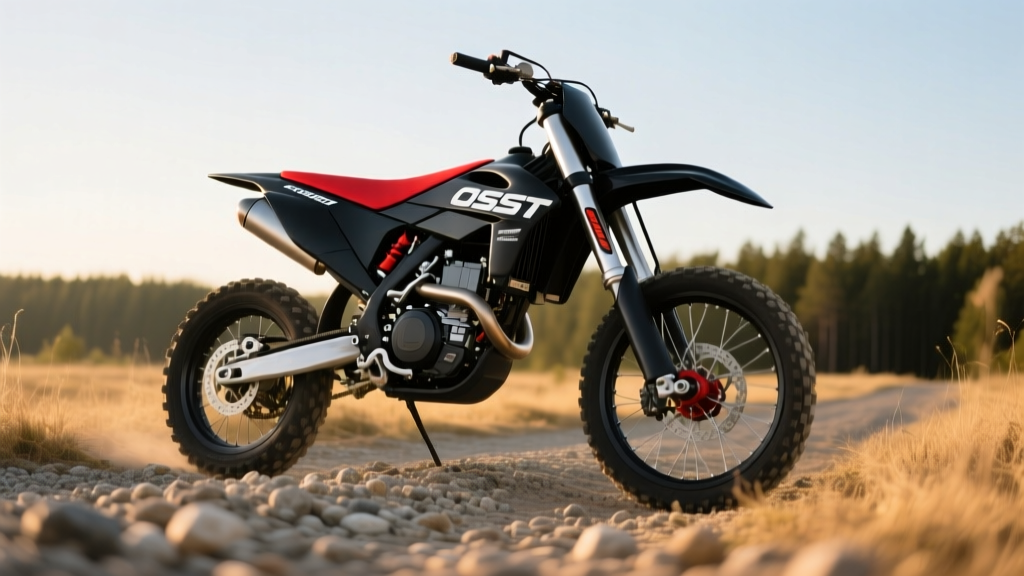
Oset Bikes, originally founded in the UK and now part of the Montesa Honda group, specializes in electric trials motorcycles designed primarily for young riders. The brand's core purpose is developing riding skills in a controlled, low-noise, zero-local-emission package. Here's how the current lineup breaks down by specification:
| Model | Target Age | Battery (kWh) | Motor Power | Top Speed | Approx. MSRP |
|---|---|---|---|---|---|
| Oset 12.5 | 3–5 years | ~1.2 kWh | ~1.5 kW peak | ~15 mph | $3,500–$4,000 |
| Oset 16.0 | 5–9 years | ~1.5 kWh | ~2.0 kW peak | ~20 mph | $4,200–$4,800 |
| Oset 20.0 | 8–12 years | ~2.0 kWh | ~3.0 kW peak | ~25 mph | $5,000–$5,800 |
| Oset 24.0 | 12–16 years | ~2.5–3.0 kWh | ~4.5 kW peak | ~35 mph | $6,000–$7,000+ |
kW vs kWh reminder: Just as with four-wheeled EVs, kilowatts (kW) measure power—how fast the motor can deliver energy—while kilowatt-hours (kWh) measure energy capacity—how much total energy the battery stores. A 3.0 kW motor on the Oset 20.0 delivers strong acceleration for trials work, while the 2.0 kWh battery determines how long that power can be sustained.
Oset Electric Dirt Bike vs Gas Mini-Moto: Real Cost Comparison
The most common cross-shop for an Oset electric dirt bike is a gas-powered youth motorcycle like the Honda CRF50F, KTM 50 SX, or Cobra CX50. Here's where the economics diverge significantly over a typical ownership period.
| Cost Category | Oset 20.0 (Electric) | Gas 50cc Youth Bike |
|---|---|---|
| Purchase Price | ~$5,400 | ~$3,800 |
| Fuel/Energy (100 hrs/year × 5 yrs) | ~$75 (electricity at $0.15/kWh) | ~$750 (gas at ~$4/gal, premix oil) |
| Maintenance (oil, filters, top-end rebuilds) | ~$200 (chain, brake pads, tires) | ~$1,200 (oil changes, air filters, piston rings, clutch) |
| Battery Replacement (if needed year 4–5) | ~$800–$1,200 | N/A |
| Resale Value (estimated) | ~$2,000–$2,500 | ~$1,500–$2,000 |
| Net 5-Year Cost | ~$4,675–$5,475 | ~$4,250–$4,750 |
The numbers reveal a nuanced picture: the Oset costs more upfront and may require a battery replacement in years 4–5, but dramatically lower maintenance and fuel costs narrow the gap considerably. The break-even point typically arrives around year 3–4 for families who ride frequently (100+ hours/year). For casual riders logging 30–50 hours annually, the gas bike may remain cheaper on a pure-dollar basis.
However, the financial comparison misses the factors that drive most Oset purchases: noise restrictions (many residential areas and indoor facilities prohibit gas bikes), ease of use (no kick-starting, no choke, no hot engine burns), and instant torque delivery that teaches throttle control more effectively than a gas engine's powerband.
Real-World Range and Ride Time: What the Specs Don't Tell You
Oset doesn't publish range in miles the way an electric car manufacturer does—because off-road riding isn't measured that way. Instead, the relevant metric is continuous ride time, and this varies enormously based on riding style, terrain, rider weight, and ambient temperature.
• Trials practice (low-speed, technical sections): 2.5–3.5 hours
• General trail riding (moderate throttle): 1.5–2.5 hours
• Aggressive riding (full throttle, hill climbs): 45 minutes–1.5 hours
• Cold weather (below 40°F / 4°C): Reduce all figures by 20–30%
This mirrors what we see with four-wheeled EVs: the EPA-equivalent "sticker" number assumes moderate use, and real-world conditions—especially aggressive riding and cold temperatures—significantly reduce effective capacity. Lithium-ion batteries experience increased internal resistance in cold weather, reducing both available capacity and peak power output. If you're riding in northern climates during shoulder seasons, plan for shorter sessions or invest in a spare battery pack where the model supports swapping.
The Oset's battery management system (BMS) includes a low-voltage cutoff that prevents deep discharge damage, but it also means the bike won't simply "limp home" at very low state of charge (SoC). When the BMS cuts power, you're done riding—plan accordingly and recharge when the indicator shows roughly 20% remaining.
Charging the Oset: What First-Time Buyers Need to Know
Charging an Oset electric dirt bike is straightforward but slow compared to what EV owners experience with DC fast charging. Every Oset charges on a standard 120V household outlet using an included charger—there is no Level 2 or DC fast-charge option. This is typical for electric motorcycles in this class.
| Model | Charger Power (kW) | 0–100% Time | Outlet Required |
|---|---|---|---|
| Oset 12.5 | ~0.3 kW | ~3–4 hours | Standard 120V |
| Oset 16.0 | ~0.35 kW | ~3.5–4.5 hours | Standard 120V |
| Oset 20.0 | ~0.4 kW | ~4–5 hours | Standard 120V |
| Oset 24.0 | ~0.5–0.6 kW | ~4.5–5.5 hours | Standard 120V |
Home charging access is not a barrier here—unlike electric cars where Level 2 (240V) installation can cost $500–$2,000, the Oset simply plugs into any standard outlet. The practical implication: charge after every riding session, and the bike will be ready the next day. For all-day riding events or competitions, you'll need to bring the charger and find an outlet during breaks, or plan around the battery's capacity.
Energy cost per charge is minimal. At the national average electricity rate of roughly $0.15/kWh (per U.S. EIA data), fully charging an Oset 20.0's 2.0 kWh battery costs approximately $0.30. Even with daily riding, annual electricity costs stay well under $50.
Common Misconceptions About the Oset Electric Dirt Bike
| Myth | Fact |
|---|---|
| "Electric dirt bikes have no power" | The Oset 24.0 delivers ~4.5 kW peak (equivalent to ~6 hp) with instant torque from 0 RPM—comparable to or exceeding a 50–65cc gas bike's usable power delivery for trials work. |
| "The battery will need replacing every 2 years" | Lithium-ion packs in Oset bikes are rated for 500–1,000+ charge cycles. With typical youth use (50–100 sessions/year), expect 5–8 years before significant capacity loss (below 80% state of health). |
| "Electric bikes qualify for the $7,500 federal EV tax credit" | The IRS §30D Clean Vehicle Credit applies to four-wheeled vehicles with a gross vehicle weight rating (GVWR) under 14,000 lbs. Electric motorcycles have a separate, now-expired credit. Oset bikes do not qualify for the current federal EV tax credit. |
| "You can ride all day on one charge" | Realistic continuous ride time is 1–3.5 hours depending on model and intensity. Plan for charging breaks or a spare battery at all-day events. |
| "It's completely maintenance-free" | While there's no engine maintenance, Oset bikes still require chain lubrication and adjustment, brake pad replacement, tire changes, suspension service, and bolt-checking—just like any off-road motorcycle. |
Battery Longevity and Replacement Costs
The single biggest long-term ownership question for any electric vehicle is battery degradation and replacement cost. For the Oset electric dirt bike, the news is relatively positive because the batteries are small and the use case is less punishing than daily automotive commuting.
Oset uses lithium-ion battery packs (typically NMC chemistry for energy density in a compact package). Unlike the LFP (lithium iron phosphate) batteries found in some electric cars like the Tesla Model 3 Standard Range, NMC offers higher energy density but slightly faster degradation under extreme conditions. However, because Oset batteries are small (1.2–3.0 kWh) and riders rarely subject them to the sustained high-C-rate discharge that would accelerate wear, real-world degradation is manageable.
Expected battery lifecycle:
- Years 1–3: Minimal noticeable degradation (95–100% state of health)
- Years 4–6: Gradual capacity loss to ~80–90% SoH; ride time decreases by 10–20%
- Years 7+: Below 80% SoH; replacement recommended for competitive use
Replacement cost: Oset battery packs typically cost $800–$1,500 depending on the model. This is a significant expense, but spread over 5–8 years of service, it adds roughly $100–$250/year to ownership cost—still less than the cumulative fuel and engine maintenance costs of a gas bike over the same period.
Care tips to maximize battery life:
- Store the bike at 40–60% state of charge during off-seasons (not fully charged or fully depleted)
- Avoid charging immediately after an aggressive riding session when the battery is hot—let it cool for 15–30 minutes
- Never store the bike with a depleted battery for extended periods; the BMS draws a small parasitic load that can push cells below safe voltage
- Charge in moderate temperatures (50–80°F) when possible
Decision Framework: Is the Oset Electric Dirt Bike Right for Your Rider?
- Your rider is aged 3–16 and learning trials techniques or building fundamental skills
- You ride in noise-restricted areas (residential neighborhoods, indoor facilities, clubs with sound limits)
- You want minimal maintenance and the simplicity of plug-in charging
- You value instant, linear torque delivery for teaching throttle control
- You have access to a standard 120V outlet for overnight charging
- Riding sessions are typically under 3 hours with time to recharge between sessions
- Your rider needs 4+ hours of continuous riding at events without charging access
- You're riding remote trails with no electrical infrastructure
- Your budget is strictly under $3,500 for purchase
- Your rider is progressing to motocross racing where gas 65cc–85cc classes dominate
- You need higher top speeds (40+ mph) for open desert or trail riding
- The rider is 16+ and needs full-size geometry and power
- You need 5+ kW sustained power for adult-weight trail riding
- You want road-legal capability (some models can be plated)
Where the Oset Fits in the Broader EV Landscape
While the Oset electric dirt bike isn't a car, its ownership experience mirrors many of the same principles that apply to electric vehicles broadly: understanding kW vs kWh, managing state of charge, accounting for cold-weather capacity loss, and evaluating total cost of ownership beyond the sticker price.
For families already owning an electric car, adding an Oset to the garage is seamless—the same household circuit that charges your EV overnight (at Level 1) can charge the Oset simultaneously without any electrical upgrades. The combined electricity cost is negligible: charging both a Tesla Model Y (75 kWh battery) and an Oset 20.0 (2.0 kWh battery) from empty costs roughly $11.55 at the national average rate—less than a single gallon of premium gasoline.
For families considering their first electric purchase of any kind, the Oset serves as an excellent low-stakes introduction to electric powertrain ownership. The charging habits, battery care practices, and range-planning mindset you develop with an Oset translate directly to electric car ownership later.
Frequently Asked Questions
Can I charge an Oset electric dirt bike from my EV's home charger?
Not directly. Oset bikes use a proprietary charger that plugs into a standard 120V wall outlet—they don't connect to J1772, NACS, or any automotive EV charging connector. However, you can use the same 120V circuit your EV's Level 1 charger uses, provided you don't exceed the circuit's amperage rating (typically 15A or 20A). The Oset charger draws roughly 3–5 amps, well within a standard circuit's capacity.
Does the Oset electric dirt bike qualify for any federal tax credits?
No. The current IRS §30D Clean Vehicle Credit applies only to four-wheeled plug-in vehicles meeting specific battery sourcing, MSRP, and buyer income requirements. Electric motorcycles previously qualified under a separate credit (IRC §30D(e) for two- and three-wheeled vehicles), but that provision has expired as of this writing. Check with a tax professional for any state-level incentives that may apply.
How does cold weather affect the Oset's battery performance?
Expect 20–30% reduced ride time in temperatures below 40°F (4°C). Lithium-ion batteries experience increased internal resistance in cold conditions, reducing both available capacity and peak power output. For winter riding, store the bike indoors and charge at room temperature. If riding in sustained sub-freezing conditions, the battery will warm somewhat during use, partially recovering performance after the first 10–15 minutes.
What's the warranty coverage on an Oset electric dirt bike?
Oset typically provides a 1-year limited warranty on the complete motorcycle and a 1-year warranty on the battery pack. This is shorter than the 8-year/100,000-mile battery warranties mandated for electric cars under EPA guidelines, reflecting the different use case and expected lifespan of a youth motorcycle. Extended warranty options may be available through dealers.
Is the Oset suitable for motocross racing?
Not for traditional motocross. Oset bikes are designed for observed trials—a discipline focused on balance, precision, and technical obstacle navigation at low speeds. They lack the suspension travel, top speed, and sustained power output needed for motocross track racing. For youth motocross, gas-powered 50cc–65cc machines (or emerging electric motocross bikes like the KTM SX-E 5) remain the standard.
Note: Specifications, pricing, and availability referenced in this article are based on the most current data available from Oset Bikes and authorized dealers as of publication. Always confirm exact figures with your local dealer before purchasing. Tax credit information reflects current IRS rules and is subject to legislative change.