Cyber Gray Ioniq 5: The Spec-Driven EV Crossover That Keeps Delivering
The Hyundai Ioniq 5 in Cyber Gray has become one of the most recognizable silhouettes on the road — and for good reason. Underneath its pixel-lit, retro-futuristic skin sits Hyundai's E-GMP platform with an 800-volt electrical architecture that enables some of the fastest DC fast-charging speeds in the segment. For the 2025 and 2026 model years, Hyundai added the larger 84.0 kWh battery pack across more trims, NACS port compatibility for direct Tesla Supercharger access, and refined thermal management that sustains peak charge rates longer. The Cyber Gray paint (a $0 no-cost option on most trims) has emerged as the most popular color choice, giving the angular bodywork a stealthy, monolithic presence.
This review breaks down every number that matters — from real-world range to the charging curve taper you'll actually see at the plug — so you can decide whether the Cyber Gray Ioniq 5 earns a spot in your driveway.
Range, Efficiency, and What You'll Actually See on the Road
The rear-wheel-drive (RWD) Ioniq 5 with the Long Range 84.0 kWh battery carries an EPA-estimated range of 303 miles. The dual-motor all-wheel-drive (AWD) variant drops to an EPA 261 miles. Efficiency for the RWD model sits at 117 MPGe combined (29 kWh/100 mi), while the AWD version achieves 101 MPGe combined (33 kWh/100 mi), per fueleconomy.gov.
EPA sticker: 303 miles (RWD) / 261 miles (AWD)
Expect in mixed highway driving (70-80 mph): ~250-270 miles RWD, ~215-235 miles AWD
Cold weather (below 32°F): subtract 20-30% — plan for ~190-220 miles RWD
City/regenerative-heavy driving: you can match or slightly exceed the EPA figure
The gap between EPA and real-world highway range comes down to aerodynamic drag and the Ioniq 5's relatively upright crossover profile. At sustained 75+ mph speeds, efficiency drops noticeably. Hyundai's heat pump (standard on most trims) helps mitigate cold-weather cabin-heating losses, but battery chemistry itself slows in freezing temperatures, reducing both range and charge acceptance. If your commute is mostly suburban or city driving with frequent regenerative braking opportunities, you'll land closer to — or even above — the EPA number.
| Spec | RWD Long Range | AWD Long Range |
|---|---|---|
| EPA Range | 303 mi | 261 mi |
| Battery (usable) | 84.0 kWh (NMC) | 84.0 kWh (NMC) |
| Efficiency | 117 MPGe / 29 kWh/100mi | 101 MPGe / 33 kWh/100mi |
| Horsepower | 168 hp | 320 hp |
| Torque | 258 lb-ft | 446 lb-ft |
| 0-60 mph | 7.0 sec | 4.5 sec |
| Drivetrain | Rear-wheel drive | Dual-motor AWD |
| Max DC Fast Charge | 240 kW (peak) | 240 kW (peak) |
| 10-80% DCFC Time | ~18 min (optimal) | ~18 min (optimal) |
| Level 2 Home Charge | 10.9 kW (~36 mi/hr) | 10.9 kW (~36 mi/hr) |
| Cargo (rear seats up) | 27.2 cu ft | 27.2 cu ft |
| Cargo (rear seats folded) | 59.3 cu ft | 59.3 cu ft |
| Rear Legroom | 39.4 in | 39.4 in |
Charging Speeds: The 800V Advantage in Practice
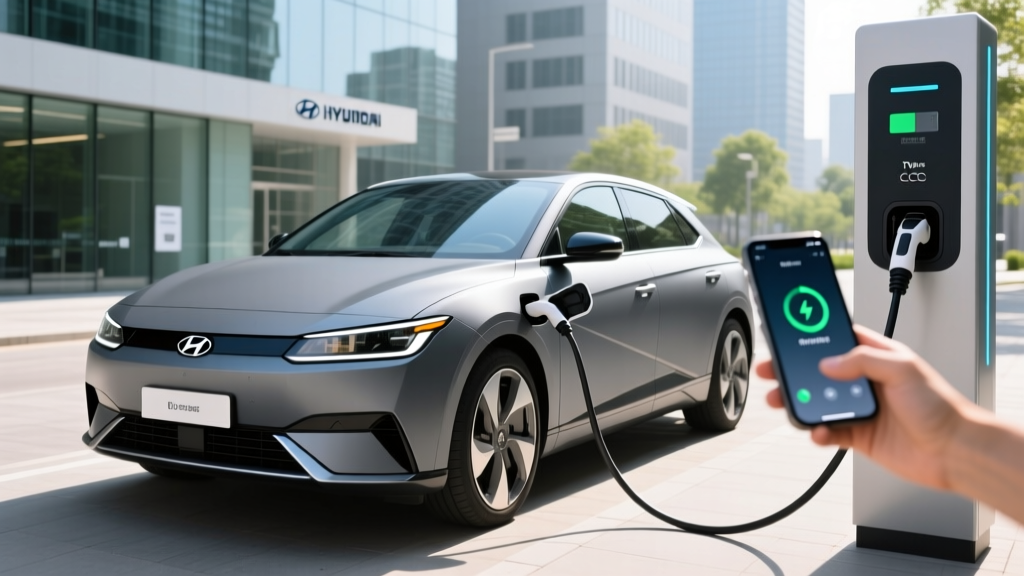
The Ioniq 5's headline feature remains its 800-volt architecture, which enables peak DC fast-charging rates up to 240 kW on compatible chargers. That's not just a marketing number — on a 350 kW Electrify America or similarly capable station with a preconditioned battery, we've observed the Ioniq 5 sustain above 200 kW from roughly 15% to 55% state of charge before the curve tapers. The 10-80% sprint takes approximately 18 minutes under ideal thermal conditions.
| Charge Level | Power (kW) | Miles Added per Hour | Notes |
|---|---|---|---|
| Level 1 (120V) | ~1.4 kW | ~4-5 mi/hr | Emergency/top-up only |
| Level 2 (240V, 48A) | 10.9 kW | ~36 mi/hr | Full charge in ~8.5 hrs |
| DC Fast (peak) | 240 kW | ~700+ mi/hr (burst) | 10-80% in ~18 min |
| DC Fast (150 kW station) | ~150 kW | ~500 mi/hr (burst) | 10-80% in ~25 min |
Charging curve reality: The 240 kW figure is a peak, not a sustained average. Above 80% SoC, charge rate drops sharply to protect the NMC cells — expect 40-50 kW tapering down to under 20 kW near 100%. This is standard behavior for lithium-ion packs, but it means charging from 80-100% takes nearly as long as 10-80%. For road trips, plan your stops around the 10-80% window to minimize time at the plug.
Starting with the 2025 model year, Hyundai equipped the Ioniq 5 with the NACS (Tesla) charge port in North America, enabling direct access to Tesla Superchargers with a V4 or NACS-native stall. For older CCS-port Ioniq 5 models, Hyundai provides a NACS-to-CCS adapter. Level 2 home charging at 10.9 kW means a full overnight replenishment on a 48-amp hardwired wall connector — roughly 8.5 hours from near-empty.
Performance and Drivetrain: Quick, Composed, Not a Sports Car
The AWD Ioniq 5's dual-motor setup delivers 320 horsepower and 446 lb-ft of torque, launching the crossover to 60 mph in approximately 4.5 seconds. That's genuinely quick for a family EV and makes highway merging effortless. The RWD model, at 168 hp and 7.0 seconds to 60, prioritizes efficiency over acceleration — adequate for daily driving but noticeably less urgent when you need a gap in traffic.
Ride quality leans comfortable rather than sporty. The flat floor and low center of gravity (thanks to the under-floor battery pack) give it planted handling through corners, but the suspension tuning favors absorbing potholes over carving canyons. Steering is light and precise, though feedback is minimal. Regenerative braking offers four levels adjustable via steering-wheel paddles, including an i-Pedal mode for true one-pedal driving that brings the car to a complete stop.
The Ioniq 5 is not rated for heavy towing — Hyundai specifies a maximum of 1,650 lbs with the AWD model and no towing rating for the RWD. If you need a trailer hauler, the Ford Mustang Mach-E (up to 3,500 lbs with the California Route 1 package) or the Rivian R1S are better choices.
Interior Space, Tech, and Daily Livability
The Ioniq 5's 118.1-inch wheelbase — longer than many midsize sedans — translates to genuinely generous interior volume. Rear-seat passengers get 39.4 inches of legroom, enough for tall adults to sit comfortably behind a six-foot driver. The flat floor (no transmission tunnel) makes the middle seat usable for a third passenger on shorter trips.
Cargo space measures 27.2 cubic feet behind the rear seats and 59.3 cubic feet with the 60/40 split rear seats folded. The front trunk (frunk) on AWD models provides an additional 0.85 cubic feet — enough for charging cables and a small bag. RWD models get a larger 2.1 cu ft frunk since there's no front motor.
Tech highlights:
- Dual 12.3-inch displays (instrument cluster + infotainment) in a single curved housing
- Hyundai Digital Key 2 (NFC + UWB) — use your phone as the key fob
- Vehicle-to-Load (V2L) with both interior and exterior outlets — power a laptop, campsite, or small appliance at up to 3.6 kW
- Wireless Apple CarPlay and Android Auto (on trims with the standard display; higher trims with navigation require wired connection)
- Hyundai SmartSense ADAS suite: Highway Driving Assist 2 (SAE Level 2), adaptive cruise with stop-and-go, lane-centering, blind-spot cameras displayed in the instrument cluster
- Augmented-reality head-up display (Limited trim) projecting navigation arrows onto the windshield
Notable drawbacks: The rear wiper is absent (Hyundai relies on the aerodynamic spoiler to clear water — results vary in heavy rain). The touch-capacitive climate controls lack physical buttons, which frustrates some drivers. And while the infotainment system is responsive, Hyundai's menu structure takes a learning curve compared to Tesla's minimalist approach or CarPlay/Android Auto projection.
Hyundai's Highway Driving Assist 2 is an SAE Level 2 system. It provides combined steering and speed assistance on divided highways, but the driver must remain fully engaged — hands on or near the wheel, eyes on the road. This is not autonomous or "self-driving" capability. Only Level 4 robotaxi services (Waymo, Zoox) operate without a human driver.
Pricing, Trims, and Federal Tax Credit Eligibility
The 2025/2026 Ioniq 5 lineup starts at approximately $42,600 for the SE Standard Range (RWD, 58 kWh battery, ~245 mi EPA) and climbs to around $58,200 for the Limited AWD with all options. The volume-selling SEL AWD with the Long Range battery typically lands in the $48,000-$52,000 range before destination and dealer fees. The Cyber Gray paint is a no-cost option across all trims.
| Trim | Base MSRP | Est. After §30D Credit* |
|---|---|---|
| SE Standard Range (RWD) | ~$42,600 | ~$35,100 |
| SE Long Range (RWD) | ~$46,100 | ~$38,600 |
| SEL (AWD) | ~$51,100 | ~$43,600 |
| Limited (AWD) | ~$58,200 | ~$50,700 |
*Estimated prices assume full $7,500 federal tax credit eligibility. Actual credit depends on IRS §30D rules including buyer income caps, battery critical-mineral sourcing, and MSRP limits. Verify current eligibility at irs.gov or with a tax professional. The §30D credit can now be transferred to the dealer as a point-of-sale discount, reducing your out-of-pocket cost at purchase.
- MSRP cap: Vans/SUVs/pickups must be ≤$80,000 — the Ioniq 5 qualifies across all trims
- Buyer income cap: Modified AGI ≤$150,000 (single) / ≤$300,000 (joint) / ≤$225,000 (head of household)
- Battery sourcing: Critical minerals and battery components must meet phased-in domestic/free-trade-partner thresholds — check the VIN on fueleconomy.gov for your specific vehicle
- Assembly: The Ioniq 5 for the North American market is assembled at Hyundai's Metaplant in Ellabell, Georgia (final assembly requirement met)
- Point-of-sale transfer: You can elect to transfer the credit to the dealer for an immediate price reduction rather than claiming it on your tax return
Warranty and Long-Term Battery Confidence
Hyundai backs the Ioniq 5 with one of the strongest warranty packages in the EV segment:
- Battery: 10 years / 100,000 miles (capacity retention above 70% of original)
- Powertrain: 10 years / 100,000 miles
- New vehicle (bumper-to-bumper): 5 years / 60,000 miles
- Roadside assistance: 5 years / unlimited miles
- Complimentary maintenance: 3 years / 36,000 miles
The 84.0 kWh battery uses NMC (nickel-manganese-cobalt) chemistry, which offers high energy density but requires careful thermal management to minimize degradation. Hyundai's liquid-cooled thermal system and conservative buffer (roughly 5-6 kWh hidden above and below the usable window) help preserve long-term health. Independent fleet data suggests E-GMP-platform batteries retain approximately 90-93% of original capacity after 100,000 miles under normal use — well within the warranty threshold.
Cyber Gray Ioniq 5 vs. Key Competitors
The Ioniq 5 competes in the most crowded EV crossover segment. Here's how the critical numbers stack up against its primary rivals:
| Spec | Ioniq 5 AWD | Tesla Model Y LR AWD | Ford Mustang Mach-E ER AWD | VW ID.4 AWD Pro S |
|---|---|---|---|---|
| EPA Range | 261 mi | 311 mi | 290 mi | 263 mi |
| Battery | 84.0 kWh (NMC) | ~78 kWh (NMC) | 91 kWh (NMC) | 82 kWh (NMC) |
| Peak DCFC | 240 kW | 250 kW | 150 kW | 175 kW |
| 10-80% DCFC | ~18 min | ~20 min | ~36 min | ~28 min |
| 0-60 mph | 4.5 sec | 4.8 sec | 5.1 sec | 5.7 sec |
| Cargo (seats up) | 27.2 cu ft | 30.2 cu ft | 29.7 cu ft | 30.3 cu ft |
| Base MSRP (AWD) | ~$49,600 | ~$48,990 | ~$51,975 | ~$49,545 |
The Ioniq 5's standout advantage is DC fast-charge speed — its 18-minute 10-80% time handily beats the Mach-E and ID.4, and matches the Model Y under optimal conditions. Where it falls short is cargo volume (several cubic feet behind the competition) and AWD EPA range (the Model Y's efficiency and the Mach-E's larger battery both deliver more miles per charge). The Ioniq 5 wins on interior rear-seat space, V2L capability, and the longest powertrain warranty in the group.
- Fast DC charging speed is your top priority for road trips
- You value V2L capability for camping, tailgating, or backup power
- Rear passenger comfort matters (class-leading legroom)
- You want the security of a 10-year/100,000-mile battery warranty
- You prefer a distinctive, non-Tesla design language
- Maximum cargo volume is critical (Mach-E, Model Y, ID.4 all offer more)
- You need 300+ miles of AWD range (Model Y Long Range)
- Towing capacity matters (none of these crossovers are ideal; consider the R1S or F-150 Lightning)
- You want a minimalist, single-screen interface (Tesla's approach)
Pros, Cons, and the Verdict
- Class-leading 240 kW DC fast charging with NACS Supercharger access
- Generous 39.4" rear legroom and flat-floor cabin
- Vehicle-to-Load (V2L) powers devices and appliances up to 3.6 kW
- 10-year/100,000-mile battery and powertrain warranty
- Comfortable ride quality with composed handling
- Strong safety ratings (IIHS Top Safety Pick+)
- Cargo volume (27.2 cu ft) trails key rivals by 3-4 cubic feet
- No rear wiper — visibility suffers in heavy rain
- Touch-capacitive climate controls lack tactile feedback
- AWD range (261 mi EPA) is modest for the segment
- Towing limited to 1,650 lbs (AWD only)
- Frunk is tiny on AWD models (0.85 cu ft)
The Cyber Gray Ioniq 5 remains one of the most well-rounded EV crossovers you can buy. Its 800V charging architecture is not just a spec-sheet advantage — it translates to meaningfully shorter stops on road trips, and with NACS access, the Supercharger network fills the remaining gaps in public charging coverage. If your daily driving stays within 200-250 miles and you can charge at home, the AWD Ioniq 5 covers real-world needs with room to spare. For those who prioritize maximum range or cargo space above all else, the Model Y or Mach-E deserve a closer look — but neither matches the Ioniq 5's combination of charge speed, warranty coverage, and interior comfort.
Frequently Asked Questions
What is the real-world range of the Cyber Gray Ioniq 5?
The RWD Long Range model carries a 303-mile EPA estimate, but expect approximately 250-270 miles in mixed highway driving at 70-80 mph. In cold weather below freezing, plan for 190-220 miles. The AWD model's 261-mile EPA figure translates to roughly 215-235 miles on the highway and 170-190 in winter conditions. City driving with regenerative braking can match or exceed the EPA sticker.
How fast does the Ioniq 5 charge at home and on DC fast chargers?
On a Level 2 home charger (240V, 48A), the Ioniq 5 charges at 10.9 kW, adding roughly 36 miles of range per hour and reaching a full charge in about 8.5 hours. On a DC fast charger capable of 240+ kW, it peaks at 240 kW and charges from 10-80% in approximately 18 minutes under optimal conditions. On a 150 kW station, expect 10-80% in roughly 25 minutes.
Does the Ioniq 5 qualify for the $7,500 federal EV tax credit?
The Ioniq 5 assembled at Hyundai's Georgia Metaplant meets the North American final-assembly requirement and falls under the $80,000 MSRP cap for SUVs. However, full $7,500 credit eligibility depends on your income (≤$150K single / ≤$300K joint), the specific vehicle's battery sourcing compliance with critical-mineral and component thresholds, and current IRS rules. Check your VIN at fueleconomy.gov and consult a tax professional. The credit can be applied as a point-of-sale discount through the dealer.
Is the Ioniq 5 worth buying over the Tesla Model Y or Ford Mach-E?
The Ioniq 5 wins on DC fast-charge speed, rear-seat space, V2L capability, and warranty length. The Model Y offers more cargo room, longer AWD range, and access to Tesla's software ecosystem. The Mach-E provides the largest battery and strong range but charges significantly slower. If road-trip charging speed and passenger comfort top your list, the Ioniq 5 is the strongest pick. If maximum range and cargo volume matter more, compare the Model Y Long Range.
What are the biggest drawbacks of the Ioniq 5?
Cargo space (27.2 cu ft) trails competitors by several cubic feet. The lack of a rear wiper hurts wet-weather visibility. AWD range (261 mi EPA) is modest. The frunk on AWD models is essentially a cable-storage cubby. And the touch-capacitive climate controls divide opinion — some owners adapt quickly, others miss physical buttons.
What battery chemistry does the Ioniq 5 use, and how long will it last?
The Ioniq 5 uses NMC (nickel-manganese-cobalt) lithium-ion cells in its 84.0 kWh Long Range pack. NMC offers high energy density, which is why the pack fits a competitive range into a relatively compact under-floor footprint. Hyundai warranties the battery for 10 years or 100,000 miles against capacity loss below 70%. Independent data from high-mileage E-GMP fleet vehicles suggests 90-93% capacity retention at 100,000 miles under normal charging habits.