The Short Answer: NJ's Electric Vehicle Fee
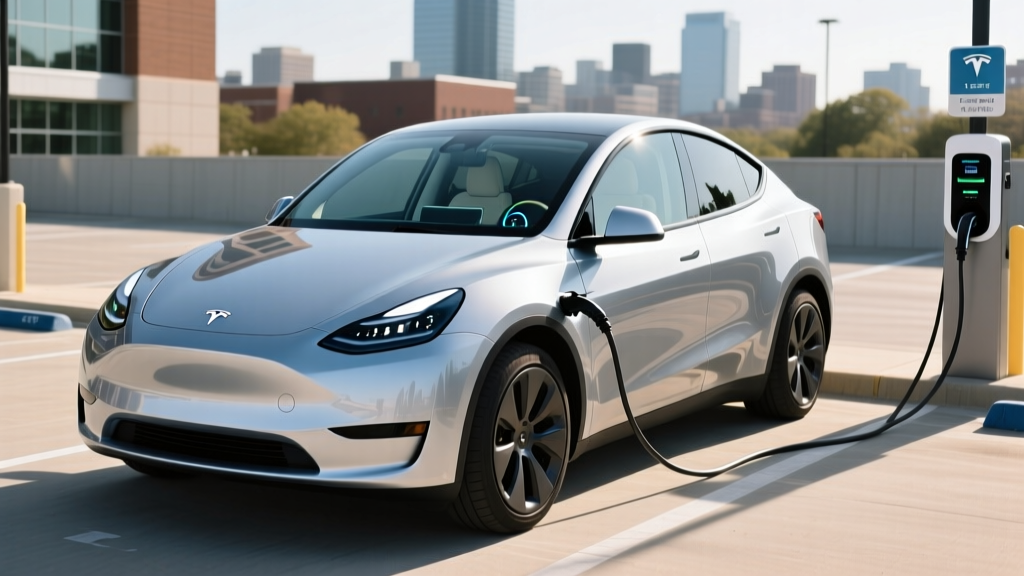
Starting in 2025, New Jersey charges battery electric vehicle (BEV) owners a $250 annual registration surcharge in addition to standard registration fees. This NJ electric vehicle fee was enacted under P.L.2024, c.40 to replace lost gas-tax revenue as more drivers go electric. Plug-in hybrids (PHEVs) and conventional hybrids are not subject to the surcharge — only zero-emission BEVs. Even with the fee, most NJ EV drivers still save significantly on fuel and maintenance compared to gas-car owners, as we'll show with real numbers below.
Why New Jersey Imposed the EV Registration Fee
Every state funds road maintenance partly through gasoline excise taxes. New Jersey's gas tax sits at 42.4 cents per gallon (one of the highest in the country). When a driver switches from gas to electric, the state loses roughly $350–$500 per year in fuel-tax revenue from that vehicle. The $250 annual BEV surcharge partially recovers that shortfall without penalizing hybrids or plug-in hybrids that still burn gasoline.
As of early 2026, over 30 U.S. states impose some form of EV registration fee, ranging from $50 (Colorado) to $400 (Alabama). New Jersey's $250 lands in the upper-middle tier. The fee applies at initial registration and at every annual renewal — it's not a one-time cost.
Full Cost Breakdown: EV vs Gas Car in New Jersey
The $250 NJ electric vehicle fee sounds steep until you compare total ownership costs. Let's run a realistic five-year comparison using a popular EV and its gas counterpart, both driven 12,000 miles per year in New Jersey.
| Cost Category | Tesla Model 3 RWD (BEV) | Toyota Camry LE (Gas) |
|---|---|---|
| Base MSRP | $38,990 | $28,400 |
| Federal §30D Tax Credit | −$7,500 (if eligible) | $0 |
| Effective Purchase Price | $31,490 | $28,400 |
| NJ Sales Tax (6.625%) | $0 (EVs exempt in NJ) | $1,882 |
| Annual Registration | $71 + $250 EV fee = $321/yr | $71/yr |
| 5-Year Registration Total | $1,605 | $355 |
| Fuel / Electricity (5 yrs) | $3,300 (home L2, $0.17/kWh) | $10,200 ($3.40/gal, 32 MPG) |
| Maintenance (5 yrs) | $1,200 | $3,800 |
| Insurance (5 yrs est.) | $9,500 | $7,200 |
| 5-Year Total Cost of Ownership | $47,095 | $51,837 |
Sources: fueleconomy.gov for MPGe and efficiency data; NJ Motor Vehicle Commission for registration fee schedules; IRS §30D clean vehicle credit for eligibility rules.
Even with the $250 annual NJ electric vehicle fee, the Tesla Model 3 costs roughly $4,700 less over five years than the Camry — driven primarily by massive fuel savings ($6,900 gap) and lower maintenance. The registration surcharge eats back only $1,250 of those savings over five years.
How the NJ EV Fee Compares to Gas Tax You'd Pay
A useful mental model: think of the EV fee as a flat-rate substitute for the gas tax. Here's how it stacks up for different mileage profiles:
| Annual Miles | Gas Tax Paid (32 MPG Gas Car) | EV Fee | Gas Tax Exceeds EV Fee By |
|---|---|---|---|
| 8,000 | $106 | $250 | −$144 (EV fee costs more) |
| 12,000 | $159 | $250 | −$91 (EV fee costs more) |
| 15,000 | $199 | $250 | −$51 |
| 20,000 | $265 | $250 | +$15 (gas tax costs more) |
| 30,000 | $397 | $250 | +$147 (gas tax costs more) |
If you drive under roughly 19,000 miles per year, you actually pay less in gas tax with a 32 MPG gas car than the $250 EV fee. High-mileage drivers (commuters, rideshare, sales reps) come out ahead with the flat EV fee. Either way, the difference is small relative to the fuel-cost savings electric driving delivers.
Which Vehicles Are Subject to the Fee (and Which Aren't)
New Jersey's surcharge applies narrowly. Here's the breakdown:
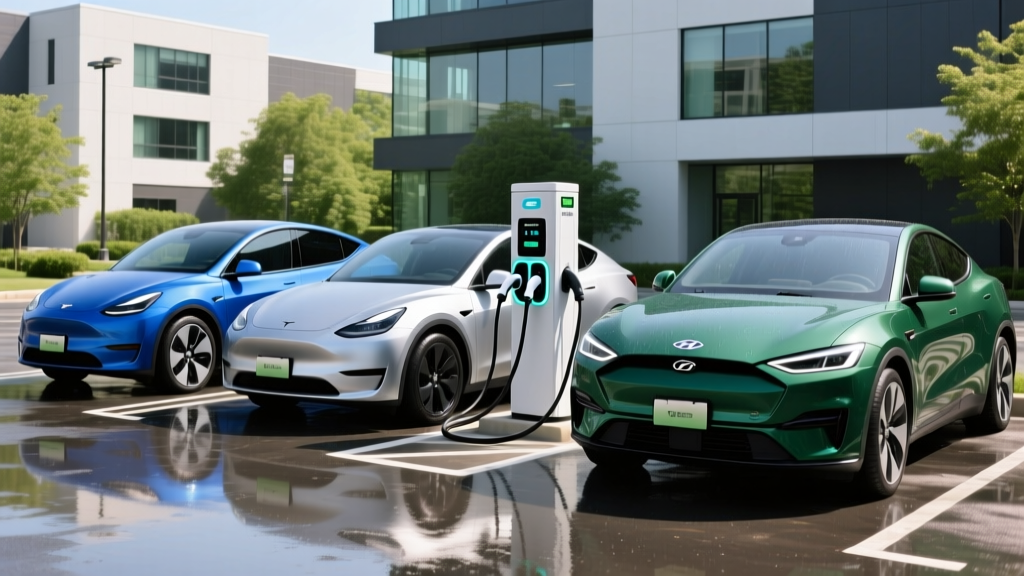
- BEVs (Battery Electric Vehicles): $250 annual surcharge. This includes Tesla Model 3/Y, Hyundai Ioniq 5/6, Ford Mustang Mach-E, Chevrolet Equinox EV, Nissan Ariya, Rivian R1S/R1T, and all other pure-electric vehicles.
- PHEVs (Plug-in Hybrids): No surcharge. The Toyota RAV4 Prime, Jeep Wrangler 4xe, Chrysler Pacifica Hybrid, and Hyundai Tucson PHEV pay standard registration only.
- HEVs (Conventional Hybrids): No surcharge. Toyota Prius, Honda Accord Hybrid, and similar pay standard fees.
- Fuel-Cell Vehicles (FCEVs): Currently exempt under the statute, though the Toyota Mirai has essentially zero NJ presence.
Common Misconceptions About the NJ EV Fee
| Myth | Fact |
|---|---|
| "All electrified vehicles pay the $250 fee." | Only pure BEVs. PHEVs and HEVs are exempt because they still burn gasoline and pay gas tax at the pump. |
| "It's a one-time fee at purchase." | It recurs every year at registration renewal — budget $250 annually. |
| "The fee replaces the federal tax credit." | Completely unrelated. The federal §30D credit (up to $7,500) still applies to eligible vehicles and buyers. NJ has no state EV rebate as of 2026. |
| "EVs are exempt from NJ sales tax, so the fee makes up for it." | NJ's EV sales-tax exemption was repealed in 2025. BEVs now pay the full 6.625% sales tax, plus the $250 registration surcharge. |
| "The fee will increase every year." | The statute sets $250 flat. Any increase requires new legislation. Some advocacy groups are pushing for a per-mile fee model instead, but nothing has passed. |
Federal Tax Credit vs State Fee: The Net Math
Many NJ shoppers ask whether the federal credit overwhelms the state fee. Under current IRS §30D rules, the up-to-$7,500 clean vehicle credit requires:
- MSRP caps: ≤$55,000 for sedans; ≤$80,000 for SUVs, pickups, and vans
- Income caps: AGI ≤$150,000 single / ≤$300,000 married filing jointly
- Battery sourcing: Critical minerals and battery components must meet phased-in domestic/Fta-country thresholds that tighten each year
- Point-of-sale transfer: You can apply the credit as a dealer discount at purchase (effective since Jan 2024)
At the maximum $7,500 credit, it would take 30 years of $250 annual EV fees to equal that one-time savings. Even a partial $3,750 credit offsets 15 years of fees. The federal incentive dwarfs the state surcharge.
Real-World Ownership Factors for NJ EV Buyers
Numbers on paper matter, but your daily experience determines whether an EV works. Here's what NJ-specific realities look like in 2026:
Home Charging Access
Roughly 60% of NJ residents live in single-family homes where Level 2 (240V) home charger installation is straightforward. A typical 48-amp Level 2 install runs $800–$2,200 including equipment, electrician labor, and permits — assuming your panel has capacity. Older NJ homes with 100-amp panels may need a $2,000–$4,000 panel upgrade. Condo and apartment dwellers face harder access; rely on public DC fast charging or workplace charging, which costs more per mile than home charging.
Cold-Weather Range Loss
NJ winters average 25–40°F from December through February. Expect 15–25% range reduction in sustained cold, depending on whether the EV has a heat pump. A 2026 Hyundai Ioniq 5 (EPA 305 mi) realistically delivers 230–260 miles in January highway driving at 70 mph. Preconditioning the battery while plugged in recovers some of this loss and preserves fast-charge speed.
Public Charging Infrastructure
New Jersey has one of the densest public charging networks on the East Coast, with Electrify America, EVgo, and Tesla Supercharger stations along the Turnpike, Garden State Parkway, and I-80 corridor. However, urban charging deserts persist in parts of Newark, Camden, and Paterson. Check PlugShare or your vehicle's nav for coverage near your regular routes before buying.
Driving Patterns
The average NJ commute is roughly 32 miles round-trip. Even the shortest-range EVs on the market (around 220–250 EPA miles) handle this easily with home charging. If you regularly drive to the Shore, upstate NY, or Boston, you'll want an EV with 300+ EPA miles and 150+ kW DC fast-charging capability to keep road-trip stops under 25 minutes.
Decision Framework: Should You Buy an EV in NJ Despite the Fee?
If This Is You → Then Do This
| You have home Level 2 charging access and drive 8,000–20,000 miles/year | ✅ A BEV likely saves you $1,000–$2,000/year in fuel and maintenance even after the $250 fee. Strong buy signal. |
| You drive over 20,000 miles/year | ✅ High mileage maximizes fuel savings and makes the flat $250 fee a bargain vs gas tax. Ideal EV candidate. |
| You live in an apartment with no charging | ⚠️ Public DC charging costs $0.30–$0.50/kWh in NJ — about half the savings of home charging. Consider a PHEV (no EV fee, still gets electric-only miles at home if you can install an outlet). |
| You qualify for the full $7,500 federal credit | ✅ The credit offsets 30 years of EV fees. The fee is a rounding error in your purchase math. |
| Your budget is under $30,000 and you can't get the credit | ⚠️ Consider a used EV (eligible for up to $4,000 used-vehicle credit under §25E) or a PHEV like the Prius Prime (no EV fee, 44 mi electric range). |
| You tow frequently or drive heavy loads | ⚠️ Towing cuts EV range 30–50%. A PHEV or diesel may be more practical for truck-duty use in NJ. |
First-Time NJ EV Buyer Checklist
- Confirm charging access first. Before picking a model, verify you can install a Level 2 charger at home (get an electrician quote) or that reliable public charging exists near you.
- Check §30D eligibility. Use the IRS's qualified vehicle list — battery sourcing requirements change frequently and can disqualify a model mid-year.
- Budget the $250 fee annually. It's not optional and recurs every registration cycle. Factor it into your total cost of ownership spreadsheet.
- Get insurance quotes before buying. EV insurance premiums in NJ run 15–30% higher than comparable gas cars. Shop Geico, Progressive, NJM, and State Farm — rates vary wildly by model.
- Test-charge before you commit. Visit a DC fast charger near your home during your typical schedule. If you can't reliably charge, the EV ownership experience degrades fast.
- Know the sales tax situation. As of 2026, NJ charges full 6.625% sales tax on EVs. The old exemption is gone — don't let a dealer tell you otherwise.
Frequently Asked Questions
Does the NJ electric vehicle fee apply to leased EVs?
Yes. The registration surcharge is tied to the vehicle, not the ownership type. If you lease a BEV in New Jersey, the $250 annual fee is typically rolled into your lease payment or charged at registration. Confirm with your dealer how it's structured.
Will I get a refund if I move out of NJ mid-year?
New Jersey MVC does not prorate or refund the EV surcharge if you cancel registration mid-year. If you move to a state without an EV fee, your new registration there won't carry the charge.
Do Teslas pay the NJ EV fee?
Yes. All BEVs registered in New Jersey pay the $250 surcharge regardless of brand — Tesla, Ford, Hyundai, Rivian, BMW, etc. There are no manufacturer exemptions.
Is the fee tax-deductible?
The $250 registration surcharge may be partially deductible as a personal property tax if you itemize on your federal return, but this depends on how NJ classifies it under IRS rules. Consult a tax professional — we don't provide tax advice.
Could the fee be repealed or increased?
Either is possible through legislation. As of early 2026, there are no active bills to repeal or raise the fee. New Jersey's commitment to its 2035 zero-emission vehicle sales target makes full repeal unlikely, but the amount could adjust. Monitor the NJ Legislature's transportation committee for changes.
Does a PHEV like the RAV4 Prime avoid the fee?
Yes. Plug-in hybrids are classified as partial-zero-emission vehicles and still burn gasoline, so they pay gas tax at the pump. New Jersey does not impose the $250 surcharge on PHEVs or conventional hybrids — only on pure BEVs.