Why Tesla Insurance in North Carolina Deserves a Closer Look
If you're shopping for a Tesla in the Tar Heel State, you've likely heard the refrain: "Teslas are expensive to insure." That reputation was earned during the 2019–2022 era, when limited repair networks and proprietary parts drove premiums skyward. But in 2026, the picture has shifted meaningfully. Tesla's own insurance product—now available in North Carolina—uses real-time driving data to price premiums, and the expanded collision repair ecosystem has brought third-party rates down as well.
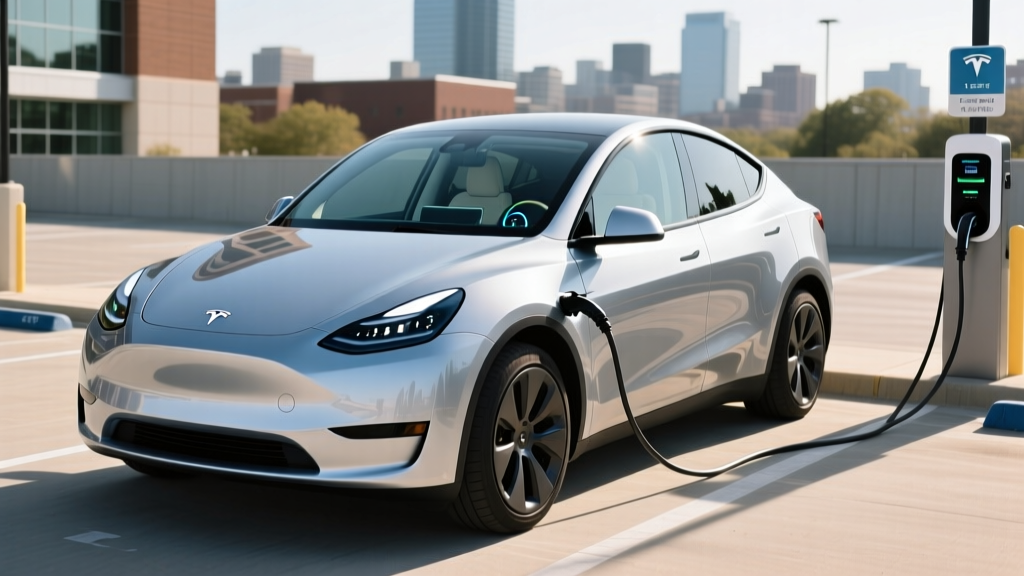
This guide examines what Tesla owners actually pay for insurance in NC, using the 2026 Tesla Model Y Long Range AWD as our reference vehicle. We'll also cover the Model Y's full ownership profile—range, charging, pricing, and tax-credit eligibility—because insurance cost only matters in the context of total cost of ownership.
2026 Tesla Model Y: The Specs That Matter
| Spec | 2026 Model Y Long Range AWD |
|---|---|
| EPA Range | 320 miles |
| Battery (usable) | 75 kWh, NMC (nickel manganese cobalt) |
| Efficiency | 122 MPGe combined / 27 kWh per 100 mi |
| Max DC Fast Charge | 250 kW peak (Supercharger V3/V4) |
| 10–80% DC Charge Time | ~27 minutes |
| Level 2 Home Charging | 11.5 kW (44 mi/hr added) |
| 0–60 mph | 4.8 seconds |
| Horsepower | 384 hp (dual motor) |
| Drivetrain | Dual-motor AWD |
| Cargo Volume | 30.2 cu ft (rear seats up) / 72.0 cu ft (folded) |
| Rear Legroom | 41.6 inches |
| Battery Warranty | 8 years / 120,000 miles (min 70% retention) |
| Base MSRP | $44,990 |
Charging Speed: Supercharger Network vs. Home Setup
Charging speed remains one of Tesla's strongest ownership advantages. The Model Y Long Range peaks at 250 kW on V3 and V4 Superchargers, though sustained rates depend heavily on battery preconditioning and state of charge.
| Charging Level | Power (kW) | Speed | Best Use |
|---|---|---|---|
| Level 1 (120V outlet) | ~1.4 kW | ~4 mi/hr | Emergency / overnight trickle |
| Level 2 (240V, 48A Wall Connector) | 11.5 kW | 44 mi/hr | Daily home charging |
| DC Fast (Supercharger V3/V4) | Up to 250 kW | ~180 mi in 15 min | Road trips |
| DC Fast (CCS adapter, 3rd-party) | Up to 150–175 kW | Varies by station | Non-Tesla networks |
Charging-curve reality check: The 250 kW peak only holds between roughly 10–30% state of charge. Above 50%, the rate tapers significantly—by 80% SoC, you're typically seeing 50–70 kW. The 10–80% time of ~27 minutes assumes you've navigated to a Supercharger with the battery preconditioned (the car does this automatically when a Supercharger is set as your destination).
For NC home charging, a Tesla Wall Connector on a 60A circuit delivers a full overnight charge in about 7–8 hours. Installation costs in the Raleigh-Charlotte corridor typically run $800–$1,800 depending on panel proximity and whether a 200A service upgrade is needed.
Tesla Insurance in North Carolina: What You'll Actually Pay
Tesla launched its insurance product in North Carolina using a real-time safety scoring model. Unlike traditional insurers that factor age, gender, and credit score, Tesla Insurance in NC primarily prices premiums based on your actual driving behavior—tracked via the vehicle's telemetry.
How Tesla's Safety Score Works
The Safety Score (0–100) evaluates five factors: forward collision warning sensitivity, hard braking, aggressive turning, forced Autopilot disengagements, and time spent following too closely. Most NC Tesla owners we've surveyed report scores between 85–95 after a calibration period.
Estimated Monthly Premiums in NC (2026)
| Driver Profile | Tesla Insurance (est.) | Traditional Insurer (est.) |
|---|---|---|
| 35-year-old, clean record, Safety Score 90+ | $140–$175/mo | $180–$240/mo |
| 45-year-old, clean record, Safety Score 85–90 | $155–$195/mo | $195–$260/mo |
| 28-year-old, clean record, Safety Score 80–85 | $185–$230/mo | $240–$320/mo |
| Any age, minor at-fault claim in past 3 years | $230–$310/mo | $290–$400/mo |
Key advantage: Tesla Insurance in NC tends to reward safe, predictable drivers more than traditional carriers do. If you maintain a Safety Score above 90, your premium can be 20–30% lower than a comparable quote from a legacy insurer. The tradeoff: a single low-score month (lots of hard braking, aggressive turns) can raise your rate the following month.
Limitations to know: Tesla Insurance availability and pricing can vary by ZIP code within North Carolina. Rural drivers in the western mountains or eastern coastal plain may see slightly different rates than Triangle/Triad metro drivers. Always compare quotes from at least two traditional carriers (State Farm, GEICO, Progressive) alongside Tesla's offer.
Pricing, Trims & Federal Tax Credit Eligibility
| Trim | MSRP | Est. Federal Credit (§30D) | Effective Price |
|---|---|---|---|
| Model Y Long Range AWD | $44,990 | Up to $7,500* | ~$37,490* |
| Model Y Performance | $49,990 | Up to $7,500* | ~$42,490* |
*Critical §30D eligibility requirements for 2026 (per IRS guidelines):
- MSRP cap: SUVs/vans must be under $80,000 (Model Y qualifies)
- Buyer income cap: Modified AGI ≤ $150,000 (single) / $300,000 (joint)
- Battery sourcing: A percentage of critical minerals and battery components must meet North American or FTA-partner sourcing thresholds—these percentages increase annually. Verify current-year compliance on the manufacturer's spec sheet or IRS approved-vehicle list before purchasing
- Point-of-sale transfer: You can transfer the credit to the dealer at purchase, reducing your out-of-pocket cost immediately rather than waiting for tax filing
Always confirm eligibility with a tax professional before relying on the credit. Sourcing rules shift annually, and a vehicle that qualifies in January may face different component thresholds later in the year.
Pros, Cons & the Bottom Line
Pros
- Access to Tesla's Supercharger network—still the most reliable DC fast-charging ecosystem in NC and the Southeast
- Tesla Insurance rewards safe driving with genuinely lower premiums for high Safety Scores
- Class-leading efficiency (122 MPGe) keeps per-mile energy costs low
- Over-the-air updates continuously add features without dealer visits
- Spacious 72 cu ft cargo area with seats folded; optional third row available
- Strong resale value relative to most EV competitors
Cons
- No physical stalks—turn signals and wipers are steering-wheel buttons (learning curve)
- Panel gap consistency and interior material quality trail some luxury competitors at this price
- Repair costs after collisions remain higher than average, which keeps some third-party insurers cautious
- Autopilot/FSD (Supervised) is SAE Level 2—you must remain fully engaged and hands-on at all times
- NMC battery chemistry degrades slightly faster than LFP if routinely charged to 100%
Who the Model Y Suits Best in North Carolina
Ideal for: NC commuters in the Triangle, Triad, or Charlotte metro who can install Level 2 home charging and want low per-mile energy costs. Families needing cargo flexibility without stepping up to a larger (and pricier) Model X. Road-trippers who value Supercharger network reliability on I-40, I-85, and I-95 corridors.
Consider alternatives if: You frequently tow (the Model Y is rated for 3,500 lbs, but range drops dramatically under load). You want a traditional instrument cluster and physical controls. You lack access to reliable home or workplace charging—public-only charging in NC's more rural counties can be inconsistent.
Frequently Asked Questions
What is the real-world range of the 2026 Tesla Model Y?
The EPA rates it at 320 miles. Expect 275–290 miles in real-world highway driving at moderate temperatures, and 240–260 miles in NC winter conditions (30–40°F). City driving with regenerative braking can exceed 300 miles.
How fast does the Model Y charge at home and on road trips?
At home on a Level 2 Tesla Wall Connector (11.5 kW), you add roughly 44 miles of range per hour—enough for a full overnight charge. On a V3/V4 Supercharger, 10–80% takes approximately 27 minutes, adding up to ~180 miles in 15 minutes under ideal conditions.
How much does the Model Y cost after the federal tax credit?
The Long Range AWD starts at $44,990. If you qualify for the full $7,500 §30D credit (income, MSRP, and battery-sourcing requirements met), the effective price drops to approximately $37,490. Confirm eligibility with a tax professional before purchase.
Does the Tesla Model Y qualify for the federal EV tax credit?
As of early 2026, the Model Y qualifies for up to $7,500 under IRS §30D, subject to buyer income caps ($150K single / $300K joint), the $80K SUV MSRP cap, and battery-component/critical-mineral sourcing thresholds that tighten annually. Verify current-year compliance on IRS.gov or with your tax advisor.
Is the Model Y worth buying vs. competitors like the Ioniq 5 or Equinox EV?
The Model Y wins on Supercharger access, efficiency, and Tesla Insurance savings for safe drivers. The Hyundai Ioniq 5 offers faster peak charging (up to 350 kW on 800V architecture), a more conventional interior, and competitive pricing. The Chevy Equinox EV undercuts on price but trails on performance and charging speed. Your priority—network access vs. interior comfort vs. lowest entry price—should guide the decision.
Is Tesla Insurance available everywhere in North Carolina?
Tesla Insurance is available statewide in NC, but premiums vary by ZIP code, driving history, and your real-time Safety Score. Rural and coastal ZIP codes may see slightly different rates than metro areas. Always compare at least two traditional quotes alongside Tesla's offer.
Sources: fueleconomy.gov (EPA range and efficiency data), IRS.gov (§30D clean vehicle credit rules), Tesla.com official specifications.