Quick Verdict: The Driver's EV That Doesn't Apologize
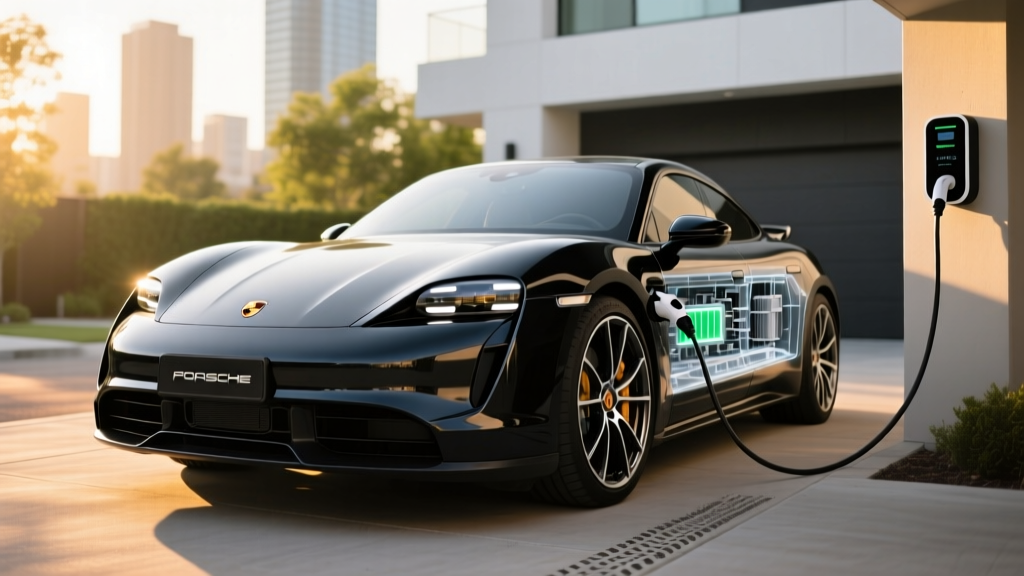
The 2023 Porsche Taycan GTS sits in the sweet spot of Porsche's electric sedan lineup — a dual-motor all-wheel-drive performance machine that trades a small slice of Turbo S horsepower for better range, a more compliant ride, and a price that's still firmly in six-figure territory. With a 93.4 kWh Performance Battery Plus, EPA-estimated 246 miles of range, and a 3.5-second 0-60 mph time, the GTS occupies a specific niche: buyers who want Porsche dynamics in an EV but don't need the excess of a Turbo variant.
Now that the 2025 refresh has introduced updated battery chemistry and faster charging to the Taycan line, the 2023 GTS exists primarily on the used and certified pre-owned market. That actually makes it more interesting from a value perspective — especially as federal used-EV tax credit rules may apply. Here's everything you need to know before buying one.
Full Spec Sheet: 2023 Porsche Taycan GTS at a Glance
| Specification | Value |
|---|---|
| EPA Range | 246 miles |
| Battery (usable) | 83.7 kWh (NMC chemistry) |
| Battery (gross) | 93.4 kWh (Performance Battery Plus) |
| Drivetrain | Dual-motor AWD |
| Horsepower (Launch Control) | 590 hp |
| Torque | 626 lb-ft |
| 0-60 mph | 3.5 seconds |
| Top Track Speed | 155 mph |
| Max DC Fast Charge | 270 kW (800V architecture) |
| 10-80% DC Charge Time | ~22.5 minutes |
| Level 2 AC Charging | 9.6 kW (onboard charger) |
| EPA Efficiency | 83 MPGe combined (41 kWh/100 mi) |
| Cargo (rear trunk) | 14.3 cu ft |
| Cargo (front trunk / frunk) | 2.8 cu ft |
| Rear Legroom | 32.7 inches |
| Base MSRP (2023) | $134,100 |
| As-Tested Price (typical) | $155,000–$170,000 |
| Battery/Powertrain Warranty | 8 years / 100,000 miles |
| Vehicle Warranty | 4 years / 50,000 miles |
Range and Efficiency: EPA Numbers vs. Real-World Reality
EPA Estimate: 246 miles
Real-World Highway (70-80 mph): ~200–220 miles
Real-World City/Mixed: ~225–245 miles
Cold Weather (below 32°F): ~170–200 miles (20-30% reduction)
The Taycan GTS's 800V thermal management system helps mitigate cold-weather losses, but the performance-oriented tires and heavy curb weight (5,121 lbs) keep efficiency modest compared to rivals.
The Taycan GTS earns an EPA-estimated 246 miles of range, which places it behind the Tesla Model S Long Range (405 mi) and the Lucid Air Pure (410 mi) but competitive with the Audi e-tron GT (238 mi), its platform sibling. According to fueleconomy.gov, the GTS returns 83 MPGe combined, consuming 41 kWh per 100 miles.
Real-world range is where the Taycan GTS diverges from the sticker. On highway road trips at sustained 75-80 mph speeds, expect roughly 200-220 miles before needing a charge stop. The GTS's two-speed rear transmission — a unique feature among EVs — helps efficiency at higher speeds by shifting into a taller second gear, but the car's weight and wide, sticky performance tires (265/35 R21 front, 305/30 R21 rear on optional 21-inch wheels) work against it.
In colder climates, the heat pump (standard on the GTS) helps preserve range compared to resistive heating, but you'll still see 20-30% range reduction in sub-freezing temperatures. Plan for 170-200 miles of usable range in winter highway driving.
One owner-relevant detail: the Taycan's battery management system reserves a larger buffer than most competitors — roughly 9.7 kWh between gross (93.4 kWh) and usable (83.7 kWh). This protects long-term battery health and reduces degradation risk, but it also means you're carrying weight you can't access. Over a typical ownership cycle, this conservative buffer strategy should result in stronger state-of-health (SoH) retention.
Charging Speed: 800V Architecture Still Sets the Pace
| Charging Level | Power (kW) | Speed / Time |
|---|---|---|
| Level 1 (120V household) | ~1.4 kW | ~3 miles per hour |
| Level 2 (240V, 40A circuit) | 9.6 kW | ~27 miles per hour; full charge ~9.5 hours |
| DC Fast Charge (350 kW station) | 270 kW peak | 10-80% in ~22.5 minutes |
| DC Fast Charge (150 kW station) | ~130 kW sustained | 10-80% in ~38 minutes |
The Taycan GTS uses an 800-volt electrical architecture — still relatively rare and a genuine technical advantage. On a 350 kW DC fast charger (such as Electrify America's newest stations), the GTS can accept up to 270 kW peak. Porsche claims a 5-80% charge in approximately 22.5 minutes under ideal conditions; in practice, 10-80% takes roughly the same window when the battery is preconditioned.
Here's the charging-curve reality: the 270 kW peak is only sustained between roughly 10-40% state of charge. Above 50%, the rate tapers to approximately 150-170 kW, and above 80%, it drops sharply to protect the cells. This is standard for NMC lithium-ion chemistry, but it means the last 20% of a charge can add 10-15 minutes. For road trips, plan your stops around 10-80% charge windows to maximize time efficiency.
One critical note: if you arrive at a 150 kW charger (which still makes up the majority of public DC infrastructure), you'll be limited to roughly 130-140 kW sustained. The 800V advantage is fully realized only on 350 kW-capable stations. Always check your route's charger capabilities before a long trip.
For home charging, the onboard 9.6 kW AC charger adds roughly 27 miles of range per hour on a 240V Level 2 connection. A full overnight charge from 10% to 100% takes about 9.5 hours. Most GTS owners will find that a nightly plug-in on a home Level 2 unit (such as a Porsche Mobile Charger Connect or a ChargePoint Home Flex) keeps the car ready each morning without ever needing to visit a public charger for daily use.
The Taycan GTS uses the CCS1 connector standard. With the industry's shift toward NACS (Tesla's connector), CCS remains widely supported at Electrify America, EVgo, and ChargePoint stations, but adapters may become relevant as Tesla Superchargers open to non-Tesla vehicles via NACS-to-CCS adapters.
Performance: 590 Horsepower with Porsche Chassis DNA
The GTS trim is positioned between the 4S and the Turbo in Porsche's Taycan hierarchy, and the performance numbers reflect that. With Launch Control engaged, the dual-motor AWD system delivers 590 horsepower and 626 lb-ft of torque, propelling the GTS from 0-60 mph in 3.5 seconds (Porsche's official figure; independent testing by outlets like Car and Driver has recorded 3.3 seconds).
The two-speed rear axle transmission is a defining engineering choice. First gear provides aggressive off-the-line acceleration, while second gear optimizes high-speed efficiency and passing power. You can feel the shift at roughly 45-50 mph — a subtle but distinct mechanical event that gives the Taycan a character unlike single-speed EVs.
Where the GTS truly separates from competitors is chassis dynamics. The standard adaptive air suspension with Porsche Active Suspension Management (PASM) and optional rear-axle steering create a car that genuinely engages on a canyon road while remaining composed over highway expansion joints. The steering weight, pedal feel, and brake modulation (with a blended regen/friction system) are tuned with a precision that most EVs — even fast ones — simply don't match.
Regenerative braking on the Taycan GTS maxes out at approximately 265 kW of recuperation, but Porsche deliberately limits one-pedal driving aggressiveness compared to Tesla or Hyundai. The philosophy: let the friction brakes handle the final stop for consistent pedal feel. You can select regen levels via steering-wheel paddles, but the car won't come to a complete stop on regen alone. Drivers accustomed to strong one-pedal driving will need an adjustment period.
Interior, Tech, and Daily Livability
The Taycan GTS interior follows Porsche's digital-first design language: a curved 16.8-inch driver display, a 10.9-inch central touchscreen, and an available 10.9-inch front passenger display. The optional head-up display projects navigation and speed data with an AR-style overlay. The GTS-specific interior adds Race-Tex (synthetic suede) upholstery, GTS-branded trim, and a sport steering wheel with mode switch.
Infotainment runs Porsche Communication Management (PCM), which supports wireless Apple CarPlay and Android Auto, over-the-air updates, and built-in navigation with real-time charging station routing. The system is responsive but menu-heavy — some climate and charging settings require more taps than physical-button equivalents.
Driver-assistance features include adaptive cruise control with stop-and-go, lane-keeping assist, night vision assist (optional), and Porsche InnoDrive (predictive cruise that adjusts speed for upcoming curves and speed limits based on navigation data). These are SAE Level 2 driver-assist systems — the driver must remain engaged with hands on the wheel at all times. The Taycan does not offer hands-free driving capability like GM's Super Cruise or Ford's BlueCruise.
Cargo space is the Taycan's most obvious compromise. The rear trunk offers 14.3 cubic feet, and the front trunk (frunk) adds just 2.8 cubic feet — enough for a charging cable bag and a small duffel. Total cargo capacity trails the Tesla Model S (28 cu ft rear + 3.1 cu ft frunk) significantly. Rear-seat legroom at 32.7 inches is tight for adults on longer trips; the Taycan is a four-seat grand tourer, not a family hauler.
Pricing, Trims, and Federal Tax Credit Eligibility
The 2023 Taycan GTS launched with a base MSRP of $134,100 (sedan) and $139,400 (Sport Turismo wagon body style). With common options — the Premium Plus package, 21-inch RS Spyder wheels, PCCB ceramic brakes, and adaptive sport seats — as-tested prices routinely land between $155,000 and $170,000.
- MSRP Cap: Sedans must be under $55,000; SUVs/trucks under $80,000. The Taycan GTS at $134,100+ far exceeds the sedan cap. It does NOT qualify for the new-vehicle §30D credit.
- Income Cap: AGI limits of $300K (married filing jointly), $225K (head of household), $150K (single).
- Battery Sourcing: Critical minerals and battery component requirements phase in annually per IRS rules.
Used-EV Credit (§25E): If purchasing a qualifying pre-owned Taycan GTS for $25,000 or more from a licensed dealer, you may be eligible for up to $4,000 (30% of sale price, capped). Income caps apply: $150K (married), $112,500 (head of household), $75K (single). The vehicle must be at least 2 model years old. See IRS §25E guidelines for current rules. Consult a tax professional for eligibility.
For 2026 buyers, the Taycan GTS is now a used or CPO proposition. Porsche's Certified Pre-Owned program extends the original warranty and can provide additional peace of mind. Pricing on 2023 GTS models in the CPO market typically ranges from $95,000 to $120,000 depending on mileage, condition, and options — making the used-EV credit potentially relevant if your income qualifies.
Ownership Costs: Warranty, Insurance, and Maintenance
Porsche covers the Taycan GTS battery and high-voltage powertrain for 8 years or 100,000 miles, whichever comes first. The warranty guarantees the battery will retain at least 70% of its original capacity during that period. The general vehicle warranty is 4 years / 50,000 miles, and Porsche includes 3 years of complimentary scheduled maintenance and 4 years of roadside assistance.
Insurance costs are substantial. Expect annual premiums in the $3,500–$5,000 range depending on your driving record, location, and coverage levels. The GTS's repair costs (especially for the carbon-ceramic brake option at $9,000+ to replace) and high MSRP drive premiums higher than mainstream EVs.
Maintenance is lighter than an ICE Porsche — no oil changes, fewer moving parts — but tire replacement is a recurring cost. The GTS's factory Pirelli P Zero or Michelin Pilot Sport EV tires wear faster under the car's weight and torque, with typical replacement intervals of 15,000-25,000 miles at $1,500-$2,200 per set.
Charging costs depend on your electricity rate. At the US average of $0.16/kWh, fully charging the 83.7 kWh usable battery costs roughly $13.40 at home — translating to about $0.054 per mile. DC fast charging at $0.40-$0.50/kWh brings costs closer to $0.14-$0.17 per mile, still below premium gasoline at current prices.
Competitive Landscape: GTS vs. the Alternatives
| Spec | Taycan GTS | Audi e-tron GT Premium Plus | Tesla Model S Plaid | BMW i4 M50 |
|---|---|---|---|---|
| EPA Range | 246 mi | 238 mi | 396 mi | 227 mi |
| Battery (usable) | 83.7 kWh | 85.0 kWh | ~95 kWh | 81.5 kWh |
| 0-60 mph | 3.5 sec | 3.9 sec | 1.99 sec | 3.7 sec |
| Horsepower | 590 hp | 522 hp | 1,020 hp | 536 hp |
| Max DC Charge | 270 kW | 270 kW | 250 kW | 205 kW |
| Base MSRP (2023) | $134,100 | $106,395 | $108,490 | $69,700 |
| Frunk + Trunk (cu ft) | 2.8 + 14.3 | 3.2 + 12.9 | 3.1 + 28.0 | 0 + 16.6 |
The Taycan GTS's closest rival is the Audi e-tron GT, which shares the same J1 platform, battery architecture, and 800V charging system. The e-tron GT is slightly cheaper, slightly slower, and offers marginally less range. The choice between them comes down to brand preference, design, and chassis tuning — the Porsche is sharper, the Audi more grand-touring oriented.
The Tesla Model S (Plaid or Long Range) dominates on range and cargo space, and the Plaid's acceleration is in a different universe entirely. But the Model S's interior quality, panel-gap consistency, and steering feel don't match Porsche's standard. The Model S Long Range's 405-mile EPA range is the strongest in this segment by a wide margin.
The BMW i4 M50 is the value play: similar performance, lower price, and practical liftback cargo area. But it rides on a modified ICE platform (CLAR), so it lacks the dedicated EV architecture advantages of the Taycan — namely 800V charging and the two-speed rear axle.
Pros and Cons: The Honest Summary
Pros
- Best-in-class chassis dynamics and steering feel
- 270 kW DC fast charging on 800V architecture
- Two-speed rear axle for strong passing power and efficiency
- Conservative battery buffer promotes long-term SoH
- GTS trim balances performance and daily comfort
- Build quality and interior materials are exceptional
- Heat pump standard for cold-weather efficiency
Cons
- 246-mile EPA range trails Tesla and Lucid significantly
- Cargo space (17.1 cu ft total) is the smallest in class
- Rear seat legroom tight for adults (32.7 in)
- Does not qualify for new-vehicle federal tax credit (MSRP cap)
- Options push price well beyond $150,000
- Infotainment requires more menu diving than rivals
- No hands-free Level 2+ driving system available
- Tire wear is rapid under the car's weight and torque
Who Should Buy the 2023 Taycan GTS?
Choose the Taycan GTS if:
- You prioritize driving dynamics over maximum range
- Your daily commute is under 150 miles round-trip with home Level 2 charging
- You want a luxury EV that drives like a Porsche, not a tech pod
- You're buying CPO/used and want to leverage the used-EV tax credit
- You value 800V fast-charging for occasional road trips
Look elsewhere if:
- You need 300+ miles of range for frequent long-distance travel
- You regularly carry rear-seat passengers or need family cargo space
- You want hands-free highway driving capability
- Budget is a primary concern — the i4 M50 or e-tron GT offer similar performance for less
Frequently Asked Questions
What is the real-world range of the 2023 Porsche Taycan GTS?
The EPA rates the Taycan GTS at 246 miles, but real-world highway driving at 70-80 mph typically yields 200-220 miles. City and mixed driving closer to 225-245 miles. In cold weather below freezing, plan for 170-200 miles. The car's heat pump and thermal management system help, but the GTS's performance tires and 5,121-lb curb weight work against efficiency.
How fast does the Taycan GTS charge at home and on the road?
On a 350 kW DC fast charger, the GTS peaks at 270 kW and charges from 10-80% in approximately 22.5 minutes. On a more common 150 kW station, expect 10-80% in about 38 minutes. At home on a Level 2 (240V, 40A) connection, the 9.6 kW onboard charger adds roughly 27 miles of range per hour, fully recharging overnight in about 9.5 hours.
Does the 2023 Taycan GTS qualify for the federal EV tax credit?
For new-vehicle purchases, no — the §30D credit caps sedan MSRP at $55,000, and the GTS starts at $134,100. However, if you buy a qualifying pre-owned Taycan GTS from a licensed dealer, you may be eligible for the §25E used-EV credit of up to $4,000, subject to income limits ($75K single / $150K married filing jointly). The vehicle must be at least 2 model years old. Always verify current rules at irs.gov and consult a tax professional.
Is the Taycan GTS worth buying over the Tesla Model S or Audi e-tron GT?
It depends on your priorities. If maximum range and cargo space matter most, the Model S Long Range wins decisively (405 mi EPA, 31 cu ft cargo). If you want similar performance at a lower price, the e-tron GT shares the Taycan's platform at roughly $28,000 less. The GTS wins on driving engagement — steering precision, chassis balance, and brake feel are meaningfully better than either rival. It's the choice for drivers who value the journey over the spec sheet.
What is the Taycan GTS battery warranty and expected longevity?
Porsche warrants the high-voltage battery for 8 years or 100,000 miles, guaranteeing at least 70% capacity retention. The conservative 9.7 kWh buffer (the gap between 93.4 kWh gross and 83.7 kWh usable) is designed to protect long-term health. Early Taycan models (2020-2021) have shown strong SoH retention in fleet data, with most reporting 92-96% capacity after 50,000+ miles. A full battery replacement outside warranty is estimated at $20,000-$30,000, though individual cell module repairs may be less.
What connector does the Taycan GTS use?
The 2023 Taycan GTS uses the CCS1 (Combined Charging System) connector for both AC Level 2 and DC fast charging. As the industry transitions toward NACS (North American Charging Standard), CCS remains widely supported across Electrify America, EVgo, and ChargePoint networks. Porsche has not announced a NACS retrofit for existing Taycan models, but CCS-to-NACS adapters may become available as Tesla opens its Supercharger network.