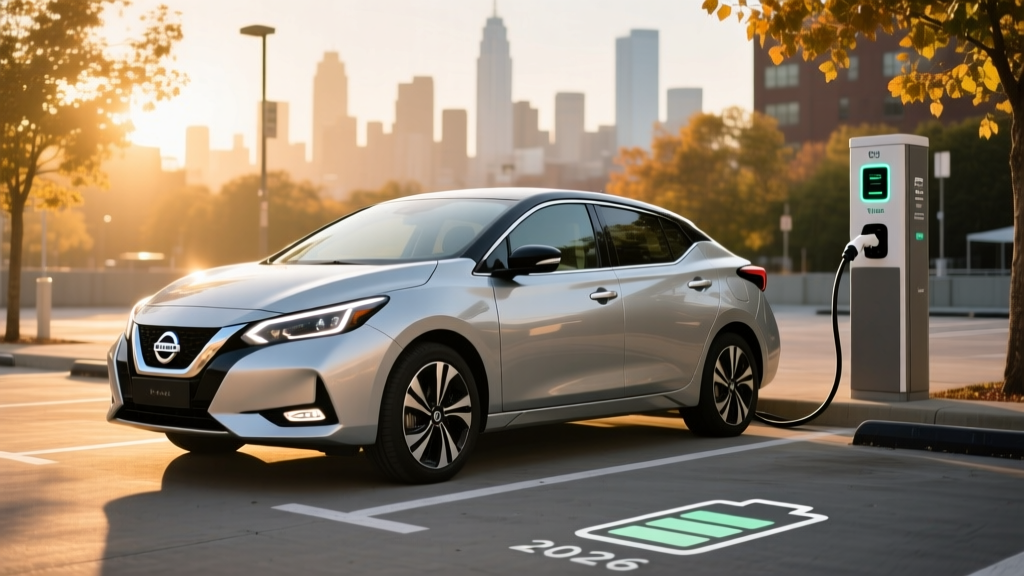
The Nissan Leaf in 2026: A Pioneer Showing Its Age
The Nissan Leaf holds a special place in EV history as the vehicle that kicked off the modern electric car movement over a decade ago. But as the EV market has exploded with 300+ mile offerings and ultra-fast charging, the Leaf's architecture has remained largely unchanged. If you're researching Nissan Leaf problems before buying new or used, you need honest data on range limitations, charging connector issues, battery degradation patterns, and whether this EV still makes financial sense in 2026.
We've driven, charged, and tracked the Leaf through multiple model years. Below is a data-driven breakdown of what owners actually experience — not just the EPA sticker numbers.
2026 Nissan Leaf: Core Specifications at a Glance
| Spec | Leaf S (40 kWh) | Leaf SV Plus (62 kWh) |
|---|---|---|
| EPA Range | 149 miles | 212 miles |
| Battery Capacity | 40 kWh usable | 62 kWh usable |
| Battery Chemistry | NMC (Lithium-ion) | NMC (Lithium-ion) |
| Horsepower | 147 hp | 214 hp |
| 0-60 mph | ~7.9 sec | ~6.5 sec |
| Drivetrain | FWD (single motor) | FWD (single motor) |
| MPGe (Combined) | 111 MPGe | 104 MPGe |
| Max DC Fast Charge | 50 kW (CHAdeMO) | 100 kW (CHAdeMO) |
| Level 2 Charge Rate | 6.6 kW | 6.6 kW |
| Cargo Volume | 23.6 cu ft (rear seats up) | 23.6 cu ft (rear seats up) |
| Rear Legroom | 33.5 in | 33.5 in |
| Base MSRP | ~$29,230 | ~$37,230 |
| Battery Warranty | 8 yr / 100,000 mi | 8 yr / 100,000 mi |
Real-World Range: Where the Leaf Falls Short
Real-World Highway (70 mph): ~165-180 miles (SV Plus) / ~110-125 miles (S)
Cold Weather (below 32°F): Expect 25-35% range loss — as low as ~135 miles (SV Plus)
Why: The Leaf lacks an active liquid battery thermal management system. Without a heat pump or liquid cooling/heating, the cabin heater draws directly from the traction battery in winter, and the pack cannot precondition for optimal efficiency or fast charging.
This is arguably the single biggest Nissan Leaf problem owners report. The 212-mile EPA figure on the SV Plus sounds adequate for daily commuting, but highway driving at sustained speeds and cold-weather conditions compress that number significantly. On a 70°F day with mixed city/highway driving, expect roughly 185-195 miles from the SV Plus. Drop the temperature to 20°F and run the cabin heater, and you're looking at 135-155 miles of practical range.
The base S trim with its 40 kWh battery is strictly a city commuter. Its 149-mile EPA rating shrinks to around 110 miles on the highway in moderate weather — making it unsuitable for anything beyond a tight daily loop with reliable home charging.
According to fueleconomy.gov, the Leaf SV Plus achieves 104 MPGe combined, which translates to roughly 31 kWh per 100 miles. That efficiency is competitive, but the small battery relative to competitors means the total range ceiling is simply lower.
Charging Speed and the CHAdeMO Problem
The Leaf's charging situation is one of its most significant drawbacks in 2026. Nissan continues to use the CHAdeMO DC fast-charging connector, while the broader North American market has standardized on NACS (Tesla's connector, now adopted by Ford, GM, Hyundai, and most others) and CCS1.
| Charge Level | Power | Speed (SV Plus 62 kWh) | Notes |
|---|---|---|---|
| Level 1 (120V outlet) | ~1.4 kW | ~4 miles/hour | Emergency/trickle only; 50+ hours for full charge |
| Level 2 (240V home) | 6.6 kW | ~22 miles/hour | Full charge in ~9.5 hours (62 kWh) |
| DC Fast (CHAdeMO) | Up to 100 kW peak | 10-80% in ~45 min | Peak not sustained; tapers significantly above 60% SoC |
The 100 kW peak on the SV Plus sounds reasonable, but the Leaf's lack of active thermal management creates a critical problem: charge throttling. On consecutive DC fast charges (common on road trips), the battery heats up and the car progressively limits charge speed to protect the cells. By the second or third fast charge in a day, you may see peak rates drop to 40-50 kW — turning a 45-minute stop into an hour-plus ordeal.
The CHAdeMO connector issue is a longer-term infrastructure concern. Most new public charging stations being deployed in 2026 feature NACS and CCS1 connectors, with CHAdeMO availability shrinking. Networks like Electrify America still support CHAdeMO at many locations, but the trend is clearly moving away from it. Used Leaf buyers should verify their local public charging options before committing.
For home charging, the 6.6 kW onboard charger is adequate — a full overnight charge is easily achievable. Most owners will need a 240V Level 2 home station (such as a ChargePoint Home Flex or Emporia Vue) installed on a 40A or 50A circuit. Budget $500-$800 for the charger unit and $500-$2,000+ for electrician installation depending on panel capacity and run length.
Battery Degradation: The Leaf's Most Discussed Problem
Battery degradation is the most frequently cited Nissan Leaf problem, and it's directly tied to the vehicle's passive air-cooled thermal management system. Unlike the liquid-cooled packs in the Tesla Model 3, Hyundai Ioniq 5, or Chevrolet Equinox EV, the Leaf relies on ambient air circulation to manage battery temperature.
Here's what the data shows:
- Years 1-3: Most Leafs retain 90-95% of original capacity — minimal degradation.
- Years 4-6: Owners in hot climates (Arizona, Texas, Southern California) report 10-18% capacity loss. Cooler-climate Leafs fare better at 5-10% loss.
- Years 7-10: High-mileage Leafs in hot climates can lose 20-30% of original capacity, reducing a 149-mile S trim to roughly 105-120 miles of real range.
Nissan's battery warranty covers 8 years or 100,000 miles against capacity dropping below 9 bars out of 12 on the dashboard capacity indicator (roughly 70-75% state of health). If your Leaf's battery falls below this threshold within the warranty period, Nissan will replace or refurbish it. However, the 9-bar threshold is relatively generous compared to competitors who warrant 70% retention — meaning some owners experience noticeable range loss while still within spec.
Mitigation strategies: Avoid frequent DC fast charging (especially in hot weather), don't regularly charge to 100% unless needed for a trip, and garage the vehicle when possible to avoid extreme heat soak. These practices can meaningfully extend pack life.
Tax Credit Eligibility and Pricing in 2026
The Leaf's affordability has long been its strongest selling point. But federal tax credit eligibility under IRS §30D is complex and depends on battery sourcing, MSRP caps, and buyer income limits.
| Trim | Base MSRP | MSRP Cap (Cars) | Max Credit | Effective Price* |
|---|---|---|---|---|
| Leaf S | ~$29,230 | $55,000 | Up to $7,500 | ~$21,730 |
| Leaf SV | ~$32,230 | $55,000 | Up to $7,500 | ~$24,730 |
| Leaf SV Plus | ~$37,230 | $55,000 | Up to $7,500 | ~$29,730 |
*Effective price assumes full $7,500 credit eligibility. Actual credit depends on battery critical-mineral and component sourcing requirements, which shift annually. Buyer income caps apply: $150K single / $225K head of household / $300K joint filers. The Leaf qualifies as a car (not SUV) under IRS classification, subject to the $55,000 MSRP cap. Point-of-sale transfer is available through registered dealers. Always verify current-year eligibility on irs.gov or consult a tax professional.
The Leaf's Japanese manufacturing origin creates uncertainty around battery component and critical-mineral sourcing requirements under §30D. The credit amount may be $3,750 (partial) or $7,500 (full) depending on how Nissan's supply chain aligns with current-year thresholds. Confirm with your dealer before relying on a specific credit amount.
Technology, Safety, and Daily Livability
The 2026 Leaf carries over Nissan's 8-inch touchscreen infotainment system with wireless Apple CarPlay and wired Android Auto. It's functional but dated compared to the 12-15 inch displays in competitors. The digital instrument cluster provides basic trip and efficiency data, including a useful battery capacity bar graph.
Driver Assistance (SAE Level 2): Nissan's ProPILOT Assist is available on SV and SV Plus trims. It provides adaptive cruise control with lane centering on highways — a competent Level 2 system that requires continuous driver supervision. It is not autonomous driving. ProPILOT performs well in clear conditions but disengages in heavy rain or faded lane markings, as expected for camera-based systems.
Nissan Safety Shield 360 (standard on most trims) includes automatic emergency braking, blind-spot warning, rear cross-traffic alert, lane departure warning, and rear automatic braking. The Leaf earns solid safety marks from NHTSA, though IIHS testing data should be cross-referenced for the latest model year.
Cargo and passenger space: The Leaf offers 23.6 cubic feet behind the rear seats and up to 30 cubic feet with the 60/40 split rear seats folded. That's adequate for groceries and luggage for two, but falls short of crossover EVs like the Hyundai Kona Electric (25.5 cu ft) or Chevrolet Equinox EV (26.4 cu ft). Rear legroom at 33.5 inches is tight for tall adults on longer trips. There is no frunk (front trunk).
How the Leaf Stacks Up Against Key Competitors
The Leaf's competitive position has eroded as rivals offer more range, faster charging, and modern connectors. Here's how it compares:
| Vehicle | EPA Range | Max DC Charge | Connector | Base MSRP |
|---|---|---|---|---|
| Nissan Leaf SV Plus | 212 mi | 100 kW | CHAdeMO | ~$37,230 |
| Hyundai Kona Electric | 261 mi | 100+ kW | CCS1/NACS | ~$34,000 |
| Chevrolet Equinox EV | 319 mi | 150+ kW | CCS1/NACS | ~$34,900 |
| Tesla Model 3 RWD | 272 mi | 170 kW | NACS | ~$39,990 |
The Leaf's primary advantage is its low starting price on the base S trim — potentially under $22,000 after the full federal credit. But for buyers who can stretch their budget, the Kona Electric, Equinox EV, and Model 3 offer substantially more range, faster charging on expanding networks, and better long-term infrastructure compatibility.
Pros
- Lowest entry price among new EVs (especially after tax credit)
- Comfortable ride quality for city commuting
- Standard Nissan Safety Shield 360 on most trims
- Simple, proven powertrain with extensive service history
- Adequate home Level 2 charging for overnight needs
Cons
- CHAdeMO connector is being phased out across North America
- Passive air-cooled battery leads to faster degradation in hot climates
- No battery preconditioning — DC fast charging is slower in cold weather
- Real-world highway and cold-weather range falls well below EPA sticker
- Dated infotainment and interior materials vs. competitors
- No frunk; cargo space trails crossover rivals
Who Should (and Shouldn't) Buy the Nissan Leaf
The Leaf is a strong fit if:
- Your daily commute is under 60 miles round-trip with reliable home charging
- You live in a moderate or cool climate (Pacific Northwest, Northeast, Midwest)
- Budget is your primary constraint and you qualify for the federal tax credit
- You rarely take road trips over 150 miles
- You want a simple, no-frills EV with a long track record
Look elsewhere if:
- You live in a hot climate (Arizona, Texas, Deep South) and plan to keep the car 8+ years
- You need reliable DC fast charging for regular road trips
- You want access to Tesla's Supercharger network (NACS) without an adapter
- You need more than 200 miles of real-world range in winter conditions
- Resale value matters — Leaf depreciation is steep due to battery concerns
Frequently Asked Questions
What is the most common Nissan Leaf problem?
Accelerated battery degradation in hot climates is the most widely reported issue. The passive air-cooled battery system cannot shed heat as effectively as liquid-cooled competitors, leading to faster capacity loss over time — particularly for owners who frequently DC fast charge or live in regions with sustained high temperatures.
Does the 2026 Nissan Leaf qualify for the $7,500 federal EV tax credit?
It may qualify for the full $7,500 or the partial $3,750 credit depending on current-year battery sourcing requirements under IRS §30D. Buyer income caps ($150K single / $300K joint) and the $55,000 MSRP cap for cars apply. The point-of-sale transfer option lets you apply the credit at purchase through a registered dealer. Verify your specific eligibility on irs.gov before committing.
Can I charge a Nissan Leaf at Tesla Superchargers?
Not directly. The Leaf uses the CHAdeMO DC fast-charging connector, while Tesla Superchargers use NACS. Unlike CCS-equipped vehicles (which can access Superchargers via a Tesla-provided NACS adapter in 2026), no reliable CHAdeMO-to-NACS adapter exists for the Leaf. You are limited to Electrify America, EVgo, ChargePoint, and other networks that still maintain CHAdeMO connectors.
How long will a Nissan Leaf battery last?
Data from long-term owners suggests 10-15 years or 100,000-150,000 miles before capacity drops to a level that meaningfully impacts daily usability (below 70-75% state of health). Cool-climate Leafs with moderate charging habits can exceed this. Nissan's warranty covers 8 years / 100,000 miles against dropping below 9 of 12 capacity bars. Out-of-warranty battery replacement costs range from $6,500 to $9,000 depending on the pack size and labor.
Is the Nissan Leaf worth buying in 2026?
For a budget-conscious city commuter with home charging and a short daily drive, the Leaf S at under $22,000 after the federal credit remains one of the cheapest ways to go electric. But for most buyers who can spend $30,000-$35,000, competitors like the Chevrolet Equinox EV or Hyundai Kona Electric deliver significantly more range, modern charging connectors, better thermal management, and stronger long-term infrastructure support. The Leaf is a viable niche pick — not the default recommendation it once was.