The Short Answer on Ford's $30,000 Electric Pickup
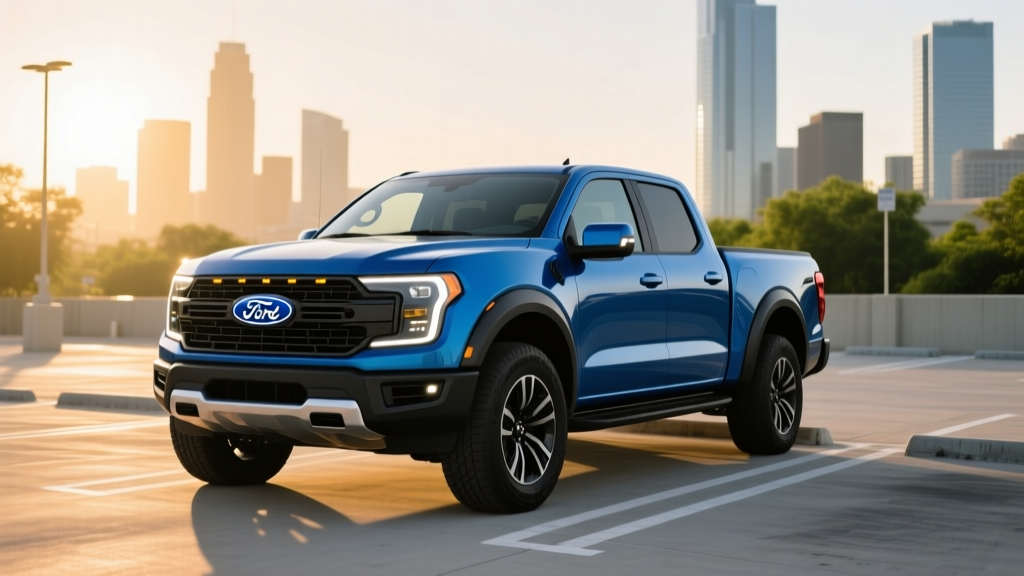
Ford's next-generation compact electric pickup — built on the new universal EV platform alongside a $30,000 electric SUV — is slated for a 2027 model-year launch, with pricing starting around $30,000 MSRP before incentives. As of early 2026, the truck has not been fully revealed with final EPA range, battery capacity, or charging specs. What we do know: it will use a lithium iron phosphate (LFP) battery to hit that price target, likely deliver 230–270 miles of EPA range based on platform projections, and qualify for the federal §30D tax credit (up to $7,500) if battery-sourcing requirements are met. For buyers shopping now, the closest available alternative is the Ford Maverick Hybrid starting at ~$27,995, which delivers 42 MPG combined with no range-anxiety tradeoff.
What We Know About Ford's $30K Electric Truck Platform
In March 2025, Ford CEO Jim Farley confirmed a new universal electric-vehicle platform designed to underpin a family of affordable EVs, including a midsize pickup and an SUV, both targeting a $30,000 starting price. The platform is engineered from the ground up for cost reduction: fewer parts, simplified wiring architecture, and LFP battery chemistry that avoids expensive cobalt and nickel.
Based on Ford's public statements and industry analysis, here are the projected specifications for the compact electric pickup:
| Attribute | Projected Spec |
|---|---|
| Base MSRP | ~$30,000 (before incentives) |
| Battery Chemistry | LFP (Lithium Iron Phosphate) |
| Battery Capacity (est.) | 65–75 kWh usable |
| EPA Range (est.) | 230–270 miles |
| Peak DC Fast Charge Rate | ~150 kW (est.) |
| 10–80% DC Charge Time (est.) | ~28–35 minutes |
| Level 2 AC Charging | ~10.5 kW / ~30 mi/hr |
| Drivetrain | RWD standard; AWD available |
| 0–60 mph (est.) | ~6.5–7.5 seconds |
| Towing Capacity (est.) | ~2,000–3,500 lbs |
| Production Start | Late 2026 (Louisville, KY plant) |
| Model Year | 2027 |
Important caveat: These are analyst estimates and Ford guidance, not finalized EPA-certified numbers. Final specs will be confirmed closer to the on-sale date. Ford has indicated the truck will be "smaller than a Ranger" — placing it in the compact segment alongside the Maverick and Hyundai Santa Cruz.
How Does It Compare to the Ford Maverick Hybrid?
For buyers who need a compact truck today — or who want to compare what $30K buys in gas-hybrid form — the Maverick Hybrid is the natural benchmark. Here's how the two stack up on the metrics that matter for ownership:
| Metric | Ford EV Pickup (Proj.) | 2026 Maverick Hybrid FWD |
|---|---|---|
| Base MSRP | ~$30,000 | $27,995 |
| Fed. Tax Credit (§30D) | Up to $7,500 (if eligible) | $0 (not a BEV/PHEV) |
| Effective Price After Credit | ~$22,500 | $27,995 |
| EPA Range / Tank Range | ~230–270 mi | ~500+ mi (16.5-gal tank) |
| Combined Efficiency | ~95–105 MPGe (est.) | 42 MPG combined |
| Fuel/Energy Cost per Mile | ~$0.04–$0.06 (home charging) | ~$0.10–$0.13 (gas at $3.30/gal) |
| Annual Fuel/Energy (15K mi) | ~$600–$900 | ~$1,500–$1,950 |
| Maintenance (annual est.) | ~$300–$400 | ~$600–$900 |
| 0–60 mph | ~6.5–7.5 sec | ~8.0 sec |
| Towing | ~2,000–3,500 lbs | 2,000 lbs (hybrid) |
| Bed Length | TBD (est. 4.5 ft) | 4.5 ft |
The key takeaway: the electric pickup's advantage is operating cost. At national-average electricity rates of ~$0.16/kWh and gas at ~$3.30/gallon, the EV saves roughly $800–$1,200 per year on energy alone. Over a 5-year ownership period, that's $4,000–$6,000 in fuel savings — enough to offset any modest price premium after the tax credit.
However, the Maverick Hybrid's 500+ mile range and 5-minute refueling make it the clear winner for buyers who regularly tow, take long road trips, or live in areas with sparse DC fast-charging infrastructure. Towing with any EV cuts range roughly in half, and a compact electric truck with ~250 miles of range would realistically deliver 120–150 miles while towing — requiring careful trip planning.
Real Ownership Costs: 5-Year Breakdown
Purchase price is only part of the equation. Here's a realistic 5-year / 75,000-mile total cost of ownership (TCO) comparison, assuming the buyer qualifies for the full $7,500 federal tax credit and charges primarily at home:
| Cost Category | Ford EV Pickup | Maverick Hybrid |
|---|---|---|
| Purchase Price (MSRP) | $30,000 | $27,995 |
| Federal Tax Credit | –$7,500 | $0 |
| Effective Purchase | $22,500 | $27,995 |
| Home Charger Install (Level 2) | $800–$2,000 | $0 |
| Energy/Fuel (75,000 mi) | $3,000–$4,500 | $7,500–$9,750 |
| Maintenance (5 years) | $1,500–$2,000 | $3,000–$4,500 |
| Insurance (5 years, avg.) | $7,500–$9,000 | $6,000–$7,500 |
| Estimated Depreciation | ~$10,000–$13,000 | ~$9,000–$11,000 |
| 5-Year Total (approx.) | $42,800–$51,000 | $53,495–$60,745 |
Key assumptions: Electricity at $0.16/kWh, gasoline at $3.30/gal, 15,000 miles/year, 80% home / 20% public charging for the EV. Insurance for EVs typically runs 10–20% higher due to repair-cost data; get quotes before committing. Depreciation estimates are uncertain for an unreleased model — EV depreciation has been volatile, though LFP batteries may help long-term resale by reducing degradation concerns. (Source: fueleconomy.gov for Maverick efficiency data.)
Tax Credit Eligibility: Will You Actually Get $7,500?
The §30D Clean Vehicle Credit is the single biggest variable in this truck's effective price. Under current IRS rules, eligibility requires meeting all of the following:
- MSRP cap: Pickup trucks must be under $80,000 MSRP — the $30K truck clears this easily.
- Buyer income cap: Modified AGI must not exceed $150,000 (single), $225,000 (head of household), or $300,000 (joint). Check your prior-year or current-year MAGI, whichever is lower.
- Battery sourcing: Increasing percentages of critical minerals and battery components must be sourced from the U.S. or free-trade-agreement countries. These thresholds tighten annually. Ford's use of LFP chemistry — often sourced from CATL in China — creates uncertainty about whether the truck will qualify for the full $7,500 or only $3,750 (or potentially $0 if foreign-entity-of-concern rules apply to battery materials).
- North American assembly: Final assembly must occur in North America. Ford's Louisville, KY plant satisfies this.
- Point-of-sale transfer: You can transfer the credit to the dealer at purchase, reducing your out-of-pocket cost immediately — or claim it on your tax return.
Bottom line: Do not assume you'll get $7,500. Ford's LFP battery supply chain is the wildcard. Buyers should verify the vehicle's eligibility on fueleconomy.gov once the truck is officially listed, and consult a tax professional for personal eligibility.
Real-World Ownership Considerations
Home Charging Access Is the Make-or-Break Factor
At $30,000, this truck targets cost-conscious buyers — many of whom may rent, live in apartments, or lack a dedicated garage. Without home Level 2 charging, EV ownership becomes significantly less convenient and more expensive:
- Home Level 2 (240V, 32A / ~7.7 kW): Adds ~25 miles of range per hour. A full overnight charge covers most daily needs. Installation costs $800–$2,000 if your panel has capacity, or $2,500–$5,000+ if you need a panel upgrade.
- Level 1 (120V outlet): Adds only ~3–4 miles per hour — impractical as a sole charging method for a truck with a 65+ kWh battery. A full charge would take 20+ hours.
- Public DC fast charging only: Costs $0.30–$0.48/kWh at networks like Electrify America or EVgo, roughly doubling your per-mile energy cost vs. home charging and adding 30+ minutes per session.
If you cannot install a Level 2 charger at home, the Maverick Hybrid is the more practical choice.
Cold-Weather Range Loss
LFP batteries are more susceptible to cold-weather range loss than NMC chemistries. In sub-freezing temperatures, expect 20–30% range reduction — meaning a truck rated at 250 miles EPA could deliver 175–200 miles in winter conditions. Ford's platform will include a heat pump (based on the company's statements about the universal EV architecture), which mitigates cabin-heating energy draw but doesn't fully solve battery-chemistry cold sensitivity. Buyers in northern climates should plan for this.
Charging Curve Reality
The projected 150 kW peak charge rate means the truck will hit its fastest charging speed only between roughly 10–40% state of charge. Above 80%, the rate tapers significantly — often to under 40 kW. This is normal for all lithium-ion batteries but means that charging from 80–100% at a DC fast charger is painfully slow. For road trips, plan to charge from 10–80% (the useful fast-charge window) and move on.
Common Misconceptions — Addressed With Facts
| Myth | Fact |
|---|---|
| "A $30K electric truck must have terrible range." | Projected 230–270 mi EPA is adequate for 85% of daily driving (avg. U.S. commute is ~35 mi round-trip). It's road trips where range matters. |
| "LFP batteries degrade faster." | LFP actually has longer cycle life than NMC — often 3,000+ cycles vs. ~1,500. The tradeoff is lower energy density (heavier, bulkier pack) and worse cold performance. |
| "I'll definitely get the $7,500 tax credit." | Battery-sourcing rules are strict and tighten yearly. LFP chemistry, often sourced from China, creates real eligibility uncertainty. Verify before purchasing. |
| "Electric trucks can't tow." | They can tow, but range drops ~40–50% under load. A 250-mi truck tows for ~125–150 mi before needing a charge. Fine for boat ramps; impractical for long hauls. |
| "Charging takes too long." | 10–80% in ~30 min at a DC fast charger is typical. Most owners charge at home overnight and rarely use public chargers except on road trips. |
Decision Framework: Should You Wait or Buy Now?
Wait for the Ford $30K Electric Pickup if:
- You have home Level 2 charging access (or can install it).
- Your daily driving is under 80 miles round-trip with occasional longer trips.
- You want the lowest possible operating cost and can wait until late 2026/2027 for delivery.
- You qualify for the §30D tax credit based on income and are willing to monitor battery-sourcing eligibility.
- You don't regularly tow heavy loads over long distances.
Buy the Maverick Hybrid now if:
- You can't install a home charger (apartment, street parking, rental).
- You take frequent road trips through areas with sparse charging infrastructure.
- You regularly tow or haul and need 500+ miles of range without planning stops.
- You need a truck in the next 6 months, not 18+ months.
- You live in an extreme cold-weather climate where LFP range loss would be painful.
Consider the Ford F-150 Lightning (used/CPO) if:
- You need a full-size truck bed and 300+ miles of range today.
- You're open to a certified pre-owned EV — 2022–2024 Lightnings have depreciated significantly and offer strong value with remaining battery warranty.
First-Time EV Buyer Essentials
If this truck would be your first EV, here's what the brochures don't emphasize:
- kW vs. kWh — know the difference. kW (kilowatts) measures power — how fast you charge. kWh (kilowatt-hours) measures energy — how big the battery is. A 70 kWh battery charged at 10 kW (Level 2) takes ~7 hours from empty. At 150 kW (DC fast), it takes ~30 minutes to 80%.
- Preconditioning matters. If your EV has battery preconditioning for DC fast charging, use it. A cold battery charges dramatically slower. Navigate to a charger using the truck's built-in nav to trigger preconditioning automatically.
- The 80% rule. Daily charging to 80% (not 100%) extends LFP battery life. LFP is more tolerant of 100% charges than NMC, but Ford will likely still recommend 80% for daily use with periodic 100% calibration charges.
- Insurance will cost more. Get quotes before ordering. EV insurance premiums run 10–20% higher on average due to specialized repair requirements and higher parts costs.
- Battery warranty is your safety net. Ford's EV battery warranty is typically 8 years / 100,000 miles, covering defects and capacity loss below 70% of original capacity. This applies to the compact pickup as well.
When will the Ford $30,000 electric pickup be available to order?
Ford has confirmed production begins in late 2026 at its Louisville, Kentucky assembly plant, with the truck likely arriving as a 2027 model year. Reservations or order banks typically open 3–6 months before production starts, so watch for announcements in mid-2026.
Will the $30,000 electric truck qualify for the $7,500 federal tax credit?
It depends on battery-sourcing compliance at the time of purchase. Ford's LFP battery supply chain likely involves Chinese-manufactured cells (CATL), which may conflict with the §30D critical-minerals and foreign-entity-of-concern requirements. The truck clears the MSRP cap ($80K for trucks) and North American assembly requirement. Verify on fueleconomy.gov when the model is listed.
How does the $30K Ford electric truck compare to the Chevy Montana or Hyundai Santa Cruz?
The Chevy Montana is not sold in the U.S. The Hyundai Santa Cruz is a unibody compact pickup but is currently gas-only. Ford's electric compact would be the first EV in this segment in the U.S. market, giving it a unique positioning — no direct electric competitor at this price point exists as of 2026.
Can I charge the Ford electric pickup with a regular household outlet?
Yes, but only for trickle charging. A standard 120V Level 1 outlet adds roughly 3–4 miles of range per hour — sufficient only to top off a battery if your daily driving is very short. For practical ownership, a 240V Level 2 home charger ($800–$2,000 installed) is strongly recommended.
What is the expected battery replacement cost?
For a 65–75 kWh LFP pack, out-of-warranty replacement would likely cost $8,000–$14,000 based on current LFP cell pricing trends. However, LFP batteries are rated for 3,000+ charge cycles, which at 250 miles per cycle equals 750,000+ miles — far exceeding the vehicle's expected lifespan. Battery replacement is unlikely to be needed under normal ownership.