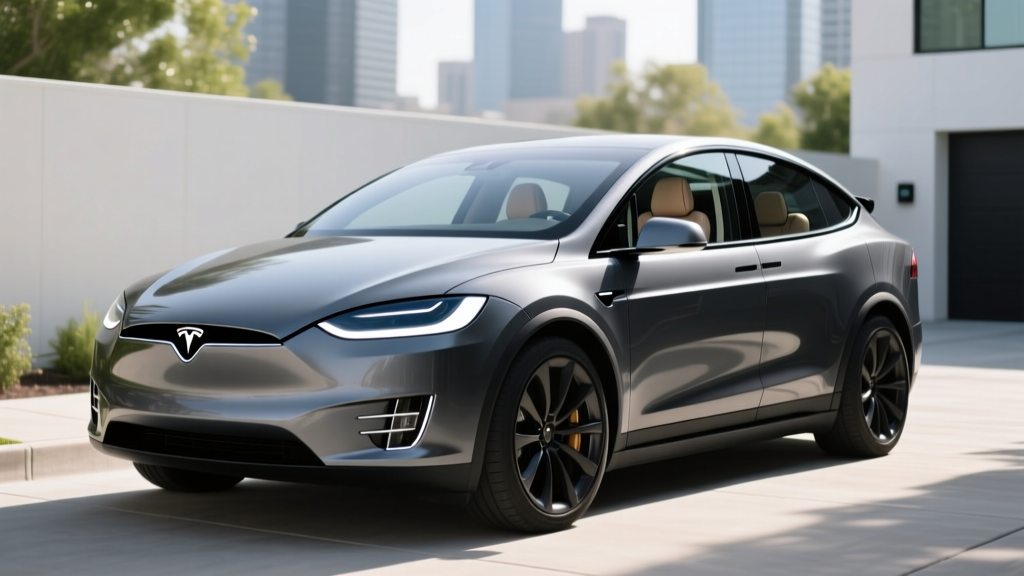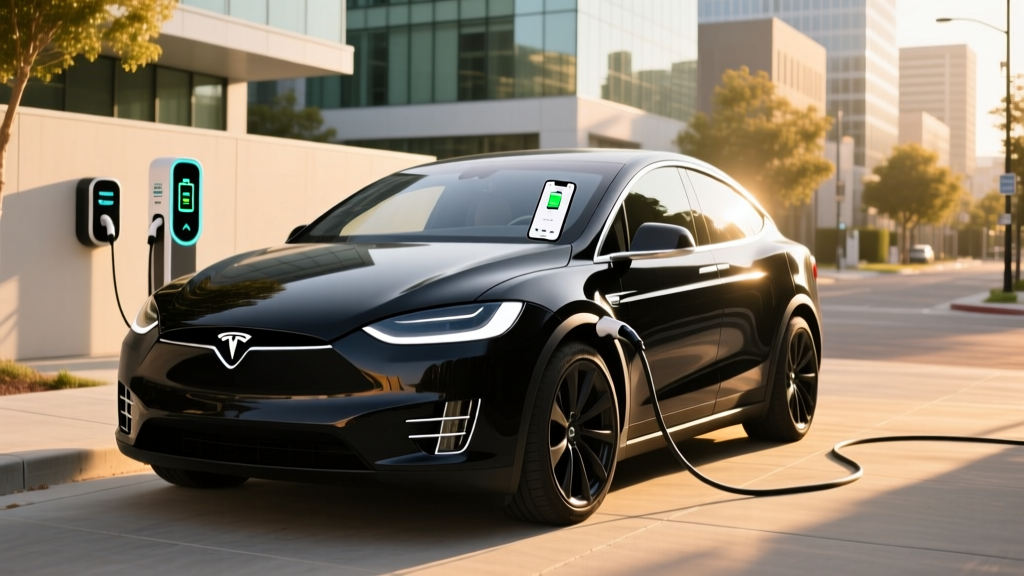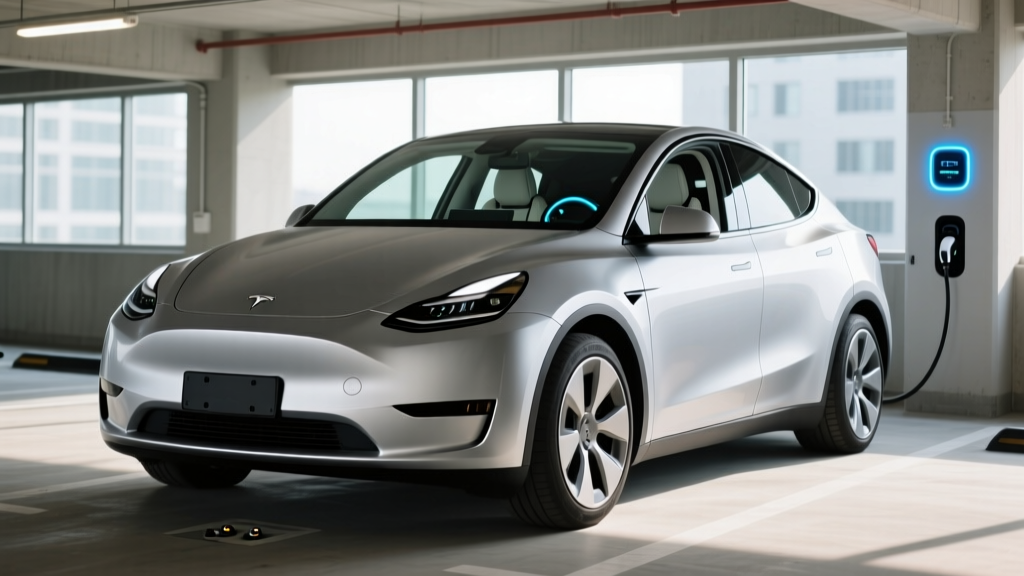
Every time a Tesla makes headlines for a collision, search interest in "Tesla auto crash" spikes. But sensationalized incident reports rarely tell the full story of a vehicle's structural safety, active crash-avoidance tech, or the real-world limitations of its driver-assistance systems. The 2026 Tesla Model Y Juniper refresh is one of the best-selling EVs on the planet — and one of the most crash-tested. This review goes beyond the headlines to evaluate the Model Y's actual safety credentials, while delivering the hard numbers on range, charging, pricing, and tax-credit eligibility that buyers need to make an informed decision.
2026 Tesla Model Y: Core Specifications at a Glance
| Spec | Long Range AWD | Performance |
|---|---|---|
| EPA Range | 320 miles | 293 miles |
| Battery (usable) | ~75 kWh (NMC) | ~75 kWh (NMC) |
| Drivetrain | Dual-Motor AWD | Dual-Motor AWD |
| Horsepower | 384 hp | 456 hp |
| 0–60 mph | 4.8 sec | 3.5 sec |
| Peak DC Fast Charge | 250 kW | 250 kW |
| 10–80% DC Time | ~24 min | ~24 min |
| Level 2 Charge Rate | 11.5 kW (~44 mi/hr) | 11.5 kW (~44 mi/hr) |
| MPGe (combined) | 122 MPGe | 111 MPGe |
| Efficiency | 28 kWh/100 mi | 30 kWh/100 mi |
| Cargo (rear seats up) | 30.2 cu ft | 30.2 cu ft |
| Cargo (rear seats folded) | 72.1 cu ft | 72.1 cu ft |
| Base MSRP | $44,990 | $51,490 |
| Battery Warranty | 8 yr / 120,000 mi | 8 yr / 120,000 mi |
Crash Safety Ratings: What NHTSA and IIHS Actually Say
The 2026 Model Y carries forward the structural architecture that earned top marks in prior model years. The NHTSA awarded the Model Y a 5-Star Overall Safety Rating across all crash scenarios — frontal, side, and rollover. The low center of gravity from the floor-mounted battery pack gives it one of the lowest rollover risks in the compact SUV segment.
On the IIHS side, the refreshed Model Y has been evaluated under the institute's updated moderate overlap front test (which now includes rear-seat occupant assessment). Tesla's cage structure and restraint system have historically performed well, though buyers should check the latest IIHS scorecard for the 2026 model year as results are updated throughout the year. Standard automatic emergency braking, lane-keeping assist, and side-collision warning are included on every trim — no safety package upsell required.
Real-World Range vs. the EPA Sticker
Real-World Expectation: In mixed driving at moderate temperatures, expect 270–300 miles from the Long Range. On sustained highway runs at 75 mph, plan for roughly 250–270 miles before needing to stop. In freezing conditions (below 32°F), range can drop 20–30%, putting realistic winter range at 210–250 miles. The Juniper refresh's improved thermal management and standard heat pump mitigate cold-weather losses better than pre-2025 Model Y variants.
The 75 kWh (usable) NMC battery pack provides strong energy density. Tesla's BMS (battery management system) is among the most conservative in the industry, maintaining a substantial buffer at the top and bottom of the state-of-charge window to protect long-term cell health. For daily commuting, Tesla recommends charging to 80–90% and only going to 100% for long trips — a practice that extends NMC cell longevity significantly.
Charging Speed: DC Fast Charging and Home Level 2
| Charging Level | Power | Miles Added per Hour | Notes |
|---|---|---|---|
| Level 1 (120V household) | ~1.4 kW | ~5 mi/hr | Emergency/top-up only |
| Level 2 (240V, 48A) | 11.5 kW | ~44 mi/hr | Full charge in ~7 hours |
| DC Fast Charge (peak) | 250 kW | Up to ~1,000 mi/hr (peak) | Sustained rate varies |
| DC Fast 10–80% | — | ~24 minutes | Charge curve tapers above 60% |
Tesla's Supercharger network remains the gold standard for reliability and coverage in the US. At a V3 or V4 Supercharger stall, the Model Y peaks at 250 kW, though that peak is only sustained for a narrow window at low state of charge (roughly 10–25% SoC). From 25–60%, expect sustained rates around 150–180 kW; above 80%, the curve drops sharply to protect cell health, which is why Tesla's navigation system typically routes you to arrive at chargers with a low SoC and recommends departing around 80%.
With the Juniper refresh, the Model Y now ships with a native NACS (North American Charging Standard) port. This means access to Tesla's Supercharger network without adapters, and — increasingly — access to chargers from networks like Electrify America and EVgo that have deployed NACS connectors. CCS adapters are available for legacy CCS stations.
Performance, Efficiency, and Daily Drivability
The Long Range AWD's 384 hp and 4.8-second 0–60 time make it genuinely quick for a family crossover, while the Performance trim's 456 hp and 3.5-second sprint puts it in sports-car territory. Both trims feature dual-motor all-wheel drive with independent torque control front and rear, providing confident traction in rain and snow.
Efficiency is a Tesla strong suit. At 122 MPGe combined (Long Range), the Model Y converts electricity to motion with minimal waste. For context, that 28 kWh/100 mi figure translates to roughly $0.04–$0.06 per mile when charging at home on a national-average electricity rate of $0.16/kWh — about one-third the per-mile cost of a 25 MPG gas SUV at $3.50/gallon.
The regenerative braking system is aggressive by default, enabling genuine one-pedal driving in most conditions. Lift off the accelerator and the car decelerates briskly, feeding energy back to the battery. The Juniper interior refresh also adds ventilated front seats, ambient lighting, a rear-seat touchscreen, and substantially improved cabin noise isolation compared to pre-2025 models.
Pricing, Tax Credits, and Total Cost
| Trim | Base MSRP | Federal Credit (§30D) | Effective Price* |
|---|---|---|---|
| Long Range AWD | $44,990 | Up to $7,500 | From ~$37,490 |
| Performance | $51,490 | Up to $7,500 | From ~$43,990 |
*Effective price assumes full §30D eligibility. Actual credit depends on buyer income, battery sourcing, and MSRP caps. See details below.
- MSRP Cap: The Model Y qualifies as an SUV under IRS rules, so the MSRP cap is $80,000. Both trims clear this easily.
- Income Caps: Adjusted gross income must not exceed $150,000 (single), $225,000 (head of household), or $300,000 (married filing jointly).
- Battery Sourcing: The full $7,500 requires meeting both critical-mineral and battery-component sourcing thresholds as defined by the IRS under §30D. Tesla has worked to localize supply chains, but the exact credit amount can vary — check the IRS's current eligible-vehicle list at the point of purchase.
- Point-of-Sale Transfer: Buyers can transfer the credit to the dealer at purchase, reducing the out-of-pocket price directly rather than waiting for a tax refund.
Pros and Cons: The Honest Scorecard
Pros
- Best-in-class Supercharger network access (native NACS)
- Top NHTSA 5-Star safety ratings across all categories
- Class-leading cargo space (72.1 cu ft with seats folded)
- Excellent efficiency at 122 MPGe combined
- Over-the-air updates continuously add features
- Strong resale value relative to most EV competitors
Cons
- No physical buttons — all climate/media controls via touchscreen
- FSD (Supervised) requires $99/mo subscription; still SAE Level 2
- Rear visibility is limited; relies heavily on cameras
- Insurance premiums run 15–30% higher than comparable gas SUVs
- Ride can be firm on broken pavement (sport-tuned suspension)
- Turn-signal stalks removed in Juniper; steering-wheel buttons instead
Who Should Buy the 2026 Model Y?
Choose the Model Y if: You want a do-it-all electric family SUV with the most reliable public charging network, top safety scores, strong cargo versatility, and competitive real-world range. It excels as a daily commuter, road-trip vehicle, and family hauler — especially in regions with robust Supercharger coverage.
Consider competitors if: You prefer physical controls and a more traditional interior layout (Hyundai Ioniq 5, Kia EV6), need three rows of seating (Kia EV9), or prioritize ride comfort over sporty handling (Genesis GV70 Electrified). If your budget is tighter, the base RWD Model Y or a used Model Y may offer better value.
Frequently Asked Questions
What is the real-world range of the 2026 Tesla Model Y?
The EPA rates the Long Range AWD at 320 miles. In real-world mixed driving, expect 270–300 miles. Highway-only driving at 75+ mph yields roughly 250–270 miles. In sub-freezing temperatures, plan for 210–250 miles due to battery chemistry limitations and cabin heating demands, even with the standard heat pump.
How fast does the Model Y charge at home and on the road?
On a 240V Level 2 home charger at 48 amps (11.5 kW), the Model Y adds roughly 44 miles of range per hour — a full overnight charge from near-empty takes about 7 hours. On a 250 kW DC Supercharger, a 10–80% session takes approximately 24 minutes, though the charge curve tapers significantly above 60% SoC.
Does the 2026 Model Y qualify for the $7,500 federal EV tax credit?
Both trims fall under the $80,000 SUV MSRP cap. However, the full $7,500 credit depends on the buyer's income (must be under $150K single / $300K joint), and the vehicle's battery meeting critical-mineral and component sourcing requirements per IRS §30D rules. The credit can be transferred at the point of sale to reduce your purchase price directly. Always verify eligibility with a tax professional before purchasing.
Is the Model Y worth buying vs. the Hyundai Ioniq 5 or Ford Mustang Mach-E?
The Model Y wins on Supercharger network reliability, cargo volume, and software integration. The Ioniq 5 offers faster peak charging (up to 350 kW on 800V architecture), physical buttons, and a more distinctive design. The Mach-E offers a more car-like driving feel and Ford dealer service accessibility. If charging-network reliability is your top priority, Tesla still has the edge in 2026.
What are the biggest pros and cons of the 2026 Model Y?
Top pros: Supercharger access, 5-star safety, 72.1 cu ft cargo space, 122 MPGe efficiency, OTA updates. Top cons: touchscreen-only controls, higher insurance costs, firm ride quality, FSD is Level 2 only (not autonomous), and removal of turn-signal stalks in the Juniper refresh.
How safe is the Model Y in a crash compared to competitors?
The Model Y earned NHTSA's 5-Star Overall Rating and has historically scored well with IIHS. Its low battery-mounted center of gravity minimizes rollover risk. The rigid battery structure also contributes to side-impact protection. Among electric compact SUVs, it ranks at or near the top alongside the Volvo XC40 Recharge and Genesis GV70 Electrified in crashworthiness.
What is the battery warranty?
Tesla covers the Model Y's battery and drive unit for 8 years or 120,000 miles (whichever comes first), with a minimum 70% capacity retention guarantee over that period. Real-world degradation data from Tesla's fleet suggests most Model Y packs retain 90%+ capacity at 100,000 miles when charged following Tesla's recommended practices.