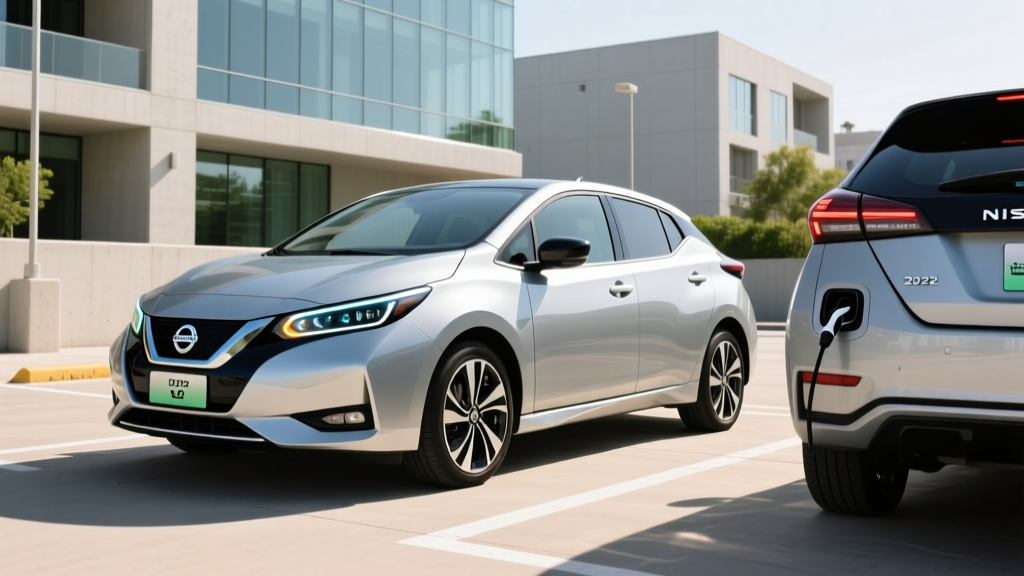
The 2022 Nissan Leaf holds a unique place in EV history. As one of the first mass-market electric vehicles sold in the United States, it introduced millions of drivers to battery-electric ownership. But in 2026, the Leaf occupies a different position: a budget-friendly, proven commuter EV that trades cutting-edge specs for a low entry price and widely available used inventory. If you are shopping for a 2022 Nissan Leaf on the used market or simply want to understand what this model delivers, this profile covers every number that matters — from real-world range to charging realities.
2022 Nissan Leaf Quick Specs
| Spec | Leaf S / SV (40 kWh) | Leaf SL Plus / SV Plus (62 kWh) |
|---|---|---|
| EPA Range | 149 miles | 226 miles |
| Battery (usable) | 40 kWh, NMC | 62 kWh, NMC |
| Motor Output | 147 hp / 236 lb-ft | 214 hp / 250 lb-ft |
| 0–60 mph | ~7.9 sec | ~6.5 sec |
| Drivetrain | FWD | FWD |
| Max DC Fast Charge | 50 kW (CHAdeMO) | 100 kW (CHAdeMO) |
| Level 2 Charge Rate | 6.6 kW (J1772) | 6.6 kW (J1772) |
| EPA Efficiency | 111 MPGe (30 kWh/100 mi) | 104 MPGe (32 kWh/100 mi) |
| Cargo Volume | 23.6 cu ft (rear seats up) | 23.6 cu ft (rear seats up) |
| Original Base MSRP | $27,400 | $35,400 |
Range and Efficiency: EPA Sticker vs. Reality
EPA Estimate: 149 miles (40 kWh) / 226 miles (62 kWh Plus)
Real-World Expectation: In mixed city/highway driving at moderate temperatures, expect roughly 125–140 miles from the 40 kWh pack and 195–215 miles from the 62 kWh Plus. Sustained highway speeds above 70 mph reduce range by approximately 15–20%. In freezing temperatures (below 32°F), range drops an additional 20–30% due to cabin heating demands and reduced battery chemistry efficiency. The 2022 Leaf lacks a heat pump, relying on resistive heating, which is a significant cold-weather drawback compared to competitors like the Hyundai Kona Electric or Chevrolet Bolt EUV.
The 40 kWh Leaf S and SV trims are best understood as dedicated city commuters. A 149-mile EPA rating means daily round-trip commutes under 60 miles are comfortable, but longer errands require planning. The 62 kWh Plus models are substantially more versatile — 226 EPA miles covers most daily needs with a comfortable buffer and makes occasional 150-mile regional trips feasible with a single DC fast-charge stop.
Efficiency is respectable across both variants. The standard Leaf achieves 111 MPGe combined (30 kWh per 100 miles), while the Plus drops slightly to 104 MPGe (32 kWh/100 mi) due to the heavier battery and more powerful motor. Both figures translate to low per-mile energy costs when charging at home on residential electricity rates.
Charging Speed: The CHAdeMO Limitation
Charging is the 2022 Leaf's most consequential limitation for modern buyers. Nissan retained the CHAdeMO DC fast-charging connector rather than adopting the CCS standard that now dominates the North American public charging network. As Electrify America, EVgo, and most other networks have standardized on CCS1 (and Tesla's NACS is rapidly expanding), CHAdeMO stalls are becoming increasingly scarce.
| Charging Level | 40 kWh Leaf | 62 kWh Leaf Plus |
|---|---|---|
| Level 1 (120V, 1.4 kW) | ~4 mi/hr added | ~4 mi/hr added |
| Level 2 (240V, 6.6 kW, J1772) | ~22 mi/hr; full charge ~7.5 hr | ~22 mi/hr; full charge ~11 hr |
| DC Fast (CHAdeMO, peak) | 50 kW peak; 10–80% ~40 min | 100 kW peak; 10–80% ~45 min |
The 100 kW peak rate on Plus models sounds adequate, but real-world charging curves tell a more nuanced story. The Leaf's passive battery thermal management system (air-cooled, unlike the liquid-cooled systems in the Bolt, Kona, and Ioniq 5) causes charging speeds to taper aggressively when the battery warms up. On a hot day or after consecutive fast-charge sessions, sustained rates can drop well below peak — a phenomenon the EV community calls "Rapidgate." For a single highway stop, expect a 10–80% session to take roughly 45 minutes on the Plus and 40 minutes on the standard pack. But back-to-back DC fast charges on a road trip will see progressively slower speeds.
Home Level 2 charging is the Leaf's sweet spot. A 6.6 kW onboard charger replenishes the 40 kWh pack overnight in about 7.5 hours and the 62 kWh pack in roughly 11 hours. For daily commuting with home charging, this is entirely adequate and keeps per-mile fuel costs between $0.03 and $0.05 depending on your local electricity rate.
Performance and Driving Dynamics
The standard 40 kWh Leaf produces 147 horsepower and 236 lb-ft of instant electric torque, delivering a 0–60 mph time of approximately 7.9 seconds. That is adequate for city merging and passing but not quick by modern EV standards. The Plus model's 214 hp and 250 lb-ft drops the 0–60 sprint to roughly 6.5 seconds, which feels genuinely brisk in daily driving.
Both variants are front-wheel drive with a single-speed reduction gear. Ride quality is compliant and tuned for comfort rather than sportiness. The low center of gravity from the floor-mounted battery pack minimizes body roll, and regenerative braking via Nissan's e-Pedal mode enables one-pedal driving in city traffic — a feature that reduces brake wear and simplifies stop-and-go commuting.
NVH (noise, vibration, harshness) levels are acceptable for the price segment, though wind and tire noise become noticeable above 65 mph. The Leaf is not a performance EV; it is a practical, comfortable commuter that delivers its best experience below 70 mph on surface streets and suburban roads.
Interior, Cargo, and Technology
The 2022 Leaf's interior is functional but shows its age compared to newer EV competitors. Materials are predominantly hard plastics, though higher trims (SL Plus) add leatherette seating and a Bose audio system. The 8-inch touchscreen infotainment system supports Apple CarPlay and Android Auto (wired on most trims), and the instrument cluster combines a digital display with an analog speedometer.
Cargo space measures 23.6 cubic feet behind the rear seats and approximately 30.0 cubic feet with the 60/40 split rear seats folded. Rear legroom is 33.5 inches — adequate for adults on shorter trips but tight for tall passengers on longer rides. The lack of a front trunk (frunk) means all cargo must go in the rear hatch area.
On the technology front, the 2022 Leaf includes Nissan's ProPILOT Assist on SV and SL trims. This is a SAE Level 2 driver-assistance system combining adaptive cruise control and lane-centering steering. It requires continuous driver supervision — hands on the wheel, eyes on the road — and does not constitute autonomous or self-driving capability. ProPILOT is competent for highway cruising but less refined than GM's Super Cruise or Ford's BlueCruise, which offer hands-free operation on mapped highways.
Standard safety features include automatic emergency braking with pedestrian detection, blind-spot warning, rear cross-traffic alert, and lane departure warning. The Leaf earned strong crash-test scores from NHTSA and IIHS in its model year.
Pricing, Trims, and Federal Tax Credit Eligibility
When new, the 2022 Leaf was one of the most affordable EVs on the US market. Original MSRP pricing broke down as follows:
| Trim | Original MSRP | Key Features |
|---|---|---|
| S (40 kWh) | $27,400 | Base trim, 149-mi range, 50 kW DCFC |
| SV (40 kWh) | $30,000 | ProPILOT Assist, 8" touchscreen, fog lights |
| SV Plus (62 kWh) | $35,400 | 226-mi range, 100 kW DCFC, ProPILOT |
| SL Plus (62 kWh) | $36,400 | Leather seats, Bose audio, LED headlights |
Used-market pricing in 2026 varies significantly by mileage and condition. Expect to find 40 kWh models between $12,000 and $17,000, and 62 kWh Plus models between $16,000 and $22,000, depending on trim, mileage, and battery health.
Federal Tax Credit: New vs. Used
When purchased new, the 2022 Leaf qualified for the full $7,500 federal EV tax credit under IRS §30D, as Nissan met battery-sourcing requirements and the Leaf's MSRP fell well under the $55,000 sedan cap. However, income limits applied: modified adjusted gross income could not exceed $150,000 (single), $225,000 (head of household), or $300,000 (joint). For the 2022 tax year, the credit was claimed on your tax return — the point-of-sale transfer option was not yet available.
For 2026 buyers purchasing a used 2022 Leaf, the §25E Used Clean Vehicle Credit may apply: up to $4,000 or 30% of the sale price (whichever is less), with income caps of $75,000 (single), $112,500 (head of household), or $150,000 (joint). The vehicle must be purchased from a licensed dealer for $25,000 or less. Always verify current eligibility on IRS.gov and consult a tax professional, as rules and income thresholds are subject to legislative change.
Battery Warranty and Longevity
Nissan provides a lithium-ion battery capacity warranty of 8 years / 100,000 miles (whichever comes first), guaranteeing the battery will retain at least 9 bars out of 12 on the capacity gauge (roughly 70–75% state of health). The powertrain warranty covers 5 years / 60,000 miles.
The Leaf's air-cooled battery thermal management system is its most debated design choice. Passive cooling means the battery is more susceptible to heat-related degradation in hot climates (Arizona, Texas, Southern California) compared to liquid-cooled competitors. Early-generation Leafs (2011–2017) showed measurable capacity loss in high-heat environments, and while the 2022 model's chemistry is improved, owners in hot regions should monitor State of Health (SoH) via the dashboard capacity bars or third-party apps like LeafSpy.
Full battery replacement for a 2022 Leaf ranges from approximately $6,500 to $9,000 at a Nissan dealer, depending on pack size and labor. Third-party refurbishment options exist at lower cost. For most buyers purchasing a used 2022 Leaf, verifying remaining battery capacity before purchase is the single most important step.
Pros and Cons
Pros
- Affordable used-market pricing — one of the cheapest EVs available
- Proven, reliable drivetrain with over a decade of real-world data
- Comfortable ride and quiet cabin at city/suburban speeds
- Efficient home Level 2 charging for daily commuting
- e-Pedal one-pedal driving simplifies stop-and-go traffic
- ProPILOT Assist standard on SV and above trims
Cons
- CHAdeMO connector — increasingly incompatible with public DC networks
- Passive (air-cooled) battery limits fast-charge speed and hot-climate longevity
- No heat pump — significant cold-weather range loss
- Dated interior materials and infotainment vs. newer competitors
- Front-wheel drive only; no AWD option
- Modest DC fast-charge speeds even on Plus (100 kW peak, heavy taper)
Who Should Buy the 2022 Nissan Leaf?
The 2022 Leaf is best suited for budget-conscious commuters who charge at home and drive primarily in moderate climates. If your daily round trip is under 80 miles (40 kWh) or under 140 miles (62 kWh Plus), and you have reliable Level 2 home charging, the Leaf delivers low operating costs and dependable transportation. It is also a strong choice for a second household vehicle dedicated to local errands and commuting.
The Leaf is not the right choice if you need frequent DC fast charging on road trips (the CHAdeMO connector and passive cooling are serious limitations), if you live in an extreme-heat climate and plan to keep the car for 8+ years, or if you need the latest infotainment and interior quality. Buyers in those situations should cross-shop the Chevrolet Bolt EV/EUV (CCS, liquid-cooled battery, similar used pricing), the Hyundai Kona Electric, or the newer Nissan Ariya.
Frequently Asked Questions
What is the real-world range of the 2022 Nissan Leaf?
Expect approximately 125–140 miles from the 40 kWh model and 195–215 miles from the 62 kWh Plus in moderate temperatures with mixed driving. Highway-only driving at 75+ mph reduces range by 15–20%. In freezing weather, subtract an additional 20–30% due to resistive cabin heating and reduced battery efficiency. The Leaf does not have a heat pump.
How fast does the 2022 Leaf charge at home and on DC fast chargers?
At home on a 240V Level 2 charger (6.6 kW), the 40 kWh Leaf adds roughly 22 miles of range per hour and fully charges in about 7.5 hours. The 62 kWh Plus takes approximately 11 hours for a full charge. On DC fast chargers, the 40 kWh model peaks at 50 kW (10–80% in ~40 minutes) and the Plus peaks at 100 kW (10–80% in ~45 minutes). Both use the CHAdeMO connector, which is increasingly rare on public networks.
Does a used 2022 Nissan Leaf qualify for a federal tax credit?
It may qualify for the §25E Used Clean Vehicle Credit — up to $4,000 or 30% of the sale price, whichever is less. Requirements include: purchase from a licensed dealer, sale price of $25,000 or less, and buyer income under $75,000 (single) / $150,000 (joint). Check current rules at IRS.gov and consult a tax professional.
Is the 2022 Nissan Leaf worth buying over competitors?
If price is the primary factor and you charge at home, the Leaf's low used-market cost makes it compelling. However, the Chevrolet Bolt EV/EUV offers a CCS connector (far better public charging compatibility), a liquid-cooled battery (better longevity in heat), and similar pricing. The Hyundai Kona Electric is another strong alternative with CCS and a heat pump. Choose the Leaf if you find an exceptional deal and your use case is home-charged commuting.
How long will the 2022 Leaf battery last?
Nissan warranties the battery for 8 years / 100,000 miles against capacity loss below approximately 70–75% SoH. Real-world data suggests the 2022 Leaf's NMC chemistry holds up well in moderate climates, but the passive air-cooling system makes it more vulnerable to heat-related degradation in hot regions. Monitoring SoH via the dashboard capacity gauge or LeafSpy is recommended, especially for used purchases.
Does the 2022 Leaf have self-driving capability?
No. The available ProPILOT Assist is an SAE Level 2 driver-assistance system that provides adaptive cruise control and lane-centering. It requires the driver to keep hands on the wheel and eyes on the road at all times. It is not autonomous or self-driving.