Cybertruck Horsepower and Powertrain: The Numbers That Matter
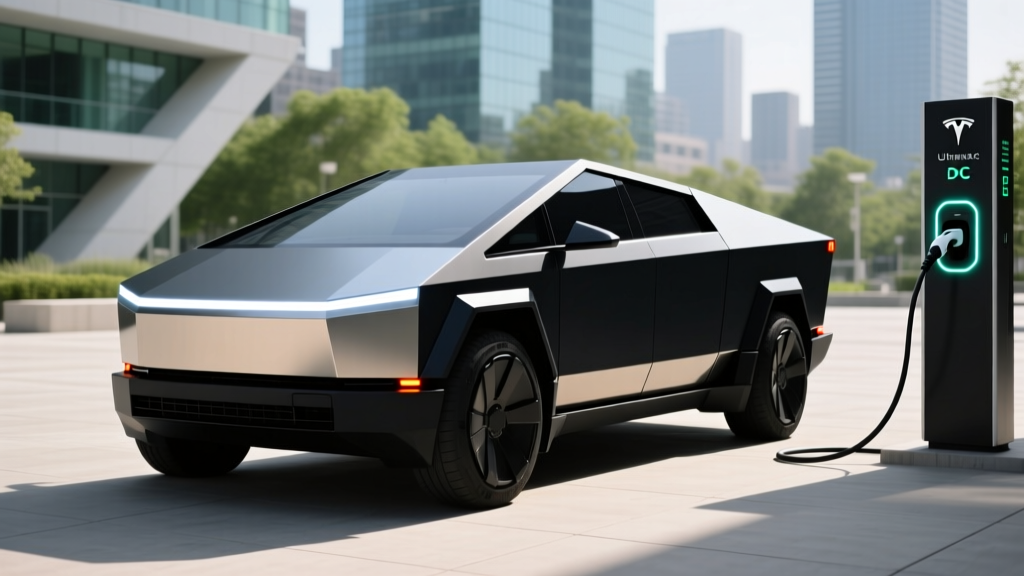
If you're searching for how much horsepower does a Cybertruck have, the answer depends on which dual-motor or tri-motor configuration you choose. For the 2026 model year, Tesla offers the Cybertruck in two primary powertrain tiers, each with dramatically different output figures that reshape what a full-size electric pickup can deliver.
| Spec | AWD (Dual-Motor) | Cyberbeast (Tri-Motor) |
|---|---|---|
| Horsepower | 600 hp | 845 hp |
| Torque | 740 lb-ft | 740 lb-ft |
| 0–60 mph | 4.1 seconds | 2.6 seconds |
| Drivetrain | Dual-motor AWD | Tri-motor AWD |
| Top Speed | 112 mph | 130 mph |
| Towing Capacity | 11,000 lbs | 11,000 lbs |
The AWD model's 600 hp already outmuscles most V8-powered full-size trucks on the market, while the Cyberbeast's 845 hp puts it in hypercar territory from a stoplight. Both use Tesla's permanent-magnet synchronous motors with silicon carbide inverters, but the Cyberbeast adds a third rear motor that primarily contributes to its brutal acceleration rather than additional towing capability.
Battery Capacity, Chemistry, and Energy Storage
The 2026 Cybertruck uses a structural battery pack integrated into the stainless-steel exoskeleton. Tesla has not officially published the exact usable kWh figure, but teardown analysis and EPA efficiency data point to a usable capacity of approximately 123 kWh for the AWD and 123 kWh for the Cyberbeast (the tri-motor variant uses the same pack but consumes more energy under load).
The pack employs NMC (nickel-manganese-cobalt) chemistry, specifically Tesla's 4680-format cells manufactured at Giga Texas. NMC offers higher energy density than LFP (lithium iron phosphate), which is critical for a vehicle this heavy — the Cybertruck's curb weight exceeds 6,600 lbs in AWD trim and approaches 6,900 lbs for the Cyberbeast. The trade-off is that NMC cells are more sensitive to sustained 100% states of charge, so Tesla recommends daily charging to 80–90% for longevity, reserving 100% for road trips.
AWD: EPA-estimated 340 miles. Real-world highway driving at 70–75 mph typically yields 270–300 miles. In cold weather (below 32°F), expect 220–260 miles due to battery heating demands and cabin HVAC load.
Cyberbeast: EPA-estimated 320 miles. Real-world highway: 250–280 miles. Cold weather: 200–240 miles. Aggressive driving or sustained towing can drop range below 200 miles.
Charging Speed: DC Fast, Level 2, and the Charge Curve
Charging a 123 kWh battery is a time-intensive process, and the Cybertruck's charge curve is one of the most important ownership factors buyers overlook. Here are the exact numbers:
| Charging Level | Max Rate | Speed / Notes |
|---|---|---|
| DC Fast Charge (NACS) | 250 kW peak | 10–80% in ~30 minutes; tapers sharply above 80% |
| Level 2 (240V / 48A) | 11.5 kW | ~30 miles of range per hour; full charge in ~12 hours |
| Level 1 (120V / 12A) | 1.4 kW | ~3–4 miles per hour; emergency/trickle only |
The 250 kW peak DC rate is competitive but not class-leading — the Rivian R1T and Ford F-150 Lightning both peak around 200–220 kW, so Tesla holds a slight advantage. However, peak rate is not sustained rate. In real-world testing at V3 and V4 Superchargers, the Cybertruck holds close to 250 kW only between roughly 10–35% state of charge, then steps down through the curve. A typical 10–80% session takes approximately 30 minutes, and pushing from 80–100% can add another 25–30 minutes due to the taper.
For home charging, a 48-amp Level 2 wall connector on a 60-amp circuit is the practical minimum for overnight replenishment. If you drive 60+ miles daily, consider upgrading to a 60-amp charger on an 80-amp circuit for faster turnaround. Budget $800–$2,500 for professional installation depending on panel capacity and run length — and factor in a potential $1,500–$3,000 panel upgrade if your home still has a 100-amp service.
Pricing, Trims, and Federal Tax Credit Eligibility
The Cybertruck's pricing has shifted multiple times since launch. As of the 2026 model year, here is where the lineup stands:
| Trim | Base MSRP | As-Tested (Typical Options) | §30D Credit Eligible? |
|---|---|---|---|
| AWD | $79,990 | $83,000–$87,000 | No — exceeds $80,000 truck MSRP cap |
| Cyberbeast | $99,990 | $104,000–$112,000 | No — exceeds $80,000 truck MSRP cap |
This is the critical detail many buyers miss: the IRS §30D federal tax credit caps eligibility for trucks, vans, and SUVs at an $80,000 MSRP. Since even the base AWD Cybertruck starts at $79,990 — and destination fees plus any option push it over — no current Cybertruck trim qualifies for the $7,500 federal credit. Additionally, buyers must meet income caps ($300,000 joint / $150,000 single modified adjusted gross income) and the vehicle must meet critical-mineral and battery-component sourcing requirements.
Some state-level incentives (California's CVRP, Colorado's state credit, etc.) may still apply, but these vary by jurisdiction and often have their own MSRP or income restrictions. Check your state energy office or DMV for current programs.
Efficiency: MPGe and Energy Consumption
For a vehicle this heavy and angular, efficiency is predictably modest. The EPA rates the Cybertruck as follows:
- AWD: 67 MPGe combined (approximately 50 kWh per 100 miles)
- Cyberbeast: 63 MPGe combined (approximately 53 kWh per 100 miles)
According to fueleconomy.gov, these figures place the Cybertruck well behind lighter EVs (a Model Y achieves 120+ MPGe) but roughly on par with the F-150 Lightning and Rivian R1T. The stainless-steel exoskeleton's flat panels and sharp angles create more aerodynamic drag than a curved body, and the 6,600+ lb curb weight demands substantial energy to accelerate and maintain speed. Highway efficiency drops further — expect 55–60 kWh/100mi at 75 mph, which is why real-world highway range falls 15–20% below the EPA combined estimate.
Cargo, Passenger Space, and Practicality
The Cybertruck's dimensions are unconventional, and that extends to its utility:
- Bed length: 6 feet (72 inches) with the tonneau closed; extends to ~8 feet with the tailgate down
- Bed width: ~48 inches between wheel wells
- Bed volume: ~67 cubic feet
- Front trunk (frunk): ~7.1 cubic feet — enough for a charging cable and small bag
- Seating: 5 passengers (3-across bench in front, 3-across rear)
- Rear legroom: ~38.2 inches — adequate but not class-leading vs. the F-150 Lightning's 43+ inches
- Towing: 11,000 lbs max (both trims) — competitive with the F-150 Lightning's 10,000 lb rating
The motorized tonneau cover is standard and lockable, providing secure enclosed storage. However, the bed's trapezoidal shape and sloped walls (a consequence of the angular design) make loading standard rectangular cargo — like plywood sheets — more awkward than in a conventional truck bed. The 11,000-lb towing rating is impressive on paper, but towing at max capacity will cut range roughly in half, dropping real-world towing range to 130–160 miles.
Tech, Driver Assists, and Standout Features
The Cybertruck's interior is minimalist in the extreme — a single 18.5-inch touchscreen dominates the dash, with a secondary 9.4-inch rear touchscreen for passengers. There are no physical buttons; even the glovebox opens via the screen. Key tech features include:
- Autopilot (standard): adaptive cruise, lane-keeping, automatic emergency braking
- Full Self-Driving Supervised ($8,000 add-on or $99/month): city street navigation, traffic-light recognition, lane changes — still Level 2, driver must supervise
- Steer-by-wire: no mechanical connection between the yoke and wheels; enables the variable-ratio steering and the compact yoke design
- 48-volt electrical architecture: a first for a production vehicle, reducing wiring harness weight and enabling higher-power accessories
- Bioweapon Defense Mode: HEPA filtration with positive cabin pressure
- Armor glass: laminated glass with stainless-steel mesh interlayer (more resistant to impacts, though not literally bulletproof)
- The yoke steering and steer-by-wire system has a steep learning curve, especially at low speeds and in parking lots.
- Visibility is compromised by the thick A-pillars, angular rear pillars, and lack of a rear windshield wiper.
- The stainless-steel body shows fingerprints immediately and requires specific cleaning products to maintain appearance.
- Panel gaps and build quality have improved since early 2024 deliveries but still draw scrutiny compared to legacy OEMs.
- No Apple CarPlay or Android Auto — Tesla's proprietary infotainment only.
Warranty Coverage and Battery Longevity
Tesla provides the following warranty coverage for the 2026 Cybertruck:
- Basic vehicle: 4 years / 50,000 miles
- Battery and drive unit: 8 years / 120,000 miles (whichever comes first), with a minimum 70% capacity retention threshold
- Restraint system: 5 years / 60,000 miles
- Corrosion: 12 years with no mileage limit (relevant given the stainless-steel body)
The 120,000-mile battery warranty is competitive. Tesla's 4680 NMC cells have shown promising degradation data in Model Y applications, typically losing 8–12% capacity over the first 100,000 miles before the curve flattens. To maximize longevity, charge to 80–90% daily, avoid frequent DC fast charging when Level 2 is available, and precondition the battery before Supercharging (the navigation system does this automatically when a Supercharger is set as the destination).
Who Should Buy the Cybertruck — and Who Shouldn't
- 600–845 hp delivers performance no gas truck can match
- 11,000-lb towing capacity competitive with full-size gas trucks
- Stainless-steel body is dent- and corrosion-resistant
- Supercharger network access (17,000+ stalls in North America)
- 48-volt architecture and steer-by-wire represent genuine engineering innovation
- Standard 250 kW DC fast charging with NACS connector
- $80,000+ price eliminates federal tax credit eligibility
- Real-world range falls 15–25% below EPA estimates, especially in cold
- Bed shape limits practical cargo loading vs. conventional trucks
- Yoke steering and screen-only controls polarize drivers
- No rear wiper; visibility challenges in rain and snow
- Insurance premiums run 30–50% higher than comparable gas trucks
Best for: Tech-forward buyers who want a daily-driver truck with sports-car acceleration, have reliable home Level 2 charging, rarely tow at max capacity, and value the Supercharger network for road trips. The AWD trim at $79,990 makes the strongest case for buyers who want the utility without the Cyberbeast premium.
Think twice if: You need maximum cargo-bed versatility (the F-150 Lightning's conventional bed is more practical), you regularly drive in extreme cold where range drops below 220 miles, you depend on the $7,500 federal credit to make the math work, or you prefer physical buttons and Apple CarPlay.
Frequently Asked Questions
How much horsepower does a Cybertruck have in 2026?
The 2026 Cybertruck AWD produces 600 horsepower and 740 lb-ft of torque from its dual-motor setup. The Cyberbeast tri-motor variant produces 845 horsepower with the same 740 lb-ft of torque. Both figures are measured at the wheels, which is how electric motors deliver power — there is no drivetrain loss to account for as with internal combustion engines.
What is the real-world range of the Cybertruck?
The EPA rates the AWD at 340 miles and the Cyberbeast at 320 miles. In real-world highway driving at 70–75 mph, expect 270–300 miles from the AWD and 250–280 from the Cyberbeast. In freezing temperatures, those figures drop to roughly 220–260 miles (AWD) and 200–240 miles (Cyberbeast). Towing at max capacity cuts range approximately in half.
How fast does the Cybertruck charge?
On a DC fast charger, the Cybertruck peaks at 250 kW and can charge from 10–80% in approximately 30 minutes. At home on a 48-amp Level 2 charger (240V), it adds about 30 miles of range per hour, requiring roughly 12 hours for a full charge. Level 1 (120V) is impractical for daily use, adding only 3–4 miles per hour.
Does the Cybertruck qualify for the $7,500 federal EV tax credit?
No. Under current IRS §30D rules, trucks must have an MSRP at or below $80,000 to qualify. The base Cybertruck AWD starts at $79,990, and destination charges plus any options push it above the cap. The Cyberbeast at $99,990 is well above the limit. State-level incentives may still apply depending on your jurisdiction.
Is the Cybertruck worth buying vs. the Rivian R1T or F-150 Lightning?
It depends on your priorities. The Cybertruck offers more horsepower, a distinctive design, and Supercharger access. The Rivian R1T provides a more conventional truck bed, better rear-seat space, and a quad-motor option. The F-150 Lightning offers the most practical bed, lower starting prices, and broader dealership service coverage. If raw performance and tech appeal matter most, the Cybertruck wins. If cargo practicality and service accessibility matter more, the Lightning or R1T may serve you better.
How much does insurance cost for a Cybertruck?
Cybertruck insurance premiums are significantly higher than average. Expect annual premiums of $3,500–$5,500 depending on your state, driving record, and coverage level — roughly 30–50% more than an equivalent F-150. Tesla's own insurance product (available in select states) uses real-time driving data and can sometimes offer lower rates for safe drivers.
What is the Cybertruck's battery warranty?
Tesla covers the battery and drive unit for 8 years or 120,000 miles, whichever comes first. The warranty guarantees a minimum of 70% capacity retention over that period. If the battery degrades below 70% within the warranty window, Tesla will repair or replace it at no cost. The basic vehicle warranty covers 4 years or 50,000 miles.