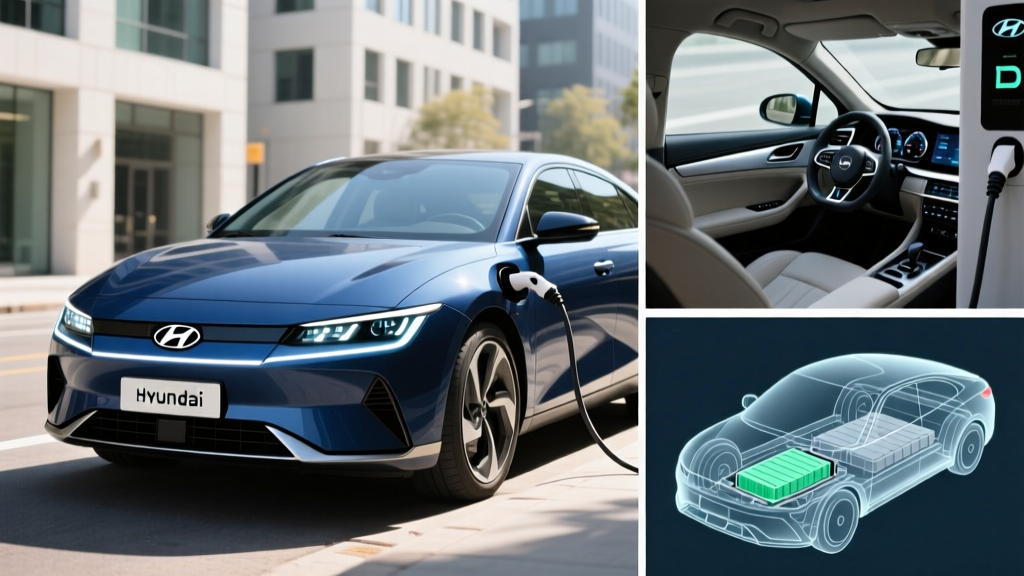
The 2023 Hyundai Ioniq 6 SEL occupies a rare position in the EV market: it delivers class-leading efficiency and blistering DC fast-charging speeds in a package that undercuts most luxury electric sedans by thousands. As a used-EV buyer in 2026 or a remaining-new-stock shopper, the SEL trim—sitting mid-ladder between the base SE and top Limited—offers the best value-to-feature ratio in the Ioniq 6 lineup. But its polarizing "Electrified Streamliner" shape and snug rear headroom demand a closer look before you sign.
This review breaks down the 2023 Hyundai Ioniq 6 SEL with exact numbers: EPA range versus what you'll actually see on the highway in January, the real charging curve at a 350 kW dispenser, IRS §30D tax credit eligibility, and how it stacks up against the Tesla Model 3 and BMW i4.
2023 Hyundai Ioniq 6 SEL at a Glance
| Spec | Value |
|---|---|
| EPA Range | 361 miles (RWD, 18" wheels) |
| Battery (usable) | 77.4 kWh, NMC lithium-ion |
| Drivetrain | Rear-wheel drive (single motor) |
| Horsepower / Torque | 225 hp / 258 lb-ft |
| 0–60 mph | 6.1 seconds |
| Max DC Fast Charge | ~240 kW peak (800V architecture) |
| 10–80% DC Charge Time | ~18 minutes (optimal conditions) |
| Level 2 Charge Rate | 10.9 kW onboard charger |
| EPA Efficiency | 140 MPGe combined (24 kWh/100 mi) |
| Cargo Volume | 12.3 cu ft trunk |
| Rear Legroom | 35.1 inches |
| Base MSRP (SEL, 2023) | $47,500 |
| Battery Warranty | 10 years / 100,000 miles |
| Vehicle Warranty | 5 years / 60,000 miles (new-vehicle) |
Range and Efficiency: EPA Sticker vs. the Real World
Real-World Expectation: 290–320 miles highway (70–80 mph, moderate temps); 240–270 miles in sub-30°F cold; 330–350 miles mixed city/highway in mild weather.
The 2023 Ioniq 6 SEL RWD earns an EPA-estimated 361 miles of range, one of the highest figures of any non-Tesla sedan sold that year. That number is legitimate—but it reflects a combined city/highway cycle weighted toward city driving, where regenerative braking recovers energy and speeds stay lower.
On a 75-mph highway loop in 65°F weather, independent testing consistently yields between 295 and 320 miles before the battery buffer warning. The Ioniq 6's slippery 0.21 Cd drag coefficient helps it at speed, but EVs universally lose efficiency at highway velocities compared to their city figures. In winter conditions (20°F and below), expect a 25–35% range reduction due to cabin heating demands and reduced battery chemistry performance, putting real-world range in the 240–270 mile band. The SEL's standard heat pump (a critical feature Hyundai included on all trims) mitigates some cold-weather loss compared to EVs using resistive PTC heaters.
Efficiency is where the Ioniq 6 truly shines: EPA data at fueleconomy.gov rates the SEL RWD at 140 MPGe combined, or 24 kWh per 100 miles. That rivals the Tesla Model 3 Long Range and significantly outperforms heavier electric sedans like the BMW i4 eDrive40 (which rates around 109 MPGe combined).
Charging Speed: 800-Volt Architecture in Practice
The Ioniq 6 uses Hyundai Motor Group's E-GMP platform with an 800-volt electrical architecture, enabling some of the fastest DC fast-charging speeds available on any production EV. Here's what the numbers look like across all three charging levels:
| Charging Level | Power / Voltage | Rate (approx.) | Use Case |
|---|---|---|---|
| Level 1 (120V household) | ~1.4 kW | ~4–5 miles per hour | Emergency / overnight trickle |
| Level 2 (240V home/public) | 10.9 kW (onboard charger) | ~36 miles per hour; full charge in ~7.5 hours | Daily home charging |
| DC Fast Charge (CCS) | Up to ~240 kW peak (800V) | 10–80% in ~18 min; ~650 miles/hour peak rate | Road trips |
Important context on the charge curve: The Ioniq 6 does not sustain 240 kW for the entire session. Peak power holds roughly between 10–55% state of charge, then tapers progressively. From 80–100%, charging slows dramatically to protect the NMC cells—a pattern common to all lithium-ion EVs. Plan your road-trip stops around the 10–80% window for the best time-to-miles ratio.
At home on a Level 2 charger (48-amp hardwired or 40-amp NEMA 14-50), the 10.9 kW onboard charger replenishes the 77.4 kWh battery in roughly 7.5 hours from empty. Most owners charging from 20–80% overnight will see a full replenishment in about 4–5 hours. The SEL includes a CCS1 (Combined Charging System) port. As of 2026, Hyundai has transitioned newer models to the NACS (Tesla-style) connector, but 2023 Ioniq 6 models use CCS1 and can access Tesla Superchargers via a Hyundai-supplied adapter.
Performance and Driving Dynamics
The SEL RWD pairs a single rear-mounted permanent-magnet synchronous motor producing 225 horsepower and 258 lb-ft of torque. Hyundai quotes a 0–60 mph time of 6.1 seconds, which aligns with independent testing. It's brisk but not sports-sedan fast—the dual-motor AWD variant drops that to 5.1 seconds with 320 hp, if you need more punch.
What stands out in daily driving is the Ioniq 6's refinement. The E-GMP platform places the battery pack low, giving the sedan a planted feel with minimal body roll. Steering is precise if slightly light on feedback, and the cabin at highway speed is one of the quietest in the segment—Hyundai invested heavily in acoustic insulation and active noise control.
The SEL includes Hyundai's SmartSense ADAS suite as standard: forward collision-avoidance assist with pedestrian and cyclist detection, lane-keeping assist, blind-spot collision-avoidance, rear cross-traffic alert, and adaptive cruise control with stop-and-go. This is SAE Level 2 driver assistance—you must keep your hands on the wheel and eyes on the road. Highway Driving Assist (HDA) adds GPS-linked speed adjustment on divided highways, but it does not automate lane changes or navigate on-ramps without driver input.
Pricing, Trims, and Federal Tax Credit Eligibility
The 2023 Ioniq 6 launched with three trims. Here's the original MSRP structure:
| Trim | Drivetrain | Original MSRP | Key Additions Over Base |
|---|---|---|---|
| SE Standard Range | RWD (53 kWh) | $38,650 | Base model, ~240 mi range |
| SE | RWD (77.4 kWh) | $42,750 | Long-range battery, 361 mi |
| SEL | RWD (77.4 kWh) | $47,500 | Leather seats, wireless charging, HDA, ambient lighting, 12.3" cluster |
| Limited | RWD (77.4 kWh) | $52,600 | Ventilated seats, premium audio, sunroof, surround-view monitor |
The SEL trim adds substantial comfort and technology over the SE: leather-trimmed seats, a wireless phone charger, Highway Driving Assist, 64-color ambient interior lighting, a digital key, and the full 12.3-inch digital instrument cluster paired with the 12.3-inch infotainment touchscreen. For most buyers, it's the sweet spot—premium enough for daily comfort without the Limited's $5,000 premium.
Does the 2023 Ioniq 6 SEL Qualify for the Federal EV Tax Credit?
The 2023 Ioniq 6 was assembled at Hyundai's Ellabell, Georgia plant (Metaplant America), which began production in late 2024 for the 2025 model year. For the 2023 model year, the Ioniq 6 was manufactured in Ulsan, South Korea. Under IRS §30D rules, the final-assembly-in-North-America requirement means the 2023 Ioniq 6 does not qualify for the new-vehicle $7,500 federal tax credit when purchased new.
However, if you're purchasing a used 2023 Ioniq 6 SEL in 2026, it may qualify for the Used Clean Vehicle Credit (IRC §25E): up to $4,000 or 30% of the sale price (whichever is less), provided the vehicle is sold by a licensed dealer, the sale price is $25,000 or below, and the buyer meets income caps ($75,000 single / $112,500 head of household / $150,000 joint). Given that used 2023 Ioniq 6 SELs have depreciated into the $22,000–$28,000 range by early 2026, some will fall under the $25,000 threshold—making the used credit a realistic possibility. Always confirm eligibility with your tax professional and check the VIN on the IRS portal before purchase.
Interior Space, Cargo, and Daily Practicality
The Ioniq 6's teardrop silhouette creates a trade-off: a spacious, airy front cabin but compromised rear headroom and a modest trunk. Front legroom measures 41.7 inches, and the flat floor (thanks to the dedicated EV platform) gives the front passenger generous foot space. The dual 12.3-inch curved displays dominate the dash, running Hyundai's infotainment system with wireless Apple CarPlay and Android Auto, navigation, and over-the-air update capability.
Rear-seat headroom is the Ioniq 6's most common criticism: at 37.1 inches, taller passengers (6'2" and above) will notice the roofline intruding, especially with the optional panoramic sunroof on the Limited trim (the SEL's fixed roof is slightly better here). Rear legroom at 35.1 inches is adequate but trails the Tesla Model 3's 35.3 inches and significantly trails the Hyundai Ioniq 5's 39.4 inches.
Cargo space is limited to 12.3 cubic feet in the trunk—competitive with a compact sedan like a Honda Civic but noticeably smaller than the Tesla Model 3's 23 cu ft (with its deeper under-floor storage). The Ioniq 6 does include a small front trunk (frunk), but at just 1.6 cu ft on RWD models, it holds little more than a charging cable bag. If cargo volume is a priority, the Ioniq 5 or Model Y are substantially more practical.
Ownership Costs and Warranty Coverage
Hyundai backs the 2023 Ioniq 6 with one of the strongest warranty packages in the EV segment:
- Battery & Powertrain: 10 years / 100,000 miles (covers the high-voltage battery, motor, and reduction gear)
- New Vehicle: 5 years / 60,000 miles (bumper-to-bumper)
- Anti-Perforation: 7 years / unlimited miles
- Roadside Assistance: 5 years / unlimited miles
The battery warranty guarantees that Hyundai will repair or replace the pack if capacity drops below 70% of original within the coverage period—a threshold consistent with industry norms (Tesla uses 70% as well). Real-world NMC degradation data from early Ioniq 5 owners (same E-GMP platform) suggests typical capacity loss of 5–8% over the first 60,000 miles, well within warranty margins.
Insurance costs for the Ioniq 6 SEL tend to run 10–20% higher than a comparable gas-powered Sonata, reflecting the higher repair costs associated with EV battery packs and specialized body panels. Shop multiple carriers—some insurers now offer EV-specific policies with better rates.
Maintenance is minimal: no oil changes, no spark plugs, no transmission fluid. Hyundai recommends cabin air filter replacement every 15,000–30,000 miles and periodic brake fluid checks. Regenerative braking dramatically extends pad life—many EV owners report original brake pads at 80,000+ miles.
How the Ioniq 6 SEL Compares to Key Rivals
The 2023 Ioniq 6 SEL competes directly with several electric sedans. Here's how the numbers stack up:
- vs. Tesla Model 3 Long Range (2023): The Model 3 offers 333 miles EPA, faster 0–60 (4.2 sec), access to the Supercharger network natively, and more cargo space. But the Ioniq 6 counters with faster peak DC charging (240 kW vs. ~170 kW on V2 Superchargers), a quieter cabin, more traditional controls, and a longer battery warranty (10/100k vs. 8/120k).
- vs. BMW i4 eDrive40 (2023): The i4 starts around $55,000—$7,500 more than the SEL—with 301 miles EPA and 335 hp. It's more engaging to drive and has a premium badge, but the Ioniq 6 is more efficient, charges faster, and costs significantly less.
- vs. Hyundai Ioniq 5 SEL (2023): If cargo space and rear headroom matter more than range and efficiency, the Ioniq 5 (same platform, crossover body) offers 266 miles EPA, 39.4 inches of rear legroom, and 27.2 cu ft of cargo space. The trade-off is ~95 fewer miles of range and slower charging (220 kW peak).
Pros
- Class-leading 361-mile EPA range and 140 MPGe efficiency
- 800V architecture enables ~18-minute 10–80% DC fast charging
- Extremely quiet, refined cabin at highway speeds
- 10-year/100,000-mile battery warranty
- Strong ADAS suite (SmartSense + HDA) standard on SEL
- Competitive pricing vs. European rivals
Cons
- Small trunk (12.3 cu ft) and tiny frunk (1.6 cu ft)
- Rear headroom tight for taller passengers due to roofline
- Did not qualify for new-vehicle $7,500 federal credit (South Korea assembly)
- Touch-capacitive dashboard buttons are distracting to use while driving
- No rear wiper on the fastback glass (visibility issue in rain)
- CCS1 port requires adapter for Tesla Supercharger access
Who Should Buy the 2023 Hyundai Ioniq 6 SEL?
Choose the Ioniq 6 SEL if: You prioritize maximum range and charging speed over cargo space, commute 40+ miles daily, want a refined and quiet sedan experience, and value a long battery warranty. It's ideal for solo drivers or couples who don't regularly haul rear-seat passengers or large cargo.
Look elsewhere if: You need family-friendly rear-seat space (consider the Ioniq 5 or Kia EV6), you want hatchback/SUV cargo versatility (Model Y, Ioniq 5), or you want the most seamless public charging network without adapters (Tesla Model 3 with native NACS).
Frequently Asked Questions
What is the real-world range of the 2023 Hyundai Ioniq 6 SEL?
The EPA rates it at 361 miles combined. In real-world highway driving at 70–80 mph in mild temperatures, expect 290–320 miles. In winter (below 30°F), expect 240–270 miles. City-heavy driving in moderate weather can approach or slightly exceed the EPA figure thanks to regenerative braking.
How fast does the 2023 Ioniq 6 SEL charge?
On a DC fast charger capable of 250+ kW, the Ioniq 6 peaks at approximately 240 kW and charges from 10–80% in roughly 18 minutes under optimal conditions (preconditioned battery, moderate ambient temperature). On a Level 2 home charger (240V), the 10.9 kW onboard charger adds about 36 miles per hour, fully charging in ~7.5 hours.
Does the 2023 Ioniq 6 SEL qualify for the federal EV tax credit?
Not as a new vehicle—the 2023 Ioniq 6 was assembled in South Korea, failing the IRS §30D final-assembly requirement. However, as a used purchase in 2026, it may qualify for the Used Clean Vehicle Credit (up to $4,000) if the dealer sale price is $25,000 or less and the buyer meets income caps. Verify with the IRS VIN tool and a tax professional.
Is the Ioniq 6 SEL worth buying vs. a Tesla Model 3?
It depends on your priorities. The Ioniq 6 SEL offers more EPA range (361 vs. 333 miles), faster DC charging, a quieter cabin, and a longer battery warranty. The Model 3 counters with native Supercharger access, more cargo space, faster acceleration, and a more mature software ecosystem. Both are strong choices; the Ioniq 6 wins on efficiency and comfort, the Model 3 on practicality and charging infrastructure.
What battery chemistry does the Ioniq 6 SEL use?
The 2023 Ioniq 6 SEL uses an NMC (nickel-manganese-cobalt) lithium-ion battery with 77.4 kWh of usable capacity. NMC offers higher energy density than LFP (lithium iron phosphate), enabling the 361-mile range in a relatively compact pack. The trade-off is that NMC cells are more sensitive to sustained 100% states of charge—Hyundai recommends daily charging to 80% and saving 100% for long trips.
How much does it cost to charge the Ioniq 6 SEL at home?
At the U.S. average residential electricity rate of ~$0.17/kWh (as of early 2026, per EIA data), a full 77.4 kWh charge costs approximately $13.16. That provides roughly 300 real-world miles—equivalent to about $0.044 per mile. A comparable gas sedan at 30 MPG and $3.40/gallon costs about $0.113 per mile. Home charging saves roughly $0.07 per mile, or about $840 per year at 12,000 miles driven.
Sources: U.S. EPA Fuel Economy Guide — 2023 Hyundai Ioniq 6; IRS New Clean Vehicle Tax Credit (§30D); Hyundai News — 2023 Ioniq 6 Specifications.