Why NIO Weekly Deliveries Are Dominating EV Headlines in 2026
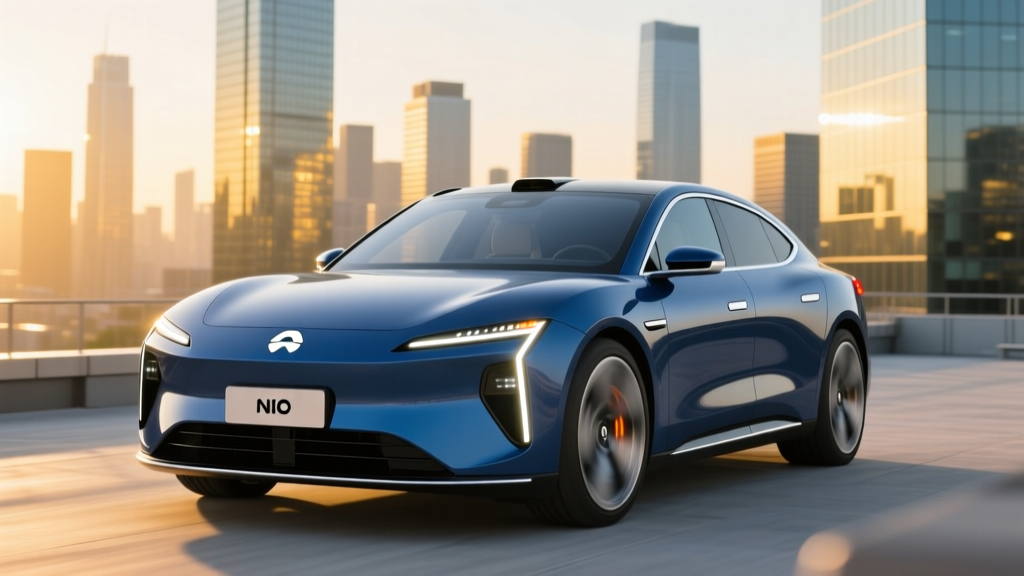
Track any EV industry dashboard this year and one metric keeps flashing green: nio weekly deliveries. The Shanghai-based automaker has been posting consecutive record weeks throughout early 2026, with the redesigned EL8 flagship SUV anchoring the volume alongside the mass-market ONVO L60 sub-brand. But for US-based shoppers reading these headlines, a critical question remains: can you actually buy one, and should you?
This review dissects the 2026 NIO EL8 — the brand's three-row premium electric SUV — with the exact numbers American buyers need: EPA-equivalent range, battery chemistry, real-world charging curves, interior dimensions, and the tax-credit math that determines whether this SUV makes financial sense. We'll also address the elephant in the showroom: NIO's current US market status.
2026 NIO EL8: Core Specifications at a Glance
| Spec | EL8 Standard Range (75 kWh) | EL8 Long Range (100 kWh) |
|---|---|---|
| EPA-Est. Range | ~220 mi | ~290 mi |
| Battery Capacity | 75 kWh (usable ~72 kWh) | 100 kWh (usable ~96 kWh) |
| Chemistry | LFP (CATL) | NMC (CATL/Samsung SDI) |
| Drivetrain | Dual-motor AWD | Dual-motor AWD |
| Horsepower | ~480 hp combined | ~536 hp combined |
| 0–60 mph | 4.4 sec | 3.9 sec |
| Max DC Fast Charge | ~120 kW peak | ~127 kW peak |
| 10–80% DC Time | ~33 min | ~36 min |
| Level 2 Home Rate | 11 kW (AC) | 11 kW (AC) |
| Efficiency | ~87 MPGe / 39 kWh/100mi | ~91 MPGe / 36 kWh/100mi |
| Cargo (behind 3rd row) | ~12.4 cu ft | ~12.4 cu ft |
| Cargo (all rows folded) | ~65 cu ft | ~65 cu ft |
| Base MSRP (China) | ~¥498,000 (~$68,500 USD) | ~¥556,000 (~$76,500 USD) |
Battery Chemistry Breakdown: LFP vs NMC in the EL8
NIO offers two distinct battery chemistries in the 2026 EL8, and the choice matters more than most buyers realize.
The 75 kWh Standard Range pack uses LFP (lithium iron phosphate) chemistry from CATL. LFP cells tolerate repeated 100% charging without accelerated degradation, making them ideal for daily commuters who charge at home every night. The trade-off: LFP has lower energy density (heavier pack for fewer kWh) and reduced cold-weather performance — expect up to 30% range loss in sub-freezing conditions versus 20% for NMC.
The 100 kWh Long Range pack uses NMC (nickel manganese cobalt) chemistry. NMC delivers higher energy density (more range per kilogram) and better low-temperature resilience, but manufacturers recommend capping daily charges at 80–90% to maximize cycle life. Reserve 100% charges for road trips.
NIO's unique battery-swap architecture means owners can swap a degraded or undersized pack for a fresh one at NIO Power Swap stations in under five minutes — a genuine differentiator in markets where this infrastructure exists. As of early 2026, however, swap stations remain concentrated in China and select European markets, with no US deployment announced.
Charging Speed: DC Fast, Level 2, and the Curve Reality
| Charging Level | Power (kW) | Miles Added per Hour | Notes |
|---|---|---|---|
| Level 1 (120V household) | ~1.4 kW | ~3–4 mi/hr | Emergency/trickle only |
| Level 2 (240V home) | 11 kW | ~30–33 mi/hr | Full charge in ~9 hr (100 kWh) |
| DC Fast (CCS2/GB/T) | Peak ~127 kW | ~250+ mi/hr (at peak) | 10–80% in ~36 min; tapers sharply above 80% |
| NIO Power Swap | N/A | Full pack in ~5 min | China/Europe only; no US stations |
The EL8's peak DC charge rate of ~127 kW is adequate but not class-leading. Competitors like the Hyundai Ioniq 9 (peak ~350 kW on 800V architecture) and the Rivian R1S (peak ~220 kW) replenish significantly faster on long road trips. The EL8's charge curve holds near peak from roughly 10–50% SoC, then tapers to ~60 kW by 80% and ~25 kW above 90%. Plan for 36 minutes for a 10–80% session, but add another 20+ minutes if you need to push past 90%.
For home charging, the 11 kW onboard charger is competitive. On a 48-amp Level 2 circuit (hardwired, 60-amp breaker), you'll add roughly 30–33 miles of range per hour — enough to fully replenish the 100 kWh pack overnight. Note: kW is the rate of power delivery; kWh is the total energy stored. Think of kW as the hose diameter and kWh as the bucket size.
Performance, Interior Space, and Technology
With dual electric motors producing up to 536 horsepower and a 3.9-second 0–60 mph time, the EL8 Long Range moves with urgency that belies its three-row, ~5,400-lb curb weight. The standard air suspension adjusts ride height for efficiency on the highway or ground clearance on rough roads, and regenerative braking offers multiple levels up to near-one-pedal driving (though not a complete stop-hold without brake pedal input).
Interior dimensions are generous for the segment:
- Front headroom: ~39.4 in | legroom: ~41.3 in
- Second-row headroom: ~38.6 in | legroom: ~37.8 in
- Third-row headroom: ~37.2 in | legroom: ~30.7 in (best for children or short trips)
- Cargo behind 3rd row: 12.4 cu ft | all rows folded: ~65 cu ft
The cabin centers on a 12.8-inch AMOLED touchscreen running NIO's Banyan 2.0 OS, a 10.2-inch digital instrument cluster, and a head-up display with augmented-reality navigation overlay. NIO's NOMI AI companion — a small animated sphere atop the dash — handles voice commands and learns driver preferences over time. It's a distinctive touch, though some drivers find it gimmicky after the novelty fades.
Driver assistance comes via NIO's NOP+ (Navigate on Pilot Plus), a Level 2 SAE system requiring full driver engagement. It handles adaptive cruise, lane centering, and highway on/off-ramp navigation competently, but it is not autonomous driving. Keep your hands on the wheel and eyes on the road.
Pricing, Tax Credit Eligibility, and the US Availability Question
Here's where the NIO weekly deliveries story meets American reality: as of early 2026, NIO does not sell vehicles in the United States. The brand operates in China, Norway, Germany, the Netherlands, Sweden, and Denmark, with announced expansion plans for additional European and Middle Eastern markets. No US launch date has been confirmed.
This means the EL8 has no official US MSRP, no EPA certification on fueleconomy.gov, and crucially, no eligibility for the IRS §30D federal EV tax credit. Even if NIO entered the US market tomorrow, eligibility would depend on:
- MSRP caps: SUVs must be priced at or below $80,000
- Buyer income caps: AGI ≤ $150,000 (single) or $300,000 (joint)
- Battery sourcing requirements: Critical minerals and battery components must meet escalating domestic-content thresholds per current IRS §30D rules
- Assembly location: Final assembly must occur in North America (a major hurdle for NIO's China-built vehicles)
Given that the EL8 is assembled in Hefei, China, it would almost certainly fail the North American assembly requirement, rendering it ineligible for the up-to-$7,500 credit regardless of price or buyer income. Always verify current-year rules with a tax professional before making purchase decisions based on credit eligibility.
Pros, Cons, and the Competitive Landscape
Pros
- Battery-swap capability (in supported markets) eliminates degradation anxiety
- Premium interior materials rival BMW X5 / Mercedes GLE at a lower price point
- Strong dual-motor performance (3.9 sec 0–60)
- LFP option allows worry-free 100% daily charging
- Generous second-row space for car seats and adult passengers
Cons
- Not available in the US — no sales, service, or charging network
- DC fast charging peaks at only ~127 kW — slower than Hyundai/Kia 800V rivals
- Third-row legroom (30.7 in) is tight for adults
- No federal tax credit eligibility due to China assembly
- Range (290 mi max) trails Rivian R1S Max (~390 mi) and Ioniq 9 (~335 mi)
- NOP+ driver assist is competent but unremarkable vs Tesla Autopilot or GM Super Cruise
Who Should Consider the NIO EL8 — and Who Should Look Elsewhere
Choose the NIO EL8 if:
- You live in China or a supported European market with NIO Power Swap stations nearby
- You want a premium three-row EV SUV without paying BMW/Mercedes pricing
- Battery degradation is a top concern and swap capability gives you peace of mind
- Your daily commute is under 150 miles and you charge at home nightly
Look at US alternatives if:
- You're a US buyer — the EL8 simply isn't available, and no timeline exists
- You need 300+ miles of real-world range for frequent road trips → consider Rivian R1S Max Pack or Kia EV9 GT-Line AWD
- You want the fastest DC charging for highway travel → Hyundai Ioniq 9 or any 800V-architecture SUV
- Federal tax credit eligibility matters to your budget → any North American–assembled qualifying EV
For US buyers tracking nio weekly deliveries as an industry trend, the takeaway is clear: NIO is executing well in its home market and Europe, and the EL8 is a genuinely competitive product where it's sold. But until NIO establishes a US sales channel, service network, and charging/swap infrastructure, American shoppers should direct their three-row EV SUV budget toward the Rivian R1S, Kia EV9, Hyundai Ioniq 9, or the refreshed Tesla Model X — all of which offer US availability, service infrastructure, and (depending on trim and buyer eligibility) potential federal tax credit access.
Frequently Asked Questions
What is the real-world range of the 2026 NIO EL8?
The 100 kWh Long Range EL8 carries an estimated 290 miles EPA. In real-world highway driving at 70 mph, expect 240–260 miles. In freezing temperatures, plan for 200–220 miles. The 75 kWh Standard Range version delivers approximately 180–200 miles in mixed real-world use.
How fast does the NIO EL8 charge at home and on DC fast chargers?
On a Level 2 home charger (11 kW), the EL8 adds roughly 30–33 miles of range per hour, fully replenishing the 100 kWh pack in about 9 hours. On a DC fast charger, it peaks at ~127 kW and charges from 10–80% in approximately 36 minutes. Charging slows significantly above 80% SoC due to battery-protection taper.
Does the NIO EL8 qualify for the US federal EV tax credit?
No. As of 2026, NIO does not sell vehicles in the United States. Even if it did, the EL8's China-based final assembly would disqualify it from the IRS §30D credit, which requires North American assembly. Always check IRS.gov for current eligibility rules.
Is the NIO EL8 worth buying over a Rivian R1S or Kia EV9?
In markets where it's sold, the EL8 competes on price, interior quality, and battery-swap flexibility. For US buyers, it's not an option. The Rivian R1S offers superior range (~390 mi Max Pack), stronger DC charging, and US service infrastructure. The Kia EV9 provides lower pricing, 800V fast charging, and potential tax credit eligibility.
What is NIO's battery warranty?
In markets where NIO operates, the battery is typically covered for 8 years or 160,000 km (~100,000 miles) with a capacity retention threshold of 70–80% depending on region. The battery-swap model complicates traditional warranty thinking: since you can swap packs, you're less exposed to individual cell degradation. NIO's US warranty terms would depend on eventual market entry details.
What are NIO's biggest pros and cons for potential buyers?
Pros: battery-swap ecosystem, premium interior at competitive pricing, strong performance, LFP daily-charging flexibility. Cons: unavailable in the US, modest DC charge speed (~127 kW peak), limited third-row space, no US service or charging network, and no federal tax credit path.