Is an EV the Right Move for New York Drivers?
Short answer: Yes — if you can charge at home or work, a new York electric vehicle typically saves $800–$1,400 annually versus a comparable gas car, and New York's combination of the federal §30D credit (up to $7,500), the state NYSERDA rebate (up to $2,000), and low utility rates makes it one of the most cost-effective states to go electric. But cold winters cut range 15–30%, apartment dwellers face charging hurdles, and upfront prices remain higher than gas equivalents. This guide breaks down the real numbers so you can decide based on your budget, housing, and commute.
New York has quietly become one of the most EV-friendly states in the country. Between Con Edison's off-peak electricity rates, a growing public charging network, and aggressive state-level incentives, the math for new York electric vehicles works better here than in most of the U.S. But the decision isn't automatic — it depends on whether you own or rent, how far you drive, and how well the vehicle handles January in Buffalo.
The Real Cost: New York EV vs Gas Car in 2026
Let's put hard numbers on the comparison. Below is a five-year cost projection for a typical New York driver doing 12,000 miles per year, comparing a popular EV against its closest gas-powered rival.
| Category | Hyundai Ioniq 5 SE (EV) | Toyota RAV4 LE (Gas) |
|---|---|---|
| Base MSRP | $42,600 | $30,425 |
| Federal §30D Credit | –$7,500 (if eligible) | $0 |
| NYSERDA Drive Clean Rebate | –$2,000 | $0 |
| Effective Purchase Price | $33,100 | $30,425 |
| Fuel/Energy (5 yrs, 60k mi) | $3,120 (home charging) | $9,480 (28 MPG avg, $3.50/gal) |
| Maintenance (5 yrs) | $1,200 | $3,400 |
| Insurance (5 yrs avg) | $9,500 | $7,800 |
| Estimated Depreciation | $14,500 | $11,200 |
| 5-Year Total Cost | $61,420 | $62,305 |
The EV wins by roughly $900 over five years, but the margin is tight — and it hinges on three things: qualifying for the full federal credit, charging primarily at home, and accepting higher insurance premiums (a persistent EV reality). If you don't qualify for the §30D credit due to income caps or battery sourcing rules, the gas car is cheaper.
Sources: EPA fueleconomy.gov, IRS §30D guidelines, NYSERDA Drive Clean Rebate program.
New York Incentives: What You Actually Qualify For
New York stacks incentives better than most states, but each has eligibility rules that trip buyers up.
Federal §30D Clean Vehicle Credit (up to $7,500)
- Income caps: AGI ≤ $150,000 single / $225,000 head of household / $300,000 joint
- MSRP caps: ≤ $55,000 for sedans; ≤ $80,000 for SUVs, trucks, vans
- Battery sourcing: Increasing percentages of critical minerals and battery components must come from U.S. or FTA-partner countries — this disqualifies some otherwise eligible models
- Point-of-sale transfer: You can apply the credit as a down-payment reduction at the dealer rather than waiting for a tax refund
- Assembly: Vehicle must undergo final assembly in North America
As of 2026, popular models like the Tesla Model Y, Ford Mustang Mach-E, Hyundai Ioniq 5 (U.S.-built trims), and Chevrolet Equinox EV generally qualify — but sourcing requirements shift periodically. Always verify on the IRS clean vehicle list before signing a purchase agreement.
NYSERDA Drive Clean Rebate (up to $2,000)
New York's state rebate applies to new BEVs and PHEVs purchased or leased from a participating NYS dealer. The rebate amount scales with MSRP and vehicle range — full BEVs with 200+ miles of range get the maximum $2,000. This is applied at the point of sale and stacks with the federal credit.
Utility Incentives
Con Edison, National Grid, and NYSEG offer time-of-use (TOU) rate plans that make overnight home charging significantly cheaper — as low as $0.07–$0.10/kWh off-peak versus $0.22/kWh standard. Some utilities also offer rebates of $250–$500 toward Level 2 home charger equipment.
Cold Weather Range: The New York Reality Check
EPA vs. Real-World Range in New York Winters:
An EV rated at 300 miles EPA will typically deliver:
- Summer, mixed driving: ~270–290 miles
- Highway at 75 mph, 70°F: ~250–270 miles
- Winter, 20°F, city/highway mix: ~210–240 miles (20–30% loss)
- Winter, 10°F, highway with cabin heat: ~180–210 miles (30–40% loss)
Vehicles with a heat pump (standard on most 2026 Hyundai, Kia, Tesla, and BMW models) lose 5–10% less range in cold weather compared to resistive heating systems. If you're buying an EV for upstate New York, a heat pump is non-negotiable.
Battery preconditioning also matters. Models like the Tesla Model Y and Ford Mustang Mach-E can precondition the battery before you arrive at a DC fast charger, which dramatically improves charging speed in cold weather. Without preconditioning, a battery at 25°F might accept only 40–50 kW at a 150 kW charger — versus 130+ kW when properly warmed.
| Vehicle | EPA Range | Est. Winter Range (20°F) | Heat Pump? |
|---|---|---|---|
| Tesla Model Y LR AWD | 320 mi | ~235–255 mi | Yes |
| Hyundai Ioniq 5 SEL AWD | 290 mi | ~215–235 mi | Yes |
| Ford Mustang Mach-E Premium | 320 mi | ~225–250 mi | Yes |
| Chevrolet Equinox EV RS | 319 mi | ~220–245 mi | Yes |
| Nissan Ariya Engage | 289 mi | ~195–220 mi | No (resistive) |
Charging in New York: Home, Public, and the Apartment Problem
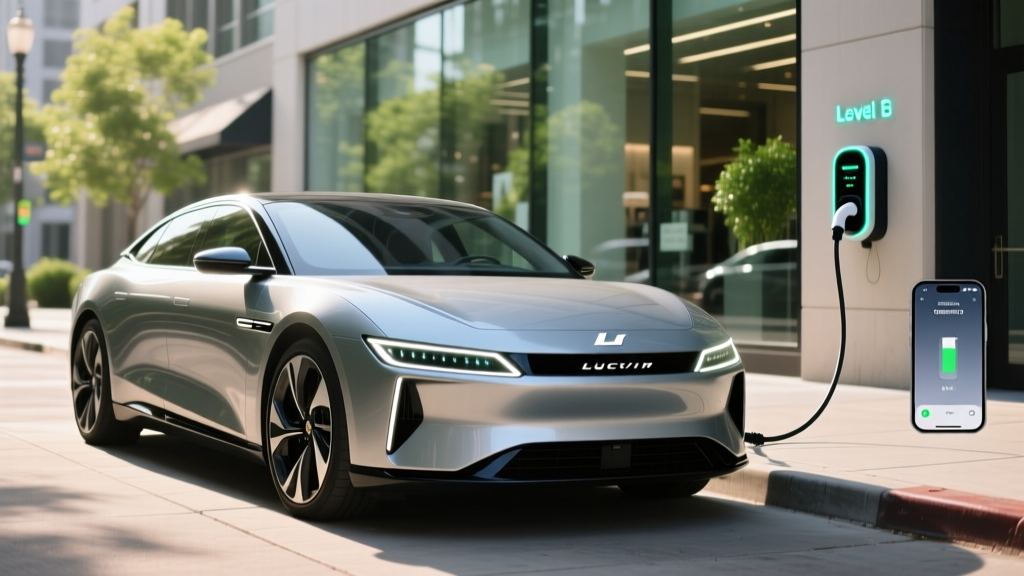
Home charging is the make-or-break factor for EV satisfaction. New Yorkers who own a home or have garage access generally report high satisfaction — those in apartments face a genuine obstacle.
| Level | Power | Miles Added/Hour | Cost (NY avg) | Best For |
|---|---|---|---|---|
| Level 1 (120V) | 1.4–1.9 kW | 3–5 mi/hr | ~$0.20/kWh | PHEVs, low-mileage drivers |
| Level 2 (240V) | 7.2–11.5 kW | 25–44 mi/hr | $0.07–$0.22/kWh (TOU varies) | Daily home charging |
| DC Fast Charge | 50–350 kW | 150–1,000+ mi/hr | $0.35–$0.55/kWh (public) | Road trips, quick top-ups |
Home Level 2 Installation Costs in New York
| Component | Cost Range |
|---|---|
| Level 2 charger (hardware) | $350–$700 |
| Electrician labor (240V/50A circuit) | $800–$2,500 |
| Permit (varies by municipality) | $50–$200 |
| Electrical panel upgrade (if needed) | $1,500–$3,500 |
| Total (no panel upgrade) | $1,200–$3,400 |
| Total (with panel upgrade) | $2,700–$6,900 |
Older homes in Westchester, Long Island, and upstate cities often have 100-amp electrical panels that can't support a 50-amp EV circuit alongside existing loads. Budget for a panel upgrade if your home was built before 1980. A licensed electrician should assess your panel before you commit to a charger purchase.
Public Charging Infrastructure
New York has over 5,000 public charging ports as of early 2026, with concentrations in NYC, the Hudson Valley, and along the Thruway corridor. Networks include Tesla Superchargers (now open to NACS-equipped non-Tesla vehicles), Electrify America, EVgo, and ChargePoint. Reliability remains inconsistent — expect 10–15% of non-Tesla public chargers to be out of service on any given day.
For apartment dwellers, the city's curbside charging pilot and workplace charging programs offer partial solutions, but coverage is limited. If you can't install a home charger, a PHEV may be a more practical choice.
EV vs Gas vs Hybrid: A Decision Framework for New York Buyers
Choose a full EV (BEV) if:
- You have reliable home or workplace Level 2 charging
- Your daily commute is under 80 miles round-trip
- You qualify for the federal §30D credit (check income and vehicle eligibility)
- You want the lowest per-mile energy cost ($0.03–$0.06/mi on off-peak home charging)
Choose a PHEV if:
- You live in an apartment without charging access but can plug in at work
- You take frequent long road trips (400+ miles) and don't want to plan around chargers
- You want electric-only commuting (25–40 miles) with gas backup
Stick with a gas car or HEV hybrid if:
- You have zero access to any charging (no home, no work, no reliable public)
- Your budget is strictly under $28,000 and you can't wait for used-EV prices to drop
- You regularly drive 400+ miles in rural upstate areas with sparse charging coverage
Common Misconceptions About EVs in New York
| Myth | Fact |
|---|---|
| "EVs can't handle New York winters" | Modern EVs with heat pumps and battery preconditioning handle cold well — expect 20–30% range loss, not 50%. Preconditioning while plugged in preserves range and cabin comfort. |
| "Everyone gets the $7,500 tax credit" | The §30D credit has income caps, MSRP caps, and battery-sourcing requirements. Many buyers qualify for $3,750 or $0 depending on the vehicle. Always verify on the EPA/IRS eligibility tool. |
| "EV batteries need replacing every few years" | 2026 EV batteries are warranted for 8 years/100,000 miles with a guaranteed 70% capacity retention. Real-world data from Tesla and Hyundai shows average degradation of 8–12% over 150,000 miles. Full replacement costs $10,000–$18,000 but is rarely needed within the warranty period. |
| "Charging takes too long" | Home Level 2 charging adds 25–44 miles per hour — most drivers wake up to a full battery every morning. DC fast charging delivers 10–80% in 18–28 minutes on 2026 models with 800V architecture (Ioniq 5, EV6, Taycan). |
| "EVs are worse for the environment because of the grid" | New York's grid is ~55% renewable/nuclear as of 2026. Even on the dirtiest U.S. grids, an EV produces fewer lifetime emissions than a comparable gas car (EPA analysis). |
Spec Snapshot: Top EVs for New York Buyers in 2026
| Model | EPA Range | Battery | DC Fast (10–80%) | 0–60 mph | Base MSRP | §30D Eligible? |
|---|---|---|---|---|---|---|
| Tesla Model Y LR AWD | 320 mi | 75 kWh (NMC) | ~25 min (250 kW peak) | 4.8s | $48,990 | Yes (partial) |
| Hyundai Ioniq 5 SEL AWD | 290 mi | 77.4 kWh (NMC) | ~18 min (350 kW peak) | 5.1s | $50,100 | Yes (U.S. built) |
| Ford Mustang Mach-E Premium | 320 mi | 91 kWh (NMC) | ~30 min (150 kW peak) | 5.2s | $48,595 | Yes |
| Chevrolet Equinox EV RS | 319 mi | 85 kWh (NMC) | ~28 min (175 kW peak) | 6.3s | $38,995 | Yes |
| Volkswagen ID.4 Pro S AWD | 291 mi | 82 kWh (NMC) | ~28 min (175 kW peak) | 5.4s | $49,995 | Yes (Chattanooga-built) |
Frequently Asked Questions
Do I need a special electrical permit to install a home charger in New York?
Yes. Most New York municipalities require an electrical permit for a new 240V circuit. Your licensed electrician typically handles the permit application and inspection. Costs range from $50 to $200 depending on your town or city.
Can I use a regular 120V outlet to charge my EV?
You can, but it's slow — roughly 3–5 miles of range per hour of charging. That's adequate for a PHEV with a small battery or an EV driver who covers under 30 miles daily. For a full BEV, Level 1 charging means 20–30 hours for a full charge, which is impractical for most drivers.
How does the NYSERDA rebate work with the federal credit?
They stack. You can receive the NYSERDA Drive Clean Rebate (up to $2,000) at the dealer and also claim the federal §30D credit (up to $7,500) on your tax return or as a point-of-sale transfer. The NYSERDA rebate does not reduce your federal credit eligibility.
Are EVs more expensive to insure in New York?
Generally yes — expect 15–25% higher premiums compared to a gas equivalent. The average EV insurance cost in New York is $1,800–$2,200/year versus $1,400–$1,700 for a comparable gas SUV. Reasons include higher repair costs, specialized parts, and elevated vehicle values. Shop quotes from multiple insurers before purchasing.
What happens to EV range on the New York Thruway in January?
Plan for 25–35% range reduction versus EPA estimates when driving 70+ mph in sub-30°F temperatures with cabin heating. A 300-mile EPA vehicle will realistically deliver 200–225 miles of Thruway range in deep winter. Use A Better Routeplanner or your vehicle's built-in navigation to plan charging stops conservatively.
Is the Tesla Supercharger network available to non-Tesla EVs in New York?
Yes, as of 2026 Tesla has opened a growing number of Supercharger stations to NACS-equipped vehicles from other manufacturers. Ford, Rivian, GM, Volvo, and others now ship with NACS ports. CCS-equipped vehicles can use Tesla Superchargers with an approved adapter, though availability varies by station.