The Short Answer: Yes, You Can Lease a Rivian — Here's What It Costs
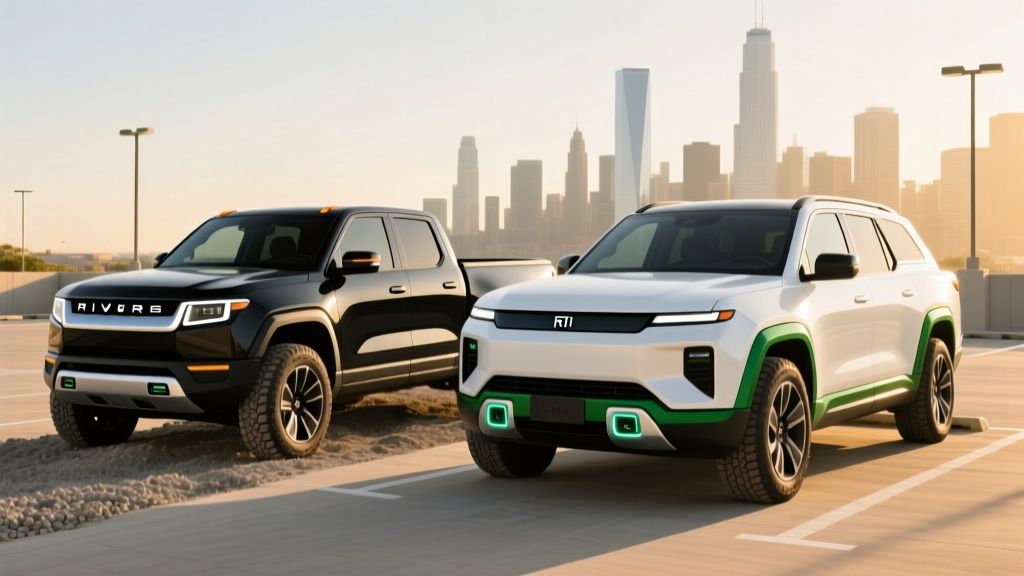
If you've been asking can you lease a Rivian, the answer is yes — Rivian offers direct leasing on both the R1T pickup and R1S SUV in all 41 states where they currently deliver vehicles. Leasing through Rivian works differently than a traditional dealership lease: there's no haggling over money factors, no dealer markups on monthly payments, and the entire process is handled online through your Rivian account. For 2026 model-year vehicles, leasing has become an especially attractive path because of how the federal EV tax credit interacts with lease agreements — a nuance we'll unpack in detail below.
But before you configure a Dual-Motor R1T and hit "order," you need to understand what you're actually getting: real-world range that diverges from the EPA sticker, charging speeds that depend heavily on which battery pack you choose, and a tax-credit situation that differs depending on whether you lease or buy. This guide covers everything.
Rivian R1T and R1S: 2026 Specs at a Glance
| Spec | R1T Dual-Motor (Standard) | R1T Dual-Motor (Max) | R1S Dual-Motor (Standard) | R1S Tri-Motor (Max) |
|---|---|---|---|---|
| EPA Range | 270 mi | 420 mi | 270 mi | 410 mi |
| Battery (usable) | ~92 kWh (LFP) | ~141 kWh (NMC) | ~92 kWh (LFP) | ~141 kWh (NMC) |
| Horsepower | 533 hp | 533 hp | 533 hp | 850 hp |
| 0-60 mph | 4.5 sec | 4.5 sec | 4.6 sec | 2.9 sec |
| Max DC Fast Charge | 200 kW | 220 kW | 200 kW | 220 kW |
| 10-80% DC Time | ~28 min | ~42 min | ~28 min | ~42 min |
| Level 2 Home Rate | 11.5 kW (~25 mi/hr) | 11.5 kW (~25 mi/hr) | 11.5 kW (~25 mi/hr) | 11.5 kW (~25 mi/hr) |
| Towing Capacity | 11,000 lb | 11,000 lb | 7,700 lb | 7,700 lb |
| Base MSRP (2026) | $69,900 | $83,900 | $75,900 | $99,900 |
Source: Rivian Specifications and fueleconomy.gov. Specs reflect 2026 model year.
Real-World Range: What the EPA Sticker Doesn't Tell You
EPA Estimate: 270 mi (Standard/LFP) | 420 mi (Max/NMC R1T) | 410 mi (Max/NMC R1S)
Real-World Expectation: Plan for ~230-250 mi highway in the Standard pack and ~350-380 mi highway in the Max pack under normal conditions. In freezing temperatures (below 32°F), reduce those figures by 15-25%. Towing a 5,000 lb trailer cuts range roughly in half.
Rivian's EPA numbers are achieved under controlled testing cycles that don't fully represent sustained 75 mph highway driving or mountain passes. In our experience and consistent with third-party testing, the R1T Max Pack with its 141 kWh NMC battery delivers roughly 350-380 highway miles before you'll want to find a charger — still exceptional for an electric pickup, but noticeably below the 420 mi sticker. The Standard Pack's LFP chemistry is more resistant to cold-weather degradation than NMC, but its smaller capacity means your real-world buffer is thinner regardless.
For daily commuting under 80 miles round-trip, either pack works comfortably with home Level 2 charging. Road-trippers who regularly drive 300+ miles between stops should strongly consider the Max Pack or plan strategic charging stops.
Charging Speed: DC Fast Charging and Home Setup
| Charging Method | Standard Pack (LFP) | Max Pack (NMC) |
|---|---|---|
| Level 1 (120V, 12A) | ~3 mi/hr | ~3 mi/hr |
| Level 2 (240V, 48A) | 11.5 kW / ~25 mi/hr | 11.5 kW / ~25 mi/hr |
| DC Fast Charge (peak) | 200 kW | 220 kW |
| 10-80% DC Time | ~28 minutes | ~42 minutes |
| Sustained Rate (20-60%) | ~170 kW avg | ~185 kW avg |
Rivian's charging architecture uses the NACS (Tesla-style) connector as standard on 2026 models, granting native access to Tesla Supercharger V3 and V4 stalls in addition to Electrify America, EVgo, and other networks. The Standard Pack's LFP battery accepts a 200 kW peak but sustains closer to 170 kW through the bulk of the charge curve before tapering above 80%. The Max Pack peaks at 220 kW with a similar taper pattern.
Home charging reality: At 11.5 kW on a 48-amp Level 2 circuit (requiring a 60-amp breaker), you'll recover roughly 25 miles of range per hour. A full Standard Pack charge from 10% takes about 8-9 hours — ideal for overnight charging. The Max Pack takes roughly 12-13 hours from 10%, which means heavy-use days may require topping off during the day or accepting a partial overnight fill. Most owners find this perfectly adequate since daily driving rarely exceeds 100 miles.
Preconditioning matters: Always use the Rivian app or in-nav routing to precondition the battery before arriving at a DC fast charger. Cold batteries that haven't been preconditioned can see charge rates drop 40-50% below peak. Rivian's thermal management system handles this automatically when you navigate to a charger.
Rivian Lease Pricing: Monthly Costs, Money Down, and the Tax Credit Advantage
Here's where leasing a Rivian gets interesting from a financial perspective. Rivian offers 24-, 36-, and 48-month lease terms with configurable mileage allowances (typically 10,000, 12,500, or 15,000 miles per year). Because Rivian sells direct, the money factor and residual values are set by Rivian Financial — there's no dealer negotiation.
| Scenario | R1T Dual-Motor Standard | R1T Dual-Motor Max |
|---|---|---|
| Base MSRP | $69,900 | $83,900 |
| Est. Monthly Lease (36mo/12.5k, $0 down) | ~$849/mo | ~$1,089/mo |
| Federal Tax Credit (§30D via lease) | -$7,500 (see note) | -$7,500 (see note) |
| Effective Monthly (credit applied as cap reduction) | ~$640/mo | ~$880/mo |
| MSRP Cap for §30D (trucks/SUVs) | $80,000 (SUVs) / $80,000 (trucks as classified) | |
⚡ The Lease Tax-Credit Loophole (2026 Update): Under IRS §30D, the $7,500 federal EV tax credit has strict buyer income caps ($150K single / $300K joint), MSRP caps ($80K for trucks and SUVs), and battery critical-mineral sourcing requirements. However, when a vehicle is leased, the credit technically goes to the lessor (Rivian Financial) under §45W commercial clean vehicle rules. Rivian has historically passed this savings to lessees as a capitalized cost reduction — effectively lowering your monthly payment by ~$209/mo over 36 months. This means lessees may bypass the income and MSRP caps that apply to buyers. Confirm current eligibility with Rivian Financial and your tax professional before signing. Source: IRS Clean Vehicle Credits.
Performance, Tech, and Daily Livability
Every Rivian R1T and R1S comes with standard dual-motor all-wheel drive (the Tri-Motor R1S adds a third motor for 850 hp). The 533 hp Dual-Motor setup hits 0-60 mph in 4.5 seconds — genuinely quick for a 7,000-lb vehicle. The air suspension offers 6.5 inches of adjustability, from a low "Aero" mode for highway efficiency to a maximum ground clearance of 14.9 inches for off-road use.
Interior space:
- R1T crew cab: 42.4 inches front legroom, 41.0 inches rear; 54.1 cu ft bed volume (plus an 11 cu ft front trunk/frunk and a tunnel-style Gear Tunnel with 11.6 cu ft)
- R1S three-row SUV: 42.4 / 38.3 / 32.5 inches legroom (front/second/third); 104.7 cu ft max cargo with second and third rows folded
Standout tech features:
- 15.6-inch center touchscreen running Rivian's proprietary OS with native trip planner, charger routing, and preconditioning
- Driver+ (SAE Level 2) highway assist with adaptive cruise and lane centering — functional on divided highways but requires hands-on-wheel attention
- Over-the-air updates that have materially improved ride quality, charging speed, and UI since launch
- Integrated air compressor (150 PSI) in the bed for tire inflation
- V2L (vehicle-to-load) capability: power campsite appliances or job-site tools via bed outlets
✅ Pros
- Class-leading real-world range with Max Pack (350-380 mi highway)
- Genuine off-road capability with 14.9" ground clearance and quad-motor option
- Best-in-class frunk and Gear Tunnel storage (R1T)
- Direct-to-consumer leasing with no dealer markup
- 11,000-lb towing capacity (R1T) with integrated trailer brake controller
- Over-the-air updates continuously add features
❌ Cons
- Standard Pack range (270 EPA / ~230 highway) requires charge planning on road trips
- Max Pack adds ~$14,000 and 400+ lbs, reducing efficiency
- Service center network still expanding — some regions face long wait times
- Driver+ is competent but not class-leading compared to GM Super Cruise
- Third row in R1S is tight for adults on long trips
- Insurance premiums run 15-25% above comparable ICE trucks
Warranty Coverage and Battery Longevity
Rivian provides the following warranty structure for 2026 models:
- Battery & Drive Units: 8 years / 175,000 miles (whichever comes first), covering defects and capacity loss below 70% of original capacity
- Limited Vehicle Warranty: 5 years / 60,000 miles bumper-to-bumper
- Corrosion Perforation: 5 years / unlimited miles
The 175,000-mile battery warranty is competitive and exceeds the federal minimum requirement. Both the LFP (Standard) and NMC (Max) chemistries are engineered for longevity, though LFP generally offers a longer cycle life — meaning more charge/discharge cycles before meaningful degradation. For a lease of 24-48 months, battery degradation is essentially a non-concern; you'll return the vehicle well within the warranty window.
Efficiency: MPGe and kWh per 100 Miles
Per fueleconomy.gov, the 2026 R1T Dual-Motor Standard Pack achieves a combined 73 MPGe (approximately 46 kWh/100 mi), while the Max Pack drops to roughly 69 MPGe (49 kWh/100 mi) due to the additional weight. The R1S figures are nearly identical. These are respectable numbers for vehicles of this size and capability, but they translate to meaningful electricity costs if you rely heavily on public DC fast charging at $0.40-$0.55/kWh. At home on Level 2 at the national average of ~$0.16/kWh, "fueling" an R1T costs roughly $7.36 per 100 miles — about one-third the cost of a comparable gas truck at 17 mpg.
Who Should Lease a Rivian — And Who Shouldn't?
Lease a Rivian R1T if:
- You want an electric pickup for daily driving plus weekend towing/adventure and plan to keep the vehicle 2-4 years
- You want to access the $7,500 federal incentive without meeting §30D income or battery-sourcing requirements
- You exceed the $80K MSRP cap on the Max Pack when buying but can capture the lease credit
- You have reliable home Level 2 charging and drive under 150 miles daily
Skip the lease (or choose a competitor) if:
- You plan to keep the vehicle 7+ years — buying and holding captures more long-term value
- You need a service center within 30 miles (check Rivian's service map for your ZIP code)
- You regularly tow heavy loads over 200 miles between stops — range while towing drops to ~130-170 mi
- You want hands-free highway driving — GM's Super Cruise and Ford's BlueCruise currently offer more hands-off capability
Frequently Asked Questions
Can you lease a Rivian in every state?
Rivian offers leasing in all 41 states where they currently deliver vehicles. Availability depends on whether your ZIP code is within a Rivian delivery zone. States without current Rivian service/delivery infrastructure may not support leasing yet.
Does leasing a Rivian qualify for the $7,500 federal tax credit?
When you lease, the federal commercial clean vehicle credit (§45W) goes to the lessor (Rivian Financial), which has historically passed the $7,500 to lessees as a capitalized cost reduction. This path may bypass the income caps and MSRP caps that apply to purchasers under §30D. Verify current terms with Rivian Financial and a tax professional before signing.
What is the real-world highway range of the Rivian R1T?
The Standard Pack (270 mi EPA) delivers approximately 230-250 highway miles at 70-75 mph. The Max Pack (420 mi EPA) delivers approximately 350-380 highway miles. Cold weather (below freezing) reduces these figures by 15-25%. Towing cuts range roughly in half.
How fast does the Rivian R1T charge at home and on the road?
On a 48-amp Level 2 home charger (11.5 kW), the R1T adds approximately 25 miles of range per hour — a full Standard Pack charges overnight in ~8-9 hours. On DC fast chargers, the Standard Pack peaks at 200 kW (10-80% in ~28 minutes) and the Max Pack peaks at 220 kW (10-80% in ~42 minutes).
Is it better to lease or buy a Rivian in 2026?
Leasing makes sense if you want lower monthly payments, access to the $7,500 incentive without income/MSRP restrictions, and plan to upgrade in 3-4 years. Buying makes sense if you plan to keep the vehicle 5+ years, want unlimited mileage freedom, or qualify for the full §30D credit on a Standard Pack model under the $80K cap.
What are the biggest drawbacks of the Rivian R1T and R1S?
The primary concerns are the limited service center network in some regions, high insurance premiums (15-25% above comparable ICE trucks), a tight third row in the R1S, and the Standard Pack's relatively modest real-world range for road trips. Driver+ is a solid SAE Level 2 system but doesn't match the hands-off convenience of GM Super Cruise on supported highways.