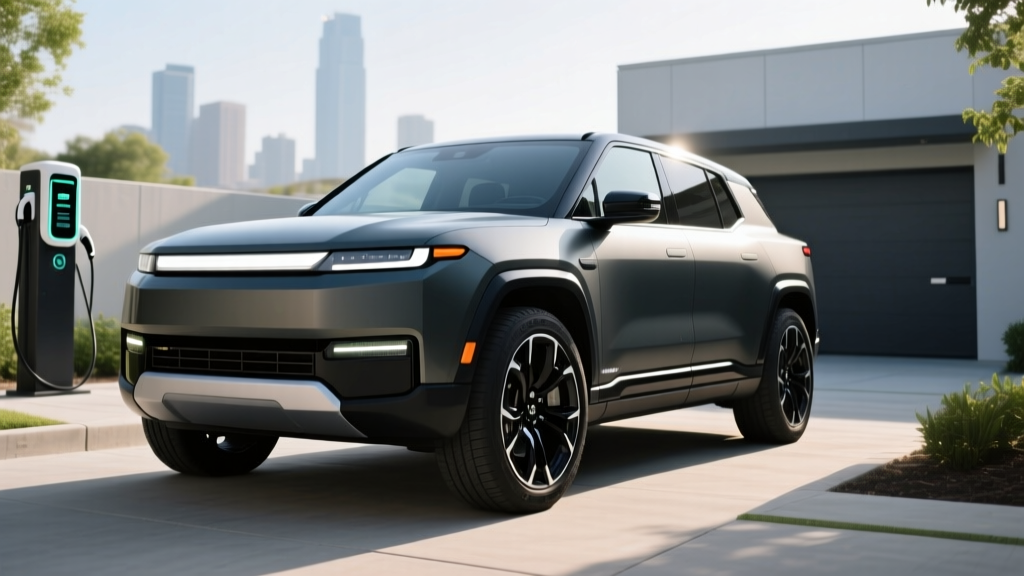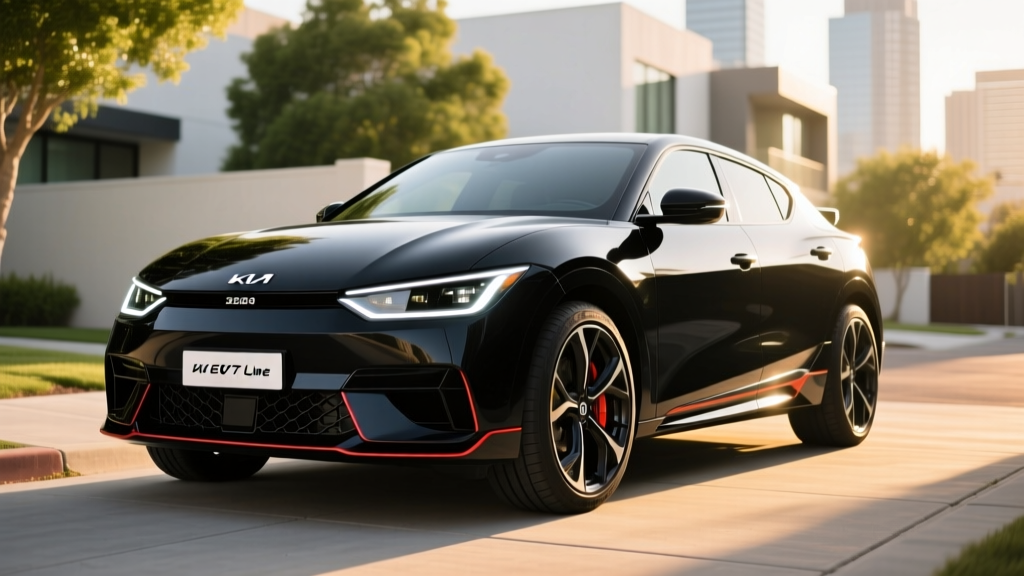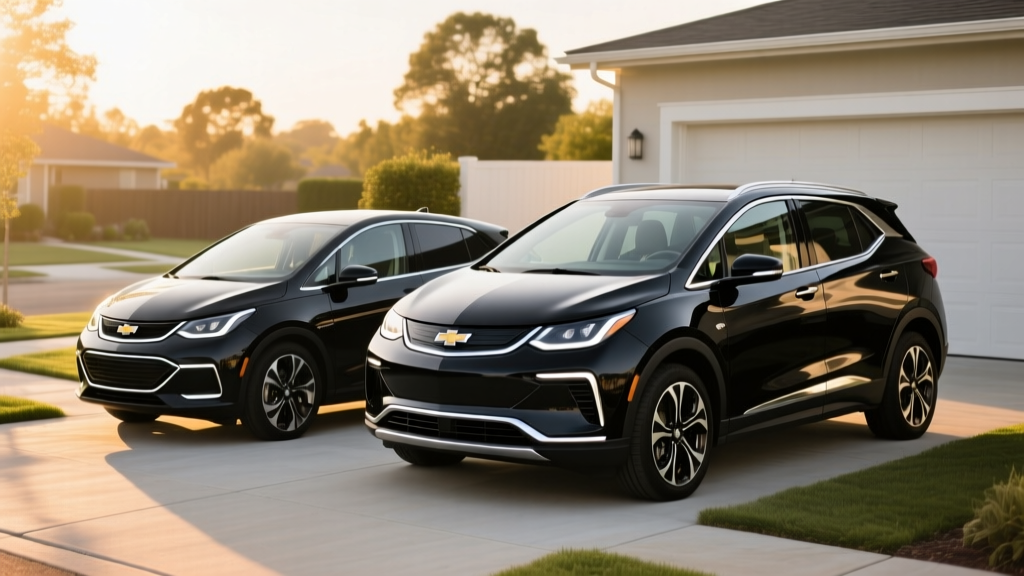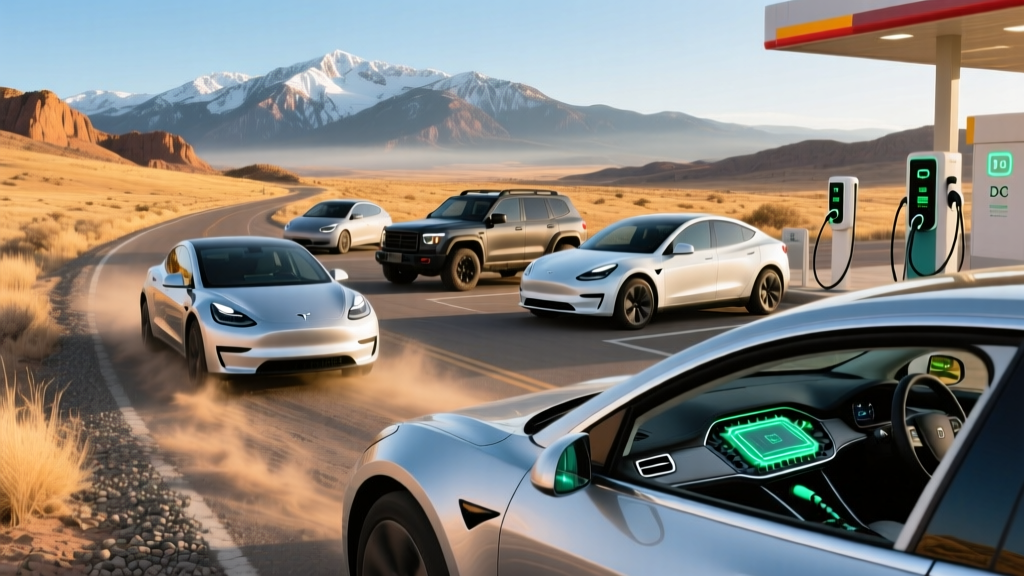
The short answer: Santa Fe's 7,000-foot elevation, dry climate, and expanding charging infrastructure make it one of the better U.S. cities for EV ownership — but altitude, cold snaps, and limited rural DC fast chargers demand careful model selection. The best new electric cars for Santa Fe drivers in 2026 include the Hyundai Ioniq 5 (318 mi EPA, from $42,600), Tesla Model Y Long Range (320 mi EPA, from $44,990), and Chevrolet Equinox EV (319 mi EPA, from $33,600). Expect real-world highway range 10–15% below EPA stickers, and winter range loss of 15–25% during January cold snaps. Federal §30D tax credits up to $7,500 apply to qualifying models, but income caps, MSRP limits, and battery-sourcing rules narrow eligibility significantly.
Why Santa Fe's Altitude and Climate Change the EV Equation
Most EV reviews are written for sea-level drivers in moderate climates. Santa Fe is neither. At roughly 7,000 feet, the thinner air affects EVs differently than it affects internal-combustion engines — and mostly in the EV's favor.
Gas engines lose roughly 3% of horsepower per 1,000 feet of elevation due to oxygen deprivation. A 250-hp turbocharged SUV might produce only 210 hp at Santa Fe's altitude. Electric motors suffer no such penalty: a 320-hp EV delivers 320 hp whether you're in Los Angeles or Los Alamos. This makes EVs genuinely more responsive at altitude than equivalent gas vehicles.
However, Santa Fe's climate introduces real range variables:
- Winter cold: Average January lows hover around 14°F. Lithium-ion batteries lose 15–25% of usable range in sustained sub-freezing temperatures, primarily because energy is diverted to cabin and battery heating. A 318-mile EPA-rated Ioniq 5 might deliver 240–270 real-world miles on a cold January morning.
- Summer heat: July highs average 86°F but can spike above 95°F. Battery thermal management systems consume additional energy, though the impact is typically smaller than winter losses — around 5–8%.
- Dry air and low humidity: This actually benefits cabin cooling efficiency compared to humid climates, slightly reducing HVAC energy draw in summer.
- Mountain driving: Trips to Taos (via US-84/285) or Los Alamos involve significant elevation gains. Regenerative braking recovers energy on descents, partially offsetting the uphill consumption spike — but net range on mountain routes will be 10–20% below EPA estimates.
Top New Electric Cars for Santa Fe Drivers: 2026 Spec Comparison
The following models represent the strongest options for Santa Fe-area buyers based on range, charging speed, ground clearance (relevant for unpaved forest roads), and federal tax credit eligibility. All prices reflect 2026 base MSRP before incentives.
| Spec | Hyundai Ioniq 5 SEL | Tesla Model Y LR | Chevy Equinox EV LT | Ford Mustang Mach-E Premium |
|---|---|---|---|---|
| EPA Range | 318 mi | 320 mi | 319 mi | 290 mi |
| Battery (usable kWh) | 84 kWh (NMC) | 75 kWh (NMC) | 85 kWh (NMC) | 75.7 kWh (NMC) |
| Peak DC Charge Rate | 238 kW | 250 kW | 150 kW | 150 kW |
| 10–80% DC Fast Charge | ~18 min | ~20 min | ~34 min | ~35 min |
| Level 2 Charge Rate | 10.9 kW | 11.5 kW | 11.5 kW | 10.5 kW |
| 0–60 mph | 7.2 sec | 5.0 sec | 7.9 sec | 5.1 sec |
| Horsepower | 225 hp | 384 hp | 213 hp | 312 hp |
| MPGe (combined) | 110 MPGe | 117 MPGe | 99 MPGe | 101 MPGe |
| Ground Clearance | 6.1 in | 6.6 in | 6.9 in | 5.7 in |
| Base MSRP | $42,600 | $44,990 | $33,600 | $42,995 |
| §30D Tax Credit Eligible? | Up to $7,500* | Up to $7,500* | Up to $7,500* | Up to $7,500* |
*Federal §30D tax credit eligibility depends on buyer income (AGI ≤ $150K single / $300K joint), vehicle MSRP caps ($55K cars / $80K SUVs/trucks), and battery critical-mineral and component sourcing requirements. Credit can be transferred to the dealer at point of sale as a purchase-price reduction. Always verify current eligibility on IRS.gov before purchasing.
EV vs Gas vs Hybrid: What Santa Fe Drivers Actually Spend
The purchase decision between a battery-electric vehicle (BEV), a conventional hybrid (HEV), and a gas-only SUV hinges on your driving pattern, home-charging access, and how long you plan to keep the vehicle. Let's compare the actual five-year costs for a Santa Fe driver covering 12,000 miles per year.
| 5-Year Cost Factor | BEV (Ioniq 5 SEL) | HEV (Toyota RAV4 Hybrid) | Gas (Toyota RAV4 LE AWD) |
|---|---|---|---|
| Purchase Price (MSRP) | $42,600 | $33,425 | $30,090 |
| Federal Tax Credit | −$7,500 | $0 | $0 |
| Effective Purchase Price | $35,100 | $33,425 | $30,090 |
| Fuel/Energy (5 yr / 60K mi) | $3,600 (home L2) | $6,750 | $9,600 |
| Maintenance (5 yr) | $1,800 | $3,200 | $4,100 |
| Insurance (5 yr est.) | $9,500 | $7,800 | $7,200 |
| Total 5-Year Cost | $50,000 | $51,175 | $50,990 |
| Cost per Mile | $0.83 | $0.85 | $0.85 |
Key assumptions: electricity at $0.14/kWh (PNM's New Mexico residential rate), home Level 2 charging for 90% of BEV energy; gas at $3.40/gallon (New Mexico average); RAV4 Hybrid at 39 MPG combined; RAV4 gas at 29 MPG combined per fueleconomy.gov. Insurance estimates reflect current EV premium trends (typically 15–25% higher than gas equivalents) — get actual quotes before committing.
The BEV breaks even or slightly undercuts the hybrid over five years, primarily due to the tax credit and dramatically lower energy costs. But the margin is thin — and it depends on qualifying for the full credit and having reliable home charging.
Charging at Home and on the Road in Santa Fe
Home charging access is the single biggest determinant of EV satisfaction. If you can install a Level 2 (240V) charger at your Santa Fe residence, daily charging becomes effortless — you wake up every morning with a full battery. If you cannot (apartment living, older electrical panels, HOA restrictions), the ownership experience becomes significantly more complicated.
| Charging Level | Power (kW) | Miles Added per Hour | Use Case |
|---|---|---|---|
| Level 1 (120V household outlet) | 1.4 kW | 3–5 mi/hr | Overnight top-up; 10 hrs ≈ 40 mi |
| Level 2 (240V, home wallbox) | 7.7–11.5 kW | 25–44 mi/hr | Primary daily charging; full charge overnight |
| DC Fast Charge (public) | 50–350 kW | 150–1,000+ mi/hr | Road trips; 10–80% in 18–40 min |
Home Level 2 Installation Costs in Santa Fe
A typical Level 2 home charger installation in the Santa Fe area runs $800–$2,500 total, depending on your electrical panel's capacity and the distance from panel to garage or carport. If your home has a 200-amp panel with available capacity, expect to pay $500–$800 for an electrician to run a 240V/50A circuit and mount a charger like the ChargePoint Home Flex or Emporia Vue. Homes with older 100-amp panels may require a panel upgrade ($1,500–$3,000 additional) before a Level 2 circuit is safe.
New Mexico offers a state tax credit for EV charging equipment installation — check the NM Energy, Minerals and Natural Resources Department for current program status, as funding and eligibility shift annually.
Public Charging Infrastructure Around Santa Fe
Santa Fe has a modest but growing public charging network. You'll find Level 2 chargers at the Santa Fe Place mall, several downtown hotels, and the Railyard district. For DC fast charging, Electrify America and EVgo stations along I-25 corridor (Albuquerque to Santa Fe) and US-84/285 toward Española provide road-trip coverage.
The honest limitation: driving from Santa Fe to more remote northern destinations (Taos, Chama, parts of the Carson National Forest) means fewer DC fast-charger options. Plan routes using PlugShare or A Better Routeplanner and ensure you leave with sufficient charge. The Ioniq 5 and Model Y's faster DC charge rates (238 kW and 250 kW peak, respectively) make them more practical for these routes than the Equinox EV or Mach-E, which peak around 150 kW.
Federal Tax Credits and New Mexico Incentives: What You Actually Qualify For
The federal §30D clean vehicle credit offers up to $7,500 for qualifying new EVs, but the rules are layered and change periodically. Here's what matters for a Santa Fe buyer in 2026:
- Buyer income cap: Modified AGI must not exceed $150,000 (single filers), $225,000 (head of household), or $300,000 (married filing jointly).
- Vehicle MSRP cap: $55,000 for sedans/wagons; $80,000 for SUVs and trucks. All models in our comparison table fall under these limits at base trim.
- Battery sourcing requirements: The credit splits into two $3,750 halves — one for critical-mineral sourcing, one for battery-component manufacturing. Both requirements tighten annually. A vehicle that qualified for the full $7,500 in 2024 may qualify for only $3,750 or $0 in 2026 depending on supply-chain changes.
- Point-of-sale transfer: You can transfer the credit to the dealer at purchase, reducing your out-of-pocket cost immediately rather than waiting to claim it on your tax return.
Always verify a specific vehicle's current eligibility on fueleconomy.gov before signing paperwork. The IRS maintains the definitive list, and manufacturer eligibility changes without much warning as sourcing requirements shift.
EV Ownership Myths vs Facts for First-Time Buyers
| Myth | Fact |
|---|---|
| "EV batteries need replacing every 5 years and cost $20,000." | Modern NMC and LFP batteries are warrantied for 8 years/100,000 miles at ≥70% capacity retention. Real-world degradation data shows most EVs lose only 8–12% capacity over 8 years. Full replacement is rare and costs $8,000–$18,000 depending on model — but is seldom needed within the vehicle's practical lifespan. |
| "EVs don't work in cold weather." | EVs lose 15–25% range in sub-freezing temps — real, but manageable. A 318-mile EV still delivers 240+ miles in January cold, sufficient for most daily driving. Preconditioning the battery while plugged in mitigates losses and preserves fast-charging speed. |
| "Charging takes too long for road trips." | A 10–80% DC fast charge takes 18–35 minutes on current models — roughly a rest-stop break. For a Santa Fe-to-Albuquerque trip (65 miles), you likely won't need to charge at all. Santa Fe-to-Denver (390 miles) requires one 20-minute stop. |
| "EVs are worse for the environment because of battery mining." | Lifecycle emissions studies consistently show EVs produce 50–70% fewer lifetime CO₂ emissions than gas cars, even accounting for battery manufacturing. New Mexico's grid is increasingly renewable-heavy (PNM targets 80% carbon-free by 2035), improving the equation further. |
| "I'll save a fortune on maintenance." | Partially true. EVs eliminate oil changes, spark plugs, and transmission fluid. Brake pads last 2–3× longer thanks to regenerative braking. But tire wear is often faster (EVs are heavier with instant torque), and insurance premiums run 15–25% higher. Net maintenance savings are real but modest: roughly $300–$500/year. |
Decision Framework: Which New Electric Car in Santa Fe Is Right for You?
Choose the Hyundai Ioniq 5 if:
- You want the best balance of range (318 mi EPA), fast charging (18 min 10–80%), and value
- You take regular road trips to Albuquerque, Taos, or beyond and need quick DC stops
- You want V2L (vehicle-to-load) capability to power devices or a small camp setup
- NACS adapter access to Tesla Superchargers matters to you
Choose the Tesla Model Y Long Range if:
- Performance matters (5.0 sec 0–60, 384 hp)
- You want the most mature Supercharger network access natively (NACS connector)
- You value over-the-air updates and the largest cargo volume in this segment
- You're comfortable with Tesla's service-center model (nearest is Albuquerque)
Choose the Chevrolet Equinox EV if:
- Budget is the priority — $33,600 base MSRP is the lowest in this comparison
- You drive primarily in-town (Santa Fe commutes, grocery runs) and rarely exceed 200 miles/day
- You prefer a traditional dealership service experience with a local Santa Fe Chevy dealer
- Slower DC charging (34 min 10–80%) doesn't bother you
Choose the Ford Mustang Mach-E if:
- You want sporty handling and strong acceleration (5.1 sec 0–60) at a mid-range price
- You prefer BlueCruise hands-free driving on I-25 highway stretches
- You already have a relationship with a local Ford dealer
Consider a PHEV instead (e.g., Toyota RAV4 Prime) if:
- You lack reliable home Level 2 charging access
- You frequently drive to remote areas with no DC fast-charger coverage
- You want electric-only commuting (42 mi EPA electric range) with gas-engine flexibility for long trips
Frequently Asked Questions
Do EVs lose range at Santa Fe's 7,000-foot altitude?
Not directly. Unlike gas engines, electric motors don't depend on atmospheric oxygen, so altitude itself doesn't reduce EV range. However, the cold temperatures that accompany high-altitude winters do reduce range by 15–25%. And mountain driving with significant elevation gains increases consumption — though regenerative braking on descents partially recovers that energy.
Can I charge an EV with just a standard 120V outlet?
Yes, but slowly. Level 1 charging at 1.4 kW adds roughly 3–5 miles of range per hour. If your daily driving is under 40 miles, overnight Level 1 charging can work. For most Santa Fe drivers, though, a Level 2 (240V) home installation is strongly recommended — it adds 25–44 miles per hour and fully replenishes the battery overnight.
How much does home Level 2 charger installation cost in Santa Fe?
Expect $800–$2,500 for a standard installation if your electrical panel has sufficient capacity. Homes with 100-amp panels may need a $1,500–$3,000 panel upgrade first. Always get a quote from a licensed electrician — the final cost depends on panel capacity, wire run distance, and local permit requirements.
Are there any EV charging stations between Santa Fe and Taos?
Public charging options on the Santa Fe–Taos corridor (US-84/285) are limited. Española has Level 2 options, and Taos has a growing number of destination chargers. DC fast-charger availability on this route is sparse. If you drive this route regularly, choose an EV with 300+ miles of EPA range and plan to leave Santa Fe with a full charge.
Will my EV battery degrade significantly in New Mexico's heat?
New Mexico's dry heat is less stressful on batteries than humid subtropical climates. Modern EVs use active liquid thermal management to keep batteries in their optimal 59–95°F range. Expect typical degradation of 8–12% over 8 years. All major manufacturers warrant batteries for 8 years/100,000 miles at a minimum 70% capacity retention threshold, per NHTSA-documented requirements.
Is the federal tax credit guaranteed when I buy?
No. The §30D credit depends on your income, the vehicle's MSRP, and current battery-sourcing rules that change periodically. A vehicle that qualifies today may not qualify in six months. Verify eligibility on IRS.gov immediately before purchase, and ask the dealer for written confirmation of the vehicle's credit eligibility.