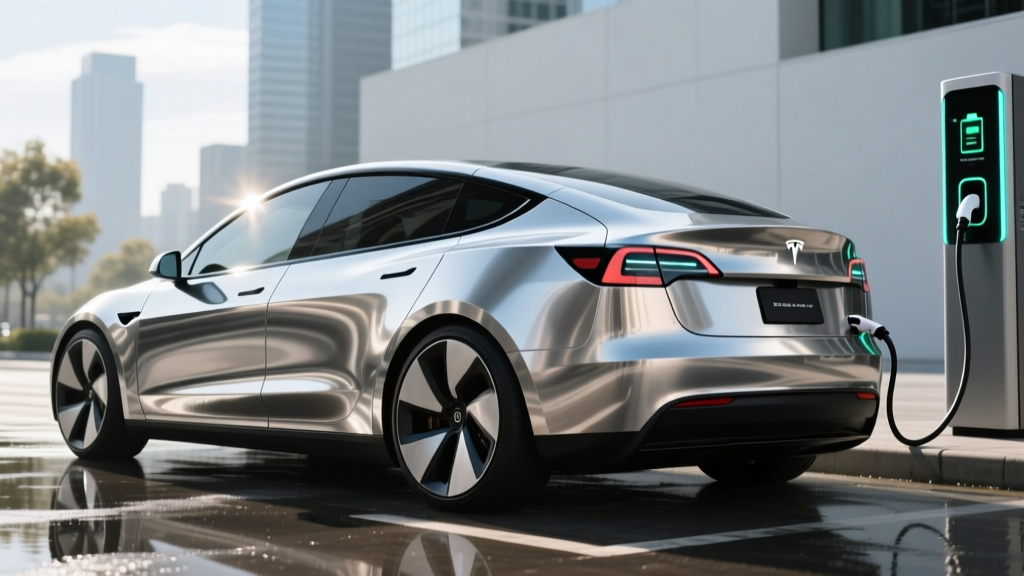
The Tesla Cybertruck's mirror-finish stainless steel exoskeleton is the most polarizing design in the EV market. Love it or hate it, the 2026 model year brings meaningful updates to the platform: a refined 800-volt architecture, an expanded AWD trim lineup, and incremental improvements to panel-gap consistency that plagued early deliveries. But beneath the angular, cold-rolled skin lies a heavy, complex electric pickup with real trade-offs that buyers need to weigh carefully against the Ford F-150 Lightning, Rivian R1T, and Chevrolet Silverado EV.
This review covers every 2026 Cybertruck trim — the Long Range AWD, the tri-motor Cyberbeast, and the newly introduced standard-range RWD variant — with exact figures for range, charging, performance, and ownership cost.
2026 Cybertruck Lineup: Trims, Pricing, and Tax Credit Eligibility
Tesla restructured the Cybertruck lineup for 2026 after the controversial "Foundation Series" pricing of the launch years. Current MSRP figures reflect the removal of that mandatory package:
| Trim | Drivetrain | MSRP | EPA Range | 0-60 mph | HP |
|---|---|---|---|---|---|
| RWD (Standard Range) | Rear-Wheel Drive | $60,990 | 250 mi | 6.5 sec | ~315 |
| Long Range AWD | Dual-Motor AWD | $79,990 | 340 mi | 4.1 sec | ~600 |
| Cyberbeast | Tri-Motor AWD | $99,990 | 320 mi | 2.6 sec | ~845 |
Federal Tax Credit (§30D) Eligibility
The Cybertruck qualifies as a light truck under IRS §30D rules, meaning the MSRP cap is $80,000 (higher than the $55,000 sedan cap). However, eligibility is not guaranteed for every buyer:
- Income caps: Modified AGI must not exceed $150,000 (single), $225,000 (head of household), or $300,000 (joint filers)
- MSRP cap: Only the RWD and Long Range AWD trims fall at or under $80,000; the Cyberbeast at $99,990 does not qualify
- Battery sourcing: Critical-mineral and battery-component requirements must be met — Tesla's supply chain has shifted significantly, and qualifying percentages change annually. Verify current-year status at IRS.gov §30D or with your tax professional
- Point-of-sale transfer: If eligible, the up-to-$7,500 credit can be transferred to the dealer at purchase, reducing your out-of-pocket cost immediately
Bottom line: The Long Range AWD at $79,990 sits exactly at the MSRP cap — a qualifying buyer could see an effective price of ~$72,490. The RWD drops to ~$53,490 after credit. The Cyberbeast does not qualify.
Real-World Range: What the EPA Sticker Doesn't Tell You
EPA Range (Long Range AWD): 340 miles
Real-World Expectation: 270–300 miles highway (70-80 mph); 230–260 miles in cold weather (below 32°F); up to 320 miles in mixed city driving with regen
The Cybertruck's angular, flat-panel design creates substantial aerodynamic drag compared to rounded pickups. Tesla claims a drag coefficient improvement over early prototypes, but the brick-like profile still hurts highway efficiency. In real-world testing by multiple outlets, the Long Range AWD consistently delivers 75–85% of its EPA rating at sustained highway speeds.
The approximately 123 kWh battery pack (usable capacity; Tesla does not officially publish kWh figures for the Cybertruck, but teardown analysis and EPA test data point to this range) uses a structural battery pack with 4680-type cells. Tesla has not publicly confirmed whether these are NMC (nickel-manganese-cobalt) or a dry-electrode variant, but energy density figures and the pack's weight strongly suggest an NMC chemistry optimized for power delivery rather than the LFP cells used in the Model 3 RWD.
Cold-weather reality: Stainless steel offers zero insulation value, and the Cybertruck's large cabin volume requires significant energy to heat. Expect 20–30% range loss in sub-freezing conditions without preconditioning. Using the seat heaters and steering wheel heater instead of cabin air heating can recover 5–8% of that loss.
Charging Speed: 800V Architecture in Practice
The 2026 Cybertruck uses an 800-volt electrical architecture, enabling higher charge power with lower current — reducing heat and cable weight. Here's what that means at the plug:
| Charge Level | Power / Rate | Miles Added per Hour | Notes |
|---|---|---|---|
| Level 1 (120V) | ~1.4 kW | ~3–4 mi/hr | Emergency/trickle only |
| Level 2 (240V, 48A) | ~11.5 kW | ~30–34 mi/hr | Home Wall Connector; full charge in ~10–12 hrs |
| DC Fast Charge (peak) | Up to ~350 kW | — | At V4 Supercharger; 10–80% in ~15–18 min (Long Range) |
| DC Fast Charge (sustained) | ~150–200 kW avg | — | Average across the 10–80% curve; tapers hard above 85% |
Charge curve reality check: The headline 350 kW peak is only achievable at a V4 Supercharger with the pack preconditioned and at a low state of charge (~10-15%). The charge curve tapers significantly: by 50% SoC, you're likely seeing ~200 kW; by 80%, it drops to ~80–100 kW. A realistic 10–80% session takes 15–18 minutes at a V4 stall, but 20–25 minutes at older V3 stalls limited to 250 kW.
For home charging, the Tesla Wall Connector at 48 amps (11.5 kW) adds roughly 30–34 miles of range per hour. A full overnight charge from 20% to 100% takes about 10 hours. Most owners charging daily from 30% to 80% (the recommended daily range for NMC chemistry) will need only 3–4 hours on Level 2.
The Cybertruck ships with a NACS (North American Charging Standard) port natively. No adapter is needed for Tesla Superchargers. For non-Tesla DC fast chargers that have transitioned to NACS (increasingly common in 2026), you plug in directly. For remaining CCS1 stations, Tesla sells a CCS adapter (~$175).
Performance, Efficiency, and the Weight Problem
The Cyberbeast's 2.6-second 0-60 mph time is legitimately supercar territory from a 6,800+ pound vehicle. But that mass is the Cybertruck's defining engineering compromise, and it shows up everywhere:
| Metric | RWD | Long Range AWD | Cyberbeast |
|---|---|---|---|
| 0-60 mph | 6.5 sec | 4.1 sec | 2.6 sec |
| Horsepower | ~315 | ~600 | ~845 |
| Curb Weight (est.) | ~6,000 lbs | ~6,600 lbs | ~6,850 lbs |
| EPA MPGe (combined) | ~68 MPGe | ~65 MPGe | ~60 MPGe |
| kWh/100 mi | ~49 | ~52 | ~56 |
| Towing Capacity | 7,500 lbs | 11,000 lbs | 11,000 lbs |
At 52 kWh/100 mi (Long Range AWD), the Cybertruck is significantly less efficient than a Model Y (~28 kWh/100 mi) or even the Rivian R1T (~48 kWh/100 mi). That inefficiency comes from three factors: the ~6,600-lb curb weight, the poor aerodynamic profile, and the all-terrain tire compound on many builds. If you tow near the 11,000-lb maximum, expect efficiency to plummet to 90–120 kWh/100 mi, cutting effective range to 100–130 miles between charges.
For reference, the EPA efficiency data can be verified at fueleconomy.gov.
Interior, Cargo, and Daily Livability
The Cybertruck's cabin is minimalist to the extreme — a single 18.5-inch center touchscreen dominates the dash, with an integrated rear-seat tablet for passengers. Tesla's yoke steering remains standard, with a round wheel available as a no-cost option. Build quality on 2026 models has improved noticeably: panel gaps are more consistent, and the stainless steel exterior shows fewer handling marks from the factory.
Cargo dimensions:
- Bed length: 6 feet (with tailgate up); ~7 feet with tailgate down
- Bed volume: ~67 cu ft (bed only)
- Front trunk (frunk): ~7 cu ft — enough for a charging cable bag and small groceries
- Rear-seat legroom: ~38 inches — adequate for adults on shorter trips, tight for long rides
- Seating: 5 passengers (3-across rear bench, though the center position is narrow)
The powered tonneau cover (the "vault" lid) is a standout feature — it's lockable, supports ~300 lbs of distributed weight on top, and seals well against weather. However, it limits vertical cargo space: anything taller than ~28 inches requires the lid to be partially or fully open, which compromises security.
The rear visibility is poor due to the bed vault design. Tesla includes a rear camera mirror display (a digital rearview mirror fed by a tailgate camera), which works well in daylight but suffers from glare and low-light noise at night.
Driver Assistance, Tech, and Safety
SAE Automation Level: Tesla Autopilot and Full Self-Driving (Supervised) are Level 2 driver-assistance systems. The driver must remain fully engaged, hands on the wheel (or providing steering-torque input), and eyes on the road at all times. This is not self-driving. Only Level 4 robotaxi services like Waymo operate without a human driver in geofenced areas.
The 2026 Cybertruck ships with Tesla's latest Hardware 4 (HW4) sensor suite: higher-resolution cameras, improved radar (reintroduced for redundancy), and the latest FSD (Supervised) software. In practice, FSD handles highway merges, lane changes, and navigation-on-autopilot competently. City-street performance has improved but still requires frequent driver intervention at complex intersections, construction zones, and unprotected left turns.
Notable tech features:
- Steer-by-wire system (no mechanical connection between yoke and wheels) — provides variable steering ratio, fewer turns lock-to-lock
- 48-volt electrical architecture (reduces wiring harness weight vs traditional 12V)
- 4-wheel steering ("crab walk" mode for tight maneuvering)
- Bioweapon Defense Mode (HEPA cabin air filtration)
- Integrated 120V/240V bed outlets (up to 9.6 kW output for tools or camping — Powershare capability)
Key Limitations: Steer-by-wire has no mechanical backup — if the system faults, you lose steering assist (redundant systems mitigate but don't eliminate this risk). The yoke requires a significant adaptation period and remains controversial for low-speed maneuvering. The Cybertruck has not been crash-tested by NHTSA or IIHS as of early 2026 — the stainless steel exoskeleton's crash behavior in standardized tests remains unverified by independent bodies.
Battery Warranty and Long-Term Ownership Cost
Tesla provides the following warranty coverage for the 2026 Cybertruck:
- Battery & Drive Unit: 8 years / 120,000 miles (whichever comes first), with minimum 70% capacity retention
- Vehicle Limited Warranty: 4 years / 50,000 miles
- Corrosion: No separate perforation warranty — stainless steel is inherently corrosion-resistant, though surface staining can occur
The 70% retention threshold over 8 years is industry-standard. For a 123 kWh pack, that means Tesla guarantees at least ~86 kWh of usable capacity at year 8. Real-world degradation data from early 2024-2025 Cybertruck owners suggests the 4680 cells are holding up well, with most reporting 3–6% loss over the first 30,000 miles — consistent with NMC chemistry expectations.
5-Year Total Cost of Ownership Estimate (Long Range AWD, 15,000 mi/yr):
| Category | Estimated Cost |
|---|---|
| Purchase price (after $7,500 credit) | ~$72,490 |
| Electricity (home + DCFC, national avg) | ~$5,800 |
| Insurance (avg, varies significantly by state/driver) | ~$14,000–$18,000 |
| Maintenance (tires, cabin filter, fluid top-offs) | ~$2,500 |
| Estimated depreciation (5 yr) | ~$30,000–$38,000 |
| Total 5-yr cost (approx.) | ~$125,000–$136,000 |
Insurance remains a pain point: the Cybertruck's stainless steel body panels are expensive to repair or replace, and Tesla's proprietary parts supply keeps premiums 20–40% higher than comparable trucks. Get quotes before ordering.
Cybertruck vs. the Competition
| Spec | Cybertruck LR AWD | Ford F-150 Lightning (Ext. Range) | Rivian R1T (Dual-Motor Max) | Chevy Silverado EV (4WT) |
|---|---|---|---|---|
| EPA Range | 340 mi | 320 mi | ~352 mi | ~380 mi |
| Base MSRP | $79,990 | ~$76,995 | ~$84,900 | ~$74,700 |
| Towing | 11,000 lbs | 10,000 lbs | 11,000 lbs | 10,000 lbs |
| 0-60 mph | 4.1 sec | ~4.5 sec | ~3.5 sec | ~4.5 sec |
| Charging (DC peak) | ~350 kW | ~150 kW | ~220 kW | ~200 kW |
| Bed Length | 6 ft | 5.5 ft | 4.5 ft (w/ gear tunnel) | 5 ft 11 in |
Choose the Cybertruck if: You want the fastest DC charging in a production pickup, the 48V/steer-by-wire tech stack appeals to you, you need 240V bed power output, and you accept the polarizing design and unproven long-term reliability of novel systems.
Choose the F-150 Lightning if: You want a traditional truck form factor, a proven dealer/service network, Pro Power Onboard, and more predictable repair costs.
Choose the Rivian R1T if: You prioritize build quality, the gear tunnel for adventure gear, a more refined driving experience, and don't mind a slightly higher price and lower DC charge speed.
Choose the Silverado EV if: Maximum EPA range is your priority and you can live with the limited initial availability and GM's Ultium platform learning curve.
Pros and Cons
Pros
- Fastest DC charging in a production pickup (~350 kW peak)
- Standard 240V bed outlet (9.6 kW Powershare) — genuine worksite utility
- Stainless steel exterior eliminates paint maintenance and resists dents
- Steer-by-wire and 4-wheel steering provide remarkable maneuverability for its size
- Tesla Supercharger network access (native NACS, no adapter needed)
- Long Range AWD qualifies for §30D credit at exactly the $80K cap
Cons
- Poor aerodynamic efficiency — 52 kWh/100 mi is thirsty for an EV
- Real-world highway range falls 15–25% below EPA sticker
- No NHTSA or IIHS crash-test ratings as of 2026
- Steer-by-wire has no mechanical backup (redundant but unproven long-term)
- Insurance premiums 20–40% above comparable trucks
- 6-foot bed is short for a full-size truck; vault lid limits vertical cargo
- Stainless steel fingerprints and smudges require frequent cleaning to maintain the mirrored finish
Frequently Asked Questions
What is the real-world range of the mirrored Cybertruck?
The 2026 Long Range AWD carries a 340-mile EPA rating, but expect 270–300 miles at highway speeds (70–80 mph) and as low as 230–260 miles in freezing temperatures. The RWD trim's 250-mile EPA rating delivers roughly 200–225 miles on the highway. Towing cuts range dramatically — plan for 100–130 miles when pulling near max capacity.
How fast does the Cybertruck charge at home and on the road?
At a V4 Tesla Supercharger, the Cybertruck can peak at ~350 kW and charge from 10–80% in approximately 15–18 minutes (with a preconditioned battery). At home on a Level 2 Wall Connector (11.5 kW / 48A), it adds ~30–34 miles of range per hour, reaching a full charge overnight in 10–12 hours. On standard 120V (Level 1), expect just 3–4 miles per hour — suitable only for emergencies or very low daily mileage.
How much does the Cybertruck cost after federal tax credits?
The Long Range AWD at $79,990 sits at the §30D MSRP cap for trucks. Qualifying buyers (meeting income limits and battery-sourcing requirements) can receive up to $7,500, bringing the effective price to ~$72,490. The RWD at $60,990 drops to ~$53,490. The Cyberbeast at $99,990 exceeds the cap and does not qualify. Always verify current eligibility at IRS.gov and consult a tax professional.
Is the Cybertruck worth buying vs. the F-150 Lightning or Rivian R1T?
It depends on your priorities. The Cybertruck leads in DC charging speed and onboard power output (9.6 kW, 240V). The F-150 Lightning wins on serviceability, dealer support, and conventional truck ergonomics. The Rivian R1T offers superior build quality and a more refined on-road experience. If you value tech novelty, fast charging, and the stainless steel durability, the Cybertruck has no direct rival. If you want predictable ownership and proven reliability, the Lightning or R1T are safer bets.
Does the Cybertruck's stainless steel body actually resist damage?
The 30X cold-rolled stainless steel is highly dent-resistant — it won't ding from shopping carts or minor impacts the way aluminum or stamped steel would. However, it shows fingerprints, water spots, and smudges aggressively. Tesla recommends specific cleaning products to maintain the mirrored finish, and surface scratches (from branches, keys, or abrasive contact) are visible and difficult to polish out. The material is corrosion-resistant but not immune to surface staining from road salt or industrial fallout.
What are the biggest ownership surprises with the Cybertruck?
Three things catch new owners off guard: (1) Insurance costs — get quotes before ordering, as premiums are significantly higher than most trucks. (2) The steer-by-wire yoke requires 1–2 weeks of adaptation and can feel disorienting in parking lots initially. (3) The powered vault lid, while convenient, makes the bed impractical for tall cargo (anything over ~28 inches) without leaving it partially open. Also budget for tire replacement — the 35-inch all-terrain tires wear faster than expected under the truck's ~6,600-lb weight, with some owners reporting replacement needs at 20,000–25,000 miles.