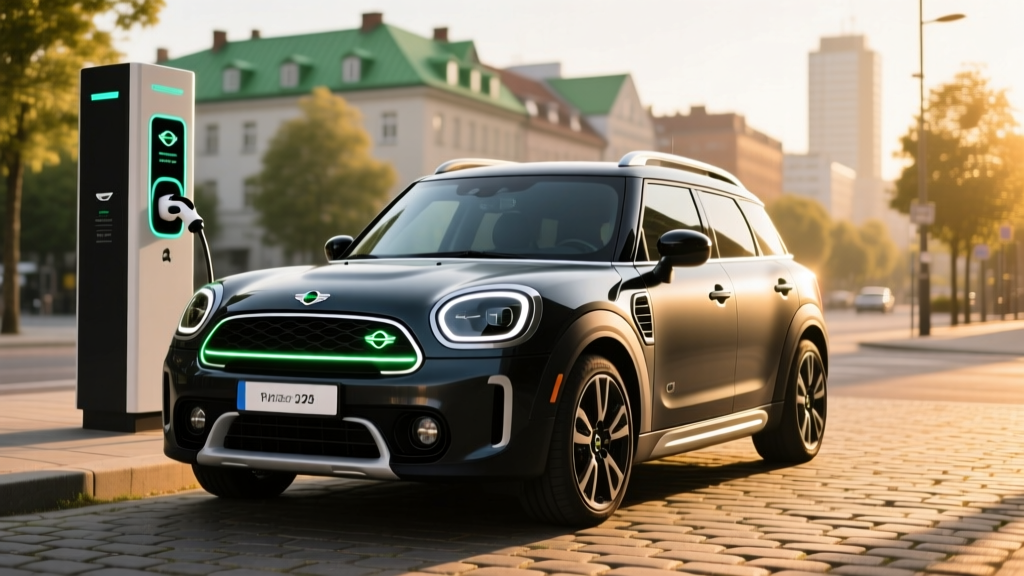
The MINI brand has always traded on personality — go-kart handling, retro-chic styling, and a certain British cheekiness that sets it apart in a sea of anonymous crossovers. The 2026 MINI Electric Countryman is the marque's largest all-electric offering, and it arrives at a moment when subcompact electric SUVs are among the most competitive segments in the market. With an EPA-estimated range up to 242 miles, available all-wheel drive, and that unmistakable MINI design language, the Electric Countryman aims to prove you don't need to sacrifice character for electrification.
But personality doesn't pay the charging bill. We've spent time analyzing the Electric Countryman's specs, real-world efficiency, charging behavior, and ownership economics to answer the question that matters: does this EV deliver where it counts, or is it all hat and no cattle?
Range and Real-World Efficiency
The 2026 MINI Electric Countryman comes in two primary powertrain configurations that affect range differently. The single-motor Countryman SE (front-wheel drive) carries a 66.5 kWh usable battery pack (NMC lithium-ion chemistry) and earns an EPA-estimated 242 miles of range. The dual-motor Countryman ALL4 (all-wheel drive) uses the same pack but is rated at 227 miles EPA due to the added weight and drivetrain losses of the second motor.
EPA sticker: 242 mi (SE FWD) / 227 mi (ALL4 AWD)
Real-world expectation: Plan for approximately 200–220 miles on mixed highway driving at 70+ mph. In cold weather (below 32°F), expect a 15–25% reduction, dropping effective range to roughly 170–195 miles for the SE. City driving with frequent regenerative braking opportunities will get you closer to or slightly above the EPA number.
Efficiency is rated at 105 MPGe combined for the SE and 98 MPGe combined for the ALL4, which translates to roughly 32 kWh/100 mi and 34 kWh/100 mi respectively. These figures are respectable for the segment but trail the efficiency leaders like the Hyundai Ioniq 5 and Tesla Model Y, both of which benefit from more aerodynamic profiles and, in Tesla's case, a heat pump standard across all trims. The Countryman does include a heat pump as standard equipment for 2026, which helps mitigate cold-weather range loss compared to vehicles using resistive cabin heating.
| Specification | Countryman SE (FWD) | Countryman ALL4 (AWD) |
|---|---|---|
| EPA Range | 242 miles | 227 miles |
| Battery (usable) | 66.5 kWh, NMC | 66.5 kWh, NMC |
| Efficiency (combined) | 105 MPGe / 32 kWh/100mi | 98 MPGe / 34 kWh/100mi |
| Horsepower | 201 hp | 308 hp |
| 0–60 mph | 7.4 seconds | 5.4 seconds |
| Drivetrain | Single motor, FWD | Dual motor, AWD |
| Max DC Charge Rate | 130 kW | 130 kW |
| 10–80% DC Charge Time | ~29 minutes | ~29 minutes |
| Level 2 Charge Rate | 11 kW (~37 mi/hr) | 11 kW (~37 mi/hr) |
| Cargo Volume (rear seats up) | 16.5 cu ft | 16.5 cu ft |
| Cargo Volume (rear seats folded) | 48.7 cu ft | 48.7 cu ft |
| Base MSRP | $38,900 | $43,900 |
Charging Speed: DC Fast Charging and Home Setup
The Electric Countryman peaks at 130 kW on DC fast charging, which places it in the middle of the pack for 2026. Competitors like the Hyundai Ioniq 5 (up to 240 kW on 800V architecture) and the Kia EV6 (up to 238 kW) charge substantially faster, while the Volvo EX30 maxes out at a similar 153 kW. The 130 kW peak is not sustained across the entire charge session — as with all EVs, the charge curve tapers significantly above 80% State of Charge (SoC) to protect battery health.
In practice, the 10–80% charge takes approximately 29 minutes at a compatible 150 kW or higher DC fast charger. If you're using a 50 kW station (still common in some areas), expect that same 10–80% session to take roughly 75–80 minutes. The Countryman uses the CCS1 connector for DC fast charging in North America, though MINI has confirmed that NACS adapter compatibility is available for Tesla Supercharger network access.
| Charging Level | Power | Speed / Time | Best Use Case |
|---|---|---|---|
| Level 1 (120V household) | ~1.4 kW | ~4–5 miles per hour | Overnight top-up, emergencies |
| Level 2 (240V home/public) | 11 kW max | ~37 miles per hour (full charge ~6.5 hrs) | Daily home charging |
| DC Fast Charge (CCS1) | 130 kW peak | 10–80% in ~29 minutes | Road trips, quick top-ups |
For home Level 2 charging, the Countryman's 11 kW onboard charger is a strong point — many competitors still ship with 7.2 kW or 9.6 kW chargers. On a 48-amp Level 2 circuit (the most common home installation), you'll recover roughly 37 miles of range per hour of charging, meaning a full overnight session easily replenishes the battery. A typical Level 2 home charger installation runs $800–$2,000 depending on your electrical panel capacity and the distance from panel to garage. If your home requires a 200-amp panel upgrade, add $1,500–$3,000 to that figure.
Performance and Driving Dynamics
The single-motor Countryman SE produces 201 horsepower and reaches 60 mph in 7.4 seconds — adequate for commuting and highway merging, but hardly thrilling by EV standards. The dual-motor ALL4 model is a different story: 308 horsepower and a 5.4-second 0–60 time give it genuine punch off the line, and the instant torque delivery makes it feel quicker than the number suggests in everyday driving.
MINI's chassis tuning has always been a brand hallmark, and the Electric Countryman continues that tradition despite carrying the extra mass of a battery pack. The steering is weighted well, body roll is controlled, and the low center of gravity from the under-floor battery gives it a planted feel through corners that most subcompact crossovers can't match. That said, the ride quality is firm — some might say too firm for rough city streets — which is a trade-off for the sporty handling.
The ALL4's dual-motor all-wheel drive provides confident traction in rain and light snow, making it the clear choice for buyers in northern climates. The system can redirect torque between front and rear axles in milliseconds, though it's worth noting this is a road-oriented AWD system, not designed for serious off-road use.
Interior, Cargo, and Technology
The 2026 Countryman's interior is a study in MINI's new design direction: minimalist, screen-forward, and surprisingly premium for the segment. The centerpiece is a 9.4-inch circular OLED display that handles both infotainment and instrument cluster duties — there is no traditional gauge cluster behind the steering wheel. The interface runs MINI's latest Operating System 9, which supports wireless Apple CarPlay and Android Auto, over-the-air updates, and a customizable widget-based home screen.
Passenger space is genuinely practical. Front legroom measures 41.2 inches, and rear legroom comes in at 38.0 inches — enough for adults on longer trips without complaint. The 16.5 cubic feet of cargo space behind the rear seats expands to 48.7 cubic feet with the 60/40 split rear seats folded, which is competitive with the Volvo EX30 (35.2 cu ft max) and slightly behind the Hyundai Kona Electric (52.8 cu ft max).
On the driver-assistance front, the Countryman comes standard with automated emergency braking, lane-keeping assist, adaptive cruise control, and blind-spot monitoring. Available features include a surround-view camera, parking assistant with automated steering, and Highway Assistant (a Level 2 hands-on system that provides steering and speed assistance on divided highways). This is SAE Level 2 driver assistance — the driver must remain attentive and keep hands on or near the wheel at all times. It is not autonomous driving.
Pricing, Trims, and Federal Tax Credit Eligibility
The 2026 MINI Electric Countryman lineup starts at $38,900 for the SE (FWD) in Classic trim. The ALL4 (AWD) begins at $43,900. Higher trims — Signature and Icon — add premium features like a panoramic sunroof, Harman Kardon audio, heated seats, and upgraded interior materials, pushing as-tested prices into the $48,000–$52,000 range.
| Trim | Drivetrain | MSRP | Est. After §30D Credit* |
|---|---|---|---|
| SE Classic | FWD | $38,900 | ~$31,400 |
| SE Signature | FWD | $42,400 | ~$34,900 |
| ALL4 Classic | AWD | $43,900 | ~$36,400 |
| ALL4 Signature | AWD | $47,400 | ~$39,900 |
| ALL4 Icon | AWD | $51,900 | ~$44,400 |
*Tax credit estimates assume full eligibility. Actual credit depends on individual circumstances.
Federal tax credit eligibility under IRS §30D is the critical variable here. The Countryman's MSRP falls well under the $80,000 SUV cap, which is the easy part. However, qualifying for the full $7,500 credit depends on several additional factors that change periodically:
- Buyer income limits: Modified adjusted gross income must not exceed $150,000 (single), $225,000 (head of household), or $300,000 (joint filers)
- Battery component sourcing: A percentage of battery components must be manufactured or assembled in North America (threshold increases annually)
- Critical minerals requirement: A percentage of critical minerals must be sourced from the U.S. or free-trade-agreement countries (threshold increases annually)
- Point-of-sale transfer: As of 2024, eligible buyers can transfer the credit to the dealer at purchase, reducing the purchase price upfront rather than waiting for tax filing
As of the 2026 model year, MINI has worked to localize battery component sourcing, but the specific credit amount available (full $7,500, partial $3,750, or $0) can shift based on updated IRS manufacturer qualification lists. Always verify current eligibility on the IRS website or with your tax professional before relying on the credit in your purchase decision.
Warranty and Long-Term Ownership
MINI backs the Electric Countryman with a 4-year/50,000-mile limited warranty and a 8-year/100,000-mile battery warranty. The battery warranty guarantees that the pack will retain at least 70% of its original capacity during the coverage period — this is the industry-standard threshold and aligns with what BMW (MINI's parent company) offers across its electrified lineup.
The NMC battery chemistry in the Countryman offers higher energy density than LFP (lithium iron phosphate) alternatives, which is how MINI fits 66.5 kWh into a relatively compact package. The trade-off is that NMC cells generally experience slightly faster degradation over time compared to LFP, though modern thermal management systems have narrowed this gap considerably. Based on data from similar BMW Group battery packs, owners can reasonably expect 85–92% capacity retention after 5 years / 75,000 miles under normal usage patterns.
Maintenance costs for the Electric Countryman should be notably lower than its gasoline counterpart — no oil changes, no spark plugs, no transmission fluid, and regenerative braking significantly extends brake pad life. MINI offers a complimentary scheduled maintenance program for the first 3 years / 36,000 miles, which covers cabin air filter replacement and brake fluid checks.
How It Compares: Countryman vs. Key Rivals
The subcompact electric SUV segment is crowded. Here's how the Electric Countryman stacks up against the three most obvious alternatives:
vs. Hyundai Kona Electric: The Kona offers a longer EPA range (261 miles), more cargo space (52.8 cu ft), and a lower starting price (~$34,000). But the Countryman counters with a more premium interior, faster Level 2 charging (11 kW vs. 7.2 kW), and sharper driving dynamics. Choose the Kona for maximum value and range; choose the Countryman for style and driving engagement.
vs. Volvo EX30: Volvo's entry is similarly premium and comparably priced ($36,350 base), but offers less range (217 miles for the single-motor version) and significantly less rear-seat and cargo space. The EX30 charges faster (153 kW peak) and has a more Scandinavian-minimalist aesthetic. The Countryman wins on practicality; the EX30 wins on charging speed and brand cachet in the luxury-adjacent space.
vs. Tesla Model Y: The Model Y is a class above in size, range (up to 320 miles), and Supercharger network access. It also starts higher (~$44,990). If you need maximum range, the most mature public charging experience, and don't mind a larger vehicle, the Model Y is the pragmatic choice. The Countryman appeals to buyers who want something smaller, more distinctive, and easier to park in urban environments.
- Engaging, sporty driving dynamics rare in the segment
- 11 kW Level 2 onboard charger — faster home charging than most rivals
- Premium, distinctive interior with circular OLED display
- Practical cargo space (48.7 cu ft max) and comfortable rear seats
- Standard heat pump for better cold-weather efficiency
- Available AWD (ALL4) for inclement-weather confidence
- 130 kW DC fast charging trails segment leaders (Ioniq 5 at 240 kW)
- 242-mile EPA range is adequate but not class-leading
- Firm ride quality may not suit all buyers on rough roads
- Circular display replaces traditional cluster — adjustment period required
- Federal tax credit eligibility is not guaranteed; verify before purchase
- No front trunk (frunk) — all cargo space is in the rear
Who Should Buy the MINI Electric Countryman?
The 2026 Electric Countryman is best suited for urban and suburban drivers who value design, driving engagement, and premium feel over maximum range. If your daily commute is under 60 miles round-trip and you have access to home Level 2 charging, the 242-mile range is more than sufficient, and you'll rarely need DC fast charging in daily life.
It's a strong pick for couples or small families who need more cargo flexibility than a hatchback offers but don't need the size of a midsize SUV. The ALL4 version makes particular sense for buyers in snow-belt states who want AWD traction without stepping up to a larger, more expensive vehicle.
It's not the right choice if you regularly drive 300+ miles between charging stops, need the fastest possible road-trip charging, or prioritize maximum interior volume per dollar. For those use cases, the Hyundai Ioniq 5, Tesla Model Y, or Kia EV6 are better fits.
Frequently Asked Questions
What is the real-world range of the MINI Electric Countryman?
The EPA rates the SE (FWD) at 242 miles and the ALL4 (AWD) at 227 miles. In real-world highway driving at 70+ mph, expect roughly 200–220 miles. In cold weather below freezing, plan for 170–195 miles due to battery chemistry limitations and cabin heating demands, even with the standard heat pump.
How fast does the MINI Electric Countryman charge?
On DC fast charging, it peaks at 130 kW and reaches 10–80% in approximately 29 minutes at a 150 kW or higher station. At home on a Level 2 charger, the 11 kW onboard charger adds about 37 miles of range per hour, fully replenishing the battery in roughly 6.5 hours.
Does the MINI Electric Countryman qualify for the $7,500 federal EV tax credit?
It can, but eligibility is not automatic. The MSRP is under the $80,000 SUV cap, which is one requirement. You must also meet IRS income limits ($150K single / $300K joint), and the vehicle must meet current-year battery component and critical minerals sourcing thresholds. Check the IRS qualified vehicles list before purchasing, as eligibility can change.
Is the MINI Electric Countryman worth buying over a Tesla Model Y?
It depends on your priorities. The Model Y offers significantly more range (320 mi), faster Supercharger access, and more interior space — but it's larger, more expensive, and less distinctive. The Countryman is the better pick if you want a smaller, more engaging-to-drive EV with a premium, personality-rich interior and don't need 300+ mile range.
What is the battery warranty on the MINI Electric Countryman?
MINI provides an 8-year/100,000-mile battery warranty that guarantees at least 70% capacity retention. The vehicle's limited warranty covers 4 years / 50,000 miles, and complimentary scheduled maintenance is included for 3 years / 36,000 miles.
Does the Countryman have a frunk (front trunk)?
No. The Electric Countryman does not include a front trunk. All cargo storage is in the rear compartment, which offers 16.5 cubic feet behind the rear seats and 48.7 cubic feet with seats folded.