Quick Answer: Is the Mustang Mach-E Safe in a Crash?
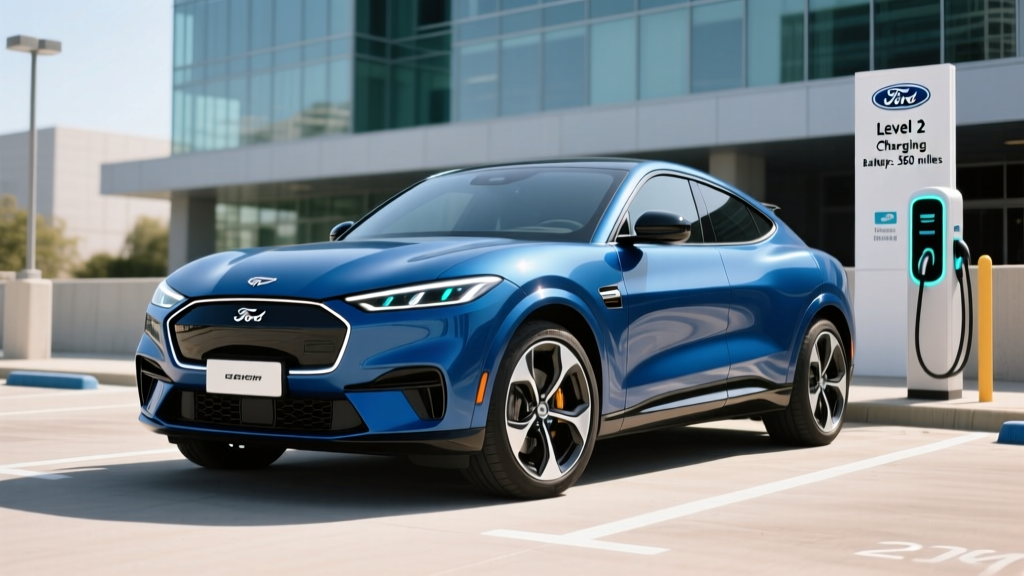
The 2026 Ford Mustang Mach-E earns top marks from both major U.S. safety agencies. It holds the IIHS Top Safety Pick+ designation (when equipped with specific headlights) and a 5-Star Overall NHTSA rating. EV battery packs are mounted low in the chassis, giving the Mach-E a lower center of gravity than the gas Mustang coupe, which reduces rollover risk. Post-crash EV battery fire incidents remain statistically rare compared to gasoline vehicle fires per 100,000 vehicles. If you're researching an "EV Mustang crash" scenario — whether from viral videos or safety concerns — the data shows the Mach-E is among the safest midsize electric SUVs on the road.
Mustang Mach-E Crash Test Scores: IIHS and NHTSA Breakdown
Both the Insurance Institute for Highway Safety (IIHS) and the National Highway Traffic Safety Administration (NHTSA) have evaluated the Mach-E extensively. Here's how the scores break down for the current-generation platform:
| Test / Agency | Rating / Score | Notes |
|---|---|---|
| NHTSA Overall | ★★★★★ (5/5) | All trims, RWD and AWD |
| NHTSA Frontal Crash | ★★★★★ (5/5) | Driver and passenger |
| NHTSA Side Crash | ★★★★★ (5/5) | Barrier and pole tests |
| NHTSA Rollover | ★★★★★ (5/5) | 9.3% risk | Low due to floor-mounted battery |
| IIHS Moderate Overlap Front | Good | Original test protocol |
| IIHS Updated Side | Good | Heavier barrier, higher speed |
| IIHS Small Overlap (Driver) | Good | Structural integrity maintained |
| IIHS Roof Strength | Good | Withstood ~4x vehicle weight |
| IIHS Front Crash Prevention | Superior (Day & Night) | Standard automatic emergency braking |
The rollover figure is particularly relevant for EV-curious buyers coming from SUVs. At just 9.3% rollover risk, the Mach-E outperforms most gas-powered midsize SUVs, which typically range from 12–18%. The heavy battery pack bolted beneath the floor acts as ballast, keeping the vehicle planted during evasive maneuvers.
EV Battery Safety in a Crash: Myth vs. Fact
Viral videos of electric vehicle fires generate outsized attention. Let's separate documented data from perception:
| Myth | Fact (with data) |
|---|---|
| "EVs catch fire more often than gas cars" | The NTSB and AutoInsuranceEZ analysis of NTSB data found gas vehicles experience roughly 1,530 fires per 100,000 vehicles, compared to approximately 25 fires per 100,000 EVs. Hybrids actually showed the highest rate at ~3,475 per 100k. |
| "A crash will ignite the battery immediately" | Ford engineers the Mach-E's battery enclosure with reinforced steel and aluminum shielding. NHTSA crash tests include post-impact battery integrity assessments. Thermal runaway events are extremely uncommon in moderate collisions. |
| "EV fires can't be extinguished" | EV battery fires require more water and longer cooling periods than gasoline fires, but fire departments are increasingly trained on EV protocols. NFPA has published EV-specific firefighting guides since 2020. |
| "The battery will electrocute occupants" | High-voltage systems automatically disconnect within milliseconds of airbag deployment via pyrotechnic safety switches. First responders are trained on EV cutoff points. |
The Mach-E's battery pack (available in 75.7 kWh Standard Range or 91.0 kWh Extended Range, both NMC chemistry) sits inside a welded steel and aluminum cradle. Ford has published emergency response guides detailing high-voltage disconnect locations for first responders — standard practice across the EV industry.
Mustang Mach-E vs. Gas Mustang: Safety & Ownership Cost Comparison
Many buyers cross-shopping the Mach-E are considering it against the traditional gas Mustang or gas-powered midsize SUVs. Here's how the numbers stack up:
| Metric | 2026 Mustang Mach-E (Select RWD) | 2026 Ford Mustang EcoBoost (gas) |
|---|---|---|
| Body Style | Midsize SUV (crossover) | 2-door coupe |
| NHTSA Overall Rating | ★★★★★ | ★★★★ (4/5) |
| IIHS Top Safety Pick | Top Safety Pick+ (qualifying headlights) | Not rated (limited IIHS testing) |
| Rollover Risk | 9.3% | ~12.5% |
| Base MSRP | $42,995 | $32,515 |
| Fed. Tax Credit (§30D) | Up to $3,750 (varies by sourcing; check IRS §30D rules) | $0 |
| EPA Range / MPG | 250 mi (EPA) | 101 MPGe combined | 21/32/25 MPG combined |
| Fuel/Charge Cost per Year | ~$550 (home L2, $0.13/kWh avg) | ~$1,850 (gas at $3.20/gal, 12k mi/yr) |
| 5-Year Fuel/Charge Total | ~$2,750 | ~$9,250 |
| Estimated Annual Insurance | $1,900–$2,400 | $1,500–$2,000 |
| Maintenance (5-yr est.) | ~$2,100 | ~$4,500 |
The Mach-E costs roughly $10,000 more upfront, but over five years the fuel and maintenance savings recoup approximately $8,900 — before factoring in any federal or state incentives. Insurance premiums for the Mach-E run 15–25% higher than the gas Mustang, driven primarily by higher repair costs for EV-specific components and higher vehicle value.
EV Insurance and Repair Costs After a Crash
This is where "EV Mustang crash" concerns become practical ownership questions. If you're in a collision, what happens?
Why EV Insurance Costs More
- Higher vehicle value: A $43,000+ Mach-E carries a larger replacement-cost basis than a $32,000 EcoBoost coupe.
- Specialized repair networks: Not every body shop is certified for high-voltage EV work. Ford requires certified collision centers for battery-adjacent structural repairs.
- Battery replacement cost: If the battery pack sustains structural damage, a full replacement runs $18,000–$24,000 (parts and labor) — though this scenario is rare and covered by insurance.
- Sensor recalibration: Post-collision ADAS recalibration (cameras, radar) adds $500–$1,200 to repair bills.
The 8-Year/100,000-Mile Battery Warranty
Ford covers the Mach-E's high-voltage battery for 8 years or 100,000 miles (whichever comes first) against defects and capacity loss below 70% of original capacity. This warranty does not cover collision damage — that's your auto insurance's job. However, it does protect against manufacturing defects and abnormal degradation, which is a meaningful long-term safety net.
Real-World Repair Timelines
One legitimate frustration EV owners face post-crash: parts availability. Ford's EV supply chain has improved since 2022–2023 shortages, but specialized components (battery modules, inverter assemblies) can still take 2–6 weeks to arrive, compared to days for common gas-car parts. Factor this into your decision if you rely on daily driving and lack a backup vehicle.
Real-World Ownership Considerations for Mach-E Buyers
Decision Framework: Is the Mach-E Right for You?
Choose the Mustang Mach-E if:
- You have access to Level 2 home charging (240V, 40A+ circuit) or reliable workplace charging
- Your daily commute is under 200 miles round-trip
- You live in a moderate climate — or can accept 20–30% range loss in sub-freezing winters
- You want crossover cargo space (29.7 cu ft behind rear seats, 59.7 cu ft folded) with a small frunk (4.7 cu ft)
- Safety ratings are a top priority for family hauling
Look elsewhere (or consider a PHEV) if:
- You have no access to home or workplace charging and rely entirely on public infrastructure
- You regularly tow more than 2,200 lbs (the Mach-E's max tow rating with the handling package)
- You frequently drive 300+ mile one-way trips through charging-desert corridors
- Your budget is firmly under $35,000 (consider a used Mach-E or a PHEV like the Ford Escape PHEV)
Charging Reality Check
The 2026 Mach-E Extended Range supports DC fast charging at up to 150 kW peak via its NACS charge port (Tesla Supercharger compatible). In real-world testing:
- 10–80% DC fast charge: approximately 35–40 minutes (the charge curve tapers significantly above 80%)
- Level 2 home charging (48A/11.5 kW): roughly 8.5 hours from 0–100%
- Level 1 (120V) trickle: adds about 3 miles per hour — only viable for emergencies or PHEV-style overnight top-ups on low-mileage days
The Mach-E's 150 kW peak rate is modest compared to rivals like the Hyundai Ioniq 5 (peak 240 kW, 10–80% in ~18 min). If frequent road-trip fast charging is central to your use case, this is a meaningful trade-off to weigh.
Common Misconceptions About EV Safety and Cost
| Concern | Reality |
|---|---|
| "I'll need a new battery in 5 years" | Modern NMC packs like the Mach-E's are engineered for 200,000+ mile lifespans. Average annual degradation is ~1.5–2.5%. Most owners will see 85–90% capacity at 100,000 miles. |
| "Public charging is unreliable" | Reliability has improved but varies by network. Tesla Superchargers (now NACS-accessible to Mach-E) consistently report 95%+ uptime. Electrify America and EVgo average 80–90%. Always have a backup charging plan for road trips. |
| "EVs don't work in cold weather" | The Mach-E's liquid-cooled battery with active thermal management mitigates cold loss. Expect 20–30% range reduction below 20°F. Preconditioning while plugged in recovers significant range. |
| "I can't get a tax credit" | The §30D credit for the Mach-E depends on battery component sourcing, your AGI, and the MSRP cap ($80,000 for SUVs). The credit can be transferred to the dealer at point of sale as an instant discount. Verify current eligibility on IRS.gov before purchase. |
| "Insurance will be impossibly expensive" | Higher, yes — but typically $400–$700/year more than a comparable gas vehicle, not double. Shop multiple quotes; some insurers now offer EV-specific discounts. |
Frequently Asked Questions
Has the Mustang Mach-E been recalled for safety issues?
Ford issued recalls for certain 2021–2022 Mach-E models related to a high-voltage battery contactor issue that could cause sudden power loss. Ford addressed this via a software update (OTA) and, in some cases, hardware replacement at no cost. Check your specific VIN on NHTSA's recall database before purchasing any used Mach-E.
How does the Mach-E's crash safety compare to the Tesla Model Y?
Both vehicles hold 5-star NHTSA ratings and Top Safety Pick+ from IIHS (with qualifying equipment). The Model Y has a slightly lower rollover risk due to its heavier battery. In updated IIHS side-crash testing, both scored "Good." Safety is essentially a tie — your decision will more likely hinge on charging network preference, interior ergonomics, and software experience.
What happens to the battery in a severe Mach-E crash?
High-voltage disconnect switches deactivate the battery pack within milliseconds of airbag deployment. Ford's emergency response guide shows first responders exactly where to cut and where not to cut. Battery fires from collision damage are exceedingly rare, and the reinforced enclosure is designed to withstand significant deformation without cell puncture.
Is the Mach-E more expensive to insure than a gas SUV?
Typically yes, by about 15–25%. Average annual premiums range from $1,900 to $2,400 depending on your state, driving record, and coverage level. The higher repair costs for EV-specific components and the vehicle's higher MSRP drive this premium. Compare quotes from at least three insurers — some now offer dedicated EV policies with battery-specific coverage.
Can I charge the Mach-E at Tesla Superchargers?
Yes. The 2026 Mach-E comes equipped with a native NACS charge port, granting access to Tesla's Supercharger network without an adapter. This significantly expands your public fast-charging options, adding over 25,000 Supercharger stalls nationwide to the Mach-E's charging map.