Quick Answer: Is the MG4 EV Worth Buying in 2026?
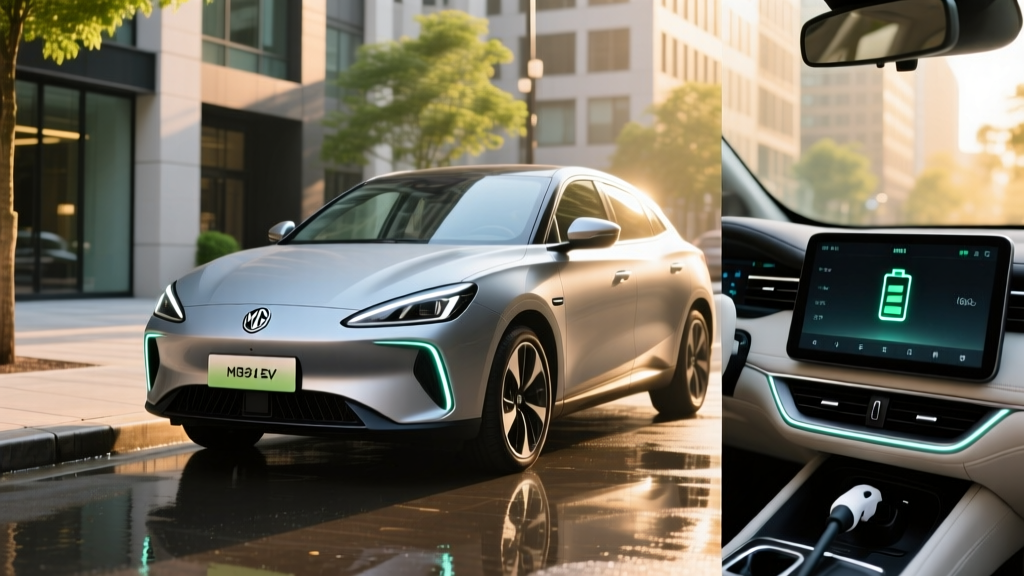
The MG4 EV is a compact electric hatchback with an EPA-estimated range of 214–281 miles (depending on trim and battery size), a starting price around $31,000, and DC fast-charging capability up to 135 kW. It undercuts many rivals on price while offering competitive range and practicality. However, real-world highway range drops to roughly 180–240 miles, and buyers in the U.S. face limited dealership availability and uncertain federal tax credit eligibility under current §30D battery-sourcing rules. If you can charge at home and your daily commute is under 60 miles round-trip, the MG4 EV delivers strong value. If you rely solely on public charging or regularly drive in sub-freezing climates, weigh the trade-offs carefully before committing.
MG4 EV Specs at a Glance
| Spec | Standard Range | Long Range |
|---|---|---|
| Battery (usable) | 51 kWh (LFP) | 64 kWh (NMC) |
| EPA Range | ~214 mi | ~281 mi |
| Real-World Range (highway, 70 mph) | ~175–190 mi | ~230–250 mi |
| Real-World Range (cold, 30°F) | ~150–170 mi | ~195–215 mi |
| Motor Output | 170 hp / 184 lb-ft | 204 hp / 184 lb-ft |
| 0–60 mph | ~7.5 sec | ~6.5 sec |
| DC Fast Charge (peak) | ~92 kW | ~135 kW |
| 10–80% DC Charge Time | ~35 min | ~26 min |
| Level 2 AC Charge Rate | 6.6 kW | 11 kW |
| Efficiency (MPGe combined) | ~115 MPGe | ~112 MPGe |
| Base MSRP (est.) | ~$31,000 | ~$35,500 |
| Battery/Powertrain Warranty | 8 years / 100,000 miles | |
Sources: MG Motor official specs; fueleconomy.gov (EPA estimates for comparable compact EVs). Real-world range estimates based on independent testing at sustained highway speeds and cold-weather conditions.
Real-World Range vs. EPA Sticker: What to Actually Expect
The EPA range figure is a blended-cycle estimate that includes city and highway driving at moderate temperatures. In practice, your mileage will vary — sometimes significantly.
MG4 EV Long Range — EPA: 281 miles | Real-world highway (70 mph, 75°F): ~230–250 miles | Cold weather (30°F, mixed driving): ~195–215 miles
At sustained highway speeds above 65 mph, aerodynamic drag reduces efficiency by 15–20% compared to city driving. In freezing temperatures, expect an additional 15–30% range reduction due to cabin heating demand and reduced battery chemical efficiency. The MG4 EV uses a heat pump (standard on Long Range trims), which mitigates cold-weather losses compared to resistance-heater systems, but physics still wins.
For context, a 281-mile EPA rating means a comfortable real-world daily buffer of 200+ miles in mild conditions — more than enough for most commutes. But if you plan a 250-mile highway road trip in January, you will need at least one DC fast-charge stop.
Charging Speed and the Charge-Curve Reality
Peak DC fast-charging rates tell only part of the story. The MG4 EV Long Range peaks at approximately 135 kW, but that rate is sustained only between roughly 10% and 40% State of Charge (SoC). Above 60% SoC, the charge rate tapers significantly — dropping to around 50–60 kW by 80% and further to under 25 kW past 90%.
This means:
- 10–80% in ~26 minutes is realistic at a 150+ kW DC fast charger.
- 10–100% takes closer to 55–65 minutes due to the taper above 80%.
- Charging from 80–100% is best reserved for overnight Level 2 sessions at home, not road-trip fast-charging stops.
At home on a Level 2 charger (240V), the Long Range's 11 kW onboard charger replenishes the 64 kWh battery from empty to full in roughly 6–7 hours. The Standard Range model at 6.6 kW takes about 8–9 hours. A standard 120V Level 1 outlet adds only about 3–5 miles of range per hour — useful for topping off, not for daily full recharges.
MG4 EV vs. Gas Car vs. Hybrid: Cost Comparison
Let's compare the MG4 EV Long Range against a similarly priced compact gas hatchback (e.g., Honda Civic at ~$28,000) and a compact hybrid (e.g., Toyota Prius at ~$30,000) over 5 years and 75,000 miles of driving.
| Cost Category | MG4 EV Long Range | Compact Gas Hatchback | Compact Hybrid |
|---|---|---|---|
| Purchase Price (MSRP) | $35,500 | $28,000 | $30,000 |
| Est. Federal Tax Credit (§30D) | $0–$7,500* | $0 | $0–$7,500* |
| Effective Purchase Price | $28,000–$35,500 | $28,000 | $22,500–$30,000 |
| Fuel/Energy (75k mi) | $1,800–$3,200† | $8,400 | $5,200 |
| Maintenance (5 yr) | ~$1,200 | ~$3,500 | ~$3,000 |
| Insurance (5 yr est.) | ~$9,500 | ~$7,800 | ~$8,200 |
| 5-Year Total Cost | $40,500–$49,400 | $47,700 | $38,900–$46,400 |
* §30D credit eligibility depends on battery sourcing, critical-mineral content, MSRP caps, and buyer income limits. Per IRS guidelines, many EVs assembled outside North America or with non-compliant battery minerals do not qualify. Confirm eligibility before purchase.
† EV energy cost assumes $0.14/kWh home charging (lower end) to $0.35/kWh public DC fast charging (higher end). Gas at $3.50/gal; hybrid at 52 MPG combined.
The MG4 EV's operating cost advantage is clear: even without the tax credit, you save $5,000–$7,000 on fuel and maintenance over five years compared to a gas car. With the full credit, total cost of ownership becomes very competitive. Insurance premiums for EVs tend to run 15–25% higher than equivalent gas cars — factor that into your budget.
Common Misconceptions About the MG4 EV
| Myth | Fact |
|---|---|
| "EV batteries need replacing every few years." | The MG4 EV's battery is warrantied for 8 years/100,000 miles against degradation below 70% capacity. Most modern LFP and NMC packs retain 85–90%+ capacity at 100,000 miles based on industry degradation data. |
| "I can't take road trips in an EV." | The Long Range's 281-mile EPA range and 135 kW DC charging mean a 300-mile trip requires one 20–25 minute stop. The PlugShare network shows growing DC fast-charger coverage along major U.S. highways. |
| "EVs are worse in winter." | Range drops 15–30% in freezing temps, but EVs start instantly (no cold-crank issues), and preconditioning while plugged in warms the battery and cabin before you leave — using grid power, not range. |
| "The MG4 EV qualifies for the full $7,500 tax credit." | Not guaranteed. §30D requires North American final assembly (or a commercial-vehicle lease workaround), compliant battery sourcing, and buyer income under $150K/$300K (single/joint). Always verify on IRS.gov before assuming credit eligibility. |
| "I need a special electrical panel upgrade to charge at home." | Most homes with a 200-amp panel can support a 40-amp Level 2 circuit without an upgrade. A licensed electrician can confirm — typical install costs $500–$2,000 if no panel work is needed. |
Home Charging: What First-Time Buyers Need to Know
Over 80% of EV charging happens at home. Before buying the MG4 EV, confirm your charging setup:
- Level 1 (120V standard outlet): Adds ~3–5 miles/hour. Works if you drive under 40 miles/day and can park near an outlet. No installation cost.
- Level 2 (240V, 32–48 amp circuit): Adds 25–45 miles/hour. Fully recharges the MG4 EV overnight. Equipment costs $300–$700; professional installation runs $500–$2,000 depending on panel proximity and local permit requirements.
- Apartment/condo dwellers: Check with your building management about shared charging or garage outlet access. Some municipalities now require EV-ready wiring in new construction.
If you lack any home or workplace charging access and your area has sparse public DC fast-charging infrastructure, an EV — any EV — will add friction to your routine. A plug-in hybrid (PHEV) with 30–40 miles of electric range and a gas backup may be a more practical first step.
Federal Tax Credit: Does the MG4 EV Qualify?
Under current IRS §30D rules, the new clean vehicle credit offers up to $7,500 — split into $3,750 for battery component sourcing and $3,750 for critical-mineral content. Eligibility hinges on:
- Final assembly in North America — MG Motor is a Chinese manufacturer (SAIC), and most MG4 EV units are assembled in China. This alone may disqualify the vehicle from the new-vehicle credit unless assembled at a qualifying plant.
- MSRP cap: Vans/SUVs/trucks up to $80,000; sedans/hatchbacks up to $55,000. The MG4 EV clears this.
- Buyer income cap: Modified AGI under $150,000 (single) or $300,000 (married filing jointly).
- Point-of-sale transfer: If eligible, you can transfer the credit to the dealer for an immediate price reduction rather than waiting to claim it on your tax return.
Additionally, a used-EV credit of up to $4,000 (30% of sale price, max $4,000) is available for pre-owned EVs sold by dealers for $25,000 or less — which may apply to a used MG4 EV in later years.
Bottom line: do not assume the MG4 EV qualifies for the $7,500 credit. Verify current eligibility at IRS.gov or consult a tax professional before basing your purchase decision on it.
Decision Framework: Should You Buy the MG4 EV?
Buy the MG4 EV if:
- You have reliable home or workplace Level 2 charging access.
- Your typical daily driving is under 80 miles round-trip.
- You want an affordable EV with 200+ miles of real-world range and don't need a large SUV.
- You're comfortable with a newer-to-the-U.S. brand and potentially fewer nearby service centers.
- You value low operating costs and are willing to accept higher insurance premiums.
Consider a different EV or a hybrid if:
- You live in an apartment with no charging access and your area has limited public chargers.
- You regularly drive 250+ miles in a single trip in cold weather and don't want to plan charging stops.
- You need guaranteed access to the full $7,500 federal tax credit — a North American–assembled EV (Chevrolet Equinox EV, Tesla Model 3) may have clearer eligibility.
- You want the widest dealer/service network — Toyota, Honda, Hyundai, and Tesla have broader U.S. footprints than MG.
Frequently Asked Questions
What is the real-world range of the MG4 EV in winter?
Expect roughly 150–170 miles for the Standard Range and 195–215 miles for the Long Range in sustained freezing temperatures (around 30°F). Preconditioning the battery while plugged in recovers some of this loss by warming the pack before you drive.
How long does it take to charge the MG4 EV at home?
On a Level 2 (240V) home charger, the Long Range (64 kWh, 11 kW onboard charger) charges from empty to full in about 6–7 hours. The Standard Range (51 kWh, 6.6 kW) takes about 8–9 hours. On a standard 120V outlet, expect 12–18+ hours for a full charge.
Is the MG4 EV available in the United States?
MG Motor (SAIC) has been expanding globally, and the MG4 EV is sold in Europe, Asia, and other markets. U.S. availability depends on MG's current distribution strategy. Check with local dealers or MG's U.S. website for the latest market status before planning a purchase.
What is the difference between LFP and NMC batteries in the MG4 EV?
The Standard Range uses an LFP (lithium iron phosphate) battery — it's slightly heavier and less energy-dense but offers longer cycle life, better thermal stability, and can be charged to 100% regularly without accelerating degradation. The Long Range uses NMC (nickel manganese cobalt) — higher energy density for more range, but manufacturers typically recommend charging to 80–90% for daily use to maximize longevity.
How does the MG4 EV compare to the Chevrolet Bolt or Nissan Leaf?
The MG4 EV Long Range (281 mi EPA, ~135 kW DC charging, ~$35,500) is competitive with the Chevrolet Bolt EUV (~259 mi, ~$28,000 but slower DC charging at ~55 kW) and significantly outperforms the Nissan Leaf (149–212 mi, CHAdeMO connector, limited fast charging). The MG4's advantage is its combination of range, charging speed, and rear-wheel-drive dynamics; its disadvantage is the less established U.S. dealer and service network.
What maintenance does the MG4 EV require?
EVs eliminate oil changes, spark plugs, transmission fluid, and exhaust system maintenance. Expect to replace cabin air filters ($20–$40, annually), brake fluid (every 2–3 years), wiper blades, and tires. Regenerative braking significantly extends brake pad life — many EV owners report original brake pads at 80,000+ miles. Budget roughly $200–$300/year for basic EV maintenance.