Quick Answer: Is the GLC 400 Electric Worth It?
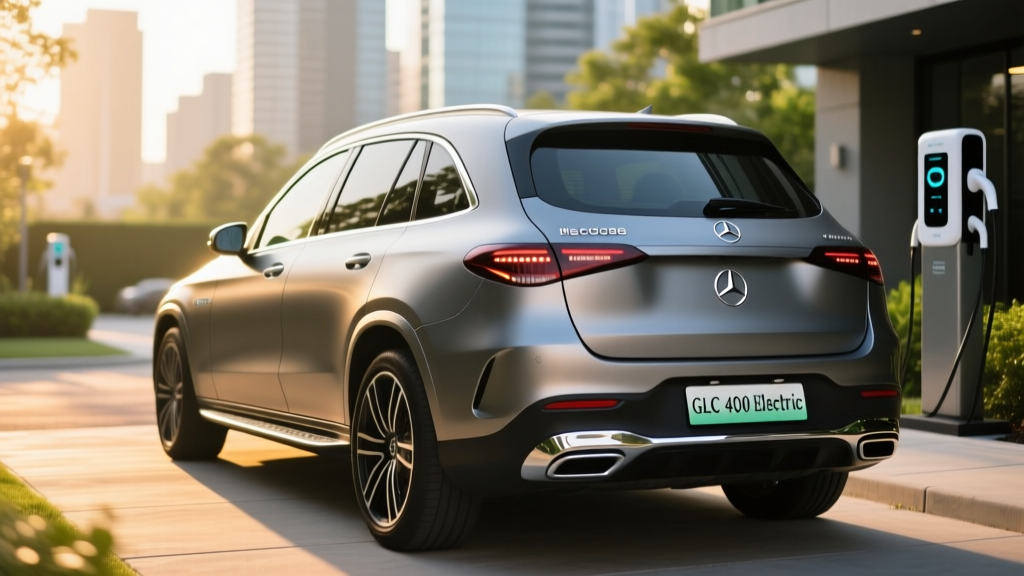
The 2026 Mercedes-Benz GLC 400 electric (officially the GLC 350 4MATIC in the U.S. EQ lineup, with the 400e designation used in select markets as a plug-in hybrid variant) targets luxury compact-SUV buyers seeking premium build quality, a refined ride, and usable electric range. Expect an EPA-estimated range near 280–320 miles depending on final U.S. trim, DC fast charging up to ~200 kW (10–80% in roughly 28–32 minutes), and a starting MSRP in the $58,000–$65,000 range before incentives. Federal §30D tax credit eligibility depends on battery-sourcing compliance and buyer income limits—check current IRS rules before assuming a flat $7,500.
Understanding the GLC 400 Electric Nameplate
Mercedes-Benz naming conventions can confuse first-time EV shoppers. The "GLC 400 electric" search term typically maps to one of two vehicles depending on your market:
- GLC EQ (all-electric): The battery-electric compact SUV built on Mercedes' MMA (Mercedes Modular Architecture) platform, wearing EQ badging in global markets. U.S. trims may carry GLC 350 or GLC 400 electric nomenclature.
- GLC 400e (PHEV): A plug-in hybrid variant pairing a turbocharged 2.0L inline-four with an electric motor and a ~25–31 kWh battery, delivering roughly 50–65 miles of electric-only range before the gas engine engages.
This guide focuses primarily on the all-electric GLC while noting where the PHEV variant differs. If you're cross-shopping, the distinction matters enormously for daily driving costs, charging needs, and tax-credit eligibility.
Range, Battery & Real-World Efficiency
The all-electric GLC on the MMA platform is expected to use a battery pack in the 80–90 kWh usable capacity range, likely NMC (nickel-manganese-cobalt) chemistry given Mercedes' current supplier relationships with CATL and Farasis for energy-dense cells.
| Spec | Estimated / Preliminary |
|---|---|
| Battery (usable) | ~85 kWh, NMC chemistry |
| EPA Range (est.) | 280–320 miles |
| Real-World Highway (70 mph) | ~230–270 miles |
| Cold-Weather Range (20°F) | ~200–240 miles |
| Efficiency | ~2.8–3.2 kWh/mile (est. 95–110 MPGe combined) |
| Drivetrain | Dual-motor AWD (4MATIC) |
| Horsepower | ~300–380 hp (est.) |
| 0–60 mph | ~5.0–5.8 seconds (est.) |
Real-World Range Reality Check
The EPA sticker may read 300+ miles, but sustained highway driving at 75–80 mph, headwinds, and elevation changes will pull real range down to roughly 240–270 miles. In sub-freezing temperatures, expect an additional 15–25% reduction unless you precondition the battery while plugged in. Mercedes' available heat pump (standard on most EQ models) mitigates but does not eliminate cold-weather losses. Plan road trips around 200–220 miles between charge stops for a comfortable buffer.
Charging Speeds: Home & DC Fast Charging
Charging speed is where luxury EVs earn their keep—or disappoint. The GLC electric supports 800-volt architecture on the MMA platform, enabling competitive DC fast-charge rates.
| Charging Level | Power (kW) | Miles Added per Hour | Use Case |
|---|---|---|---|
| Level 1 (120V outlet) | ~1.4 kW | ~4–5 mi/hr | Emergency / overnight trickle |
| Level 2 (240V, 48A) | ~11.5 kW | ~35–40 mi/hr | Daily home charging |
| DC Fast Charge (peak) | ~200 kW | ~180 mi in 15 min (peak) | Road trips |
Charge curve reality: The ~200 kW peak rate applies only between roughly 10–40% state of charge. Expect the rate to taper to ~120 kW by 60% and below 60 kW past 80%. A realistic 10–80% session takes 28–32 minutes at a capable 350 kW charger (such as Electrify America or EVgo stations). Charging from 80–100% adds another 20+ minutes—skip it on road trips unless you need every mile.
Connector note: Mercedes-Benz has committed to adopting the NACS (Tesla-style) connector for North American models. Depending on your model year and delivery date, your GLC may ship with a CCS1 port and an included NACS adapter, or ship natively with NACS. Verify at purchase—this determines which public networks you can use without an adapter.
Pricing, Tax Credits & Incentives
The 2026 all-electric GLC is expected to start near $58,000–$62,000 MSRP for a base 4MATIC trim, with higher-optioned models reaching $70,000+. The plug-in hybrid GLC 400e typically starts around $55,000–$58,000.
Federal §30D Tax Credit Eligibility (2026 Rules)
- MSRP cap: SUVs must be ≤$80,000 MSRP — the GLC should qualify on price.
- Buyer income cap: AGI ≤$150,000 (single) / ≤$300,000 (married filing jointly).
- Battery sourcing: Critical minerals and battery components must meet escalating domestic/free-trade-partner thresholds. Mercedes' global supply chain may or may not comply in every model year — verify on fueleconomy.gov before purchasing.
- Point-of-sale transfer: Eligible buyers can transfer the credit to the dealer for an upfront price reduction at purchase.
- Final assembly: Must be assembled in North America. Confirm VIN eligibility on the IRS site.
Source: IRS §30D Clean Vehicle Credit. Rules are subject to change — consult a tax professional.
EV vs Gas vs PHEV: Cost Comparison
How does the electric GLC stack up against its gas-powered sibling and the plug-in hybrid variant over five years of ownership? Below is a modeled comparison assuming 12,000 miles/year, $0.14/kWh home electricity, $3.50/gallon gasoline, and 80% home / 20% public DC charging for the EV.
| Category | GLC Electric (est.) | GLC 300 Gas | GLC 400e PHEV |
|---|---|---|---|
| Base MSRP | $60,000 | $48,000 | $57,000 |
| Fed. Tax Credit (est.) | $0–$7,500* | $0 | $0–$3,750* |
| 5-Yr Fuel/Energy Cost | $4,200 | $10,500 | $6,300 |
| 5-Yr Maintenance (est.) | $1,800 | $3,500 | $3,000 |
| 5-Yr Insurance (est.) | $12,000 | $9,500 | $10,800 |
| 5-Yr Total Cost (est.) | $70,500–$78,000 | $71,500 | $73,350–$77,100 |
*Tax credit amount depends on battery-sourcing compliance and buyer eligibility. Insurance estimates are averages — EV premiums tend to run 15–25% higher than equivalent gas models due to repair costs and parts pricing. Source: fueleconomy.gov for energy cost baselines.
The takeaway: The EV variant breaks even or slightly undercuts the gas GLC over five years when the full tax credit applies. Without the credit, the gas model costs less upfront, but the EV's energy and maintenance savings close the gap by year four or five. The PHEV is a middle ground — lower fuel cost than gas, no range anxiety, but higher maintenance than the EV due to retaining an internal combustion engine.
Real-World Ownership Considerations
Numbers on paper only matter if they fit your life. Here are the practical factors that determine whether the electric GLC works for you:
Home Charging Access
If you can install a Level 2 (240V, 48A) home charger, the GLC electric refills overnight—roughly 8–10 hours from 10% to full. A typical Level 2 installation runs $800–$2,500 including the charger ($400–$700), electrician labor ($400–$1,500), and permits ($50–$300). If your electrical panel needs a 200A upgrade, add $1,500–$3,000. Without home charging, daily EV ownership becomes significantly less convenient—plan on 2–3 public charging sessions per week at $0.35–$0.55/kWh, which raises your per-mile cost substantially.
Climate & Driving Patterns
In mild climates (Southern California, Southeast), you'll see range close to the EPA sticker. In cold Northern states, budget 20% range loss in winter and use preconditioning (set departure times while plugged in) to warm the battery before driving. If your daily commute exceeds 80 miles round-trip and you lack home charging, the PHEV variant may be the more pragmatic choice.
Maintenance Differences
The electric GLC eliminates oil changes, spark plugs, transmission fluid, and exhaust system repairs. Brake wear is significantly reduced thanks to regenerative braking—expect brake pad replacement intervals of 80,000–100,000+ miles versus 30,000–50,000 on the gas model. The primary maintenance items are cabin air filters, wiper fluid, tire rotations, and eventual tire replacement (EVs tend to wear tires 20–30% faster due to instant torque and heavier curb weight).
Battery Warranty & Longevity
Mercedes-Benz typically provides an 8-year / 100,000-mile high-voltage battery warranty covering capacity retention below 70% of original capacity. For NMC chemistry, industry data suggests roughly 10–15% degradation over 150,000 miles under normal use. Best practices for longevity:
- Set daily charge limit to 80% for routine use; charge to 100% only for long trips.
- Avoid frequent DC fast charging when Level 2 is available.
- Minimize prolonged storage above 90% or below 10% state of charge.
- Use preconditioning in extreme heat or cold.
Battery replacement cost, if needed out of warranty, is estimated at $15,000–$22,000 for a pack of this size, though prices continue to decline as cell costs fall.
Common Misconceptions Addressed
| Myth | Fact |
|---|---|
| "The GLC electric qualifies for the full $7,500 credit automatically." | Credit eligibility depends on battery-sourcing compliance, buyer income, and MSRP caps. Verify on fueleconomy.gov for the specific model year. |
| "300 miles of range means I'll always get 300 miles." | Highway speeds, cold weather, and terrain reduce real range by 15–30%. Plan around 220–250 miles in mixed conditions. |
| "DC fast charging takes 15 minutes for a full charge." | Peak rates apply only at low SoC. 10–80% takes ~30 minutes; 80–100% adds another 20+ minutes due to charge-curve taper. |
| "EVs are cheaper to insure." | EV insurance premiums typically run 15–25% higher than gas equivalents due to repair complexity and parts cost. |
| "The battery will need replacing in 5 years." | Modern NMC packs are warrantied for 8 years / 100,000 miles and data shows most retain 85–90% capacity at that point. |
Decision Framework: Should You Buy the Electric GLC?
Choose the All-Electric GLC If:
- You have reliable home Level 2 charging access (garage or driveway with 240V circuit).
- Your daily driving is under 100 miles round-trip with occasional 200–300 mile road trips.
- You qualify for the federal §30D credit (income and sourcing requirements met).
- You want the lowest per-mile energy cost and minimal routine maintenance.
- You live in a moderate climate or can precondition in cold weather.
Choose the GLC 400e PHEV If:
- You lack consistent home charging but still want electric commuting for short trips.
- You frequently drive 300+ miles without reliable DC fast-charging infrastructure along your route.
- You want EV-like daily driving without any range anxiety on long trips.
- Your daily commute is under 50 miles (covering most days on electric-only range).
Stick With the Gas GLC 300 If:
- You have no home charging option and public infrastructure in your area is sparse.
- You drive in extreme cold regularly and need guaranteed range without battery preconditioning logistics.
- You want the lowest upfront purchase price and don't plan to keep the vehicle beyond 3–4 years.
Frequently Asked Questions
What is the real-world range of the Mercedes GLC electric?
Expect 240–270 miles in mixed highway driving at 70–75 mph, and roughly 200–240 miles in sub-freezing temperatures. The EPA estimate of ~280–320 miles is achievable in city/suburban driving at moderate speeds in mild weather.
Does the GLC electric use NACS or CCS?
Mercedes-Benz is transitioning to NACS for North America. Depending on your delivery date and model year, the vehicle may ship with CCS1 and an included NACS adapter, or with a native NACS port. Confirm with your dealer before purchase.
How long does it take to charge the GLC electric at home?
On a Level 2 (240V, 48A, ~11.5 kW) home charger, a full charge from 10% to 100% takes approximately 8–10 hours. This is ideal for overnight charging.
Is the GLC electric eligible for the $7,500 federal tax credit?
It may be, but eligibility is not guaranteed. The vehicle must meet battery critical-mineral and component sourcing thresholds, be assembled in North America, and the buyer must fall within IRS income caps. Check fueleconomy.gov and consult a tax professional before relying on the credit in your purchase decision.
How does the GLC electric compare to the Tesla Model Y or BMW iX3?
The GLC electric competes on ride quality, interior materials, and brand prestige rather than outright range or charging speed. The Tesla Model Y Long Range offers more EPA range (~320 miles) and faster Supercharger access, while the BMW iX3 provides similar luxury positioning. Cross-shop based on what you value: Mercedes' cabin refinement and MBUX interface versus Tesla's efficiency and charging network.
What happens if the battery degrades significantly?
Mercedes' 8-year/100,000-mile battery warranty covers capacity dropping below 70%. If degradation exceeds that threshold within the warranty period, Mercedes will repair or replace the battery at no cost. Out of warranty, replacement costs $15,000–$22,000, though prices are trending downward.