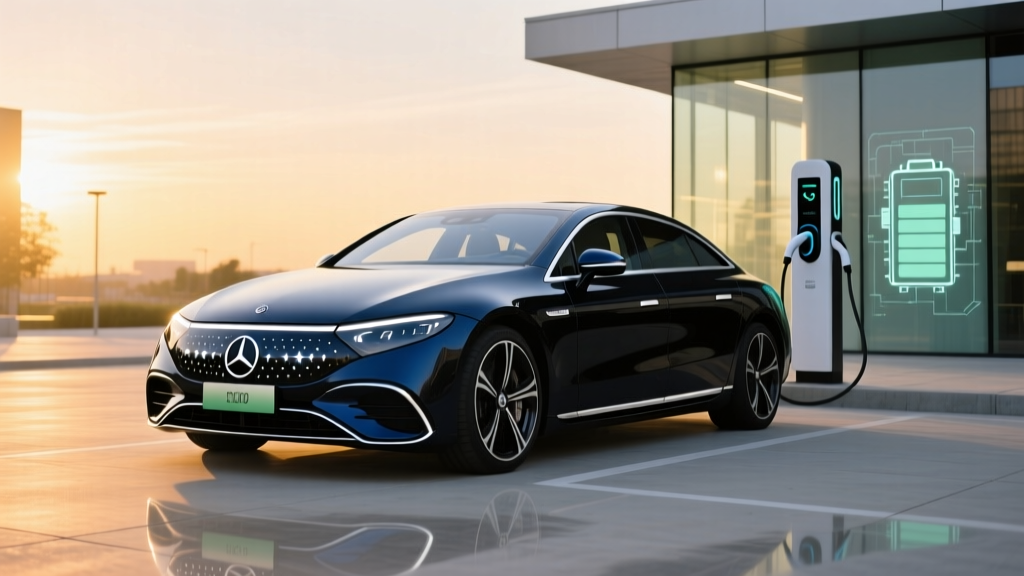
The Mercedes-Benz EQS sedan has always been a study in contrasts: class-leading aerodynamics and range wrapped in a polarizing design and a price tag that keeps it out of reach for most buyers. For 2026, the EQS enters its fourth model year with meaningful refinements — a larger battery, faster charging architecture, and updated MBUX software — but the fundamental question remains the same. Does the math work for a six-figure electric luxury sedan when competitors undercut it on price and, in some cases, match it on technology?
This review breaks down the 2026 EQS lineup with the exact numbers you need: real-world range versus EPA estimates, DC fast-charging curves, home charging speeds, tax credit eligibility under current IRS §30D rules, and how it stacks up against the BMW i7, Lucid Air, and Tesla Model S.
2026 Mercedes-Benz EQS at a Glance: Core Specifications
| Specification | EQS 450+ Sedan | EQS 450 4MATIC | EQS 580 4MATIC | AMG EQS |
|---|---|---|---|---|
| EPA Range | 390 mi | 370 mi | 365 mi | 330 mi |
| Battery (usable) | 118 kWh (NMC) | 118 kWh (NMC) | 118 kWh (NMC) | 118 kWh (NMC) |
| Drivetrain | RWD (single motor) | AWD (dual motor) | AWD (dual motor) | AWD (dual motor, AMG-tuned) |
| Horsepower | 355 hp | 355 hp | 536 hp | 649 hp (751 hp w/ Race Start) |
| 0–60 mph | 5.9 sec | 5.3 sec | 4.1 sec | 3.4 sec |
| Max DC Fast Charge | 200 kW | 200 kW | 200 kW | 200 kW |
| 10–80% DC Charge Time | ~32 min | ~32 min | ~32 min | ~32 min |
| Level 2 Charge Rate | 9.6 kW (~28 mi/hr) | 9.6 kW (~28 mi/hr) | 9.6 kW (~28 mi/hr) | 9.6 kW (~28 mi/hr) |
| Efficiency (MPGe) | 97 MPGe combined | 92 MPGe combined | 89 MPGe combined | 79 MPGe combined |
| Base MSRP | $104,400 | $107,900 | $125,950 | $152,750 |
Source: fueleconomy.gov and Mercedes-Benz USA 2026 spec sheets. All prices include destination charge. Specs subject to final EPA certification.
Range and Efficiency: What the EPA Sticker Doesn't Tell You
EPA: 390 miles (EQS 450+ RWD)
Real-world highway (70–75 mph): Expect 310–340 miles in mild weather. The EQS's 0.20 Cd drag coefficient is the lowest of any production car, but aerodynamic efficiency drops at sustained highway speeds above 75 mph.
Cold-weather (below 32°F): Plan for 260–290 miles. The EQS uses a heat pump for cabin heating, which mitigates some of the 25–30% range loss typical of NMC batteries in freezing temperatures, but battery internal resistance still increases significantly.
City/mixed driving: 350–380 miles is achievable thanks to aggressive regenerative braking (up to 0.3g deceleration in D Auto mode) and lower average speeds.
The 2026 EQS carries an updated 118 kWh usable battery pack (up from 107.8 kWh in the 2024 model), using nickel-manganese-cobalt (NMC) chemistry. NMC delivers higher energy density than LFP, which is critical in a sedan package where vertical space for cells is limited. The trade-off is that NMC degrades slightly faster over time and prefers not to sit at 100% state of charge for extended periods — something to factor into your daily charging habits.
Efficiency for the 450+ model comes in at 97 MPGe combined, or roughly 34 kWh per 100 miles. That's respectable for a 5,800-pound luxury sedan, but it trails the Lucid Air Grand Touring (131 MPGe combined) significantly. The difference shows up at the charger: over 12,000 miles of annual driving, the EQS 450+ will consume approximately 4,080 kWh versus roughly 3,050 kWh for the Lucid.
Charging Speed: DC Fast Charging and Home Setup
The EQS supports a peak DC fast-charge rate of 200 kW via its CCS1 port (a NACS adapter is available for Tesla Supercharger access). In practice, the charging curve looks like this:
| Charging Level | Power / Rate | Miles Added per Hour | Notes |
|---|---|---|---|
| Level 1 (120V household) | 1.4 kW | ~3–4 mi/hr | Emergency/trickle only; 30+ hours for full charge |
| Level 2 (240V home/work) | 9.6 kW | ~28 mi/hr | Full charge in ~12.5 hours; ideal overnight |
| DC Fast (peak) | 200 kW | ~190 mi in 15 min | Peak rate held from 10–30% SoC, then tapers |
| DC Fast (10–80%) | Avg ~145 kW | ~32 min total | Curve drops to ~80 kW above 60% SoC |
The 200 kW peak is competitive but no longer class-leading. The Hyundai Ioniq 5 peaks at 240 kW, and the Lucid Air supports up to 300+ kW on compatible chargers. The EQS's charge curve is relatively flat between 10% and 30% SoC, then tapers progressively. If you're road-tripping and charging from 10% to 80%, expect to spend roughly 32 minutes at a 350 kW Electrify America or EVgo station — but only if the battery is preconditioned.
Preconditioning matters: The EQS will automatically precondition its battery when you navigate to a DC fast charger via the MBUX navigation system. If you arrive at a charger without preconditioning (for example, by driving there manually), peak charge rates can drop to 120–140 kW, adding 5–10 minutes to your stop. Always route through the nav system.
For home charging, a 48-amp Level 2 wall connector on a 60-amp circuit delivers the full 9.6 kW. A typical overnight session (10 hours) adds roughly 280 miles — more than enough for daily use. Installation costs vary: expect $800–$1,500 for a straightforward install near your electrical panel, or $2,000–$4,000 if a panel upgrade or long conduit run is needed.
Performance and Driving Dynamics
The EQS 450+ RWD delivers 355 hp and a 5.9-second 0–60 time — quick enough for highway merging but not thrilling. The dual-motor 450 4MATIC adds all-weather traction with the same horsepower but shaves the sprint to 5.3 seconds. The 580 4MATIC is where the EQS becomes genuinely fast: 536 hp, 4.1 seconds to 60, and a torque-vectoring AWD system that can shift power front-to-rear in milliseconds.
The AMG EQS is a different animal entirely. With 649 hp standard (751 hp in 20-second Race Start bursts), it hits 60 in 3.4 seconds. The trade-off is efficiency: 79 MPGe combined and 330 miles of EPA range. For most luxury sedan buyers, the 580 4MATIC hits the better balance of performance and range.
Ride quality is a highlight. The standard AIRMATIC air suspension with adaptive damping absorbs road imperfections with genuine S-Class composure. Rear-axle steering (standard, up to 10 degrees) shrinks the car's turning circle to 35.8 feet — remarkable for a 207-inch-long sedan and genuinely useful in parking structures.
Interior, Tech, and Cargo: The Hyperscreen Question
The EQS interior is dominated by the available MBUX Hyperscreen — a 56-inch curved glass panel spanning the entire dashboard, incorporating a 17.7-inch central OLED display, a 12.3-inch passenger display, and a 12.3-inch driver cluster. It's visually stunning but draws polarized reactions for usability. Physical buttons are nearly absent; climate control, seat adjustments, and even the glovebox release are accessed through the touchscreen. For 2026, Mercedes has added a "zero-layer" home screen with larger, customizable quick-access tiles that reduce the menu-diving complaints from earlier model years.
The available Drive Pilot system is an SAE Level 3 conditional automation feature — meaning in approved conditions (divided highways, below 40 mph, clear weather, daytime), the car handles all driving tasks and the driver can legally look away. This is a significant step beyond Level 2 systems like Tesla Autopilot or GM Super Cruise, where driver attention is always required. However, Drive Pilot availability in the U.S. remains limited to Nevada and California as of early 2026, with strict operational design domain (ODD) constraints.
- Operates only below 40 mph on mapped, divided highways
- Requires clear weather, daytime, visible lane markings
- Currently approved only in Nevada and California
- Driver must be ready to resume control within 10 seconds when prompted
- Not a replacement for full attentiveness in most real-world driving
Cargo space measures 22 cubic feet in the liftback-style trunk — generous for a sedan and significantly more than the BMW i7's 17.7 cu ft. Rear legroom is 41.3 inches, and the flat floor (no transmission tunnel) makes the middle seat usable for short trips. However, the EQS does not offer a front trunk (frunk); the space under the hood is occupied by HVAC components and the HEPA filtration system.
Pricing, Tax Credits, and Ownership Cost
| Trim | Base MSRP | Federal §30D Credit | Effective Price |
|---|---|---|---|
| EQS 450+ Sedan | $104,400 | $0 (MSRP cap exceeded) | $104,400 |
| EQS 450 4MATIC | $107,900 | $0 (MSRP cap exceeded) | $107,900 |
| EQS 580 4MATIC | $125,950 | $0 (MSRP cap exceeded) | $125,950 |
| AMG EQS | $152,750 | $0 (MSRP cap exceeded) | $152,750 |
The EQS does not qualify for the $7,500 federal EV tax credit. Under current IRS §30D rules, new EVs must have an MSRP below $55,000 (sedans) or $80,000 (SUVs/trucks/vans) to be eligible. Every EQS trim exceeds the $55,000 sedan cap. Additionally, the EQS's battery cells are manufactured in Europe, and the critical-minerals sourcing requirements further disqualify it.
This is the single biggest financial headwind for the EQS. Competitors like the Tesla Model S ($89,990 base — still above the cap, but closer) and the Lucid Air Pure ($69,900, which also exceeds the cap) face the same issue. But it means buyers should not expect a federal incentive to soften the price.
State and local incentives may apply. California's CVRP program, Colorado's state credit, and various utility rebates can reduce effective cost by $2,000–$7,500 depending on your jurisdiction. Check your state's energy office and local utility for current programs.
5-year ownership cost estimate (EQS 450+):
- Electricity (12,000 mi/yr, $0.16/kWh national avg): ~$5,880
- Insurance (national avg for luxury EV): ~$14,000–$18,000
- Maintenance (tires, cabin filter, brake fluid): ~$2,500
- Estimated depreciation (5yr/60k mi): ~$45,000–$52,000
- Total estimated 5-year cost: $67,000–$78,000 (excluding purchase price)
How the EQS Compares: Key Rivals
| Attribute | 2026 Mercedes EQS 450+ | 2026 Lucid Air Grand Touring | 2026 BMW i7 xDrive60 | 2026 Tesla Model S LR |
|---|---|---|---|---|
| EPA Range | 390 mi | 516 mi | 318 mi | 402 mi |
| Battery | 118 kWh NMC | 112 kWh NMC | 101.7 kWh NMC | ~100 kWh (est.) |
| DC Fast Charge Peak | 200 kW | 300+ kW | 195 kW | 250 kW |
| 0–60 mph | 5.9 sec | 3.0 sec | 4.5 sec | 3.1 sec |
| MPGe Combined | 97 | 131 | 82 | 120 (est.) |
| Cargo Space | 22 cu ft | 32 cu ft | 17.7 cu ft | 28 cu ft |
| Base MSRP | $104,400 | $125,600 | $124,200 | $89,990 |
| Federal Tax Credit | No | No | No | No |
Choose the EQS if: You prioritize ride comfort, cabin quietness, and brand prestige above raw range or performance. The EQS's air suspension, rear-axle steering, and acoustic insulation deliver a driving experience that feels closest to an S-Class. The available Level 3 Drive Pilot (in approved states) is also a genuine technology differentiator.
Choose the Lucid Air if: Range and efficiency are your top priorities. The Air Grand Touring's 516-mile EPA range and 131 MPGe are unmatched in the segment. It's also quicker and has more cargo space, though its service center network is smaller and its brand lacks Mercedes' dealer infrastructure.
Choose the BMW i7 if: You want a more traditional luxury sedan aesthetic with excellent build quality and BMW's strong dealer network. The i7 trails on range (318 mi) but offers a more conservative, handsome design that many buyers prefer over the EQS's one-bow silhouette.
Choose the Tesla Model S if: You want the best value, the Supercharger network, and strong performance. The Model S undercuts the EQS by $14,000+ at base price, offers 402 miles of range, and has the most reliable public charging experience. Its interior quality and ride comfort, however, don't compete with Mercedes or BMW.
Pros, Cons, and Verdict
- Class-leading 0.20 Cd aerodynamics contribute to strong real-world efficiency at moderate speeds
- AIRMATIC air suspension delivers exceptional ride quality and cabin isolation
- 118 kWh battery provides 390-mi EPA range (450+ RWD)
- Rear-axle steering gives limousine space a compact turning circle
- Available SAE Level 3 Drive Pilot in approved states (Nevada, California)
- 22 cu ft liftback cargo area is practical for a luxury sedan
- MBUX Hyperscreen is visually impressive and improved for 2026
- No federal tax credit eligibility (MSRP exceeds §30D sedan cap)
- 200 kW peak DC charging is slower than Lucid Air and Tesla Model S
- Polarizing one-bow exterior design remains divisive
- Heavy reliance on touchscreen controls; minimal physical buttons
- NMC battery chemistry requires more careful SoC management than LFP
- Efficiency (97 MPGe) trails Lucid Air significantly
- No front trunk (frunk)
- Insurance premiums are high for the luxury EV segment
Who Should Buy the 2026 Mercedes-Benz EQS?
The EQS is best suited for buyers who:
- Prioritize comfort over sportiness: The air suspension and acoustic glass make it one of the quietest, most composed EVs on the highway. If you commute long distances on smooth interstates, the EQS excels.
- Want Mercedes brand equity and dealer support: With over 380 U.S. dealerships, service access is better than Lucid or Rivian. Mercedes also offers strong certified-pre-owned and lease programs.
- Don't need the absolute longest range: 390 miles is sufficient for most road trips with one 30-minute charging stop, but if you regularly drive 400+ miles between stops, the Lucid Air's 516-mile range is the better tool.
- Live in a state with Level 3 approval: If you commute in Nevada or California on qualifying highways, Drive Pilot offers a genuine hands-off, eyes-off experience that no Level 2 system can match.
The EQS is not the right choice if you're looking for maximum tax credit value (it gets $0 federally), if you want the fastest DC charging in the segment, or if you prefer physical controls over touchscreen interfaces.
Warranty and Battery Longevity
Mercedes covers the EQS with the following warranty structure:
- New vehicle: 4 years / 50,000 miles
- Battery pack: 8 years / 100,000 miles (capacity retention threshold: 70% of original)
- Powertrain (motors, inverters): 8 years / 100,000 miles
- Corrosion perforation: 4 years / 50,000 miles
The 70% capacity retention threshold over 8 years is industry-standard, matching Tesla, BMW, and Hyundai. For NMC chemistry, real-world degradation data from earlier EQS models (2022–2024) suggests approximately 5–8% capacity loss over the first 60,000 miles when charged primarily on Level 2 and kept between 20–80% SoC. The 118 kWh pack provides a large buffer: even at 85% state of health, you'd still have roughly 330 miles of usable range.
Mercedes offers a battery replacement program, though exact out-of-warranty pricing has not been publicly listed for the 2026 pack. Industry estimates for NMC packs of this size range from $18,000–$28,000 for a full replacement — a figure worth factoring into long-term ownership plans beyond the warranty period.
Frequently Asked Questions
What is the real-world range of the 2026 Mercedes EQS?
The EPA rates the EQS 450+ at 390 miles. In real-world highway driving at 70–75 mph in mild weather, expect 310–340 miles. In cold weather (below freezing), plan for 260–290 miles. City driving with regenerative braking can yield 350–380 miles.
Does the Mercedes EQS qualify for the federal EV tax credit?
No. Under current IRS §30D rules, the EQS exceeds the $55,000 MSRP cap for sedans. Additionally, its European-manufactured battery cells do not meet the critical-minerals and battery-component sourcing requirements. No EQS trim qualifies for the $7,500 federal credit. State incentives may still apply — check your local programs.
How fast does the EQS charge at home and on the road?
At home on a 240V Level 2 charger (9.6 kW), the EQS adds about 28 miles per hour and fully charges in roughly 12.5 hours. On DC fast chargers, it peaks at 200 kW and charges from 10–80% in approximately 32 minutes, though the rate tapers significantly above 60% SoC.
Is the EQS worth buying over the Lucid Air or Tesla Model S?
It depends on your priorities. The EQS wins on ride comfort, cabin quietness, and brand/dealer infrastructure. The Lucid Air wins decisively on range (516 vs. 390 mi), efficiency (131 vs. 97 MPGe), and charging speed. The Tesla Model S wins on value ($89,990 vs. $104,400) and Supercharger network access. If comfort and prestige are paramount, the EQS is the strongest choice. If range and efficiency matter more, the Lucid is objectively superior.
What are the biggest drawbacks of the EQS?
The main cons are no federal tax credit eligibility, slower DC charging (200 kW) versus key rivals, heavy touchscreen dependence with few physical controls, polarizing exterior styling, and high insurance costs typical of six-figure luxury EVs. The NMC battery also requires more careful state-of-charge management than LFP packs.
Does the EQS have a frunk?
No. The EQS does not have a front trunk. The space under the hood houses the HVAC system, HEPA air filtration unit, and power electronics. All cargo goes in the 22 cu ft rear liftback.
What is Drive Pilot and is it self-driving?
Drive Pilot is Mercedes' SAE Level 3 conditional automation system. In approved conditions (mapped divided highways, below 40 mph, clear daytime weather), the car handles steering, braking, and acceleration while the driver can legally look away. It is not full self-driving — it operates only within a narrow operational design domain and requires the driver to resume control within 10 seconds when prompted. As of 2026, it is approved only in Nevada and California.