Quick Answer: Should You Buy the 2026 Hyundai Kona EV?
The 2026 Hyundai Kona Electric delivers up to 261 miles of EPA range with a 65.4 kWh battery, starts at $32,675, and qualifies for the $7,500 federal tax credit (point-of-sale, income and sourcing rules apply). It charges at up to 100 kW DC, reaching 10–80% in roughly 43 minutes. It's an ideal first EV for buyers with home Level 2 charging who commute under 200 miles round-trip. If you regularly road-trip in cold climates or lack home charging, a PHEV or a faster-charging EV on the NACS network may serve you better.
Next Generation Hyundai Kona EV: What You're Actually Getting
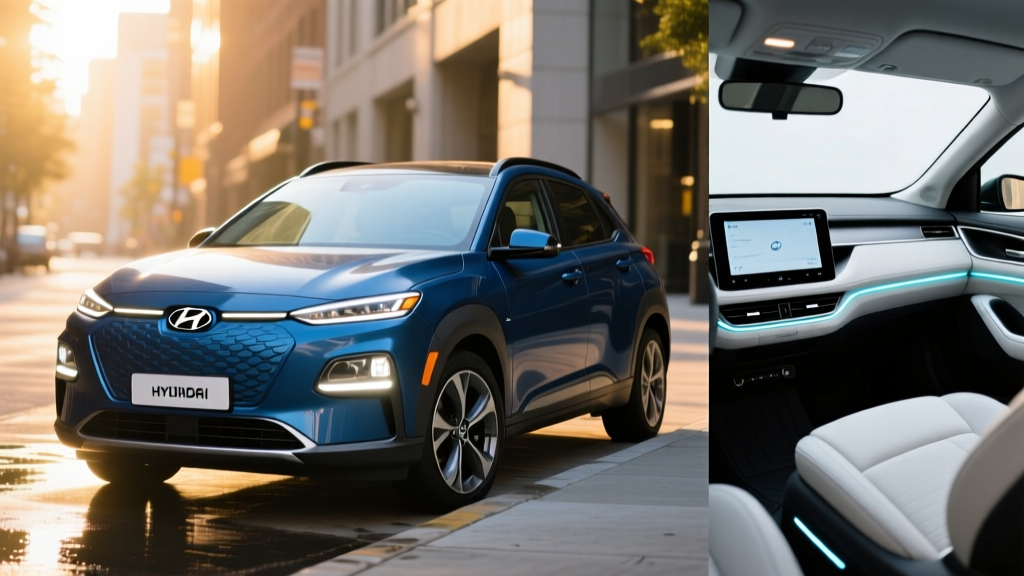
The next generation Hyundai Kona EV rides on Hyundai's redesigned platform, growing significantly over the first-generation model in both wheelbase and cargo volume. For 2026, the Kona Electric is offered in three trims—SE, SEL, and Limited—each powered by a front-mounted 150 kW (201 hp) permanent-magnet synchronous motor drawing from a 65.4 kWh NMC (nickel-manganese-cobalt) lithium-ion battery. Unlike the Ioniq 5's 800V architecture, the Kona EV uses a conventional 400V system, which keeps costs down but limits peak DC fast-charging speed.
| Spec | Value |
|---|---|
| EPA Range (SEL/Limited) | 261 miles |
| EPA Range (SE, smaller wheels) | ~261 miles |
| Battery Capacity (usable) | 65.4 kWh, NMC chemistry |
| Motor Output | 150 kW / 201 hp / 188 lb-ft torque |
| 0–60 mph | ~7.4 seconds |
| Max DC Fast Charge Rate | 100 kW peak (400V architecture) |
| 10–80% DC Charge Time | ~43 minutes |
| Level 2 (240V) Charge Rate | 10.9 kW (onboard charger) |
| Level 2 Full Charge Time | ~6.5 hours (0–100%) |
| EPA Efficiency | 129 MPGe combined / 26 kWh/100mi |
| Drivetrain | FWD only |
| Cargo Volume | 25.5 cu ft (rear seats up) / 54.4 cu ft (folded) |
| Battery Warranty | 10 years / 100,000 miles |
| Base MSRP (SE) | $32,675 (before incentives) |
Source: EPA fueleconomy.gov, Hyundai Motor America.
Kona EV vs Gas Kona vs PHEV Competitors: The Numbers
Buyers cross-shopping the next generation Hyundai Kona EV often compare it against the gas-powered Kona and plug-in hybrid alternatives like the Kia Niro PHEV or Toyota RAV4 Prime. Here's how the math works out.
| Metric | 2026 Kona EV (SEL) | 2026 Kona Gas (SEL AWD) | Kia Niro PHEV |
|---|---|---|---|
| Base MSRP | $34,125 | $29,250 | $35,890 |
| After $7,500 Federal Credit* | $26,625 | $29,250 | $28,390* |
| EPA Efficiency | 129 MPGe / 26 kWh/100mi | 29 MPG combined | 105 MPGe (EV) / 48 MPG (gas) |
| Annual Fuel/Energy Cost† | ~$550 (electric) | ~$1,900 (gasoline) | ~$900 (mixed) |
| Electric-Only Range | 261 miles | N/A | 33 miles |
| Maintenance (5-yr est.) | ~$1,500 | ~$3,500 | ~$2,800 |
*Federal tax credit eligibility depends on buyer income caps, MSRP caps, and battery sourcing requirements per IRS §30D rules. The Niro PHEV credit amount varies; confirm current eligibility. †Annual cost assumes 15,000 miles/year, $0.15/kWh home electricity, $3.50/gal gas.
The critical takeaway: once the federal tax credit is applied at point-of-sale, the Kona EV can actually undercut the gas Kona on effective purchase price while delivering roughly $1,350/year in fuel savings for a typical driver. Over five years, that's $6,750 in energy savings alone, plus another ~$2,000 in avoided maintenance (no oil changes, fewer brake replacements thanks to regenerative braking, no transmission fluid).
Charging the Kona EV: Home, Public, and What to Expect
Understanding the Kona EV's charging profile is essential before purchase. The 400V architecture means peak DC charging tops out at 100 kW—respectable for daily use but noticeably slower than 800V rivals like the Ioniq 5 or Kia EV6 (which peak at 230–240 kW).
| Level | Power (kW) | Miles Added/Hour | Use Case |
|---|---|---|---|
| Level 1 (120V household) | ~1.4 kW | ~5 miles/hr | Overnight trickle; emergency only |
| Level 2 (240V, 48A home) | 10.9 kW | ~40 miles/hr | Primary daily charging; full charge ~6.5 hrs |
| DC Fast Charge (100 kW peak) | Up to 100 kW | ~190 miles/hr (peak) | Road trips; 10–80% in ~43 min |
Home Charging Installation: For most Kona EV owners, a Level 2 home charger is essential. Budget $500–$800 for a quality Level 2 EVSE (ChargePoint Home Flex, Emporia Vue, or Hyundai's branded unit) plus $500–$2,000 for licensed electrician installation depending on panel proximity and whether a 240V/50A circuit already exists. If your home's electrical panel needs an upgrade from 100A to 200A service, add $1,500–$3,000. Always have a licensed electrician assess your panel before purchase.
5-Year Total Cost of Ownership Breakdown
Here's what owning the Kona EV actually costs over five years and 75,000 miles, compared to the gas Kona. This assumes home charging at $0.15/kWh and gasoline at $3.50/gallon.
| Category | Kona EV (SEL) | Gas Kona (SEL AWD) |
|---|---|---|
| Purchase Price (MSRP) | $34,125 | $29,250 |
| Federal Tax Credit (§30D) | -$7,500 | $0 |
| Effective Purchase Price | $26,625 | $29,250 |
| Home Charger Install | $1,200 | $0 |
| Fuel/Energy (5 yrs) | $2,750 | $9,500 |
| Maintenance (5 yrs) | $1,500 | $3,500 |
| Insurance (5 yrs, est.) | $7,500 | $6,500 |
| Estimated Depreciation | $12,000 | $10,500 |
| 5-Year Total Cost | $51,575 | $59,250 |
The Kona EV saves roughly $7,675 over five years in this scenario, driven primarily by fuel and maintenance savings that more than offset the higher insurance premiums (typically 10–20% more for EVs) and slightly steeper depreciation. Your actual numbers depend heavily on local electricity rates, state incentives, and driving patterns.
Federal Tax Credit Eligibility: What You Need to Know
The Kona EV currently qualifies for the full $7,500 federal tax credit under IRS §30D, and it can be transferred to the dealer as a point-of-sale rebate—meaning you get $7,500 off the purchase price at signing rather than waiting for tax season. However, eligibility is not automatic:
- Income caps: Modified AGI must not exceed $150,000 (single), $225,000 (head of household), or $300,000 (joint filers).
- MSRP caps: The vehicle's MSRP must not exceed $55,000 for SUVs (the Kona qualifies easily).
- Battery sourcing: Critical minerals and battery components must meet phased-in domestic content requirements, which tighten annually. Hyundai has confirmed the Kona EV meets current-year sourcing thresholds.
- Transferability: You can transfer the credit to the dealer for an immediate price reduction, but you must attest to income eligibility at point of sale. If your income exceeds the cap when you file taxes, you'll owe the credit back.
Always verify current eligibility at fueleconomy.gov and consult a tax professional before relying on the credit in your purchase budget.
Kona EV Myths vs Facts
| Myth | Fact |
|---|---|
| "The battery will need replacing in 5 years." | Hyundai warranties the battery for 10 years/100,000 miles with a minimum 70% capacity retention threshold. Industry data shows NMC batteries typically retain 85–90% capacity after 100,000 miles with normal use. |
| "I can't road-trip because charging is too slow." | 10–80% in ~43 minutes is adequate for highway driving with rest/food stops. On a 500-mile trip, plan two 45-minute stops. It's slower than an Ioniq 5 (~18 min) but manageable. |
| "The Kona EV uses Tesla Superchargers." | The 2026 Kona EV uses the CCS1 connector for DC fast charging. Hyundai has committed to NACS adoption in future models, but the current Kona requires a CCS-to-NACS adapter at Tesla Superchargers (where supported) or uses Electrify America, EVgo, and ChargePoint networks natively. |
| "Electricity is just as expensive as gas." | At the US average of $0.15/kWh and 26 kWh/100mi, the Kona costs ~$0.039/mile to fuel. A 29 MPG gas Kona at $3.50/gal costs ~$0.121/mile. That's a 3x difference. |
| "I need AWD for winter." | The Kona EV is FWD only. With quality winter tires, FWD EVs perform well in snow (low center of gravity, instant torque management). However, if AWD is non-negotiable, look at the Ioniq 5 or Kia EV6. |
Decision Framework: Is the Kona EV Right for You?
Choose the Kona EV if:
- You have (or can install) Level 2 home charging and drive under 200 miles round-trip daily
- Your budget targets $25,000–$30,000 after incentives for a new EV
- You prioritize a 10-year/100,000-mile battery warranty and proven Hyundai reliability
- You commute mostly in urban/suburban areas where the 129 MPGe shines
- You don't need AWD or frequent 400+ mile road trips
Look elsewhere if:
- You lack home charging access and rely entirely on public infrastructure—the 43-minute DC charge times will frustrate
- You regularly drive in sub-zero temperatures and need maximum range retention (consider an EV with a heat pump or a PHEV)
- You need AWD for mountain or heavy-snow driving
- You want ultra-fast road-trip charging—step up to the Ioniq 5 (800V, ~18 min 10–80%)
- You need more than 261 miles of range without stopping—consider the Tesla Model Y Long Range (320 mi) or Chevy Equinox EV (319 mi)
First-Time EV Buyer Checklist
If the Kona EV is your first electric vehicle, work through this list before signing:
- Audit your home electrical panel: Can it support a 240V/50A circuit? Get an electrician quote before committing.
- Verify tax credit eligibility: Check your income against §30D caps and confirm the vehicle's current credit status on fueleconomy.gov.
- Map your weekly driving: If 95% of your trips fall within 200 miles, the Kona EV handles them on a single charge with buffer.
- Download charging apps: PlugShare, Electrify America, and ChargePoint are essential for public charging. Test a nearby DC fast charger before purchase to understand the experience.
- Get insurance quotes: EV premiums run 10–20% higher than equivalent gas cars. Shop multiple carriers—some offer EV-specific discounts.
- Understand the connector: The Kona EV uses CCS1 for DC fast charging and J1772 for Level 2 AC. Confirm your local public chargers support CCS.
- Plan for cold weather: If you live where winters drop below freezing, budget 25–35% range loss and precondition the battery while plugged in every morning.
Frequently Asked Questions
Does the 2026 Hyundai Kona EV qualify for the full $7,500 tax credit?
Yes, the Kona EV currently qualifies for the full $7,500 federal clean vehicle credit under IRS §30D, provided you meet the income caps ($150K single / $300K joint) and the vehicle meets battery sourcing requirements. The credit can be transferred to the dealer as a point-of-sale discount. Verify current eligibility on fueleconomy.gov at the time of purchase.
How long does the Kona EV battery last before needing replacement?
Hyundai warranties the 65.4 kWh battery for 10 years or 100,000 miles, guaranteeing at least 70% of original capacity. Based on industry NMC degradation data, most owners will see 85–90% capacity retention at 100,000 miles. Full battery replacement, if ever needed outside warranty, currently costs $8,000–$12,000—but is rarely required within the vehicle's typical lifespan.
Can I charge the Kona EV at Tesla Superchargers?
The 2026 Kona EV uses a CCS1 port. Some Tesla Supercharger stations now offer a "Magic Dock" CCS adapter built into the stall, allowing non-Tesla EVs to charge. However, not all Supercharger locations have this. For reliable DC fast charging, rely on Electrify America, EVgo, and ChargePoint networks, which natively support CCS1.
What's the real-world highway range of the Kona EV?
On sustained highway driving at 70–75 mph in moderate temperatures (60–80°F), expect approximately 220–240 miles from a full charge. In cold weather (below 30°F), plan for 170–200 miles. These figures account for the absence of a heat pump on most trims and the energy demands of resistive cabin heating.
Is the Kona EV a good first EV?
Yes, with caveats. The Kona EV is one of the most accessible new EVs on the market thanks to its sub-$27,000 effective price (after credit), strong warranty, and practical 261-mile range. It works best as a first EV for buyers with home charging access and primarily urban/suburban driving patterns. If your lifestyle involves frequent long road trips or you lack home charging, a PHEV or a faster-charging EV may be a better entry point.