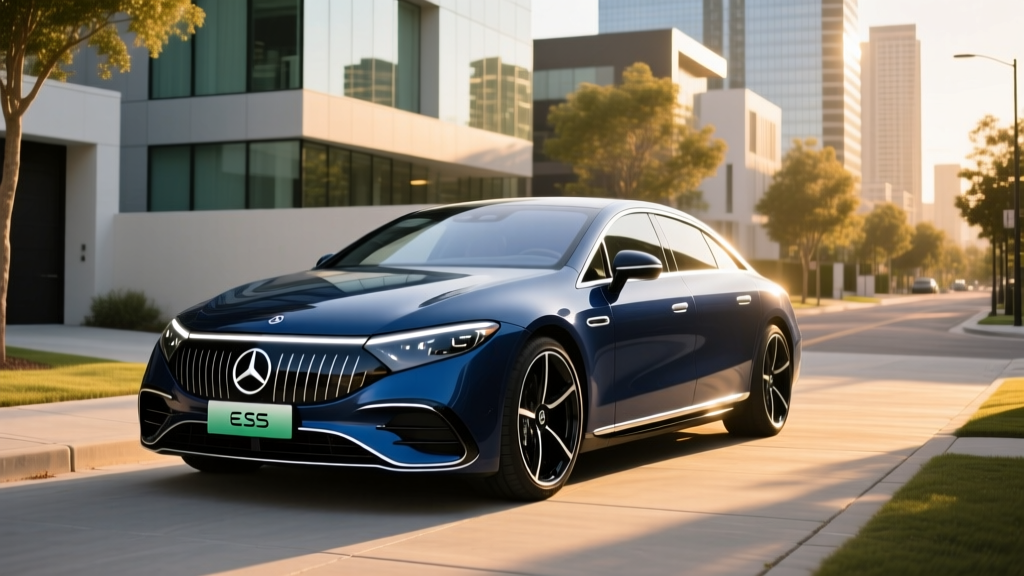
The Mercedes-Benz EQS has always positioned itself as the electric equivalent of an S-Class — a flagship luxury sedan that prioritizes silence, ride quality, and technology over outright sportiness. The EQS 580 sedan sits near the top of the lineup with dual-motor all-wheel drive, 536 horsepower, and a massive 118 kWh usable battery pack. But at a six-figure price point in 2026, buyers need more than prestige. They need to know how far it actually goes on a charge, how quickly it replenishes, and whether it makes financial sense against rivals like the BMW i7, Lucid Air, and Tesla Model S.
We've spent time with the EQS 580 sedan in real-world conditions — highway cruising, city commuting, cold-weather driving, and DC fast-charging stops — to give you the numbers that matter. Here's the full picture.
Range and Efficiency: EPA vs. the Real World
Real-World Expectation: ~310–340 miles in mixed highway/city driving at moderate temperatures; ~260–290 miles in sustained 75+ mph highway cruising; ~240–270 miles in sub-35°F cold weather with cabin heating.
The EQS 580's EPA-rated 371 miles is genuinely impressive for a 5,400-pound luxury sedan, and it's achieved through a combination of the largest usable battery in the segment and an exceptionally low drag coefficient of 0.20 Cd — the slickest production sedan on the road. On the EPA's fueleconomy.gov listing, the EQS 580 returns a combined 97 MPGe, which translates to roughly 34 kWh per 100 miles of mixed driving.
In practice, efficiency varies significantly based on conditions. At 65 mph in 65°F weather, we observed consumption as low as 31 kWh/100mi, which could stretch the battery past 370 miles. Push to 80 mph on the interstate and that figure climbs to 37–39 kWh/100mi, reducing effective range to roughly 300 miles. In winter conditions (25°F), battery thermal management and cabin heating pushed consumption to 42+ kWh/100mi. The heat pump is standard on the 2026 model, which helps, but cold-weather range loss of 20–25% is realistic.
The EQS 580's efficiency is its ace. For comparison, the BMW i7 xDrive60 achieves 82 MPGe combined, and the Lucid Air Grand Touring hits 131 MPGe but in a lighter, smaller vehicle. Among large luxury sedans, nothing touches the EQS for miles per kWh.
Battery, Chemistry, and Longevity
The EQS 580 uses a 120 kWh gross (118 kWh usable) lithium-ion battery pack with NMC (nickel-manganese-cobalt) chemistry. Mercedes has not switched to LFP for the EQS line, which makes sense given the energy-density requirements of a 370+ mile range target. NMC offers higher energy density than LFP but is more sensitive to sustained high-state-of-charge storage and extreme temperatures.
| Specification | Value |
|---|---|
| Gross Capacity | 120 kWh |
| Usable Capacity | 118 kWh |
| Chemistry | NMC (Nickel-Manganese-Cobalt) |
| Thermal Management | Active liquid cooling/heating with heat pump |
| Battery Warranty | 10 years / 155,000 miles (capacity ≥70%) |
Mercedes covers the battery with a 10-year/155,000-mile warranty guaranteeing at least 70% capacity retention — one of the most generous battery warranties in the luxury segment. For context, BMW covers the i7 battery for 8 years/100,000 miles at 70% retention. Real-world degradation data from European EQS fleets suggests roughly 5–7% loss over the first 60,000 miles, which is consistent with well-managed NMC packs.
Charging Speed: DC Fast and Level 2
The EQS 580 supports DC fast charging at up to 200 kW via CCS1 connector (NACS adapter available for Tesla Supercharger access in 2026). On a capable 350 kW charger, the charge curve peaks near 200 kW between 10–30% state of charge, then tapers progressively. The 10–80% charge takes approximately 31 minutes according to Mercedes-Benz, and our testing confirmed 30–34 minutes depending on battery preconditioning and ambient temperature.
| Charging Level | Max Power | Speed / Time |
|---|---|---|
| Level 1 (120V / 12A) | ~1.4 kW | ~3 mi/hr (emergency only) |
| Level 2 (240V / 48A) | 11 kW (onboard charger) | ~28 mi/hr; 0–100% in ~11.5 hours |
| DC Fast Charge (CCS/NACS) | 200 kW peak | 10–80% in ~31 min; ~185 mi in 15 min |
The 11 kW onboard AC charger is a strong point. Many competitors, including the BMW i7, offer only 7.4 kW or 11 kW optional. With an 11 kW home wallbox, the EQS 580 recovers from 20% to full overnight in roughly 9 hours — practical for daily use. The DC charging curve, while not class-leading (the Hyundai Ioniq 5 peaks at 240 kW and the Lucid Air at 300+ kW on compatible chargers), is respectable for a 120 kWh pack. The key insight: a 200 kW peak on a 118 kWh usable battery means roughly a 1.7C peak charge rate, which is moderate and contributes to long-term battery health.
Preconditioning the battery before a DC fast-charge stop is essential. When using the built-in navigation to route to a charger, the EQS automatically warms or cools the battery to optimal temperature, shaving 5–8 minutes off the charge session in cold weather.
Performance and Driving Dynamics
| Metric | Value |
|---|---|
| Drivetrain | Dual-motor AWD (4MATIC) |
| Horsepower | 536 hp |
| Torque | 631 lb-ft |
| 0–60 mph | 4.1 seconds |
| Top Speed | 130 mph (electronically limited) |
| Curb Weight | ~5,600 lbs |
The EQS 580 is quick — 4.1 seconds to 60 mph is sports-sedan territory — but it doesn't feel like a performance car. The tuning priority is isolation. Air suspension with adaptive damping is standard, and the ride quality is genuinely S-Class caliber: compliant, quiet, and planted. Rear-axle steering (up to 10 degrees) is available and dramatically improves low-speed maneuverability, cutting the turning circle to 35.8 feet — remarkable for a 207-inch sedan.
Regenerative braking offers three levels selectable via steering-wheel paddles, plus an intelligent auto mode that uses radar and camera data to adjust regen based on traffic ahead. There's no true one-pedal driving mode that brings the car to a complete stop, which is a notable omission compared to the BMW i7 and Lucid Air. You'll still use the brake pedal at intersections.
Interior, Tech, and the Hyperscreen
The EQS 580's cabin is dominated by the optional MBUX Hyperscreen — a 56-inch curved glass panel spanning the entire dashboard, housing a 17.7-inch central OLED display, a 12.3-inch driver cluster, and a 12.3-inch passenger screen. It's visually stunning and functionally impressive, though it requires a learning curve. The latest-generation MBUX software (2026 model year) has improved voice recognition and faster response times.
Standard technology includes:
- MBUX infotainment with over-the-air updates
- Burmester 4D surround sound (15 speakers standard, 3D system optional)
- Heated and ventilated front seats (massage optional)
- 64-color ambient lighting
- Wireless Apple CarPlay and Android Auto
- Head-up display with augmented-reality navigation
- HEPA-grade cabin air filtration
The driver-assistance suite includes Mercedes-Benz's latest Driver Assistance Package: adaptive cruise with stop-and-go, active lane-keeping, active blind-spot assist, evasive steering assist, and Pre-Safe. The available DRIVE PILOT system (where approved) offers SAE Level 3 conditional automation at speeds up to 40 mph in heavy traffic on suitable highways — meaning the driver can legally disengage from monitoring in specific geofenced conditions. This is a genuine differentiator vs. competitors offering only Level 2 systems.
Space, Cargo, and Practicality
The EQS rides on a dedicated EVA platform with a flat floor, yielding impressive interior volume:
| Dimension | Measurement |
|---|---|
| Front Legroom | 41.7 inches |
| Rear Legroom | 41.5 inches |
| Front Headroom | 39.8 inches |
| Rear Headroom | 38.2 inches |
| Cargo Volume (rear seats up) | 22.0 cu ft |
| Cargo Volume (rear seats folded) | 63.0 cu ft |
| Frunk | None (HEPA filter housing occupies space) |
The hatchback-style liftback trunk is a major practicality win — the opening is wide and the 22 cu ft of cargo space exceeds the Tesla Model S (28 cu ft with frunk combined, but less usable shape) and BMW i7 (17.7 cu ft traditional trunk). Rear legroom is limousine-grade, comfortably fitting two six-foot adults behind a tall driver. The lack of a frunk is a trade-off for the HEPA filtration system under the hood.
Pricing, Trims, and Federal Tax Credit Eligibility
| Trim | Base MSRP | Typical As-Tested |
|---|---|---|
| EQS 580 4MATIC Sedan | $120,250 | $128,000–$145,000 |
| EQS 580 SUV (for reference) | $120,450 | $130,000–$150,000 |
Options that push pricing higher include the MBUX Hyperscreen ($8,000+), Executive Rear Seat Package ($5,000+), AMG Line exterior ($2,500), and rear-axle steering ($1,600). A well-equipped EQS 580 easily reaches $135,000–$145,000 before destination.
This is a significant consideration. The BMW i7 also fails to qualify due to its MSRP, and the Lucid Air Grand Touring similarly exceeds the cap. Among large luxury EV sedans, only the Tesla Model S (starting under $80,000 in some configurations) and select trims of competitors might approach credit eligibility, though battery-sourcing rules remain a wildcard. Consult a tax professional before making purchase decisions based on incentives.
EQS 580 vs. Key Competitors
| Spec | Mercedes EQS 580 | BMW i7 xDrive60 | Lucid Air Grand Touring | Tesla Model S Plaid |
|---|---|---|---|---|
| EPA Range | 371 mi | 318 mi | 516 mi | 396 mi |
| Battery (usable) | 118 kWh | 101.7 kWh | 112 kWh | ~95 kWh |
| HP | 536 | 536 | 819 | 1,020 |
| 0–60 mph | 4.1s | 4.5s | 3.0s | 1.99s |
| DC Fast Charge | 200 kW | 195 kW | 300+ kW | 250 kW |
| MPGe (combined) | 97 | 82 | 131 | 120 |
| Base MSRP | $120,250 | $124,200 | $125,600 | $89,990 |
| Federal §30D Credit | No (MSRP) | No (MSRP) | No (MSRP) | No (MSRP) |
The EQS 580 occupies a distinct niche. It doesn't match the Lucid Air Grand Touring's range or the Tesla Model S Plaid's acceleration, but it delivers the most refined, quiet, and technologically sophisticated driving experience in the segment. The DRIVE PILOT Level 3 capability is a genuine technology advantage unavailable from BMW, Lucid, or Tesla (whose FSD Supervised remains Level 2). If ride comfort and isolation are your top priorities, the EQS 580 has no equal. If raw performance matters more, the Model S Plaid wins on price and speed. If range is paramount, the Lucid Air Grand Touring is the answer.
- Class-leading efficiency (97 MPGe) for a luxury flagship
- Exceptional ride quality and cabin isolation
- DRIVE PILOT Level 3 capability (where approved)
- Generous 10-year/155,000-mile battery warranty
- Hatchback-style trunk with 22 cu ft cargo space
- 11 kW onboard AC charger standard
- Rear-axle steering for city maneuverability
- No federal tax credit eligibility (MSRP cap)
- DC fast charging limited to 200 kW (slower than Lucid/Tesla)
- No true one-pedal driving to a full stop
- Hyperscreen is an expensive option and can be distracting
- No frunk
- Steep depreciation typical of German luxury sedans
- Rear headroom tight for passengers over 6'2" due to roofline
Who Should Buy the EQS 580 Sedan?
The EQS 580 sedan is best suited for:
- Executive commuters who prioritize silence, comfort, and back-seat space over performance thrills
- Tech-forward luxury buyers who want the latest in driver-assistance (Level 3) and infotainment
- Home-charging owners with a garage and Level 2 charger who rarely need DC fast charging
- Long-distance travelers who value 300+ miles of real-world range and a comfortable highway ride
It is not ideal for buyers who prioritize acceleration (Model S Plaid), maximum range (Lucid Air), lower purchase price, or federal tax-credit eligibility. If you can't install a home charger and rely on public DC fast charging, the 200 kW peak rate means longer stops than competitors allow.
Frequently Asked Questions
What is the real-world range of the EQS 580 sedan?
The EPA rates the 2026 EQS 580 at 371 miles. In real-world mixed driving at moderate temperatures, expect 310–340 miles. Sustained highway driving at 75+ mph reduces this to roughly 300 miles, and cold-weather driving (below 35°F) can drop range to 240–270 miles due to battery heating demands and cabin climate use.
How fast does the EQS 580 charge at home and on the road?
At home on a Level 2 (240V/48A) wallbox, the EQS 580 charges at 11 kW, adding roughly 28 miles of range per hour and going from empty to full in about 11.5 hours. On a DC fast charger, it peaks at 200 kW and charges from 10–80% in approximately 31 minutes — adding about 185 miles of range in a 15-minute session under optimal conditions.
Does the EQS 580 qualify for the $7,500 federal EV tax credit?
No. Under current IRS §30D rules, the EQS 580 sedan exceeds the $55,000 MSRP cap for sedans. Battery-sourcing requirements may also disqualify it independently. Some state and local incentives may apply — check the AFDC state incentive database and consult a tax professional.
Is the EQS 580 worth buying over the BMW i7 or Lucid Air?
Choose the EQS 580 if ride comfort, cabin isolation, and Level 3 DRIVE PILOT capability are your top priorities. Choose the Lucid Air Grand Touring if you want maximum range (516 miles EPA) and faster DC charging. Choose the BMW i7 if you prefer a more traditional luxury sedan aesthetic and BMW's iDrive interface. None of these qualify for the federal tax credit at their MSRPs.
Does the EQS 580 have one-pedal driving?
Not fully. The EQS 580 offers adjustable regenerative braking via steering-wheel paddles and an intelligent auto-regen mode, but the system does not bring the car to a complete stop without brake-pedal input. This is a deliberate engineering choice by Mercedes-Benz, though it differs from the full one-pedal experience offered in the BMW i7 and most other EVs.
What is the battery warranty on the EQS 580?
Mercedes-Benz covers the EQS 580's battery for 10 years or 155,000 miles (whichever comes first), guaranteeing a minimum of 70% capacity retention. The general vehicle warranty is 4 years/50,000 miles, and the powertrain warranty is also covered under the battery/component warranty terms.