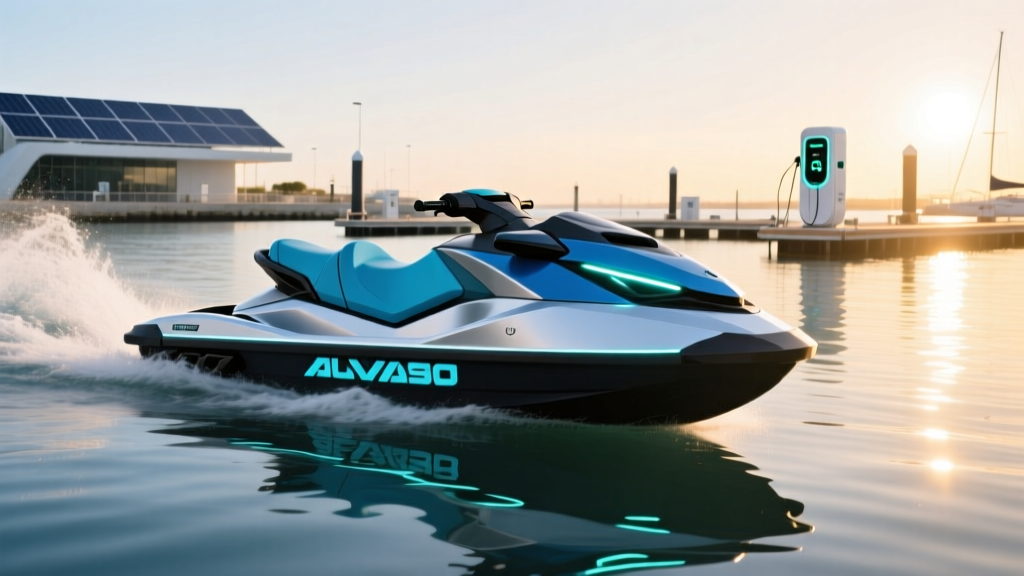
If you have searched for an electric Sea-Doo, here is the direct answer: BRP (Sea-Doo's parent company) has not released a fully electric personal watercraft as of the 2026 model year. Sea-Doo currently offers no battery-electric PWC in its consumer lineup. However, the electric watercraft market is evolving rapidly, with competitors like the Taiga Orca delivering fully electric performance personal watercraft. Below, we cover what exists today, what BRP has announced, how electric PWCs compare to gas models on cost and capability, and what a prospective buyer should actually expect.
Quick Answer: Electric Sea-Doo Status
- Available electric Sea-Doo models (2026): None — BRP has not launched a production electric PWC.
- Closest competitor: Taiga Orca — fully electric, ~$24,000–$32,000 MSRP, ~2-hour runtime, 100+ kWh-equivalent performance.
- BRP's stance: The company has publicly committed to electrification across its portfolio, with electric prototypes in testing, but no announced production date for an electric Sea-Doo.
- Key takeaway: If you want an electric PWC today, you are looking at Taiga or smaller emerging brands — not Sea-Doo.
The Current Electric PWC Landscape
While the term "electric Sea-Doo" gets steady search interest, it reflects buyer anticipation more than product reality. The personal watercraft market remains dominated by internal combustion engines — specifically, 4-stroke marine engines in the 60–300+ horsepower range. Sea-Doo, Yamaha (WaveRunner), and Kawasaki (Jet Ski) all sell exclusively gas-powered models in the US market as of 2026.
The one serious production electric PWC is the Taiga Orca, built by Canadian startup Taiga Motors. Here is what the Orca delivers:
- Battery: ~23 kWh usable capacity (lithium-ion NMC chemistry)
- Runtime: Approximately 2 hours of mixed riding (real-world; aggressive riding reduces this to ~90 minutes)
- Power: Up to 180 HP equivalent (Orca Performance trim)
- Top speed: ~65 mph (Performance trim)
- Charging: Level 2 (240V) — full charge in approximately 3–4 hours; DC fast charging available on select trims, reaching 80% in roughly 45 minutes at 50 kW
- MSRP: Starting around $24,000 (Orca Sport) to $32,000+ (Orca Carbon/Performance)
- Weight: ~620 lbs (significantly lighter than most gas PWCs, which run 800–1,000+ lbs)
Smaller brands like Narke and various Chinese-market electric jet skis exist, but they lack US dealer networks, EPA/CARB marine emissions certification, or the performance envelope most buyers expect.
Electric PWC vs Gas Sea-Doo: Cost and Capability Comparison
Since no electric Sea-Doo exists, the most useful comparison is between the Taiga Orca and a comparable gas Sea-Doo — say, the 2026 Sea-Doo RXP-X 325, a popular performance model.
| Spec / Cost Factor | Taiga Orca (Electric) | Sea-Doo RXP-X 325 (Gas) |
|---|---|---|
| Powertrain | Electric motor, ~180 HP | 1,630cc supercharged 4-stroke, 325 HP |
| Energy Capacity | ~23 kWh battery (NMC) | 15.9-gallon fuel tank |
| Runtime / Range | ~2 hours mixed riding | ~3–4 hours (varies heavily by throttle use) |
| Top Speed | ~65 mph | ~72 mph (electronically limited) |
| MSRP | $24,000–$32,000 | $19,599–$21,299 |
| Fuel / Energy Cost Per Hour | ~$1.50–$3.00 (at $0.13–$0.25/kWh) | ~$15–$25 (at $4.00/gal, 10–15 gal/hr at WOT) |
| Annual Maintenance | ~$100–$200 (minimal — no oil, impeller service only) | ~$400–$800 (oil changes, winterization, spark plugs, supercharger service) |
| Noise Level | Near-silent at idle; low hum under load | 75–90 dB (significant noise, restricted on some lakes) |
| Emissions | Zero tailpipe emissions | EPA/CARB certified; still produces hydrocarbons and NOx |
| Weight | ~620 lbs | ~850 lbs |
| Trailer Required | Yes (same as gas PWC) | Yes |
Real Costs and Savings: 5-Year Ownership Breakdown
The sticker price of an electric PWC is substantially higher, but operating costs are dramatically lower. Here is a realistic 5-year cost projection assuming 50 hours of riding per year:
| Cost Category (5 Years) | Taiga Orca ($28,000 avg) | Sea-Doo RXP-X ($20,500 avg) |
|---|---|---|
| Purchase Price | $28,000 | $20,500 |
| Energy/Fuel (250 hrs total) | $500–$750 | $3,750–$6,250 |
| Maintenance (5 years) | $750–$1,000 | $2,500–$4,000 |
| Insurance (est. annual avg) | $400/yr × 5 = $2,000 | $350/yr × 5 = $1,750 |
| Trailer (same for both) | $1,500 | $1,500 |
| Total 5-Year Cost | ~$32,750–$33,250 | ~$30,000–$34,000 |
The takeaway: at roughly 50 hours per year, the higher purchase price of an electric PWC is nearly offset by fuel and maintenance savings within 5 years. If you ride more (75+ hours/year), the electric option breaks even faster. If you ride less (25 hours/year), the gas model stays cheaper over 5 years.
One important caveat: battery replacement cost. Taiga has not published official replacement pricing, but based on 23 kWh of NMC cells and marine-grade packaging, a full battery replacement out of warranty would likely cost $6,000–$10,000. Taiga offers a standard warranty (typically 3–5 years on the battery pack), but buyers should factor in potential end-of-life replacement. This mirrors the long-term ownership question EV buyers face with traction batteries.
Charging an Electric PWC: What You Actually Need
Charging infrastructure for an electric PWC is fundamentally different from charging an EV. You are not pulling up to an Electrify America station — you are charging at a dock, a garage, or a storage unit.
Common Misconceptions About Electric PWC Charging
| Myth | Fact |
|---|---|
| "I can charge at any marina outlet." | Most marina outlets are 120V/15A (Level 1). That delivers ~1.4 kW, meaning a full charge of a 23 kWh battery takes 16+ hours. You need a 240V outlet (Level 2) for practical turnaround. |
| "I need a special marine charger." | The Taiga Orca uses a standard J1772 Level 2 connector — the same standard used by EVs. A quality 240V/32A Level 2 EV charger (~$500–$800) works, provided you have electrical access at your storage location. |
| "Electric PWCs can't handle cold water." | Battery performance does drop in cold conditions (below 50°F water/air temp), reducing effective runtime by 10–20%. However, marine-grade thermal management systems mitigate this. Most riding seasons in temperate climates are unaffected. |
| "I'll save a fortune on fuel immediately." | Fuel savings are real ($15–$25/hr for gas vs $1.50–$3/hr for electric), but the $5,000–$10,000 purchase premium means breakeven depends entirely on your annual hours on the water. |
Home charging setup for an electric PWC mirrors a home EV charger installation: you need a 240V circuit (NEMA 14-50 or hardwired) near where you store the watercraft. If your PWC lives on a lift at a dock, you will need to coordinate with your marina or HOA for electrical access — this is the PWC equivalent of "can I charge at home?" and it is the single biggest ownership gate.
Installation costs for a 240V/50A circuit typically range from $500 to $2,500 depending on panel capacity, conduit run length, and local permitting. If your panel needs an upgrade (common in older lake homes), add $1,500–$3,000.
What a First-Time Electric PWC Buyer Should Know
If you are seriously considering an electric personal watercraft — whether waiting for BRP or evaluating Taiga — these are the ownership realities that matter:
- Runtime is your range. Unlike an EV where "range" means miles, PWC range is measured in hours. Two hours sounds short, but average PWC outings run 1–3 hours. If your typical session is under 2 hours, an electric PWC covers it. If you do all-day lake trips with towing and touring, gas still wins.
- Power delivery is different — and better in some ways. Electric motors produce instant torque with no supercharger lag. The Taiga Orca's acceleration off the line rivals or exceeds gas PWCs in the 0–30 mph range, even if top-end speed falls short of the most powerful gas models.
- Noise restrictions matter. A growing number of lakes and waterways have noise restrictions or outright bans on high-decibel watercraft. Electric PWCs are functionally exempt from these restrictions, opening up waterways that gas PWCs cannot access.
- Winterization is simpler. No engine oil, no fuel stabilizer, no fogging the cylinders. Electric PWCs require far less winterization — primarily battery storage at a recommended state of charge (~50–60%) in a temperature-controlled environment.
- Resale value is uncertain. The electric PWC market is too new for reliable depreciation data. Gas Sea-Doos hold value predictably (typically 50–65% of MSRP after 5 years). Electric PWC residual values are unproven — a risk factor for buyers who plan to sell or trade.
Will Sea-Doo Release an Electric Model? What BRP Has Said
BRP has stated publicly that electrification is a strategic priority across its product lines, which include Ski-Doo snowmobiles, Can-Am off-road vehicles, and Sea-Doo watercraft. The company announced in 2022 that it would offer electric models in each of its product lines by 2026. However, as of early 2026, the only BRP product line with confirmed electric models entering production is Can-Am (the electric off-road and motorcycle platforms).
For Sea-Doo specifically, BRP has shown concept prototypes and filed patents related to electric marine propulsion, but no production electric Sea-Doo has been formally announced with a release date, pricing, or specifications. Industry analysts expect BRP to enter the electric PWC space eventually, likely leveraging battery and motor technology from its Can-Am EV programs, but buyers should not delay a purchase decision based on speculation.
If and when BRP does release an electric Sea-Doo, expect:
- Initial pricing above equivalent gas models (consistent with EV premium patterns across the auto and powersports industries)
- Battery capacity in the 20–30 kWh range (balancing weight, cost, and runtime)
- Leverage of BRP's existing dealer network for sales and service — a major advantage over direct-to-consumer startups like Taiga
- Potential eligibility for certain clean-energy incentives, though federal §30D tax credits apply to on-road vehicles, not off-road/marine — consult the IRS and your tax professional for current incentive eligibility on marine craft
Decision Framework: Should You Buy Electric or Gas?
Choose an Electric PWC (Taiga Orca) If:
- Your typical riding session is under 2 hours
- You have access to 240V charging at your storage location or dock
- You ride on lakes with noise restrictions
- You ride 50+ hours per year (faster payback on the purchase premium)
- You value near-silent operation and zero on-water emissions
- You want minimal annual maintenance
Choose a Gas PWC (Sea-Doo, Yamaha, Kawasaki) If:
- You regularly ride 3+ hours per session or do all-day outings
- You lack access to 240V charging where you store the watercraft
- You want maximum top speed and proven towing power for wakeboarding/tubing
- You want established dealer support and predictable resale values
- Your budget is under $20,000
- You ride fewer than 30 hours per year (the electric premium won't pay back)
Frequently Asked Questions
Is there an electric Sea-Doo available in 2026?
No. BRP has not released a production electric Sea-Doo as of the 2026 model year. The company has signaled electrification plans but has not announced a specific electric PWC product with specs, pricing, or a release date.
What is the best electric personal watercraft I can buy right now?
The Taiga Orca is the only fully electric PWC in production with meaningful US availability as of 2026. It offers ~2 hours of runtime, up to 180 HP equivalent, and pricing from approximately $24,000 to $32,000 depending on trim.
How much does it cost to charge an electric PWC?
At a national average electricity rate of $0.16/kWh, fully charging a 23 kWh battery costs approximately $3.68. At higher-tier rates ($0.25/kWh in states like California), a full charge costs about $5.75. Compare this to filling a 15.9-gallon gas PWC tank at $4.00/gallon: $63.60.
Do electric PWCs qualify for the federal EV tax credit?
No. The IRS §30D Clean Vehicle Credit applies to on-road vehicles (cars, trucks, SUVs, motorcycles meeting specific criteria). Personal watercraft are not eligible for the federal EV tax credit. Some state or local incentives for electric off-road/marine equipment may exist — check your state energy office.
How long do electric PWC batteries last?
Taiga has not published long-term degradation data specific to the Orca, but NMC lithium-ion batteries in marine applications typically retain 70–80% of original capacity after 1,000–1,500 charge cycles. At 50 full cycles per year, that translates to 20–30 years before significant capacity loss. Real-world degradation depends heavily on storage habits (avoid storing at 100% SoC in heat) and charging patterns.
Can I charge an electric PWC from a standard household outlet?
Yes, but impractically. A standard 120V/15A outlet delivers approximately 1.4 kW, meaning a full charge of a 23 kWh battery takes 16+ hours. For practical use (overnight turnaround between riding days), a 240V Level 2 circuit delivering 7–11 kW is strongly recommended, reducing charge time to 3–4 hours.