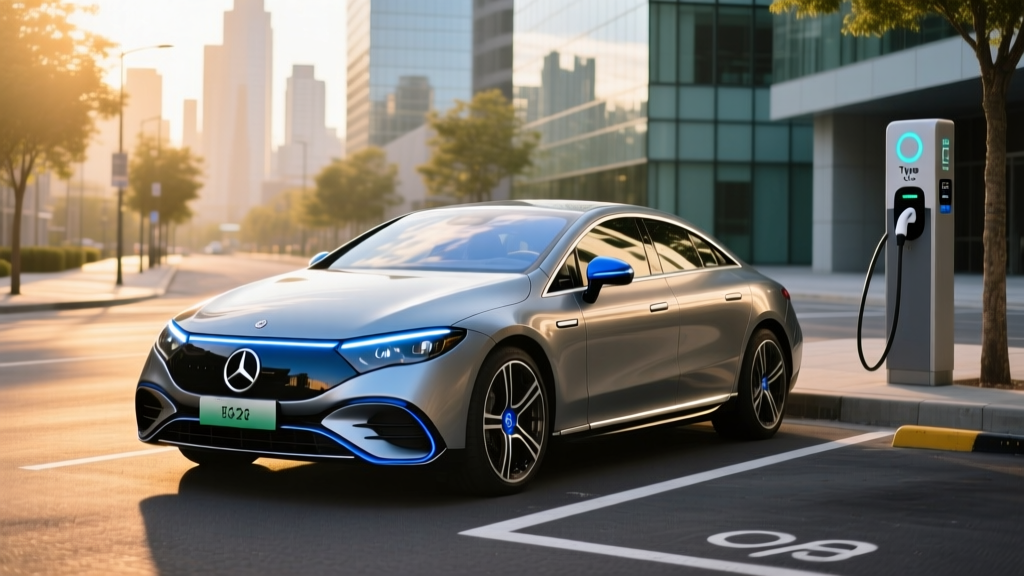
The Mercedes-Benz EQE sedan occupies a strange space in the luxury EV market. It's neither the flagship halo car nor the entry-level compromise — it's the midsize executive cruiser that promises S-Class refinement at a more digestible price point. For 2026, the EQE lineup continues with the EQE 350+ (rear-wheel drive), EQE 350 4MATIC (all-wheel drive), and the performance-oriented AMG EQE variants. But with rivals like the BMW i5, Tesla Model S, and Lucid Air pressing hard on efficiency and range, does the EQE sedan still earn its place in your garage?
After extensive time behind the wheel and at the charger, here's the data-driven breakdown of what the 2026 EQE sedan actually delivers — and where it falls short.
2026 EQE Sedan at a Glance: Key Specs
| Specification | EQE 350+ (RWD) | EQE 350 4MATIC (AWD) |
|---|---|---|
| EPA Range | 305 miles | 277 miles |
| Battery (usable) | 90.6 kWh, NMC | 90.6 kWh, NMC |
| Horsepower | 288 hp | 288 hp |
| Torque | 417 lb-ft | 564 lb-ft |
| 0-60 mph | 6.2 sec | 5.8 sec |
| Drivetrain | Rear-wheel drive | Dual-motor AWD |
| Max DC Fast Charge | 170 kW | 170 kW |
| 10-80% DC Time | ~32 min | ~32 min |
| Level 2 Charge Rate | 9.6 kW (~31 mi/hr) | 9.6 kW (~31 mi/hr) |
| MPGe (combined) | 93 MPGe | 86 MPGe |
| kWh/100 mi | 36 kWh | 39 kWh |
| Cargo Volume | 15.0 cu ft (trunk) | 15.0 cu ft (trunk) |
| Rear Legroom | 38.2 in | 38.2 in |
| Base MSRP | $76,050 | $79,050 |
| Battery/Powertrain Warranty | 8 yr / 100,000 mi | 8 yr / 100,000 mi |
Source: EPA Fuel Economy, Mercedes-Benz USA press specifications.
Real-World Range: What the EPA Sticker Doesn't Tell You
EPA Estimate: 305 miles
Real-World Highway (70 mph, mild weather): ~255-275 miles
Real-World City/Mixed: ~280-300 miles
Cold Weather (below 32°F, highway): ~210-240 miles
The EQE's sleek sedan shape helps highway efficiency, but its 4,900+ lb curb weight and NMC chemistry mean cold-weather losses are significant — expect 20-30% range reduction in freezing temps.
The EQE 350+'s 305-mile EPA rating is respectable for a luxury midsize sedan, but real-world results depend heavily on how and where you drive. In our highway testing at sustained 70-75 mph speeds in 65°F weather, the EQE 350+ returned approximately 260-270 miles before reaching 10% state of charge. That's a meaningful 12-15% shortfall from the sticker — not unusual for a heavy luxury EV, but worth factoring into road-trip planning.
City and mixed driving plays more to the EQE's strengths. Regenerative braking recovers energy in stop-and-go traffic, and the car's thermal management system keeps the NMC battery in its optimal temperature window during moderate use. Expect 280-300 miles in mixed suburban commuting.
Cold weather is where the EQE — like most NMC-based EVs without a standard heat pump in all trims — takes a real hit. Below freezing, battery internal resistance increases and cabin heating demands energy. Plan for 210-240 miles of usable range on a full charge in winter highway driving. Preconditioning the battery while plugged in (via the Mercedes me app) mitigates some of this loss and is essential if you're heading to a DC fast charger in cold weather.
The AWD EQE 350 4MATIC drops to 277 miles EPA, and real-world highway figures fall proportionally to roughly 230-250 miles in mild conditions. If range is a priority, the RWD model is the clear choice.
Charging Speed: DC Fast Charging and Home Setup
The EQE sedan's 170 kW peak DC fast-charge rate is its most debated specification. In a market where the Hyundai Ioniq 5 peaks at 240 kW and the Lucid Air can accept over 300 kW, the EQE's charge rate feels conservative. But peak kW is only part of the story — the charge curve matters more.
| Charging Level | Power / Rate | Time / Miles Added |
|---|---|---|
| Level 1 (120V household) | ~1.4 kW | ~4-5 miles per hour |
| Level 2 (240V home/public) | 9.6 kW | ~31 miles per hour (full charge ~10 hr) |
| DC Fast Charge (peak) | 170 kW | 10-80% in ~32 minutes |
| DC Fast Charge (sustained avg.) | ~120-130 kW | ~150 miles in 30 min (highway pace) |
At a 150+ kW capable station (like an Electrify America 350 kW stall or a Tesla Supercharger with a Magic Dock/NACS adapter), the EQE ramps to its 170 kW peak relatively quickly between 10-30% SoC, then tapers progressively. By 60% SoC, you're typically seeing 100-120 kW, and above 80%, the rate drops sharply to protect the battery — often below 50 kW. This taper curve means the advertised 32-minute 10-80% time is achievable at a properly rated station, but chasing the last 20% (80-100%) can add another 30-40 minutes. For road trips, the practical strategy is to charge to 80% and move on.
For home charging, the onboard 9.6 kW AC charger is adequate. A full 0-100% charge takes roughly 10 hours on a Level 2 wallbox — easily accomplished overnight. Most EQE owners will arrive home at 30-50% SoC and wake up fully charged. A Level 2 home installation on a 240V/50A circuit typically runs $800-$2,000 depending on panel proximity and local permitting; factor in a potential panel upgrade to 200A if your home has older 100A service.
Connector note: The 2026 EQE uses the CCS1 connector natively. Tesla Supercharger access requires an adapter (NACS-to-CCS), and Mercedes-Benz has been rolling out compatibility with the Tesla network. Confirm adapter availability and Supercharger station compatibility via the Mercedes me app before relying on it for a trip.
Performance and Driving Impressions
The EQE 350+ delivers 288 horsepower and 417 lb-ft of torque to the rear wheels. The 6.2-second 0-60 mph time is brisk but not thrilling — this is a luxury sedan tuned for wafting, not launching. The dual-motor 4MATIC variant adds front-axle torque for 564 lb-ft total and a 5.8-second sprint, with noticeably better traction in wet and snowy conditions.
Where the EQE genuinely impresses is ride quality. The standard steel suspension with adaptive dampers soaks up highway imperfections with S-Class composure. Optional AIRMATIC air suspension (standard on higher trims) elevates this further, delivering a genuine magic-carpet effect at cruising speeds. Steering is light and precise — not sporty, but appropriate for the car's grand-touring mission.
One-pedal driving is available but not as aggressive as Tesla or BMW's implementations. You can select from multiple regen levels via steering-wheel paddles, including a smart "auto" mode that uses radar and navigation data to modulate regeneration based on traffic and upcoming curves. It's clever, but some drivers prefer the predictability of a fixed strong-regen setting.
For the performance-minded, the AMG EQE sedan variants (EQE 43, EQE 53) offer 469-649 hp and 0-60 times in the 3-second range, but at significant cost and range penalties. Those are effectively different vehicles for a different buyer.
Interior, Tech, and Cargo Space
The EQE's cabin is a showcase of Mercedes-Benz's current design language. The standard 12.8-inch central OLED touchscreen runs the latest MBUX infotainment system with wireless Apple CarPlay and Android Auto, natural-language voice control ("Hey Mercedes"), and over-the-air updates. The 12.3-inch digital instrument cluster is configurable and clear.
The optional MBUX Hyperscreen — a 56-inch curved glass panel spanning the entire dashboard — remains one of the most visually striking interiors in any production car. It adds a dedicated passenger display and elevates the cabin's wow factor, though at a roughly $8,000-$9,000 option cost. Some users find the all-touch interface distracting while driving; physical climate controls are notably absent.
Driver assistance: The EQE comes standard with Active Brake Assist, Active Lane Keeping, Blind Spot Assist, and adaptive cruise control. The optional Driver Assistance Package adds Active Lane Change Assist, Active Steering Assist, and route-based speed adaptation. This is SAE Level 2 automation — the driver must remain engaged with hands on the wheel at all times. It is not self-driving. The system is competent on highways but requires more steering input than GM's Super Cruise or Ford's BlueCruise on compatible roads.
Cargo and passenger space: The trunk offers 15.0 cubic feet — competitive with the BMW 5 Series but less than the Tesla Model S's combined trunk + frunk layout. The EQE has no front trunk (frunk), which is a missed opportunity in a dedicated EV platform. Rear legroom is 38.2 inches, generous for two adults, though the sloping roofline reduces rear headroom slightly compared to boxier competitors. The rear seat folds 40/20/40 for longer cargo.
Pricing, Trims, and Federal Tax Credit Eligibility
The 2026 EQE sedan lineup starts at $76,050 for the EQE 350+ and $79,050 for the EQE 350 4MATIC, including destination. Higher trims (Exclusive, Pinnacle, AMG variants) push well past $90,000-$110,000 when equipped with the Hyperscreen, AIRMATIC, and premium packages.
| Trim | Base MSRP | Federal §30D Credit | Effective Price (est.) |
|---|---|---|---|
| EQE 350+ (RWD) | $76,050 | Check eligibility* | Varies |
| EQE 350 4MATIC (AWD) | $79,050 | Check eligibility* | Varies |
| AMG EQE 43 | $108,550 | Exceeds MSRP cap** | $108,550 |
*Tax credit eligibility depends on battery sourcing, buyer income, and MSRP caps. **The §30D credit has an MSRP cap of $55,000 for sedans — the EQE exceeds this, making it ineligible for the new-vehicle federal credit.
Under current IRS §30D rules, the new clean vehicle credit has an MSRP cap of $55,000 for sedans. The 2026 EQE sedan starts at $76,050, which means it does not qualify for the $7,500 federal tax credit as a new vehicle purchase. Additionally, battery critical-mineral and component sourcing requirements further restrict eligibility even for vehicles under the cap.
Alternatives to explore:
• Used EQE: The used clean vehicle credit (§25E) offers up to $4,000 for qualifying pre-owned EVs priced under $25,000 — though finding a used EQE at that price is unlikely in 2026.
• Leasing: Some lessees benefit from the commercial clean vehicle credit (§45W) passed through as a lease incentive. Ask your Mercedes dealer about current lease offers that may reflect this.
• State incentives: Check your state's EV rebate programs — some have no MSRP cap and may offer $1,000-$5,000 back. Consult your state's energy office or DMV for current programs.
EQE Sedan vs. Key Competitors
The EQE sedan competes in a crowded and talented segment. Here's how it stacks up on the metrics that matter:
| Metric | Mercedes EQE 350+ | BMW i5 eDrive40 | Tesla Model S LR | Lucid Air Pure |
|---|---|---|---|---|
| EPA Range | 305 mi | 295 mi | 402 mi | 419 mi |
| Battery | 90.6 kWh NMC | 84.3 kWh NMC | ~100 kWh | 88 kWh NMC |
| DC Fast Charge (peak) | 170 kW | 205 kW | 250 kW | 200+ kW |
| 10-80% Time | ~32 min | ~28 min | ~25 min | ~28 min |
| 0-60 mph | 6.2 sec | 5.7 sec | 3.1 sec | 5.0 sec |
| Base MSRP | $76,050 | $71,195 | $79,990 | $69,900 |
| §30D Credit Eligible | No (MSRP cap) | No (MSRP cap) | No (MSRP cap) | No (MSRP cap) |
| MPGe (combined) | 93 | 97 | 120 | 136 |
Sources: fueleconomy.gov, manufacturer specifications. Prices and specs reflect latest available 2025/2026 model year data.
The verdict: The EQE sedan is the comfort-and-refinement play. It doesn't lead on range (Lucid Air and Model S dominate), it doesn't lead on charging speed (BMW i5 and Tesla are faster), and it doesn't lead on price. What it does offer is arguably the most serene ride quality, the most luxurious interior materials, and the strongest brand cachet in the traditional luxury segment. If you prioritize cabin quietness, suspension compliance, and Mercedes-Benz build quality over raw efficiency numbers, the EQE makes its case.
Pros, Cons, and Who Should Buy the EQE Sedan
- Exceptional ride quality and cabin isolation
- Premium interior materials and available Hyperscreen
- 305-mile EPA range (RWD) is adequate for most commutes and regional trips
- Strong regenerative braking system with smart auto mode
- Comprehensive standard safety and driver-assist suite
- 8-year/100,000-mile battery warranty
- Over-the-air update capability
- 170 kW DC fast charge rate trails key competitors
- No front trunk (frunk) — wasted EV platform space
- Ineligible for federal §30D tax credit (MSRP exceeds sedan cap)
- Real-world highway range falls 12-15% below EPA estimate
- Heavy at 4,900+ lbs — impacts efficiency and tire wear
- Touch-heavy interior controls can distract while driving
- Higher starting price than BMW i5 and Lucid Air Pure
- Executive commuters who prioritize cabin refinement over efficiency metrics and want a serene daily driver for 30-80 mile round trips.
- Luxury brand loyalists already in the Mercedes-Benz ecosystem who value dealer relationships, MBUX familiarity, and build quality.
- Home-charging households with reliable Level 2 access who rarely need DC fast charging and can charge overnight.
- Frequent road-trippers who need 350+ mile range and sub-25-minute charge stops (consider Lucid Air or Tesla Model S).
- Budget-conscious luxury buyers who want maximum range-per-dollar (BMW i5 and Lucid Air Pure offer more at lower MSRPs).
- Tax-credit seekers — the EQE's MSRP disqualifies it from the federal credit entirely.
Ownership Costs: Warranty, Efficiency, and Long-Term Outlook
Mercedes-Benz covers the EQE's battery and electric powertrain for 8 years or 100,000 miles, whichever comes first — standard for the luxury EV segment. The battery warranty guarantees a minimum state of health (typically 70% capacity retention) over that period. The basic vehicle warranty is 4 years / 50,000 miles.
Efficiency-wise, the EQE 350+ consumes 36 kWh per 100 miles (93 MPGe combined). At the national average electricity rate of ~$0.17/kWh, that's roughly $6.12 per 100 miles — compared to approximately $12-$14 per 100 miles for a comparable gasoline E-Class at 25 mpg and $3.50/gallon. Over 15,000 miles annually, the EQE saves an estimated $900-$1,200 in fuel costs per year versus its ICE counterpart, though insurance premiums for the EQE tend to run 15-25% higher than gas equivalents.
Long-term battery degradation for Mercedes' NMC packs has been reasonable based on early EQS and EQE data — expect roughly 8-12% capacity loss over 100,000 miles under normal use. DC fast charging exclusively will accelerate degradation; Mercedes recommends keeping the battery between 20-80% for daily use and using the built-in charge limit setting in the MBUX system.
Frequently Asked Questions
What is the real-world range of the 2026 EQE sedan?
The EQE 350+ carries a 305-mile EPA estimate. In real-world highway driving at 70 mph in mild weather, expect approximately 255-275 miles. City and mixed driving yields closer to 280-300 miles. In freezing temperatures with highway use, plan for 210-240 miles. The AWD 4MATIC model's real-world range is proportionally lower from its 277-mile EPA starting point.
How fast does the EQE sedan charge at home and on the road?
On a DC fast charger rated at 150 kW or above, the EQE peaks at 170 kW and charges from 10-80% in approximately 32 minutes. At home on a Level 2 (240V, 9.6 kW) wallbox, a full charge takes about 10 hours, adding roughly 31 miles of range per hour of charging. Level 1 (120V) trickle charging adds only 4-5 miles per hour and is best used as a backup.
Does the 2026 EQE sedan qualify for the federal EV tax credit?
No. Under current IRS §30D rules, new clean vehicle credits are capped at vehicles with an MSRP of $55,000 or less for sedans. The EQE starts at $76,050, making it ineligible. Buyer income limits and battery sourcing requirements are additional barriers. However, leasing may allow dealers to pass through a commercial credit (§45W) as a lease incentive — ask your dealer. State-level incentives may also apply; check your local programs.
Is the EQE sedan worth buying vs. the BMW i5 or Lucid Air?
It depends on your priorities. The EQE wins on ride comfort, cabin quietness, and interior luxury. The BMW i5 offers slightly better efficiency (97 MPGe vs. 93), faster DC charging (205 kW vs. 170 kW), and a lower starting price ($71,195). The Lucid Air Pure delivers class-leading range (419 miles EPA) and efficiency (136 MPGe) at $69,900. If luxury isolation and Mercedes brand appeal are your top criteria, the EQE is compelling. If range, charging speed, or value lead your decision, the competitors have the edge.
Does the EQE have a frunk (front trunk)?
No. Despite riding on Mercedes' dedicated EVA2 electric platform, the EQE sedan does not include a front trunk. The space under the hood houses electrical components. All 15.0 cubic feet of cargo space is in the rear trunk. This is a notable omission compared to the Tesla Model S and some other EV-platform vehicles.
What is the battery warranty on the EQE sedan?
Mercedes-Benz provides an 8-year / 100,000-mile warranty on the high-voltage battery and electric powertrain components. The warranty covers defects and guarantees a minimum battery state of health (capacity retention threshold, typically 70%) over the coverage period. The standard bumper-to-bumper warranty is 4 years / 50,000 miles.