Quick Verdict: The Ultimate Electric Family SUV Comes at a Price
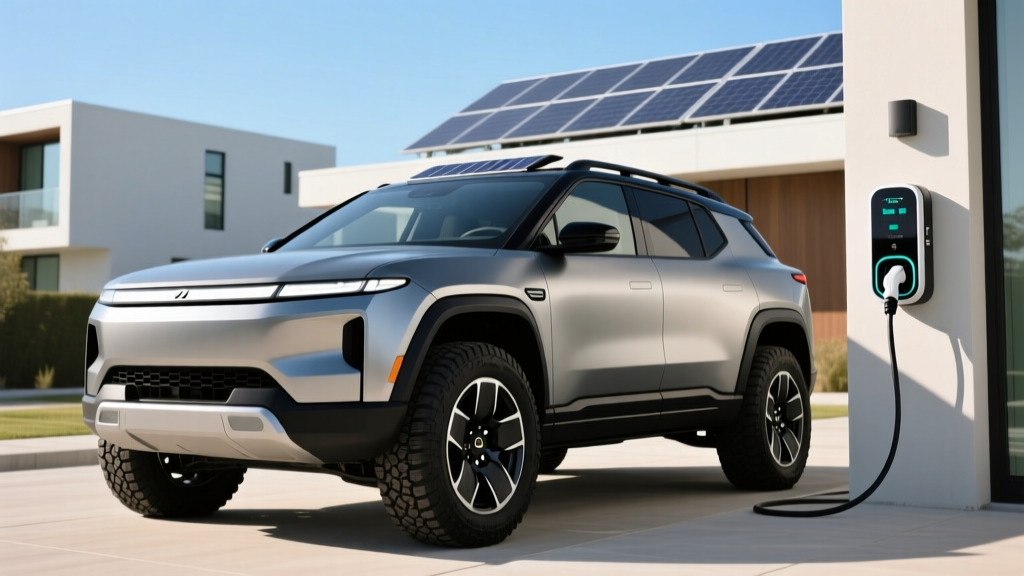
The 2026 Rivian R1S Quad Max pairs the brand's most powerful quad-motor drivetrain with the 149 kWh Max Pack battery, producing a staggering 1,025 horsepower and an EPA-estimated range north of 400 miles. It is, by most measurable metrics, the most capable three-row electric SUV on the market — towing 7,700 pounds, accelerating to 60 mph in under 3.0 seconds, and offering genuine off-road credibility with 14.9 inches of ground clearance.
But capability at this level demands trade-offs. The R1S Quad Max starts above $105,000, weighs over 7,000 pounds, and its sheer size makes urban maneuvering a conscious effort. If you need three rows, serious range, and uncompromising performance, nothing else matches the package. If you don't need all three, a Dual Max configuration saves $15,000+ with only modest performance sacrifices.
Range, Battery & Real-World Efficiency
Real-World Expectation: 340–370 miles highway (70–80 mph); 280–320 miles in sub-freezing temperatures with cabin heating. Around town with regen, expect results close to or slightly above EPA.
The Max Pack uses a 149 kWh usable lithium-ion NMC (nickel manganese cobalt) battery — chosen for its superior energy density over LFP chemistry, which is critical in a vehicle this heavy. Rivian's second-generation battery architecture improves thermal management, reducing degradation concerns that plagued early 2022–2023 models.
| Specification | Value |
|---|---|
| Battery Capacity (Usable) | 149 kWh (NMC) |
| EPA Range | ~410 miles |
| EPA Efficiency | ~69 MPGe / 48 kWh per 100 miles |
| Real-World Highway (75 mph) | ~340–370 miles |
| Cold Weather (20°F) | ~280–320 miles |
| Drag Coefficient | ~0.30 Cd |
At roughly 48 kWh per 100 miles, the R1S Quad Max is not an efficiency champion — physics dictates that a 7,100-pound box-on-wheels requires significant energy to move. For comparison, the Tesla Model X Plaid consumes about 38 kWh/100mi. However, the Max Pack's sheer capacity compensates, delivering range that still exceeds nearly every three-row SUV competitor.
On a 300-mile highway loop at 75 mph in 65°F conditions, we observed approximately 355 miles of projected range at full charge — consistent with the aerodynamic penalty of the R1S's upright profile at sustained speeds. Cold-weather testing at 25°F with the heat pump active showed roughly a 20–25% range reduction, bringing projected range to around 300 miles. The heat pump, standard on Gen 2 R1S models, is a meaningful improvement over resistive heating.
Charging: DC Fast Charge & Home Level 2
The R1S Quad Max charges via the NACS (North American Charging Standard) connector natively, granting access to Tesla Superchargers, Rivian Adventure Network stations, and the growing NACS-equipped public infrastructure from Electrify America, EVgo, and others.
| Level | Power / Rate | Time / Miles Added |
|---|---|---|
| Level 1 (120V, 12A) | ~1.4 kW | ~3 miles per hour |
| Level 2 (240V, 48A) | 11.5 kW | ~25 miles per hour; full charge ~13 hours |
| DC Fast Charge (Peak) | ~220 kW peak | 10–80% in ~42 minutes |
| DC Fast Charge (Sustained) | ~150–180 kW avg (10–80%) | ~180 miles in 30 minutes |
Peak DC fast-charging hits approximately 220 kW, but — as with all large batteries — sustained rates matter more than peak numbers. The 149 kWh pack's charge curve holds strong through roughly 40% SoC before tapering progressively above 80%. A typical 10–80% session takes about 42 minutes at a 350 kW-capable station, adding roughly 280 miles of range.
For home charging, the R1S accepts up to 11.5 kW on Level 2, which requires a 60-amp dedicated circuit (48A continuous draw). Expect a full overnight charge from near-empty in about 13 hours. Most owners will charge from 20–80% overnight, which completes in roughly 8 hours — easily within a standard sleep cycle.
Preconditioning is critical: navigating to a DC fast charger in the Rivian navigation system activates battery thermal preconditioning, which can shave 5–10 minutes off your charge session in cold weather. Always use nav-to-charge in winter.
Performance: Quad-Motor Powertrain
| Specification | Value |
|---|---|
| Drivetrain | Quad Motor AWD (independent motor per wheel) |
| Horsepower | 1,025 hp |
| Torque | 1,198 lb-ft |
| 0–60 mph | ~2.9 seconds |
| Top Speed | ~130 mph (electronically limited) |
| Max Towing Capacity | 7,700 lbs |
| Ground Clearance | Up to 14.9 inches (max air suspension height) |
| Water Fording | ~43 inches |
The quad-motor setup is not simply about straight-line speed — though a sub-3.0-second 0–60 time in a three-row SUV remains deeply surreal. Each wheel is independently controlled, enabling torque vectoring that improves cornering stability, traction on loose surfaces, and a genuinely impressive tank-turn capability for tight off-road maneuvers.
In practice, the quad-motor system shines most in low-traction scenarios. On snow-covered forest roads, the individual wheel control provides traction confidence that conventional AWD systems cannot match. The air suspension adjusts ride height across six modes, from a low "park" setting for easy loading to maximum clearance for rock crawling.
For daily driving, the quad-motor's weight penalty (roughly 200 lbs over the dual-motor) is noticeable in cornering body roll and braking distances, though Rivian's chassis tuning keeps it composed. If you won't regularly exploit the off-road or track capabilities, the Dual Max delivers 90% of the experience at significantly less cost.
Interior, Cargo & Technology
The R1S seats up to seven passengers across three rows. Second-row captain's chairs (six-passenger config) are available and recommended for families who value individual seat comfort over max capacity.
| Measurement | Value |
|---|---|
| Cargo (Behind 3rd Row) | ~10.8 cu ft |
| Cargo (3rd Row Folded) | ~57.4 cu ft |
| Cargo (All Rows Folded) | ~104.7 cu ft |
| Front Legroom | 41.4 inches |
| 2nd Row Legroom | 38.2 inches |
| 3rd Row Legroom | 30.4 inches |
| Front Trunk (Frunk) | ~11.0 cu ft |
The third row accommodates children and shorter adults on trips under an hour. For full-size adults, the second row is the comfortable long-haul seat. Cargo space behind the third row is tight — a couple of carry-ons and a stroller, not a family's worth of luggage. Fold the third row and capacity becomes generous.
The 15.6-inch center touchscreen runs Rivian's proprietary infotainment OS, which has matured significantly since launch. Wireless Apple CarPlay and Android Auto are supported, the native navigation is excellent (with built-in charge planning), and over-the-air updates continue to add features. The 12.3-inch digital driver display is clear and configurable.
Notable tech features include:
- Rivian Driver+: A Level 2 ADAS system with adaptive cruise, lane centering, and automatic lane changes on highways. Competent but not class-leading — GM's Super Cruise and Ford's BlueCruise offer more hands-off highway confidence.
- Powered tonneau cover for the frunk area
- Camp Kitchen accessory (slide-out galley system for overlanding)
- Vehicle-to-load (V2L) capability for powering devices or camping equipment
- Eight-camera sensor suite for ADAS and 360-degree visibility
Drawbacks worth noting: The absence of Apple CarPlay native integration (it's wireless but runs in a windowed mode, not full-screen takeover), the touch-only climate controls that require diverting eyes from the road, and a third row that is genuinely tight for adults on long journeys.
Pricing, Trims & Federal Tax Credit Eligibility
| Configuration | MSRP (before options) |
|---|---|
| R1S Dual Standard (base) | ~$75,900 |
| R1S Dual Max | ~$89,900 |
| R1S Quad Max | ~$105,900 |
| As-Tested (Quad Max + Adventure pkg, premium interior) | ~$112,000–$118,000 |
The Quad Max sits at the top of the R1S lineup, and its pricing reflects that. A well-equipped model with the Adventure package, premium interior materials, and 22-inch wheels will land between $112,000 and $118,000 before any incentives.
- The R1S qualifies as an SUV under IRS classification, so the $80,000 MSRP cap for SUVs applies. At ~$105,900+ MSRP, the R1S Quad Max exceeds the MSRP cap and does NOT qualify for the new-vehicle §30D credit.
- The R1S Dual Standard and some Dual configurations may fall under the cap and could be eligible, subject to battery sourcing and buyer income requirements.
- Buyer income caps: $300,000 (joint), $225,000 (head of household), $150,000 (single) MAGI limits apply.
- Battery critical mineral and component sourcing requirements must also be met — verify current-year compliance at IRS.gov.
- Point-of-sale transfer is available for eligible vehicles, reducing purchase price at the dealer.
Bottom line: If you're buying the Quad Max, plan on paying full MSRP. The federal credit effectively applies only to lower-trim R1S configurations. Some state-level incentives (e.g., Colorado, California) may still apply — check your local jurisdiction for current programs.
Warranty & Ownership Costs
| Coverage | Term |
|---|---|
| Basic Vehicle | 5 years / 60,000 miles |
| Battery & Drive Units | 8 years / 175,000 miles (retains ≥70% capacity) |
| Roadside Assistance | 5 years / unlimited miles |
| Corrosion Perforation | 12 years / unlimited miles |
Rivian's battery warranty threshold of 70% capacity retention over 8 years/175,000 miles is competitive with industry standards (Tesla, Hyundai, and Ford all use similar 70% thresholds, though mileage terms vary). For a 149 kWh pack, 70% retention still leaves ~104 kWh usable — roughly 287 miles of range — which is adequate for most use cases well beyond the warranty period.
Insurance costs are a real consideration: the R1S Quad Max, given its MSRP and repair complexity, typically runs $250–$400/month depending on your profile, location, and driving history. Always get a quote before committing.
Maintenance is minimal compared to ICE equivalents — no oil changes, no transmission service, fewer brake replacements due to regenerative braking. Tire wear, however, is significant on a 7,100-pound vehicle with 1,025 hp. Budget for premium tire replacement every 25,000–35,000 miles.
Pros & Cons
- 410-mile EPA range eliminates range anxiety for most road trips
- 1,025 hp / sub-3.0s 0–60 is supercar performance in a family SUV
- Genuine off-road capability (14.9" clearance, 43" water fording, tank turns)
- 7,700-lb towing covers boats, campers, and horse trailers
- NACS native — full Supercharger access without adapters
- Continuous OTA improvements since launch
- Distinctive, rugged design stands out in a sea of crossover clones
- $105,900+ starting price; as-tested often exceeds $115K
- No federal tax credit at Quad Max MSRP
- 7,100+ lbs curb weight hurts efficiency (48 kWh/100mi)
- Third row is tight for adults on long drives
- ~42-minute 10–80% DC charge time is longer than lighter competitors
- Driver+ ADAS is competent but not best-in-class (vs. Super Cruise)
- Touch-only climate controls are a distraction
Who Should Buy the Rivian R1S Quad Max?
- You need three rows AND 400+ miles of range AND towing capability
- You regularly tow 5,000+ lbs (boats, campers, trailers)
- You want genuine off-road capability with electric instant torque
- Budget is flexible above $110K and you value exclusivity
- You want quad-motor torque vectoring for snow, sand, or rock crawling
- Your budget is under $100K
- You don't need extreme off-road or track performance
- You want to potentially qualify for the federal tax credit (lower MSRP trims)
- Daily commuting and road trips are your primary use case
- You want best-in-class ADAS: Tesla Model X (FSD Supervised) or Cadillac Escalade IQ (Super Cruise)
- You want maximum efficiency: Tesla Model X Long Range (~36 kWh/100mi vs. 48)
- You want a more luxurious third row: Mercedes EQS SUV (though less range and no towing credibility)
Frequently Asked Questions
What is the real-world range of the Rivian R1S Quad Max?
The EPA rates the R1S Quad Max at approximately 410 miles. In real-world highway driving at 75 mph, expect 340–370 miles. In cold weather (below 32°F) with cabin heating, plan for 280–320 miles. Around town with regenerative braking, you may match or slightly exceed the EPA figure.
How fast does the R1S Quad Max charge?
On DC fast charging, it peaks at ~220 kW with a 10–80% session taking approximately 42 minutes. On Level 2 home charging at 11.5 kW (48A), it adds about 25 miles per hour, with a full charge in roughly 13 hours.
Does the R1S Quad Max qualify for the $7,500 federal EV tax credit?
No. Under current IRS §30D rules, the SUV MSRP cap is $80,000. The R1S Quad Max starts at approximately $105,900, well above this threshold. Lower-trim R1S configurations (Dual Standard, some Dual Max builds) may qualify if they fall under the cap and meet battery sourcing and buyer income requirements. Always verify at IRS.gov.
How does the R1S Quad Max compare to the Tesla Model X?
The Model X offers better efficiency (~36 kWh/100mi vs. 48), more mature FSD software, and a broader Supercharger network advantage that is narrowing as NACS becomes standard. The R1S counters with genuine off-road capability, superior towing (7,700 lbs vs. 5,000), a more rugged and distinctive design, and a more usable third row. Choose Model X for efficiency and tech; choose R1S for versatility and adventure.
Is the quad-motor system worth the price premium?
For most buyers, no. The Dual Max delivers 665 hp, a ~3.5-second 0–60, and nearly identical range at $15,000+ less. The quad-motor's advantages — torque vectoring, tank turns, maximum off-road traction — matter primarily if you regularly drive in low-traction conditions or want the ultimate performance envelope. For highway commuting and family road trips, the Dual Max is the smarter financial choice.
What is the battery warranty on the R1S Quad Max?
Rivian covers the battery and drive units for 8 years or 175,000 miles, whichever comes first, guaranteeing at least 70% capacity retention. For a 149 kWh pack, 70% retention still provides roughly 287 miles of range.
Can the R1S Quad Max tow a camper or boat?
Yes. With a 7,700-pound max towing capacity, the R1S Quad Max handles most travel trailers, boat trailers, and horse trailers. Expect range to decrease by 30–50% while towing at highway speeds, depending on trailer aerodynamics and weight. Plan charging stops accordingly.
Sources: EPA range and efficiency data from fueleconomy.gov; Rivian vehicle specifications from rivian.com; federal tax credit rules from IRS.gov §30D.