Quick Verdict: Is the Mercedes CLA EV Worth It?
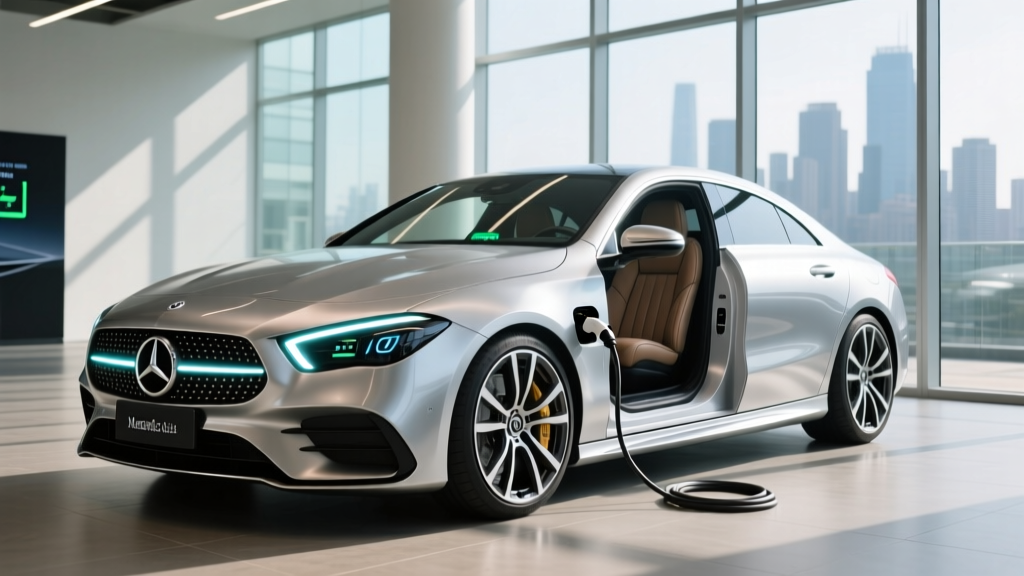
The 2026 Mercedes CLA EV (built on the new MMA platform) targets buyers who want luxury compact-sedan styling with serious electric range. Mercedes has announced a WLTP range exceeding 750 km (~466 miles) for the lead variant, paired with an 85 kWh NMC battery, an 800-volt architecture supporting up to 320 kW DC fast charging (adding roughly 247 miles in 15 minutes), and a starting price expected around $45,000–$48,000 before incentives. The CLA EV is not yet on sale in the U.S. as of early 2026 — deliveries are expected later this year. If you need a luxury EV sedan today, the Tesla Model 3, BMW i4, or Hyundai Ioniq 6 are available now. If you can wait, the CLA EV could reset the bar for efficiency in the compact luxury segment.
What the Mercedes CLA EV Actually Is
The Mercedes CLA EV is the first production vehicle built on Mercedes-Benz's Modular Mercedes Architecture (MMA), a platform engineered from the ground up for battery-electric powertrains. It replaces the previous CLA (which was offered only as a gas-powered compact sedan and AMG variant) with a dedicated EV. Mercedes previewed the production intent with the Concept CLA Class in 2023, and the production version was officially unveiled for the 2026 model year.
The CLA EV slots below the EQE in Mercedes' electric lineup, targeting the compact luxury sedan segment — the same space occupied by the Tesla Model 3, BMW i4 eDrive40, Audi A4 e-tron, and the Hyundai Ioniq 6. Unlike those competitors, Mercedes is emphasizing extreme efficiency: the company claims energy consumption as low as 12 kWh/100 km (roughly 5 mi/kWh) under optimal conditions, which would make it one of the most efficient luxury EVs on the market.
Mercedes plans multiple variants, including a base rear-wheel-drive model, an all-wheel-drive option, and eventually AMG-badged performance versions. The initial U.S. launch is expected to prioritize the longer-range RWD variant.
Range, Battery, and Efficiency Specs
| Specification | Mercedes CLA EV (Announced/Estimated) |
|---|---|
| Battery Capacity (Usable) | ~85 kWh (NMC chemistry) |
| WLTP Range (Lead Variant) | 750+ km (~466 mi) |
| Estimated EPA Range | ~400–430 mi (EPA typically 10–15% lower than WLTP) |
| Energy Efficiency | ~12 kWh/100 km (5.0 mi/kWh claimed) |
| Drivetrain | RWD standard; AWD available |
| Motor Output (Base RWD) | ~268 hp (200 kW) |
| 0–60 mph (Estimated) | ~6.0 seconds (RWD) |
| Platform Voltage | 800V architecture |
Real-World Range Reality Check
Mercedes' headline 750+ km figure uses the WLTP cycle, which is more generous than the U.S. EPA test. Based on historical EPA-to-WLTP conversion ratios for similar vehicles, expect an EPA sticker in the 400–430 mile range for the long-range RWD variant once officially rated by the EPA at fueleconomy.gov.
In real-world driving, plan for:
- Highway cruising (70–75 mph): ~340–380 miles before needing a charge
- Cold weather (below 32°F / 0°C): ~300–340 miles (NMC batteries lose 15–25% range in freezing temps)
- Mixed city/highway, moderate climate: ~370–410 miles
The CLA EV's exceptional efficiency claim (12 kWh/100 km) is achievable in city driving with moderate temperatures. At sustained highway speeds, expect consumption closer to 14–16 kWh/100 km — still impressive for a luxury sedan, but not the headline number.
Mercedes has confirmed the CLA EV uses NMC (nickel manganese cobalt) cell chemistry. NMC offers higher energy density than LFP (lithium iron phosphate), which is how Mercedes achieves such high range in a compact footprint. The trade-off: NMC batteries typically degrade slightly faster over time than LFP and carry higher raw-material costs. Mercedes has not yet published U.S. battery warranty terms, but expect the standard 8-year/100,000-mile coverage with a 70% capacity retention threshold — consistent with the EQE and EQS.
Charging Speed and Infrastructure
The 800-volt electrical architecture is the CLA EV's charging secret. Here's what the numbers mean in practice:
| Charging Level | Power (kW) | Speed (Miles of Range per Hour) | Notes |
|---|---|---|---|
| Level 1 (120V household) | ~1.4 kW | ~4–5 mi/hr | Emergency/top-up only; ~80+ hours for full charge |
| Level 2 (240V home/public) | ~11 kW (onboard charger) | ~35–40 mi/hr | Full charge overnight (~9 hours from 10%) |
| DC Fast Charging (Peak) | Up to 320 kW | ~247 mi in 15 min (claimed) | 800V architecture; 10–80% in ~18–20 min (est.) |
Understanding kW vs. kWh: kW (kilowatts) measures charging power — how fast energy flows into the battery. kWh (kilowatt-hours) measures battery capacity — how much energy the battery holds total. The CLA EV's 85 kWh battery charged at a peak 320 kW rate will fill rapidly, but only under ideal conditions (battery preconditioned to optimal temperature, state of charge below 50%).
The charging curve matters more than peak kW. The 320 kW figure is a peak, not a sustained rate. Expect the CLA EV to hold near-peak speeds from roughly 10–40% state of charge, then taper progressively. From 80–100%, charging slows dramatically to protect battery health — a universal EV behavior. A realistic 10–80% session at a capable 350 kW charger (like Electrify America or Tesla Supercharger V4 with NACS/CCS adapters) should take approximately 18–22 minutes.
Regarding connectors: Mercedes has committed to adopting the NACS (Tesla) connector for North American models. The CLA EV is expected to ship with a native NACS port in the U.S., granting access to Tesla's Supercharger network — currently the most reliable DC fast-charging infrastructure in the country. This is a significant advantage over CCS-equipped competitors that require adapters for Supercharger access.
Pricing, Tax Credits, and What You'll Actually Pay
Mercedes has not published final U.S. MSRP for the 2026 CLA EV. Based on European pricing, positioning relative to the EQE, and segment competition, here's our estimate:
| Trim (Estimated) | Est. MSRP | Est. Federal Tax Credit | Est. Effective Price |
|---|---|---|---|
| CLA 250 (Base RWD) | $45,000–$48,000 | Up to $7,500 (§30D)* | $37,500–$40,500 |
| CLA 300 (AWD) | $50,000–$54,000 | Up to $7,500 (§30D)* | $42,500–$46,500 |
| CLA 350 (Long Range) | $53,000–$57,000 | Up to $7,500 (§30D)* | $45,500–$49,500 |
*Federal tax credit eligibility under IRS §30D rules depends on multiple factors that change frequently:
- MSRP cap: Sedans must have an MSRP at or below $55,000 to qualify. Higher trims of the CLA EV may exceed this cap.
- Buyer income limits: Modified AGI must not exceed $150,000 (single), $225,000 (head of household), or $300,000 (joint filing) for 2026.
- Battery sourcing requirements: Increasingly strict critical-mineral and battery-component sourcing rules may reduce the credit to $3,750 or disqualify certain build configurations entirely.
- Point-of-sale transfer: Eligible buyers can transfer the credit to the dealer at purchase, reducing the out-of-pocket price immediately rather than waiting for a tax refund.
Consult a tax professional and check the latest IRS guidance before relying on the full $7,500. Mercedes will also likely offer lease incentives that can bypass some sourcing restrictions under the commercial clean vehicle credit (§45W), a common strategy used by luxury automakers.
CLA EV vs. Gas CLA vs. Competition: The Numbers
How does the electric CLA stack up against the gas-powered CLA it effectively replaces — and against rival EVs?
| Metric | 2026 CLA EV (Est.) | 2025 CLA 250 (Gas) | Tesla Model 3 LR | BMW i4 eDrive40 |
|---|---|---|---|---|
| Base MSRP | ~$46,000 | ~$44,350 | $47,740 | $57,975 |
| EPA Range / Tank Range | ~410 mi (est.) | ~390 mi (33 MPG × 11.9 gal) | 363 mi | 307 mi |
| Fuel/Energy Cost per Mile | ~$0.04–$0.06 (home charging) | ~$0.11 (gas at $3.50/gal) | ~$0.04–$0.06 | ~$0.04–$0.06 |
| 0–60 mph | ~6.0 sec | ~6.2 sec | 4.2 sec | 5.5 sec |
| Annual Fuel/Energy Cost (12k mi) | ~$500–$700 | ~$1,300 | ~$500–$700 | ~$550–$750 |
| Annual Maintenance (Est.) | ~$300–$500 | ~$600–$900 | ~$300–$400 | ~$400–$600 |
The gas-vs-EV cost math: Over 5 years and 60,000 miles, the CLA EV saves roughly $3,000–$4,000 in fuel costs alone compared to the gas CLA 250, plus another $1,500–$2,500 in reduced maintenance (no oil changes, fewer brake replacements due to regenerative braking, no transmission fluid). Combined with a potential $7,500 federal credit, the CLA EV can reach cost parity with the gas version within 2–3 years of ownership — even at a slightly higher purchase price.
Against the Tesla Model 3 Long Range, the CLA EV offers a more premium interior, Mercedes' MBUX infotainment system, and likely better build quality. The Model 3 counters with a proven Supercharger network (though NACS adoption narrows this gap), faster acceleration, and a lower starting price. Against the BMW i4, the CLA EV undercuts on price while offering substantially more range.
Real-World Ownership: What First-Time EV Buyers Need to Know
If the CLA EV is your first electric vehicle, these practical realities will shape your experience far more than spec sheets:
Home Charging Is Non-Negotiable for Most Owners
Over 80% of EV charging happens at home. If you have a garage or dedicated parking spot with access to a 240V circuit (or can install one), the CLA EV's ~11 kW onboard charger will add roughly 35–40 miles of range per hour — enough to fully replenish overnight. Budget $800–$2,500 for a quality Level 2 home charger and professional installation by a licensed electrician. If your electrical panel needs an upgrade to 200A (common in older homes), add $1,500–$3,500.
If you cannot charge at home (apartment, street parking, no electrical access), EV ownership becomes significantly less convenient. You'll rely on public Level 2 chargers (slower, often occupied) or DC fast chargers (more expensive, $0.30–$0.50/kWh vs. $0.12–$0.16/kWh at home). Before committing to the CLA EV, honestly assess your home-charging situation.
Cold Weather Cuts Range — Plan Accordingly
NMC batteries lose efficiency in cold temperatures. If you live in a region with sustained sub-freezing winters (Minnesota, New England, mountain states), expect 15–25% range reduction. The CLA EV's heat pump (standard on MMA-platform vehicles) helps mitigate cabin-heating energy draw, but battery chemistry physics can't be fully engineered away. A 410-mile EPA range becomes roughly 310–350 miles in January in Chicago.
Insurance Costs More (Usually)
EV insurance premiums run 15–25% higher than equivalent gas cars due to higher repair costs, specialized parts, and battery replacement risk. Expect annual premiums in the $1,800–$2,400 range for the CLA EV depending on your location, driving record, and coverage level. Get quotes before purchasing.
Maintenance Is Genuinely Lower
EVs eliminate oil changes, spark plugs, timing belts, transmission fluid, and exhaust system repairs. Brake pads last significantly longer due to regenerative braking handling most deceleration. The main maintenance items are tire rotations, cabin air filters, brake fluid checks, and wiper blades. Budget $300–$500/year vs. $600–$900/year for a gas Mercedes CLA.
Common Misconceptions — Addressed With Data
| Myth | Fact |
|---|---|
| "EV batteries need replacing every few years at enormous cost." | Modern NMC batteries are warrantied for 8 years/100,000 miles with 70%+ capacity retention. Real-world degradation data from similar Mercedes EQ models shows ~8–12% capacity loss over 100,000 miles. Full replacement (rarely needed) runs $12,000–$18,000. |
| "Charging takes too long for road trips." | At 320 kW peak, the CLA EV adds ~247 miles in 15 minutes. A typical road-trip stop (10–80%, plus a restroom break and coffee) takes 20–25 minutes every 3–4 hours of driving. |
| "EVs are worse for the environment because of electricity generation." | Even on the U.S. average grid mix, EVs produce 50–70% fewer lifecycle emissions than gas cars over 150,000 miles, per EPA and Argonne National Laboratory data. On cleaner grids (California, Pacific Northwest), the advantage exceeds 80%. |
| "I'll be stranded with no charging stations." | The U.S. now has over 70,000 public charging ports. With NACS access to Tesla Superchargers plus Electrify America, EVgo, and ChargePoint networks, highway corridor coverage is strong in most states. Rural gaps remain — check PlugShare for your routes. |
| "The CLA EV qualifies for the full $7,500 tax credit automatically." | Eligibility depends on MSRP cap ($55,000 for sedans), buyer income, and battery sourcing rules that tighten annually. Higher trims may exceed the MSRP cap. Always verify current IRS §30D rules. |
Decision Framework: Should You Buy the Mercedes CLA EV?
Choose the Mercedes CLA EV if:
- You want a compact luxury EV sedan with class-leading range (400+ miles EPA) and don't want a Tesla
- You have home Level 2 charging access or can install it
- You value interior quality, MBUX tech, and Mercedes brand prestige over outright performance
- You can wait for U.S. deliveries (expected late 2026) and want the latest MMA-platform efficiency
- Your target trim stays under the $55,000 MSRP cap for federal tax credit eligibility
Look elsewhere if:
- You need a car now — the CLA EV isn't on U.S. lots yet. Consider the Tesla Model 3, BMW i4, or Hyundai Ioniq 6.
- You want maximum performance — the base CLA EV (~268 hp) prioritizes efficiency over speed. The Model 3 Performance or BMW i4 M50 are quicker.
- You can't charge at home and live in an area with sparse public charging infrastructure.
- You want a proven platform with multi-year reliability data — the MMA architecture is brand-new, and first-year models can carry teething issues.
- Your budget pushes you into higher trims above $55,000, eliminating federal tax credit eligibility.
Frequently Asked Questions
When will the Mercedes CLA EV be available in the United States?
Mercedes has confirmed U.S. deliveries for the 2026 model year, with availability expected in the second half of 2026. Exact timing varies by market and trim. Reservations may open before launch — check Mercedes-Benz USA for updates.
Will the CLA EV have access to Tesla Superchargers?
Yes. Mercedes is adopting the NACS connector for North American models, and the CLA EV is expected to ship with a native NACS port. This provides direct access to Tesla's Supercharger network without an adapter.
How does the CLA EV's range compare to the Tesla Model 3?
The CLA EV's estimated EPA range of 400–430 miles would exceed the Tesla Model 3 Long Range's current 363-mile EPA rating by a significant margin. However, the Model 3 is available now, has established reliability data, and starts at a lower price.
What is the expected battery warranty?
Mercedes has not published U.S.-specific warranty details for the CLA EV. Based on existing EQ models, expect 8 years or 100,000 miles with a minimum 70% capacity retention guarantee. This is consistent with industry standards set by federal requirements.
Can I charge the CLA EV on a regular 120V outlet?
Yes, but slowly. Level 1 (120V) charging adds roughly 4–5 miles of range per hour — adequate only for overnight top-ups if you drive fewer than 40 miles daily. For practical daily use, a 240V Level 2 charger is strongly recommended.
Is the CLA EV a self-driving car?
No. The CLA EV will feature Mercedes' latest driver-assistance systems, likely including a version of Drive Pilot (SAE Level 3 in limited conditions on approved highways in certain states) and standard Level 2 features like adaptive cruise control and lane-keeping. The driver must remain attentive and engaged. This is not a Level 4 autonomous vehicle like a Waymo robotaxi.
How much will it cost to charge the CLA EV at home vs. public chargers?
At the U.S. average residential electricity rate of ~$0.16/kWh, a full 85 kWh charge costs roughly $13.60 and provides ~400 miles — about $0.034 per mile. Public DC fast chargers typically cost $0.30–$0.50/kWh, making a full charge $25–$42. For comparison, the gas CLA 250 at 33 MPG and $3.50/gallon costs about $0.11 per mile.