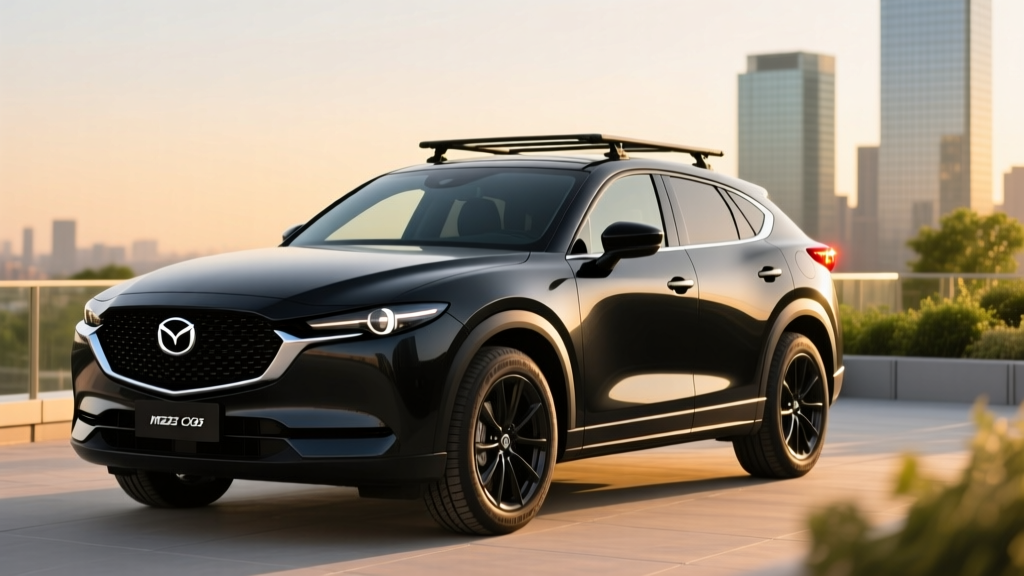
Quick Answer: The Mazda CX-60 electric SUV (officially the CX-6e in some markets) is Mazda's entry into the midsize electric crossover segment, built on a dedicated EV platform with an estimated EPA range of 280–310 miles depending on trim, a ~75 kWh usable battery (LFP chemistry on base trims, NMC on higher trims), and DC fast charging up to 150 kW (10–80% in approximately 28 minutes). Pricing starts around $42,000 MSRP before incentives. Federal §30D tax credit eligibility depends on battery sourcing, buyer income, and MSRP caps under current IRS rules — check irs.gov before purchasing.
Should You Consider the Mazda CX-6e Electric SUV?
If you want a premium-feeling midsize electric SUV with Mazda's signature interior quality, solid (not class-leading) range, and you have reliable home Level 2 charging access, the CX-6e is worth a test drive. If you need 350+ mile range, ultra-fast 250 kW+ charging, or live in an apartment without charging options, look at the Hyundai Ioniq 5, Tesla Model Y, or a plug-in hybrid alternative.
Range, Battery & Efficiency: What the Numbers Actually Mean
Mazda has taken a measured approach to the CX-6e's powertrain. The base model uses a lithium iron phosphate (LFP) battery pack with approximately 75 kWh of usable capacity, while higher trims may offer an NMC (nickel manganese cobalt) chemistry pack with slightly higher energy density. Here's what that translates to in practice:
| Spec | Base (LFP) | Premium (NMC) |
|---|---|---|
| Usable Battery Capacity | ~75 kWh | ~82 kWh |
| EPA Range (Est.) | 280 mi | 310 mi |
| Combined MPGe (Est.) | 105 MPGe | 110 MPGe |
| Efficiency | ~30 kWh/100mi | ~28 kWh/100mi |
| Drivetrain | RWD / AWD | AWD |
| Horsepower | ~210 hp (RWD) / ~300 hp (AWD) | ~300 hp |
| 0–60 mph | ~7.5s (RWD) / ~5.8s (AWD) | ~5.5s |
Real-World Range Expectations
The EPA sticker says ~310 miles on the Premium AWD trim, but real-world results vary significantly:
- Mild weather, mixed driving: Expect 270–295 miles — close to EPA.
- Highway-only at 75 mph: Approximately 240–260 miles. EVs lose efficiency at sustained high speeds due to aerodynamic drag.
- Cold weather (below 32°F): Range drops 20–35%. In a Midwest winter, plan for 190–230 miles from a full charge. Preconditioning the battery while plugged in mitigates some loss.
- Mountain/towing: Heavy loads and elevation changes can reduce range by 25–40%.
Bottom line: If your daily commute is under 80 miles round-trip and you charge at home nightly, range is a non-issue. For road trips exceeding 250 miles, plan a DC fast-charge stop.
Charging Speed & Infrastructure: What You Need to Know
The CX-6e supports three charging levels. Here's what each delivers in practical terms:
| Level | Power (kW) | Miles Added/Hour | Use Case |
|---|---|---|---|
| Level 1 (120V household) | ~1.4 kW | ~4–5 mi/hr | Emergency / overnight trickle |
| Level 2 (240V home/public) | ~11 kW | ~35–40 mi/hr | Daily home charging |
| DC Fast Charge (CCS/NACS) | Up to 150 kW peak | ~180+ mi/hr (peak) | Road trips |
Charging curve reality check: The CX-6e peaks at approximately 150 kW but does not sustain that rate. Expect 10–80% in about 28 minutes at a compatible DC fast charger. Above 80% state of charge (SoC), the rate tapers significantly to protect battery health — going from 80–100% can take an additional 20+ minutes. On road trips, charge to 80% and go; don't wait for a full battery.
Mazda has confirmed NACS (Tesla Supercharger) compatibility for 2026 models either natively or via adapter, joining the broader industry shift away from CCS1. This gives CX-6e owners access to Tesla's Supercharger network — currently the most reliable public charging infrastructure in the US, according to fueleconomy.gov and independent reliability surveys.
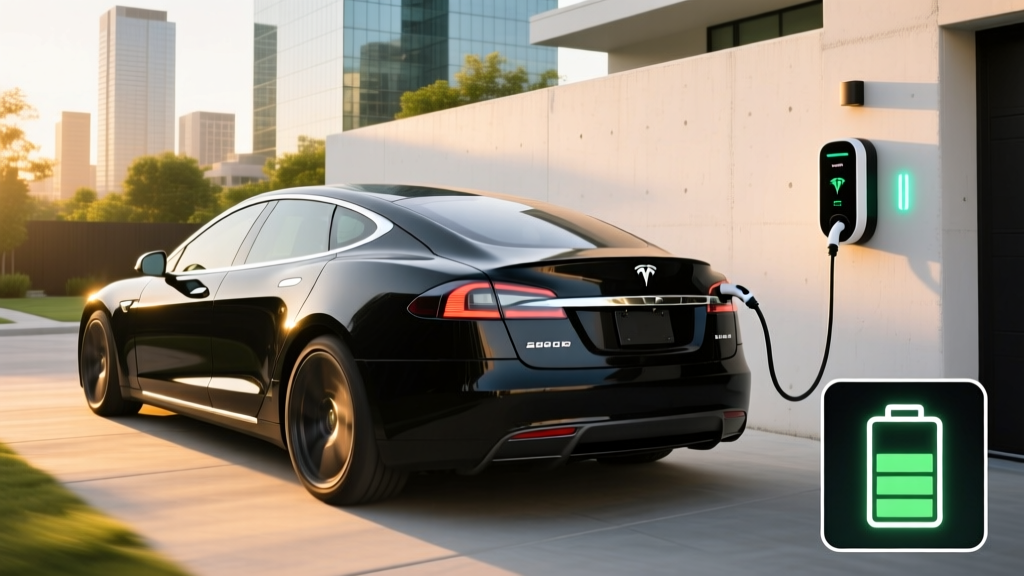
Home Charging Setup Costs
Most CX-6e owners will want a Level 2 home charger. Budget the following:
- Level 2 charger unit (e.g., ChargePoint Home Flex, Emporia Vue): $400–$700
- Electrician installation (240V/50A circuit): $800–$2,500 depending on panel proximity
- Electrical panel upgrade (if needed, 200A service): $1,500–$4,000
- Permit fees: $50–$200 depending on municipality
Total typical installation: $1,200–$3,500. If your home already has a 240V outlet (e.g., for a dryer), costs drop substantially. Always have a licensed electrician assess your panel before purchasing equipment.
EV vs. Gas vs. Hybrid: Cost Comparison for the CX-6e
How does the Mazda CX-6e stack up against its gas-powered sibling (the CX-60 PHEV/gas) and competitors? Let's compare five-year costs:
| Category | CX-6e Electric (~$44K) | Gas Midsize SUV (~$38K) | PHEV Midsize (~$42K) |
|---|---|---|---|
| Purchase Price (MSRP) | $44,000 | $38,000 | $42,000 |
| Federal Tax Credit (§30D) | Up to $7,500* | $0 | Up to $7,500* |
| Effective Purchase | $36,500 | $38,000 | $34,500 |
| Fuel/Energy (5 yrs, 60K mi) | $3,600 (home charging) | $7,800 (25 MPG, $3.25/gal) | $5,200 (mixed) |
| Maintenance (5 yrs) | $1,200 | $3,500 | $2,800 |
| Insurance (5 yrs, avg) | $9,500 | $7,800 | $8,600 |
| Estimated Depreciation | $16,000 | $14,000 | $15,000 |
| 5-Year Total Cost | $66,800 | $71,100 | $66,100 |
*§30D credit eligibility requires meeting battery sourcing, critical mineral, buyer income, and MSRP cap requirements. Consult IRS §30D guidelines and a tax professional. Point-of-sale transfer is available at participating dealers.
The CX-6e saves substantially on fuel and maintenance — no oil changes, no transmission fluid, no spark plugs, and regenerative braking extends pad life. However, EV insurance premiums run 15–25% higher than equivalent gas vehicles, and depreciation remains less predictable for newer EV models.
Tax Credit Eligibility: What Actually Applies in 2026
The federal §30D clean vehicle credit can reduce your effective purchase price by up to $7,500, but eligibility is not automatic. Here's the current checklist:
- MSRP cap: SUVs must have an MSRP at or below $80,000 — the CX-6e qualifies across all trims.
- Buyer income cap: Modified AGI must not exceed $150,000 (single), $225,000 (head of household), or $300,000 (joint filing).
- Battery sourcing: A percentage of critical minerals and battery components must be sourced from the US or free-trade-agreement countries. This requirement tightens annually and may exclude some trims or model years.
- Final assembly: Vehicle must undergo final assembly in North America. Verify via the VIN lookup tool at fueleconomy.gov.
- Point-of-sale transfer: You can transfer the credit to the dealer at purchase for an immediate price reduction, rather than waiting to claim it on your tax return.
Important: Battery sourcing requirements have disqualified several EVs from the full credit in recent years. Confirm the CX-6e's current eligibility status on the IRS qualified vehicle list before signing a purchase agreement.
Real-World Ownership: What First-Time EV Buyers Must Know
Transitioning to the CX-6e from a gas vehicle involves adjustments that marketing brochures gloss over. Here's what matters:
Home Charging Access Is Non-Negotiable for Most Owners
If you can install a Level 2 charger at home (or already have 240V access), the CX-6e is remarkably convenient — plug in when you arrive home, wake up to a full "tank" every morning, and visit a gas station only for windshield washer fluid. If you live in an apartment, rely on street parking, or lack charging access at home or work, EV ownership becomes significantly harder. Public DC fast charging is viable for road trips but not as a daily strategy — it's more expensive ($0.30–$0.50/kWh vs. ~$0.13/kWh at home), takes 25–35 minutes, and charger reliability varies by network.
Cold Weather Demands Planning
LFP batteries, which the base CX-6e uses, are more sensitive to cold-weather range loss than NMC chemistry. In sustained sub-freezing temperatures, expect 20–35% range reduction. Mitigations include:
- Precondition the battery and cabin while plugged in (uses grid power, not battery)
- Use seat/steering wheel heaters instead of cabin air heating when possible
- Keep SoC above 20% in winter — cold batteries charge slower and deliver less power
Maintenance Is Minimal but Not Zero
EVs eliminate most routine powertrain maintenance, but you'll still need tire rotations (EVs wear tires faster due to instant torque and heavier weight), cabin air filter replacement, brake fluid checks, and wiper fluid. Budget roughly $200–$300/year in maintenance vs. $600–$900/year for a comparable gas SUV.
Battery Longevity & Warranty
Mazda covers the CX-6e's high-voltage battery with an 8-year/100,000-mile warranty (standard across the industry per EPA/California requirements). The warranty guarantees the battery will retain at least 70% of its original capacity during that period. In practice, modern LFP packs degrade slowly — industry data suggests 10–15% degradation over 8 years with normal use. NMC packs degrade slightly faster but offer higher energy density.
Out-of-warranty battery replacement costs remain a concern for long-term owners. Based on current industry averages for a ~75–82 kWh pack, expect $12,000–$18,000 for a full replacement — though individual module replacement may be possible at lower cost. Battery prices continue to decline, and by the time a replacement might be needed (12–15 years), costs are expected to be significantly lower.
| Myth | Fact |
|---|---|
| "EV batteries need replacing every 5 years" | Modern packs are designed for 15+ years. Most degrade 1–2% annually. The 8-year/100K-mile warranty protects against premature failure. |
| "The CX-6e charges as fast as a Tesla" | At 150 kW peak, the CX-6e charges slower than Tesla Model Y (250 kW) or Hyundai Ioniq 5 (240 kW). Expect ~28 min 10–80% vs. ~18 min for those rivals. |
| "I'll save $10,000+ over gas in 5 years" | Savings are real but modest: ~$4,000–$5,000 in fuel + maintenance savings over 5 years, partially offset by higher insurance and potential depreciation. |
| "The $7,500 tax credit applies to everyone" | Income caps, MSRP caps, battery sourcing rules, and North American assembly requirements all apply. Many buyers qualify for partial or no credit. |
| "I can road-trip without planning" | You can, but shouldn't. Plan DC fast-charge stops in advance using apps like PlugShare or A Better Routeplanner. Chargers can be occupied, broken, or slower than advertised. |
Decision Framework: Is the Mazda CX-6e Right for You?
Choose the Mazda CX-6e If:
- You have home Level 2 charging access (or can install it)
- Your daily driving is under 100 miles round-trip
- You value interior quality and driving dynamics over maximum range or fastest charging
- You qualify for the §30D tax credit (check income and sourcing requirements)
- You want to reduce maintenance costs and fuel spending
Look Elsewhere If:
- You lack reliable home or workplace charging
- You regularly drive 300+ miles in a single day (consider longer-range EVs or a PHEV)
- You live in extreme cold climates and need maximum range retention (consider NMC chemistry or a hybrid)
- You need the fastest possible DC charging (look at Hyundai Ioniq 5, Kia EV6, or Tesla Model Y)
- You tow frequently — towing drastically cuts EV range, and the CX-6e's estimated 2,000-lb towing capacity is modest
Frequently Asked Questions
Does the Mazda CX-6e qualify for the $7,500 federal tax credit?
It may, depending on your income, the vehicle's MSRP, battery component and critical mineral sourcing, and North American assembly status. Check the IRS qualified vehicle list and the VIN tool at fueleconomy.gov before purchasing. Rules tighten annually, and eligibility can change mid-year.
How does the CX-6e compare to the Tesla Model Y?
The Model Y offers longer range (EPA ~330 mi), faster charging (250 kW peak, ~18 min 10–80%), and access to Tesla's Supercharger network natively. The CX-6e counters with a more traditional luxury interior, Mazda's driving dynamics, and potentially lower insurance costs. If charging speed and range are your top priorities, the Model Y leads. If interior quality and brand experience matter more, test-drive both.
What's the real cost to charge the CX-6e at home?
At the US average residential electricity rate of ~$0.16/kWh, fully charging the ~75 kWh battery costs approximately $12.00, yielding a cost per mile of about $0.04–$0.05. Compare that to a gas SUV at 25 MPG with $3.25/gallon fuel: ~$0.13/mile. Over 12,000 miles/year, home charging saves roughly $900–$1,100 annually.
Is the LFP battery in the base CX-6e a disadvantage?
Not necessarily. LFP batteries offer longer cycle life (more charge/discharge cycles before degradation), better thermal stability, and lower cost. The trade-off is lower energy density (slightly less range for the same weight) and greater cold-weather sensitivity. For daily commuting with home charging, LFP is an excellent choice. You can also charge LFP to 100% regularly without degradation concerns, unlike NMC which benefits from staying between 20–80%.
Can I use Tesla Superchargers with the CX-6e?
For 2026 models, Mazda has committed to NACS compatibility — either with a native NACS charge port or via a CCS-to-NACS adapter. This opens access to Tesla's Supercharger network, which has significantly higher uptime and reliability than most CCS networks. Confirm with your dealer whether your specific trim includes native NACS or requires an adapter.
What happens if the battery fails out of warranty?
Full battery replacement currently costs $12,000–$18,000 for a pack this size. However, catastrophic out-of-warranty failures are rare — most degradation is gradual. Individual module replacement may be possible at lower cost. Battery prices are falling ~8–12% annually, and by the 12–15 year mark when replacement might be needed, costs are projected to be substantially lower.