Who Bought Rivian — And Why They're Still Buying in 2026
Rivian has carved a distinct niche in the electric vehicle market since delivering its first R1T pickup in late 2021 and the R1S SUV shortly after. But who bought Rivian vehicles, and does that buyer profile hold up as the EV market matures in 2026? The answer reveals a lot about where electric trucks and SUVs actually fit in American garages — and where they don't.
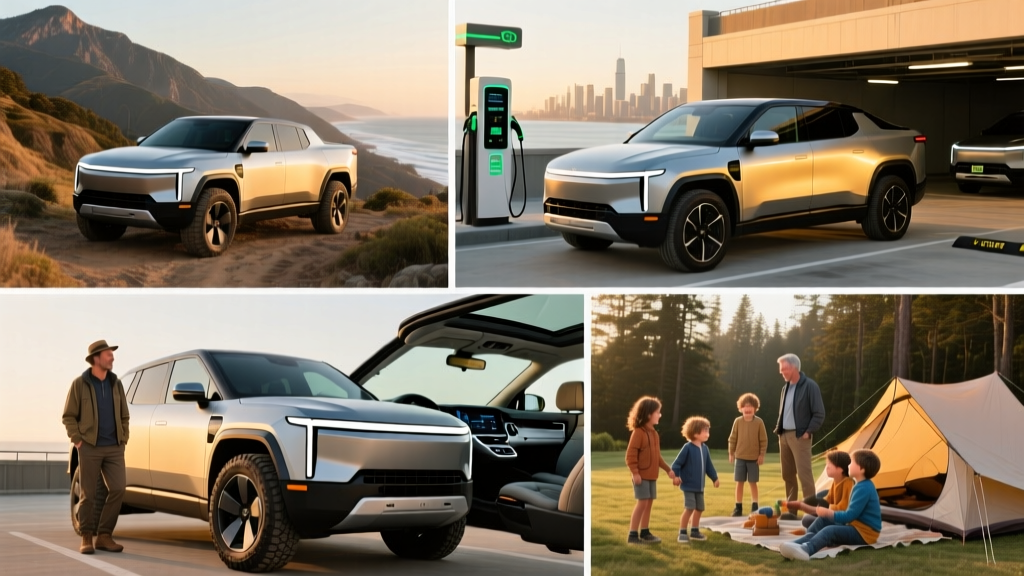
Rivian's core buyer in 2026 remains an affluent, outdoor-oriented household that wants genuine off-road capability, towing competence, and a tech-forward cabin without burning fossil fuels. But with the second-generation R1T and R1S (introduced for the 2025 model year) bringing significant price reductions and the new Standard battery option, the buyer tent has expanded considerably. Let's break down exactly what these vehicles offer, what they cost after incentives, and whether you fit the profile.
2026 Rivian R1T & R1S: Spec Snapshot
| Spec | R1T Dual-Motor (Max Pack) | R1S Dual-Motor (Max Pack) |
|---|---|---|
| EPA Range | 420 miles | 410 miles |
| Battery Capacity (usable) | 141 kWh (NMC) | 141 kWh (NMC) |
| Standard Battery (LFP) | 92 kWh / ~270 mi EPA | 92 kWh / ~260 mi EPA |
| Peak DC Fast Charge | 220 kW | 220 kW |
| 10–80% DCFC Time | ~30 minutes | ~30 minutes |
| Level 2 Home Charging | 11.5 kW (~25 mi/hr) | 11.5 kW (~25 mi/hr) |
| 0–60 mph | 4.5 sec (Dual) / 3.0 sec (Tri) | 4.5 sec (Dual) / 3.0 sec (Tri) |
| Horsepower | 533 hp (Dual) / 850 hp (Tri) | 533 hp (Dual) / 850 hp (Tri) |
| Drivetrain | AWD (Dual/Tri-Motor) | AWD (Dual/Tri-Motor) |
| Max Towing | 11,000 lbs | 7,700 lbs |
| Efficiency | 73 MPGe / 46 kWh/100mi | 74 MPGe / 45 kWh/100mi |
| Cargo (bed / behind 3rd row) | 54 cu ft bed + 11 cu ft frunk | 10.5 cu ft (3rd row up) / 104 cu ft (max) |
| Base MSRP (Dual-Motor Standard) | $69,900 | $75,900 |
| Max Pack MSRP | $89,900 | $95,900 |
| Battery/Powertrain Warranty | 8 yr / 175,000 mi | 8 yr / 175,000 mi |
Source: Rivian R1T specs and fueleconomy.gov (EPA). Prices and specs reflect the 2026 model year as listed by Rivian; confirm with your local dealer.
Real-World Range: What the EPA Sticker Doesn't Tell You
EPA Estimated: 420 miles (R1T Max Pack) / 270 miles (R1T Standard)
Real-World Highway (70 mph, mild weather): Expect ~340–370 miles from the Max Pack; ~215–240 miles from the Standard battery. The R1T's boxy aerodynamics and 6,700+ lb curb weight work against it at sustained highway speeds.
Cold Weather (below 30°F): Plan for a 20–30% range reduction. A Max Pack R1T that delivers 350 miles at 65°F may drop to 245–280 miles in freezing conditions without preconditioning. Rivian's heat pump helps, but physics wins in deep cold.
Towing: Range drops dramatically when towing. Expect roughly 50% of EPA range when pulling a 7,000+ lb trailer — meaning ~200 miles from the Max Pack. Plan charging stops accordingly.
Rivian's Max Pack uses NMC (nickel manganese cobalt) chemistry in the 141 kWh battery, which delivers higher energy density than LFP. The Standard battery uses LFP (lithium iron phosphate) chemistry — it's heavier per kWh but offers longer cycle life and can be charged to 100% daily without degradation concerns. For buyers who commute short distances and charge at home nightly, the LFP Standard pack is a smart, lower-cost choice. For road-trippers and towers, the Max Pack's range buffer is worth the premium.
Charging Speed: DC Fast Charging and Home Setup
| Charging Level | Power / Rate | Time or Miles Added |
|---|---|---|
| Level 1 (120V household) | ~1.4 kW | ~3–4 miles per hour |
| Level 2 (240V home, 48A) | 11.5 kW | ~25 miles per hour; full charge in ~12–14 hrs (Max Pack) |
| DC Fast Charge (Max Pack) | Peak 220 kW | 10–80% in ~30 min; adds ~140 mi in 15 min |
| DC Fast Charge (Standard LFP) | Peak 190 kW | 10–80% in ~25 min; smaller battery fills faster |
Rivian's charge curve on the Max Pack peaks near 220 kW from roughly 10–30% State of Charge, then tapers progressively. By 60% SoC, you're seeing ~150 kW; above 80%, it drops below 60 kW. This is typical for large NMC packs and is why the 10–80% time is the meaningful metric — not the peak number.
For home charging, a 48-amp Level 2 wall connector on a 60-amp circuit is the sweet spot. Budget $800–$1,500 for the charger hardware and $1,000–$3,000 for professional installation by a licensed electrician (permit included). If your home has a 200-amp electrical panel with spare capacity, installation stays at the lower end. A panel upgrade to 200A or 400A can add $2,000–$5,000+.
Who Actually Bought Rivian? The 2026 Buyer Profile
Based on registration data patterns, owner surveys, and Rivian's own customer communications, the 2026 Rivian buyer profile breaks down into three primary segments:
1. The Adventure Household (Largest Segment)
These buyers tow a camper or boat on weekends, ski in winter, and mountain bike in summer. They chose the R1T over the Ford F-150 Lightning because of Rivian's superior ground clearance (up to 14.9 inches in Max mode), the integrated camp kitchen option, and the gear tunnel — a lockable, pass-through storage space behind the cab unique to the R1T. They typically spec the Max Pack because towing and remote-area driving demand range reserves.
2. The Tech-Forward Family
Often cross-shopping the Tesla Model X and BMW iX, these R1S buyers want three rows, a spacious cabin, and advanced driver assistance. Rivian's Driver+ system (SAE Level 2 — not self-driving; the driver must remain engaged) offers hands-on highway assist with lane centering and adaptive cruise. The R1S's 104 cu ft of max cargo space with both rear rows folded and available air suspension appeal to families hauling gear and kids.
3. The Fleet and Commercial Buyer
Rivian's Commercial Van (EDV) — built for Amazon and now available to other fleets — represents a growing share of Rivian's total deliveries. While not a consumer model, fleet sales have subsidized Rivian's R&D and helped stabilize the company financially, which matters to consumer buyers evaluating long-term parts and service support.
Pricing, Tax Credits, and Total Cost
| Trim (R1T) | MSRP | Federal §30D Credit | Effective Price |
|---|---|---|---|
| Dual-Motor Standard (92 kWh LFP) | $69,900 | Up to $7,500* | ~$62,400 |
| Dual-Motor Large (117 kWh NMC) | $79,900 | Up to $7,500* | ~$72,400 |
| Dual-Motor Max (141 kWh NMC) | $89,900 | Up to $7,500* | ~$82,400 |
| Tri-Motor Max | $99,900 | Up to $7,500* | ~$92,400 |
*Federal EV Tax Credit (§30D) — critical caveats:
- MSRP Cap: Pickup trucks (R1T) must have an MSRP at or below $80,000; SUVs (R1S) at or below $80,000. This means Max Pack and Tri-Motor trims above $80,000 do not qualify for the federal credit. Confirm the exact MSRP including mandatory options.
- Income Cap: Modified AGI must not exceed $300,000 (joint), $225,000 (head of household), or $150,000 (single). See IRS §30D guidelines.
- Battery Sourcing: The full $7,500 requires meeting both critical minerals and battery component requirements. Rivian has worked to shift sourcing, but the exact credit amount ($3,750 or $7,500) depends on current-year battery component and mineral sourcing percentages. Confirm with your tax professional.
- Point-of-Sale Transfer: As of 2024, buyers can transfer the credit to the dealer at purchase, reducing the out-of-pocket price immediately rather than waiting for tax filing.
Pros, Cons, and Competitor Verdict
- Class-leading off-road capability (14.9" ground clearance, quad-motor tank turns on Tri-Motor)
- Unique gear tunnel storage (R1T) — 11 cu ft lockable pass-through
- Strong tow rating (11,000 lbs R1T) with integrated tow-brake controller
- Over-the-air updates continuously add features
- 8-year/175,000-mile battery warranty exceeds the industry-standard 100,000 mi
- LFP Standard battery option lowers entry price and enables daily 100% charging
- Highway efficiency suffers — 46 kWh/100mi is thirsty vs. sleeker EVs
- DC fast charging at 220 kW peak trails Hyundai/Kia's 350 kW E-GMP platform
- Service center network still limited outside major metros
- Third-row space in R1S is tight for adults (28.9" legroom)
- Top trims exceed the $80,000 MSRP cap for the federal tax credit
- Towing range is roughly half of EPA — a real constraint for long hauls
Is It Worth Buying vs. Key Competitors?
R1T vs. Ford F-150 Lightning: The Lightning is more affordable (starting ~$55,000) and offers a larger frunk, but the R1T outperforms it off-road, tows 2,000 lbs more (in Max Pack), and offers the gear tunnel. If budget is the priority, the Lightning wins. If capability and adventure use matter, the R1T is the stronger tool.
R1S vs. Tesla Model X: The Model X offers more range per kWh (better efficiency) and access to the Supercharger network (though Rivian now has NACS adapters for Supercharger access as of 2024). The R1S provides genuine off-road chops, a more traditional SUV design, and a lower starting price. The Model X wins on efficiency and charging infrastructure convenience; the R1S wins on versatility and value.
R1S vs. BMW iX: The iX is a luxury benchmark with a more refined ride and interior, but it lacks the R1S's third row, off-road capability, and tow rating. Different vehicles for different missions.
Who Should Buy a Rivian in 2026?
- You need a pickup for towing (boat, camper, trailer) and want electric
- Off-road trails, ski resorts, and remote camping are regular use cases
- You value the gear tunnel and camp kitchen for overlanding
- Your budget allows $70K–$90K+ and you have home Level 2 charging
- You need three rows but want genuine off-road and tow capability
- You prefer a non-Tesla brand with a more conventional SUV silhouette
- You want air suspension for adjustable ride height and comfort
- Your typical trips are under 300 miles or you're comfortable planning DCFC stops
- You need maximum highway efficiency (consider a sedan or crossover like the Ioniq 6 or Model 3)
- You live far from a Rivian service center and can't tolerate mobile-service wait times
- Your budget is below $65K (consider the Standard battery R1T or competitors like the Chevy Silverado EV base trims)
Frequently Asked Questions
What is the real-world range of the Rivian R1T?
The EPA rates the 2026 R1T Dual-Motor Max Pack at 420 miles. In real-world highway driving at 70 mph in mild weather, expect 340–370 miles. In freezing temperatures, plan for 245–280 miles. The Standard battery (92 kWh LFP) is EPA-rated at ~270 miles; expect ~215–240 miles highway in fair weather.
How fast does the Rivian R1T charge?
On a DC fast charger, the Max Pack peaks at 220 kW and charges from 10–80% in approximately 30 minutes. The Standard LFP battery peaks at ~190 kW and reaches 10–80% in about 25 minutes. At home on a 48-amp Level 2 charger (11.5 kW), the Max Pack takes roughly 12–14 hours from empty to full — overnight charging covers most daily needs easily.
How much does a Rivian cost after the federal tax credit?
The R1T Dual-Motor Standard starts at $69,900. If you qualify for the full $7,500 §30D credit (meeting income, MSRP, and battery sourcing requirements), the effective price drops to ~$62,400. However, trims with an MSRP above $80,000 (Max Pack, Tri-Motor) do not qualify for the federal credit due to the MSRP cap. Consult a tax professional and verify current IRS §30D rules.
Does the Rivian R1T qualify for the federal EV tax credit?
It depends on the trim. The Dual-Motor Standard ($69,900 MSRP) and Dual-Motor Large ($79,900 MSRP) fall under the $80,000 MSRP cap for trucks and are potentially eligible for up to $7,500 — provided your income is under the cap and battery sourcing requirements are met. The Max Pack and Tri-Motor trims exceed $80,000 and are not eligible for the federal credit. State and local incentives may still apply; check your state's energy office.
Is Rivian a reliable brand long-term?
Rivian's 8-year/175,000-mile battery and powertrain warranty is among the best in the industry (most competitors offer 8 yr/100,000 mi). Early build-quality issues from 2022–2023 models have been largely addressed in the second-generation platform. Service access remains a consideration — Rivian operates a growing network of service centers and offers mobile service, but coverage in rural areas is still limited compared to legacy automakers.
Can Rivians use Tesla Superchargers?
Yes. Since 2024, Rivian vehicles equipped with a NACS adapter can access Tesla's Supercharger network (V3 and V4 stalls). Rivian also ships newer vehicles with a native NACS charge port. This significantly expands the available DC fast-charging infrastructure for Rivian owners on road trips.
Always verify current pricing, specs, and tax credit eligibility at rivian.com and fueleconomy.gov before purchasing. Tax credit rules are subject to change; consult a qualified tax professional for your specific situation.