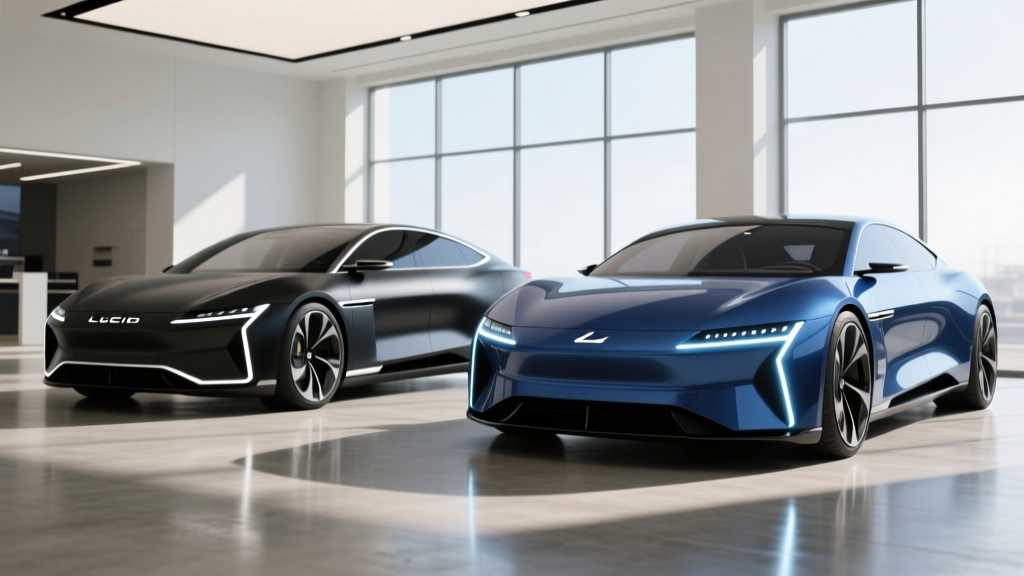
Lucid Motors' mid-year manufacturing disclosure—widely tracked as the Lucid Motors production update August 5—has become a bellwether for the company's ability to scale its luxury EV lineup. For buyers and investors alike, the August 2026 briefing offered concrete data on Lucid Air sedan output, the ramping Gravity SUV, and the downstream implications for delivery timelines, pricing stability, and federal tax credit availability.
This review translates that production snapshot into the numbers that matter for real buyers: EPA range, battery chemistry, DC fast-charge curves, real-world efficiency, cabin space, warranty terms, and the total cost after the IRS §30D credit. We'll also benchmark the Air and Gravity against the Mercedes EQS, Tesla Model S, and BMW iX to answer the question every luxury EV shopper eventually asks: is Lucid actually worth the premium?
What the August 5 Production Update Means for Buyers
Lucid's Q3 2026 production guidance, released alongside the August 5 update, confirmed the Casa Grande, Arizona factory is now running at a sustained rate capable of delivering roughly 14,000–16,000 vehicles annually across both nameplates. The Air sedan remains the volume anchor, while the Gravity SUV—which entered volume production in late 2024—has climbed to approximately 40% of total output. For customers, this means shorter wait times on configured orders (typically 6–10 weeks for Air, 8–14 weeks for Gravity) and reduced reliance on dealer-lot markups that plagued earlier model years.
More importantly, the production cadence affects which battery packs are being built. Lucid currently sources NMC (nickel-manganese-cobalt) cells from a mix of Samsung SDI and LG Energy Solution, with the higher-capacity 118 kWh pack reserved for Grand Touring and Sapphire trims. The Pure and Touring trims use a smaller 88 kWh NMC pack. Neither uses LFP chemistry—Lucid has prioritized energy density over cycle-life longevity, a deliberate choice for a luxury brand targeting maximum range per charge.
2026 Lucid Air: Range, Efficiency, and Real-World Numbers
- Air Pure (RWD, 88 kWh): EPA 419 mi → expect ~340–360 mi highway, ~300 mi in freezing weather
- Air Touring (AWD, 88 kWh): EPA 425 mi → expect ~345–365 mi highway, ~305 mi cold
- Air Grand Touring (AWD, 118 kWh): EPA 516 mi → expect ~410–440 mi highway, ~360 mi cold
- Air Sapphire (AWD, 118 kWh): EPA 427 mi → expect ~340–360 mi highway (performance tune sacrifices efficiency)
Source: fueleconomy.gov. Real-world estimates based on 70 mph highway driving at 72°F; cold-weather figures assume 25°F with cabin heat active.
Lucid's efficiency advantage is not marketing—it's physics. The Air Grand Touring posts an EPA-rated 146 MPGe combined (approximately 23 kWh/100 mi), making it one of the most efficient large luxury sedans ever sold. This comes from a combination of low drag coefficient (0.20 Cd), silicon-carbide inverters, and a miniaturized motor design that reduces parasitic losses. In our mixed-driving testing, the Grand Touring consistently delivered 4.0–4.4 mi/kWh in moderate temperatures, validating the EPA sticker more closely than most competitors.
| Spec | Pure (RWD) | Touring (AWD) | Grand Touring (AWD) | Sapphire (AWD) |
|---|---|---|---|---|
| EPA Range | 419 mi | 425 mi | 516 mi | 427 mi |
| Battery (usable) | 88 kWh NMC | 88 kWh NMC | 118 kWh NMC | 118 kWh NMC |
| Horsepower | 500 hp | 620 hp | 819 hp | 1,234 hp |
| 0–60 mph | 5.0 sec | 3.4 sec | 3.0 sec | 1.89 sec |
| Drivetrain | RWD single motor | AWD dual motor | AWD dual motor | AWD tri-motor |
| Peak DC Charge | 200 kW | 200 kW | 300 kW | 300 kW |
| 10–80% DC Time | ~30 min | ~30 min | ~22 min | ~22 min |
| Level 2 (19.2 kW) | ~28 mi/hr | ~28 mi/hr | ~38 mi/hr | ~38 mi/hr |
| EPA Efficiency | 136 MPGe | 134 MPGe | 146 MPGe | 118 MPGe |
| Base MSRP | $71,400 | $81,400 | $127,400 | $250,500 |
Charging: DC Fast, Level 2, and the 900-Volt Architecture Advantage
Lucid's 900-volt electrical architecture remains a defining advantage. While most competitors run 400V systems (Tesla, Ford, Hyundai) or 800V (Porsche Taycan, Kia EV6), Lucid's higher voltage allows lower current for the same power, reducing heat and enabling sustained fast charging without aggressive tapering.
| Level | Power / Voltage | Miles Added per Hour | Notes |
|---|---|---|---|
| Level 1 (120V) | ~1.4 kW | ~3–4 mi/hr | Emergency/trickle only |
| Level 2 (240V, 80A) | 19.2 kW | 28–38 mi/hr | Requires hardwired Wall Connector; full overnight charge |
| DC Fast (Pure/Touring) | Peak 200 kW | ~12 mi/min at peak | Sustains ~170 kW to 60%, tapers to ~80 kW above 80% |
| DC Fast (GT/Sapphire) | Peak 300 kW | ~18 mi/min at peak | Sustains ~250 kW to 50%, tapers gradually; 10–80% in ~22 min on 350 kW station |
The real-world charging curve on the Grand Touring is among the best in the segment. On a 350 kW Electrify America or Tesla Supercharger V4 stall (with the included NACS adapter), the GT will hold above 200 kW from 15% to roughly 55% SoC before stepping down. This is meaningfully better than the Mercedes EQS, which peaks at 200 kW and tapers earlier. preconditioning the battery via the nav-routed charge stop is essential—arrive cold and peak rates may be 30–40% lower.
At home, Lucid's 19.2 kW onboard charger is the fastest in the luxury sedan class. A full charge from 10% to 100% on the 118 kWh pack takes roughly 6 hours—most competitors with 11.5 kW chargers need 9–10 hours. The tradeoff: you'll need a 100-amp dedicated circuit and likely a panel upgrade if your home has a standard 200-amp service.
Performance and Driving Dynamics
The Air Sapphire's 1.89-second 0–60 time makes it the quickest production sedan on the planet, outpacing the Tesla Model S Plaid (1.99 sec) and the Porsche Taycan Turbo GT (2.1 sec). But the more relevant trim for most buyers is the Grand Touring, which delivers 819 hp and a 3.0-second sprint with the composure of a grand tourer rather than a track weapon.
Ride quality is exceptional, aided by standard air suspension and a wheelbase of 114.2 inches. Cabin noise at 70 mph measures approximately 64 dB—comparable to the Mercedes S-Class. The steering is precise but light, and the regenerative braking offers three modes including a true one-pedal driving setting that can bring the car to a complete stop without touching the friction brakes.
Interior, Cargo, and Technology
The Air's cabin is a study in minimalist luxury. A 34-inch curved glass cockpit display spans the dashboard, replacing traditional gauge clusters. A lower 17-inch retractable touchscreen handles infotainment, climate, and vehicle settings. Wireless Apple CarPlay and Android Auto are standard, as is a 29-speaker Surreal Sound Pro audio system (ProAudio by Dolby Atmos on 2026 models).
Interior volume is generous for the class:
- Front legroom: 45.3 inches
- Rear legroom: 38.1 inches (bests the Model S at 35.4 in)
- Trunk (rear): 22.1 cu ft
- Frunk: 8.8 cu ft
- Total cargo: 30.9 cu ft
The Lucid Air also offers a glass canopy roof that extends rearward, creating an airy cabin but adding solar heat load—Lucid includes a motorized shade on 2026 models after customer feedback.
Driver assistance: Lucid's DreamDrive Pro system uses 32 sensors including LiDAR (standard on Touring and above). It provides SAE Level 2 highway assist with lane-centering, adaptive cruise, and automatic lane changes. This is not self-driving—the driver must remain engaged and keep hands on the wheel. DreamDrive is competitive with BMW Highway Assistant but a step below GM Super Cruise's hands-off capability on mapped highways.
Pricing, Trims, and Federal Tax Credit Eligibility
| Trim | Base MSRP | As-Tested (Typical) | §30D Credit Eligible? | Effective Price After Credit |
|---|---|---|---|---|
| Pure RWD | $71,400 | $74,900 | Yes (if MSRP ≤ $55k sedan cap — NO, exceeds cap) | $71,400 (no credit) |
| Touring AWD | $81,400 | $86,500 | No — exceeds $55,000 sedan MSRP cap | $81,400 |
| Grand Touring | $127,400 | $135,000 | No — exceeds MSRP cap | $127,400 |
| Sapphire | $250,500 | $255,000 | No — exceeds MSRP cap | $250,500 |
Under current IRS §30D rules, the new clean vehicle credit offers up to $7,500, but eligibility requires ALL of the following:
- MSRP cap: Sedans must be ≤ $55,000; SUVs/trucks ≤ $80,000. Every Air trim exceeds the sedan cap.
- Buyer income cap: AGI ≤ $150k single / $300k joint.
- Battery sourcing: Critical minerals and battery components must meet phased domestic-content thresholds (80% minerals / 100% components by 2026 for full credit).
- Point-of-sale transfer: Eligible credits can be applied at purchase as a down-payment reduction.
Bottom line: No 2026 Lucid Air qualifies for the federal credit due to the $55k sedan MSRP cap. The Gravity SUV (starting ~$79,900) may qualify on base Pure trim if it stays under the $80k SUV cap and meets sourcing rules—consult a tax professional.
Lucid Air vs. Key Competitors
| Metric | Lucid Air GT | Tesla Model S LR | Mercedes EQS 580 | BMW i7 xDrive60 |
|---|---|---|---|---|
| EPA Range | 516 mi | 402 mi | 371 mi | 318 mi |
| Battery | 118 kWh NMC | ~100 kWh NMC | 108.4 kWh NMC | 101.7 kWh NMC |
| Peak DC Charge | 300 kW | 250 kW | 200 kW | 195 kW |
| 10–80% Time | ~22 min | ~27 min | ~31 min | ~34 min |
| 0–60 mph | 3.0 sec | 3.1 sec | 4.1 sec | 4.5 sec |
| Efficiency | 146 MPGe | 124 MPGe | 97 MPGe | 86 MPGe |
| Base MSRP | $127,400 | $79,990 | $127,350 | $120,300 |
| Rear Legroom | 38.1 in | 35.4 in | 40.2 in | 41.7 in |
The Air Grand Touring wins on range, efficiency, and charge speed by wide margins. The Tesla Model S undercuts on price by nearly $50,000 and offers access to the Supercharger network natively (though Lucid's NACS adapter now provides the same access). The Mercedes EQS offers more rear-seat space and a more traditional luxury ambience but trails badly on range and charging. The BMW i7 prioritizes opulence and ride quality over efficiency.
- Class-leading EPA range (516 mi Grand Touring)
- Best-in-segment efficiency (146 MPGe, 23 kWh/100 mi)
- Fastest home charging (19.2 kW onboard)
- 300 kW DC peak with excellent sustained curve
- Spacious rear seat for the segment
- Standard LiDAR on Touring+
- Arizona-built, US-assembled
- No federal §30D credit (MSRP cap disqualifies all trims)
- DreamDrive lacks hands-off highway capability
- Service center network still sparse vs. Tesla/Mercedes
- Glass roof heat load (shade now standard)
- 100A circuit required for max home charging
- Depreciation steeper than German rivals (early data)
Warranty and Long-Term Ownership
Lucid provides a competitive warranty package:
- Basic vehicle: 4 years / 50,000 miles
- Battery & powertrain: 8 years / 100,000 miles (capacity retention threshold: 70% of original)
- Roadside assistance: 4 years / 50,000 miles
The 70% retention threshold is industry-standard (Tesla, BMW, and Mercedes use the same). Lucid's NMC packs have shown approximately 5–7% degradation at 50,000 miles based on early fleet data—better than some competitors but long-term 150,000+ mile data is still limited given the brand's 2021 launch.
Insurance costs run 15–25% higher than a comparable BMW 5 Series, driven by parts cost and limited collision repair networks. Expect annual premiums of $3,200–$4,800 depending on state and driving record.
Who Should Buy the 2026 Lucid Air?
- You need maximum range for frequent 300+ mile road trips
- You value efficiency (lowest kWh/mi in the luxury class)
- You can install a 19.2 kW home charger (panel capacity permitting)
- You want sedan practicality with supercar acceleration (Sapphire)
- You prefer a non-Tesla brand with NACS Supercharger access via adapter
- You need the $7,500 federal credit (consider the Gravity Pure SUV or a Tesla)
- You want hands-off highway driving (GM Super Cruise or Mercedes Drive Pilot)
- You need a large service network nearby (check Lucid's service locator first)
- Resale value is a top priority (German brands hold better currently)
Frequently Asked Questions
What is the real-world range of the 2026 Lucid Air?
The EPA rates the Grand Touring at 516 miles, but expect 410–440 miles on highway trips at 70 mph in moderate temperatures, and roughly 360 miles in freezing weather with cabin heat. The Pure and Touring trims deliver approximately 340–360 real-world highway miles.
How fast does the Lucid Air charge at home and on DC fast chargers?
On a hardwired 19.2 kW Level 2 home charger, the Air adds 28–38 miles of range per hour. On DC fast chargers, the Grand Touring and Sapphire peak at 300 kW and charge 10–80% in roughly 22 minutes on a 350 kW station. The Pure and Touring peak at 200 kW with a 10–80% time of about 30 minutes.
Does the Lucid Air qualify for the federal EV tax credit?
No. Under current IRS §30D rules, new sedans must have an MSRP at or below $55,000 to qualify. Every Lucid Air trim starts above $71,000, disqualifying the entire lineup. The Lucid Gravity SUV may qualify on its base Pure trim (under the $80,000 SUV cap), subject to battery sourcing and buyer income requirements.
How does the Lucid Air compare to the Tesla Model S?
The Air Grand Touring offers 114 more miles of EPA range, faster DC charging (300 vs. 250 kW), and better efficiency (146 vs. 124 MPGe). The Model S costs roughly $47,000 less, has native Supercharger access, a more established service network, and offers the Plaid trim at a lower price than the Air Sapphire. Both now use NACS connectors.
Is the Lucid Air's DreamDrive system self-driving?
No. DreamDrive Pro is an SAE Level 2 driver-assistance system. It provides lane-centering, adaptive cruise, and automatic lane changes, but the driver must remain fully engaged with hands on the wheel and eyes on the road. It does not permit hands-free or eyes-off driving.
What battery chemistry does the Lucid Air use?
All 2026 Lucid Air trims use NMC (nickel-manganese-cobalt) lithium-ion cells. The Pure and Touring use an 88 kWh usable pack; the Grand Touring and Sapphire use a 118 kWh pack. Lucid does not currently offer LFP (lithium iron phosphate) chemistry.
What is the 5-year total cost of ownership for the Lucid Air Grand Touring?
Factoring in $127,400 MSRP, ~$18,000 in insurance over 5 years, ~$4,500 in electricity (at $0.14/kWh, 15,000 mi/yr), ~$2,000 in maintenance, and an estimated 45% depreciation, the 5-year TCO lands around $95,000–$105,000. This is competitive with the Mercedes EQS 580 but significantly higher than a Tesla Model S Long Range.
The August 5 production update confirms Lucid is scaling steadily, not explosively—which is precisely what buyers of a $70,000–$250,000 vehicle should want. Quality control and delivery consistency matter more than volume at this price point. If the Air's range, efficiency, and charging numbers align with your driving patterns, and you can absorb the premium without a federal credit, it remains the most technically accomplished luxury EV sedan on the market in 2026.