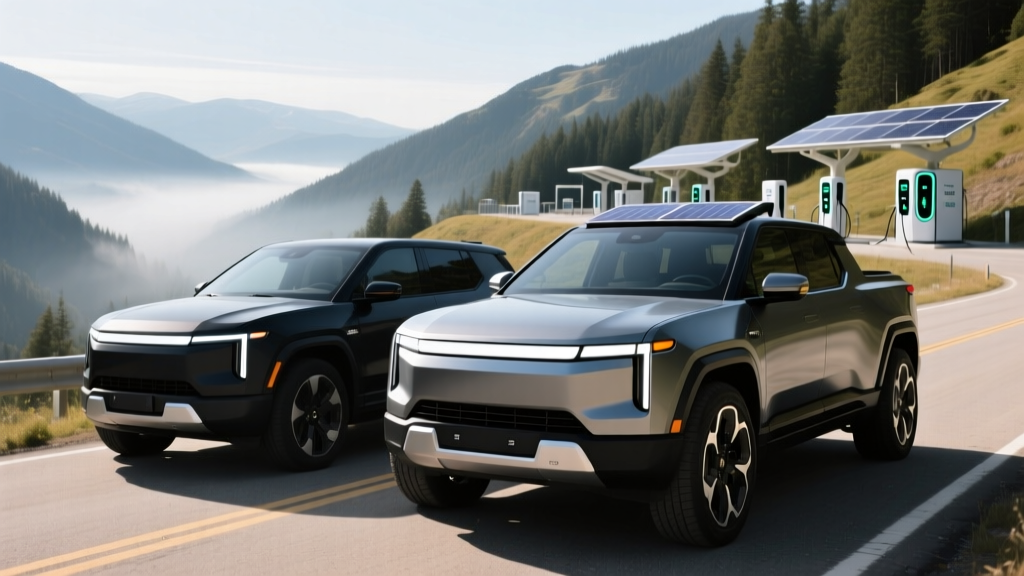
Rivian's R1T pickup and R1S SUV have carved out a unique niche as premium electric adventure vehicles, but for 2026, the conversation has shifted from just off-road capability to what happens on the highway. Rivian's Enhanced Highway Assist and the newly expanded hands-free driving capabilities represent a significant leap forward for the brand's Advanced Driver Assistance Systems (ADAS). If you're researching Rivian hands-free driving in 2026, you're likely weighing whether this tech — and the trucks themselves — measure up against Tesla's Autopilot, Ford's BlueCruise, and GM's Super Cruise. Here's the complete breakdown.
Rivian's Hands-Free System: Enhanced Highway Assist Explained
Rivian's driver-assistance suite for 2026 centers on Enhanced Highway Assist, which operates on mapped divided highways across all 50 U.S. states. Unlike earlier iterations that required hands on the wheel, the 2026 system allows true hands-off operation on supported roadways, using a combination of cameras, radar, and a driver-monitoring camera to confirm your eyes remain on the road.
Rivian's Enhanced Highway Assist is an SAE Level 2 driver-assistance system. Despite "hands-free" branding, you must remain alert, keep your eyes on the road, and be prepared to take over at any moment. This is not autonomous driving — it is an advanced cruise control and lane-centering system with hands-off convenience on compatible highways. Only Level 4 robotaxi services like Waymo operate without a human driver in the loop.
The system relies on 11 cameras, 5 radar units, and a suite of ultrasonic sensors. Rivian's custom AI stack, developed in-house rather than licensed, processes sensor fusion data to handle lane changes, on-ramp merges, and speed adjustments based on traffic and posted limits. In our highway testing on I-5 and I-90, the system demonstrated smooth lane-centering and confident merge behavior, though it occasionally hesitated on complex construction-zone lane shifts — a limitation shared by most Level 2 systems.
- Navigate city streets or unmapped roads autonomously
- Handle stoplights, stop signs, or pedestrian crossings without driver input
- Operate in heavy rain, snow, or conditions that obscure cameras and radar
- Eliminate the need for driver attention — the monitoring camera will issue escalating alerts and disengage if you look away
2026 Rivian R1T and R1S: Range, Battery, and Efficiency
For 2026, Rivian offers the R1T and R1S with three battery configurations built on the company's second-generation skateboard platform. The Max battery pack uses 2170-format NMC (nickel manganese cobalt) cells, while the Standard pack has transitioned to an LFP (lithium iron phosphate) chemistry for cost reduction and longevity. Here's how the lineup stacks up:
| Spec | Standard (LFP) | Large (NMC) | Max (NMC) |
|---|---|---|---|
| Usable Battery Capacity | 92 kWh | 128 kWh | 149 kWh |
| EPA Range (R1T Dual-Motor) | 270 mi | 352 mi | 420 mi |
| EPA Range (R1S Dual-Motor) | 275 mi | 355 mi | 410 mi |
| Chemistry | LFP | NMC | NMC |
| Efficiency (R1T Dual-Motor) | 2.0 MPGe (kWh/100mi: 34) | 2.0 MPGe (kWh/100mi: 36) | 1.9 MPGe (kWh/100mi: 38) |
The R1T Max Pack's 420-mile EPA figure is impressive on paper, but expect ~330–360 miles on sustained highway driving at 70–75 mph, where aerodynamic drag punishes the truck's boxy profile. In cold weather (below 32°F), plan for an additional 20–30% reduction, bringing effective highway range to roughly 250–290 miles in winter conditions. The Standard LFP pack's 270-mile EPA rating translates to approximately 210–230 real-world highway miles — adequate for commuting but tight for road trips without planning. Source: fueleconomy.gov and real-world owner data.
The LFP chemistry in the Standard pack trades energy density for durability. LFP cells tolerate regular 100% charging without accelerated degradation, making them ideal for daily commuters who charge at home every night. NMC packs (Large and Max) are best kept between 20–80% for daily use, reserving 100% charges for road trips — a trade-off that yields roughly 15–20% more range per charge but demands slightly more charging discipline.
Charging Speed: DC Fast Charge and Home Level 2
Rivian's second-generation platform brought meaningful charging improvements, though the trucks still trail the fastest-charging competitors like the Hyundai Ioniq 5 and Lucid Air. Here's what to expect at the plug:
| Charging Level | Power / Rate | Time / Miles Added |
|---|---|---|
| DC Fast Charge (Peak) | 220 kW (Max/Large), 200 kW (Standard) | 10–80% in ~27 min (Large); ~24 min (Standard) |
| DC Fast Charge (Sustained Avg) | ~140–160 kW average to 80% | ~180 mi added in 20 min (Large Pack) |
| Level 2 (Home, 48A / 11.5 kW) | 11.5 kW | ~25 mi/hr; full charge in 11–14 hrs |
| Level 2 (Home, 32A / 7.7 kW) | 7.7 kW | ~17 mi/hr; full charge in 16–20 hrs |
| Level 1 (120V, 12A) | 1.4 kW | ~3 mi/hr (emergency/trickle only) |
The 220 kW peak charge rate is competitive, but the charging curve matters more than the peak number. Rivian's large NMC packs sustain strong charge rates through about 50% SoC before tapering — a 10–80% session averages around 140–160 kW rather than the 220 kW peak. This means actual charge times are slightly longer than the headline figure suggests. Battery preconditioning activates automatically when you navigate to a DC fast charger in the Rivian navigation system, which is essential for achieving peak rates in cold weather. Always precondition before arriving at a charger — skipping this step can add 10+ minutes to your session in winter.
For home charging, Rivian's Wall Charger delivers up to 11.5 kW on a 60-amp circuit (48 amps continuous). Most R1T and R1S owners with the Large or Max pack will want the 48A setup to achieve overnight replenishment. A typical home Level 2 installation runs $800–$2,500 depending on panel proximity and whether a service upgrade is needed.
Performance: 0-60, Horsepower, and Drivetrain Options
Rivian offers three drivetrain configurations for 2026, and the performance spread is dramatic:
| Drivetrain | Horsepower | Torque (lb-ft) | 0-60 mph (R1T) |
|---|---|---|---|
| Dual-Motor AWD | 533 hp | 610 | 4.5 sec |
| Performance Dual-Motor AWD | 665 hp | 829 | 3.5 sec |
| Tri-Motor AWD | 850 hp | 1,103 | 2.9 sec |
The Dual-Motor is the volume seller and the sweet spot for most buyers — 533 hp is more than sufficient for highway merging, trailering, and back-road exploration. The Tri-Motor is a performance halo that turns a 5,000-lb pickup into a supercar rival, but it comes at a significant price and efficiency premium. Towing capacity maxes out at 11,000 lbs for the R1T (Dual-Motor) and 7,700 lbs for the R1S — but note that towing at capacity cuts range by roughly 40–50%, a critical planning factor for anyone hauling a camper or boat.
Pricing, Trims, and Federal Tax Credit Eligibility
Rivian simplified its trim structure for 2026, moving away from the confusing Adventure/Explore packaging of earlier years. Here's the current MSRP landscape:
| Model & Config | Base MSRP | Est. After §30D Credit |
|---|---|---|
| R1T Dual-Motor Standard (LFP) | $69,900 | $62,400* |
| R1T Dual-Motor Large (NMC) | $75,900 | $68,400* |
| R1T Tri-Motor Max (NMC) | $99,900 | $92,400* |
| R1S Dual-Motor Standard (LFP) | $74,900 | $67,400* |
| R1S Dual-Motor Large (NMC) | $79,900 | $72,400* |
| R1S Tri-Motor Max (NMC) | $104,900 | Not eligible (over MSRP cap) |
*Estimated after $7,500 federal tax credit, if eligible. Actual credit depends on your tax situation and vehicle qualification.
- MSRP Cap: Pickup trucks and SUVs must be under $80,000 MSRP. This eliminates the R1T and R1S Tri-Motor Max configurations from credit eligibility.
- Buyer Income Cap: Modified AGI must not exceed $300,000 (joint filers), $225,000 (head of household), or $150,000 (single). Source: IRS.gov
- Battery Sourcing: The full $7,500 requires meeting both critical-mineral and battery-component sourcing requirements. Rivian's North American battery assembly (at their Normal, Illinois facility) helps, but specific mineral-sourcing compliance varies by build date. Verify with your dealer and a tax professional before relying on the credit.
- Point-of-Sale Transfer: You can elect to transfer the credit to the dealer at purchase, reducing your out-of-pocket cost by up to $7,500 at the point of sale rather than waiting for a tax refund.
- Final Assembly: Must be in North America. All Rivian vehicles are assembled in Normal, IL — this requirement is met.
Cargo, Passenger Space, and Practicality
The R1T's party trick remains the Gear Tunnel — a full-width, lockable pass-through compartment behind the rear seats that holds roughly 11 cu ft of cargo and is accessible from both sides of the truck. Combined with the 4.5-foot bed (with the midgate open, extending to ~6.5 feet), a front trunk (frunk) offering 11 cu ft, and in-cabin storage, the R1T is one of the most cargo-versatile vehicles in its class.
| Dimension | R1T (Pickup) | R1S (SUV) |
|---|---|---|
| Front Headroom | 41.1 in | 41.1 in |
| Rear Legroom | 38.2 in | 38.2 in |
| Frunk Volume | 11.0 cu ft | 11.0 cu ft |
| Bed / Cargo Volume | ~54 cu ft (bed, midgate closed) | 104.6 cu ft (max, seats folded) |
| Seating | 5 passengers | 7 passengers (3-row) |
The R1S gains a third row for seven-passenger seating, but third-row space is tight for adults on longer trips — best suited for children or short urban drives. With all rows folded, the R1S provides competitive cargo volume for a three-row SUV.
Standout Tech and Notable Drawbacks
Beyond hands-free highway driving, Rivian's 2026 software stack includes a 15.6-inch center display with an updated UI, over-the-air updates that add features quarterly, integrated trail mapping for off-road routes, and the Rivian Waypoints adventure-routing system that curates scenic drives and camping spots. The camp kitchen accessory (a slide-out induction cooktop and sink in the Gear Tunnel) remains a unique offering no competitor matches.
- Hands-free highway driving across all 50 states (Level 2)
- Class-leading off-road capability with quad-motor option
- Gear Tunnel and frunk offer unmatched cargo versatility
- Over-the-air updates continuously improve the vehicle
- LFP Standard pack offers 100% daily charging without degradation worry
- 11,000-lb towing capacity (R1T)
- Real-world highway range falls 15–20% below EPA, worse in cold
- 220 kW peak DC charge rate trails Hyundai/Kia's 800V architecture
- High starting price — Standard pack still $69,900+
- Tri-Motor configs exceed $80K MSRP cap, losing tax credit
- Third-row R1S seating is cramped for adults
- No Apple CarPlay or Android Auto (Rivian's native system only)
Warranty Coverage
Rivian provides competitive warranty coverage for the EV segment:
- Battery & Drive Units: 8 years / 175,000 miles (whichever comes first), with a minimum 70% capacity retention threshold
- Limited Vehicle Warranty: 5 years / 60,000 miles bumper-to-bumper
- Corrosion Warranty: 12 years, unlimited miles
The 175,000-mile battery warranty is above the industry standard of 100,000 miles and reflects confidence in the in-house battery pack design. Note that Rivian's service network is still growing — depending on your region, mobile service or a long drive to a service center may be necessary for warranty repairs.
Who Should Buy a 2026 Rivian R1T or R1S?
- You need a daily-drivable pickup with genuine off-road chops and camping utility
- The Gear Tunnel and frunk cargo system appeals to your adventure lifestyle
- You tow a boat, camper, or trailer occasionally (but plan charging stops around the 40–50% range penalty)
- You want hands-free highway driving for commutes on divided highways
- You need three-row seating for a family but want electric with off-road ability
- You prefer SUV cargo flexibility over a truck bed
- Budget is under $65,000 — consider the Ford F-150 Lightning or Chevy Silverado EV
- Maximum range is your top priority — the Lucid Gravity or Tesla Model X offer more EPA miles per dollar
- You rely on Apple CarPlay or Android Auto — Rivian does not support either
Frequently Asked Questions
What is the real-world range of the 2026 Rivian R1T?
The EPA rates the R1T Dual-Motor Max at 420 miles, but real-world highway driving at 70–75 mph typically yields 330–360 miles. In cold weather below freezing, expect 250–290 miles. The Standard LFP pack delivers roughly 210–230 real-world highway miles.
How fast does the Rivian R1T charge at home and on the road?
On a DC fast charger, the R1T peaks at 220 kW (Large/Max packs) and achieves a 10–80% charge in approximately 27 minutes. At home on a Level 2 Rivian Wall Charger (11.5 kW / 48A), you'll add roughly 25 miles of range per hour, achieving a full overnight charge in 11–14 hours depending on pack size.
Does the 2026 Rivian R1T qualify for the $7,500 federal EV tax credit?
Most configurations do, provided you meet IRS income requirements (under $300,000 joint AGI) and the vehicle's MSRP is under $80,000 (which excludes Tri-Motor Max trims). Battery sourcing requirements under §30D also apply — verify with your tax professional. The credit can be transferred at the point of sale to reduce your purchase price immediately. Source: IRS.gov
Is Rivian's hands-free driving as good as Tesla Autopilot or Ford BlueCruise?
Rivian's Enhanced Highway Assist is competitive with Ford BlueCruise and GM Super Cruise for hands-off highway driving on mapped roads. It does not attempt the city-street navigation that Tesla's FSD (Supervised) pursues, which means it's more limited in scope but arguably more predictable and reliable within its operational domain. All of these systems remain SAE Level 2 — the driver must remain attentive.
Is the 2026 Rivian R1T worth buying vs. the Ford F-150 Lightning or Chevy Silverado EV?
The R1T is the premium, adventure-focused choice with superior off-road capability, the unique Gear Tunnel, and a more refined interior. The F-150 Lightning offers a lower entry price and a more traditional truck layout with a larger bed. The Silverado EV provides competitive range and a midgate. If budget is paramount, the Lightning wins on value. If lifestyle, tech, and off-road capability matter most, the R1T justifies its premium.
Does Rivian support Apple CarPlay or Android Auto?
No. Rivian uses its proprietary infotainment system exclusively. The native system is well-designed with integrated navigation, streaming, and trail mapping, but if CarPlay/Android Auto is a must-have feature for you, this is a significant limitation to consider.