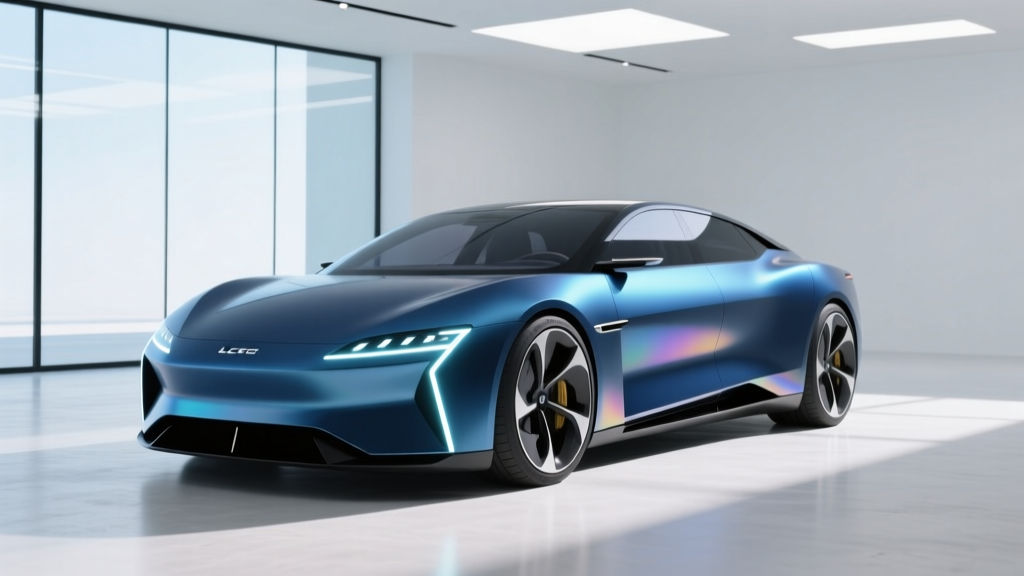
Lucid Motors has built its reputation on the Air sedan — a luxury flagship with class-leading efficiency and a 500+ mile EPA range. But the company's next act may matter more for mainstream adoption: a family of midsize electric vehicles currently in prototype testing. Spotted in camouflage wraps near Lucid's Casa Grande, Arizona manufacturing plant and on public roads throughout 2025, these midsize prototypes represent the brand's push into a higher-volume, more accessible segment.
As of early 2026, Lucid has not officially unveiled a production midsize model, nor published final EPA-certified specifications. What follows is a data-driven synthesis of confirmed company statements, patent filings, prototype observations, and Lucid's existing powertrain architecture to project what buyers can realistically expect when these vehicles reach showrooms — likely as 2027 models.
What Are the Lucid Motors Midsize EV Prototypes?
Lucid CEO Marc Winterhoff and former CEO Peter Rawlinson have confirmed on multiple earnings calls that the company is developing a midsize platform internally referred to as "Project Midsize." The vehicles are expected to slot below the Air sedan and Gravity SUV in both price and dimensions, targeting the Tesla Model Y, Hyundai Ioniq 5, and Ford Mustang Mach-E segment.
Prototype mules observed in late 2025 wore crossover-style bodywork with a sloping roofline, suggesting at least one variant will be a compact-to-midsize SUV or fastback crossover. Lucid's patented miniaturized drive unit technology — the same compact motors that give the Air its generous frunk and cabin space — is expected to carry over, enabling a relatively long wheelbase on a shorter overall footprint.
Projected Battery, Range, and Efficiency
Lucid's core engineering advantage has always been efficiency — extracting more miles per kilowatt-hour than competitors through aerodynamic optimization, low-resistance drivetrains, and sophisticated thermal management. The Air Grand Touring achieves an EPA-estimated 516 miles from a 112 kWh (usable) battery pack, translating to roughly 4.6 miles per kWh. That efficiency benchmark informs our midsize projections.
| Specification | Projected (Base RWD) | Projected (AWD Long Range) |
|---|---|---|
| Battery Capacity (Usable) | ~78–85 kWh | ~95–100 kWh |
| Chemistry | NMC (likely), LFP possible for base | NMC (nickel manganese cobalt) |
| EPA Est. Range | ~320–360 miles | ~380–420 miles |
| Efficiency | ~4.1–4.4 mi/kWh (130–140 MPGe) | ~3.9–4.2 mi/kWh (125–135 MPGe) |
| Drivetrain | Single-motor RWD | Dual-motor AWD |
If the AWD Long Range variant achieves an EPA-estimated ~400 miles, real-world highway driving at 70–75 mph will likely yield 330–360 miles due to aerodynamic drag at sustained speed. In cold weather (below 32°F), expect a 15–25% range reduction, bringing effective range to approximately 280–320 miles for the long-range variant. Lucid's heat pump system (standard on the Air and Gravity) should mitigate cabin-heating losses, but battery chemistry still suffers in extreme cold. These projections assume Lucid maintains its class-leading efficiency; a heavier crossover body could reduce these figures.
Lucid has invested heavily in its proprietary Wunderbox powertrain architecture, which integrates the motor, inverter, and gearbox into a single compact unit. If this technology scales down to the midsize platform without significant efficiency loss, the projected range figures above are achievable — and could even be conservative.
Charging Speed: DC Fast and Level 2 Projections
Charging speed is where Lucid's 900-volt electrical architecture (used in the Air) provides a tangible advantage over 400V competitors. Higher voltage enables faster charging at lower current, reducing heat buildup and sustaining peak charge rates longer. The Air Grand Touring peaks at approximately 300 kW on a compatible DC fast charger, adding roughly 200 miles in 12 minutes under ideal conditions.
| Charge Level | Power / Rate | Time / Speed | Connector |
|---|---|---|---|
| Level 1 (120V) | ~1.4 kW | ~5–6 mi/hr | NACS (native) |
| Level 2 (240V, 48A) | ~11.5 kW | ~44–48 mi/hr; full charge ~8–9 hrs | NACS |
| DC Fast Charge | Peak ~250–300 kW | 10–80% in ~18–22 min (projected) | NACS (Tesla Supercharger network) |
Charging curve reality check: Peak kW figures are never sustained across the full session. Based on the Air's observed charge curve, the midsize Lucid will likely hold above 200 kW from roughly 10–45% state of charge (SoC), then taper to ~120 kW through 65%, and drop below 50 kW past 80%. A 10–80% time of ~20 minutes is excellent, but plan for 25–30 minutes in real-world conditions if the battery is cold or the charger is shared.
Lucid transitioned to the NACS (North American Charging Standard) connector for the 2025 Gravity and is expected to use it natively on all midsize models, granting direct access to the Tesla Supercharger network — currently the most reliable public charging infrastructure in the U.S. No adapter should be required.
Performance and Powertrain Estimates
Lucid's miniaturized electric motors produce remarkable power from small, lightweight packages. The Air Pure's single rear motor delivers 430 horsepower; the dual-motor Air Touring produces 620 hp. For a midsize crossover, Lucid is expected to offer:
- Base RWD: ~300–400 hp, single rear motor, 0–60 mph in ~5.5–6.5 seconds
- AWD Long Range: ~500–600 hp, dual motor, 0–60 mph in ~3.8–4.5 seconds
- Potential Performance variant: 700+ hp, 0–60 in ~3.0 seconds (if Lucid follows the Air's Sapphire playbook)
Regenerative braking modes will likely mirror the Air's setup: a standard coasting mode and a stronger regen mode that approaches one-pedal driving, though Lucid has historically stopped short of full one-pedal capability (the car will not come to a complete stop without brake application). Expect adaptive cruise control with stop-and-go as standard.
Interior Space, Cargo, and Technology
One of the Air's most impressive traits is its interior volume relative to its exterior dimensions — 110 cubic feet of passenger space and a 32-cubic-foot trunk plus a 7-cubic-foot frunk. Lucid's compact drive units free up significant cabin real estate. For the midsize platform, projected dimensions include:
- Passenger volume: ~100–105 cu ft (comparable to Hyundai Ioniq 5 or Tesla Model Y)
- Rear legroom: ~38–41 inches (class-competitive)
- Cargo behind rear seats: ~28–34 cu ft
- Frunk: ~3–5 cu ft (smaller than Air's due to packaging)
- Towing capacity: ~2,000–3,500 lbs (if SUV variant; unconfirmed)
Infotainment and driver assistance: Lucid's glass-cockpit curved display (a 34-inch curved glass panel on the Air) is expected to carry over in a cost-optimized form. The DreamDrive Pro ADAS suite — using lidar, radar, and cameras — provides SAE Level 2 driver assistance. This includes adaptive cruise, lane centering, and automatic emergency braking. Lucid has not marketed any Level 3 or Level 4 autonomous capability, and drivers must remain fully engaged at all times. The system is competitive with Tesla Autopilot and Ford BlueCruise but does not offer hands-free operation on mapped highways the way GM's Super Cruise or Ford's BlueCruise do in specific zones.
Pricing, Trims, and Federal Tax Credit Eligibility
Lucid has signaled that the midsize platform will target a starting price in the $48,000–$55,000 range for the base RWD model, with AWD and long-range variants climbing to $60,000–$70,000. This positions the vehicle squarely against the Tesla Model Y Long Range (~$50,000), Ford Mustang Mach-E Premium (~$52,000), and Hyundai Ioniq 5 Limited (~$54,000).
| Trim (Projected) | Est. Base MSRP | §30D Credit Eligibility | Effective Price (with max credit) |
|---|---|---|---|
| Base RWD | ~$48,000–$52,000 | Likely eligible (under $80K SUV/$55K sedan cap) | ~$40,500–$44,500 |
| AWD Long Range | ~$58,000–$65,000 | Depends on battery sourcing + MSRP cap | ~$50,500–$57,500 |
| Performance AWD | ~$70,000+ | Risk of exceeding MSRP cap if classified as sedan | Varies |
- MSRP Cap: Vans/SUVs/pickups: ≤$80,000. Sedans: ≤$55,000. Classification depends on how Lucid registers the vehicle with the IRS — a crossover body style likely qualifies under the $80K SUV cap.
- Buyer Income Cap: Modified AGI ≤$150,000 (single), ≤$225,000 (head of household), ≤$300,000 (joint).
- Battery Sourcing: Critical minerals and battery components must meet escalating domestic/free-trade-partner percentages. Lucid's Arizona manufacturing gives it an advantage, but cell sourcing (likely Samsung SDI or similar) must comply with IRS §30D requirements.
- Point-of-Sale Transfer: Buyers can transfer the credit to the dealer at purchase, reducing the upfront price rather than waiting for a tax refund.
- Assembly: Must be assembled in North America. Lucid's Casa Grande, AZ plant satisfies this requirement.
Consult a tax professional before relying on credit eligibility. Rules are subject to legislative change and individual circumstances vary. See IRS.gov clean vehicle credits for current requirements.
Warranty Coverage and Battery Longevity
Lucid currently offers the following warranty on the Air, which is expected to carry over to the midsize platform:
- Basic Vehicle Warranty: 4 years / 50,000 miles
- Battery & Powertrain: 8 years / 100,000 miles (with a capacity retention threshold of ~70%)
- Roadside Assistance: 4 years / 50,000 miles
Lucid's NMC battery packs on the Air have shown modest degradation in early owner reports — typically 3–5% capacity loss in the first 30,000 miles before stabilizing. The midsize platform, if it uses LFP chemistry for a base variant, could see even slower degradation (LFP cells typically retain 90%+ capacity after 200,000 miles), though at the cost of lower energy density and reduced cold-weather performance.
Who Should Wait for the Lucid Midsize EV?
Consider waiting for the Lucid midsize if:
- You want class-leading efficiency and 350+ mile range in a crossover under $60K
- You value NACS native charging and Supercharger access without an adapter
- You prioritize interior space and a premium cabin over the Tesla Model Y's minimalist approach
- Your purchase timeline extends into 2027
Buy a competitor now if:
- You need a vehicle in 2026 — the Lucid midsize is not yet orderable
- You require confirmed EPA ratings and third-party safety scores (IIHS/NHTSA) before purchasing
- Your budget is under $45,000 — consider the Chevrolet Equinox EV, Hyundai Ioniq 5, or used Tesla Model Y
- You need proven service-center density — Lucid's service network remains smaller than Tesla's or legacy OEMs
- Best-in-class efficiency (4+ mi/kWh projected)
- 900V architecture for fast DC charging (~250–300 kW peak)
- Spacious cabin from compact drive-unit packaging
- NACS native — full Supercharger network access
- Arizona-built; strong §30D credit positioning
- Premium interior materials at a mid-market price
- Not yet available — production timeline uncertain
- Lucid's service network is still growing; limited in rural areas
- DreamDrive ADAS lags behind Super Cruise/BlueCruise in hands-free capability
- Brand-new platform risks first-year build-quality issues
- Tax credit eligibility depends on battery-sourcing rules that may shift
- Resale value unproven vs. Tesla or Toyota
Lucid Midsize vs. Key Competitors
If Lucid's midsize EV arrives near its projected specs, here is how it stacks up against confirmed 2026 competitors:
| Attribute | Lucid Midsize (Projected) | Tesla Model Y LR (2026) | Hyundai Ioniq 5 LR (2026) |
|---|---|---|---|
| EPA Range | ~380–420 mi | ~330 mi | ~310 mi |
| Battery | ~95–100 kWh NMC | ~78 kWh NMC | ~84 kWh NMC |
| Peak DC Charge | ~250–300 kW | ~250 kW | ~240 kW |
| 10–80% Time | ~18–22 min | ~20 min | ~18 min |
| Starting MSRP | ~$48,000–$52,000 | ~$48,000 | ~$47,000 |
| Connector | NACS (native) | NACS (native) | NACS (2025+) |
The Lucid's projected advantage lies in range and efficiency — if the company can deliver 400+ miles EPA at a sub-$60K price, it would lead the segment. However, the Ioniq 5 and Model Y offer proven reliability records, established service networks, and immediate availability.
Frequently Asked Questions
What is the real-world range of the Lucid midsize EV?
Based on projected specs and Lucid's efficiency track record, expect approximately 330–360 miles in real-world highway driving for the AWD Long Range variant (from an EPA estimate of ~400 miles). Cold weather (below freezing) will reduce this by 15–25%, yielding roughly 280–320 miles. The base RWD model should deliver 260–300 miles real-world from a ~340-mile EPA estimate. These are projections; final EPA numbers will be published closer to launch.
How fast does the Lucid midsize prototype charge?
Lucid's 900V architecture should enable peak DC fast charging of 250–300 kW, with a projected 10–80% time of 18–22 minutes on a compatible 350 kW charger. At home on a Level 2 (240V, 48A) connection, expect approximately 11.5 kW and 44–48 miles of range added per hour — a full charge overnight in about 8–9 hours. The NACS connector provides native Tesla Supercharger compatibility.
How much will the Lucid midsize EV cost after tax credits?
The base RWD model is projected at $48,000–$52,000 MSRP. If it qualifies for the full $7,500 §30D federal credit (subject to MSRP caps, buyer income limits, and battery-sourcing requirements), the effective price could drop to approximately $40,500–$44,500. Point-of-sale transfer allows you to apply the credit at purchase rather than waiting for tax season. Always verify eligibility with a tax professional and check IRS.gov for current rules.
Is the Lucid midsize EV worth waiting for vs. buying a Model Y or Ioniq 5 now?
If you can wait until 2027 and value maximum range, premium interior quality, and Lucid's efficiency engineering, the midsize could be segment-leading. If you need a vehicle now, have limited access to Lucid service centers, or want proven long-term reliability data, the Tesla Model Y, Hyundai Ioniq 5, or Ford Mustang Mach-E are strong, available alternatives with established track records.
Does the Lucid midsize qualify for the federal EV tax credit?
Likely yes, but with caveats. Lucid assembles vehicles in Arizona (satisfying North American final assembly), and the projected MSRP falls under the $80,000 SUV cap or $55,000 sedan cap. However, §30D eligibility also depends on battery component and critical-mineral sourcing requirements that escalate annually, plus buyer income limits ($150K single / $300K joint). Lucid's domestic manufacturing gives it a strong position, but final eligibility will depend on the specific battery supplier and 2027 rule interpretations. Confirm with the IRS and a tax advisor before purchase.
When will the Lucid midsize EV be available to order?
Lucid has not announced a firm order date. Based on prototype sightings and Lucid's typical development timeline, a reveal could occur in late 2026, with production and deliveries beginning in 2027. Reservations may open before the formal reveal, as Lucid did with the Gravity SUV.
Sources: Lucid Motors official specifications (lucidmotors.com), EPA fueleconomy.gov for competitor benchmarks, IRS §30D clean vehicle credit guidelines (irs.gov). All projected figures are estimates pending official Lucid confirmation and EPA certification.