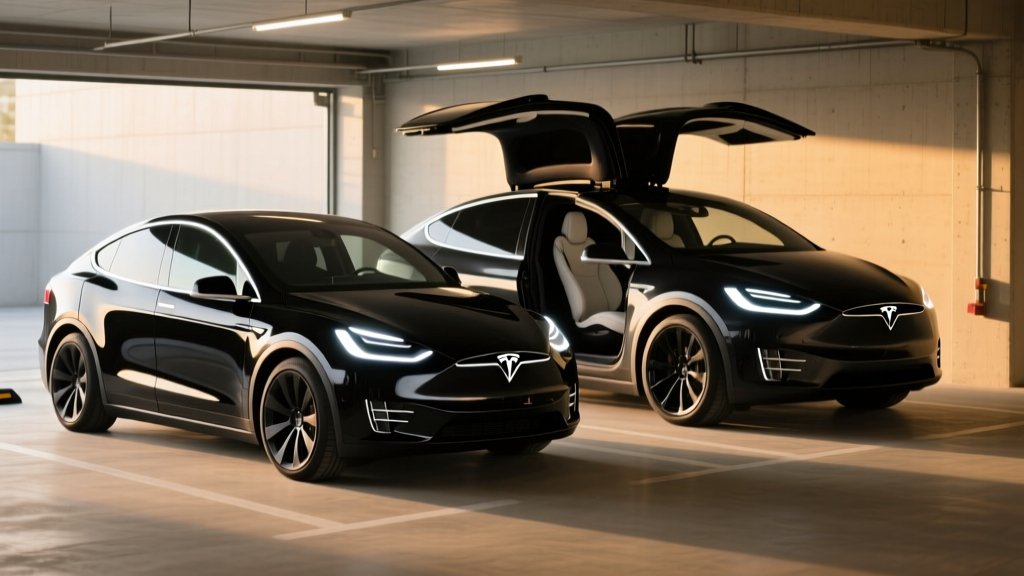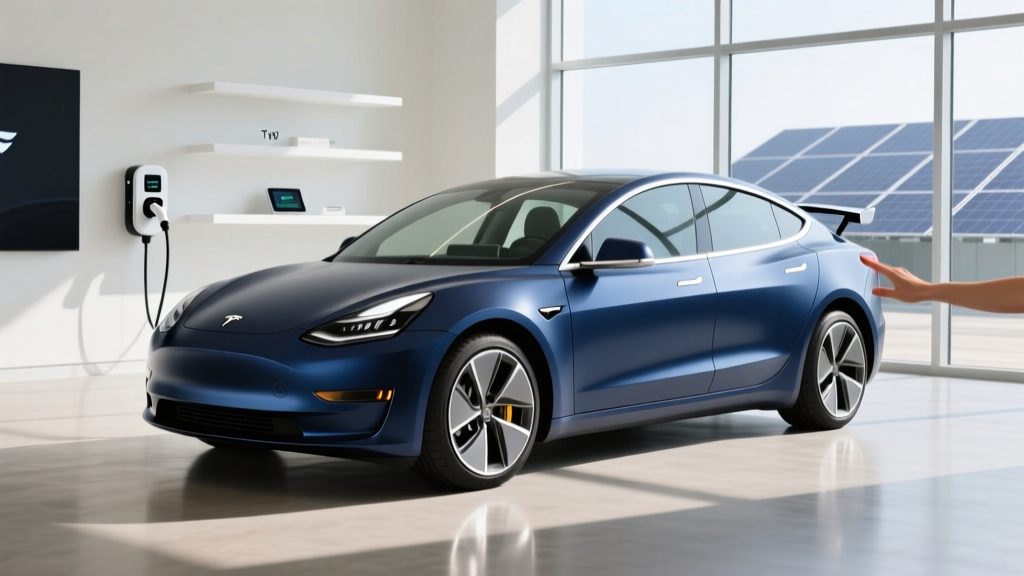
If you're browsing Tesla Model 3 inventory right now, you're likely weighing the refreshed "Highland" sedan against a growing field of electric rivals. The Model 3 remains one of the most efficient, best-charging, and most tech-forward EVs on the market — but the 2026 lineup has shifted in pricing, trims, and federal tax credit eligibility. This guide breaks down every spec, real-world number, and ownership cost you need before you click "Order."
2026 Tesla Model 3 Trim Lineup at a Glance
| Trim | Drivetrain | EPA Range | 0-60 mph | Base MSRP |
|---|---|---|---|---|
| Long Range RWD | Rear-Wheel Drive | 363 mi | 5.8 sec | $42,490 |
| Long Range AWD | Dual Motor AWD | 341 mi | 4.2 sec | $47,490 |
| Performance | Dual Motor AWD | 315 mi | 2.9 sec | $54,990 |
Tesla discontinued the base RWD trim with the smaller LFP battery for the U.S. market in late 2025, consolidating the lineup around the 79 kWh (usable) NMC battery pack. All 2026 Model 3 trims now use a nickel-manganese-cobalt (NMC) chemistry, which offers higher energy density than LFP but requires more careful long-term state-of-charge management (Tesla recommends daily charging to 80% for NMC, versus 100% for LFP).
Real-World Range: Beyond the EPA Sticker
- City / mixed driving (65°F): ~320-340 mi achievable with moderate regen
- Highway (75 mph sustained): ~270-290 mi — expect a 15-20% reduction at sustained high speed
- Cold weather (20°F, cabin heat): ~230-260 mi — NMC packs lose roughly 25-30% range in deep cold without preconditioning
The Model 3's heat pump (standard on all trims) mitigates winter losses better than resistive-heater EVs, but physics still wins. On a 300-mile winter road trip from Denver to Grand Junction, plan one 15-minute Supercharger stop.
According to fueleconomy.gov, the Long Range AWD achieves 130 MPGe combined (26 kWh/100 mi). In our experience, that efficiency figure holds true in moderate climates at speeds under 70 mph, but sustained 80 mph highway driving pushes consumption closer to 30-32 kWh/100 mi.
Charging Speed: Supercharger Network Advantage
The Model 3's charging architecture remains one of its strongest selling points, especially given access to Tesla's Supercharger network — now the largest and most reliable DC fast-charging ecosystem in North America.
| Charging Level | Power / Rate | Speed (Miles Added) | Notes |
|---|---|---|---|
| Level 1 (120V household) | ~1.4 kW | ~4-5 mi/hr | Emergency / trickle only |
| Level 2 (240V home, 48A) | 11.5 kW | ~44 mi/hr | Full charge in ~8 hours |
| DC Fast (V3 Supercharger) | Peak 250 kW | 10-80% in ~25 min | Sustains ~170 kW to 50%, tapers to <60 kW above 85% |
| DC Fast (V4 Supercharger) | Peak 250 kW (current vehicle limit) | 10-80% in ~25 min | V4 stalls offer cable management upgrades; Model 3 cannot yet accept 350 kW |
Key insight: The 250 kW peak is just that — a peak. The Model 3 sustains its highest charge rate between roughly 10-40% state of charge. Above 60%, the curve tapers significantly. On a road trip, charging from 10-80% takes about 25 minutes, but 80-100% can add another 20+ minutes. Plan your stops to arrive at low SoC and leave at 80%.
The Model 3 uses the NACS (North American Charging Standard) connector natively. With Ford, GM, Rivian, and others now adopting NACS, Supercharger stalls are becoming busier — but Tesla has been adding stalls faster than demand in most corridors.
Performance and Driving Dynamics
The Highland refresh brought meaningful suspension and NVH (noise, vibration, harshness) improvements. The 2026 Model 3 rides noticeably smoother than pre-2024 models, with revised dampers, acoustic glass, and improved sound deadening.
- Long Range RWD: 271 hp, 317 lb-ft torque, 0-60 in 5.8 seconds — adequate for commuting, best efficiency
- Long Range AWD: 346 hp, 389 lb-ft, 0-60 in 4.2 seconds — the sweet spot for most buyers
- Performance: 510 hp, 546 lb-ft, 0-60 in 2.9 seconds — Track Mode, adaptive dampers, 20" wheels
All trims feature one-pedal driving via strong regenerative braking (Tesla removed the low-regen option). The steering is quick but offers minimal road feel — a common criticism among driving enthusiasts. The Performance trim's adaptive dampers and larger brakes make it a legitimate sports-sedan competitor to the BMW i4 M50.
Pricing, Tax Credits, and What You'll Actually Pay
| Trim | MSRP | Destination | §30D Credit | Effective Price |
|---|---|---|---|---|
| Long Range RWD | $42,490 | $1,390 | $7,500 (if eligible) | ~$36,380 |
| Long Range AWD | $47,490 | $1,390 | $7,500 (if eligible) | ~$41,380 |
| Performance | $54,990 | $1,390 | $7,500 (if eligible) | ~$48,880 |
Federal tax credit eligibility (IRS §30D, 2026 rules): The Model 3 Long Range and Performance trims currently qualify for the full $7,500 credit, but only if you meet all of the following criteria per IRS.gov:
- Income caps: Modified AGI ≤ $150,000 (single), $225,000 (head of household), $300,000 (joint)
- MSRP cap: Vehicle MSRP must not exceed $55,000 (sedans) — the Performance trim at $54,990 clears this by $10
- Battery sourcing: Critical minerals and battery components must meet phased-in percentages for 2026; Tesla sources from approved suppliers, but verify at purchase
- Point-of-sale transfer: You can transfer the credit to the dealer at purchase for an instant price reduction, or claim it on your tax return
Warning: Tax credit rules change frequently. The Performance trim's eligibility is particularly sensitive to any MSRP adjustment. Always confirm with your tax professional and check the latest IRS guidance before ordering.
Interior, Cargo, and Daily Practicality
The Model 3 interior is minimalist by design — some say too minimalist. The 15.4-inch touchscreen controls nearly everything, including climate vents (adjusted by swiping on-screen). Physical controls are limited to steering-wheel buttons, turn-signal stalks (returning for 2026 after a brief stalk-less experiment in some markets), and window switches.
- Front headroom: 40.3 inches
- Front legroom: 42.7 inches
- Rear headroom: 37.8 inches
- Rear legroom: 35.2 inches — tighter than a Hyundai Ioniq 6 or BMW i4
- Trunk: 23 cu ft (including rear frunk of ~3 cu ft)
- Rear seats fold: 60/40 split for longer cargo
The rear seat is the Model 3's weakest practicality point. Adults over 6 feet will find the low cushion and limited headroom uncomfortable on long trips. Families with rear-facing car seats will struggle with front-passenger legroom. If rear-seat space is a priority, the Model Y or Ioniq 5 are better fits.
Technology, Autopilot, and Software
The Model 3's software experience remains best-in-class. The infotainment system is fast, responsive, and receives regular over-the-air updates that add features (recent additions include adaptive cruise improvements, new games, and UI refinements).
Tesla's Autopilot (standard) and Full Self-Driving Supervised ($8,000 option or $99/month) are SAE Level 2 driver-assist systems. The driver must remain engaged, hands on or near the wheel, and eyes on the road at all times. These are not autonomous or self-driving systems. FSD Supervised can handle highway lane changes, city intersections, and parking, but requires constant supervision and can make errors.
- Drive without human supervision
- Handle all weather conditions (heavy rain, snow, construction zones)
- Replace an attentive driver — NHTSA has investigated multiple crashes involving Autopilot/FSD misuse
Standard Autopilot includes adaptive cruise control and lane-centering. Competitor systems like GM's Super Cruise (hands-free on mapped highways) and Ford's BlueCruise offer similar Level 2 capability with different engagement models. Tesla's camera-only vision approach (no LiDAR or radar) is unique and occasionally struggles in low-contrast conditions.
Battery Warranty and Long-Term Ownership
- Battery warranty: 8 years / 120,000 miles (Long Range RWD), 8 years / 100,000 miles (AWD trims), whichever comes first, with minimum 70% capacity retention
- Powertrain warranty: Same as battery coverage
- Bumper-to-bumper: 4 years / 50,000 miles
Tesla's battery degradation data (aggregated from fleet reports) shows the NMC pack in the Model 3 typically loses 5-8% capacity in the first 50,000 miles, then degrades more slowly. At 150,000 miles, most packs retain 88-92% of original capacity. The 70% warranty threshold is conservative — very few packs hit that mark under normal use.
Replacement cost: If your battery fails out of warranty, a full pack replacement runs approximately $12,000-$16,000 at a Tesla Service Center, including labor. Third-party options are emerging but limited.
Pros and Cons
Pros
- Class-leading efficiency (26 kWh/100 mi)
- Supercharger network access — most reliable DC charging in North America
- Fast 10-80% charging (~25 min at 250 kW)
- Excellent software and OTA updates
- Strong resale value relative to EV segment
- Qualifies for full $7,500 federal tax credit (if eligible)
Cons
- Cramped rear seat for taller adults
- Minimalist interior frustrates some buyers (no physical climate knobs)
- FSD ($8,000) remains Level 2 despite the name
- Performance trim barely clears $55,000 MSRP cap — credit at risk if prices rise
- Camera-only Autopilot struggles in some low-visibility conditions
Is the Model 3 Worth It vs. Competitors?
- You prioritize efficiency and charging speed above all else
- You road-trip frequently and value Supercharger reliability
- You want the most mature EV software ecosystem
- You're a solo driver or couple who rarely uses the rear seat
- Hyundai Ioniq 6: You need more rear-seat space and prefer physical controls
- BMW i4: You want premium interior materials and a more engaging chassis
- Tesla Model Y: You need cargo space, higher seating position, or family practicality
- Polestar 2: You want Scandinavian design and Google Automotive OS
Frequently Asked Questions
What is the real-world range of the 2026 Tesla Model 3?
The Long Range AWD achieves 341 miles EPA, but expect ~270-290 miles at sustained 75 mph highway speeds and ~230-260 miles in cold weather (20°F) with cabin heat. The RWD trim offers slightly more (363 mi EPA) due to single-motor efficiency.
How fast does the Model 3 charge at home and on the road?
At home on a 48-amp Level 2 charger (240V), the Model 3 adds ~44 miles per hour (11.5 kW), fully charging in about 8 hours. On a V3 Supercharger, it peaks at 250 kW and charges 10-80% in roughly 25 minutes.
How much does the Model 3 cost after the federal tax credit?
If you qualify for the full $7,500 §30D credit, the Long Range RWD drops to ~$36,380 (including destination), the Long Range AWD to ~$41,380, and the Performance to ~$48,880. Eligibility depends on income, MSRP caps, and battery sourcing — confirm with a tax professional.
Does the Tesla Model 3 qualify for the federal EV tax credit?
Yes, all 2026 Model 3 trims currently qualify for the full $7,500 credit under IRS §30D, provided the buyer meets income caps ($150K single / $300K joint) and the vehicle MSRP stays under $55,000. The Performance trim at $54,990 is close to the cap — verify at time of purchase.
Is Autopilot or FSD self-driving?
No. Both are SAE Level 2 driver-assist systems requiring full driver attention. FSD Supervised can handle more complex scenarios (city streets, intersections) but is not autonomous and can make errors. Only Level 4 services like Waymo operate without a human driver.
What's the biggest drawback of the Model 3?
The rear seat. Legroom (35.2 inches) and headroom (37.8 inches) are tight for adults, and the low cushion position compromises thigh support on long trips. If rear-seat comfort is a priority, test-drive the Hyundai Ioniq 6 or consider the Model Y.
Source data: fueleconomy.gov, Tesla.com Model 3 specs, IRS §30D clean vehicle credits. Pricing and tax credit rules reflect 2026 model year and are subject to change. Always verify with manufacturer and tax professional before purchasing.