Lucid Motors has built its reputation on efficiency and range with the Air sedan, but the luxury EV market demands a crossover. Enter the Lucid Gravity — the brand's first SUV — with a base model positioned near the highly searched Lucid $50K crossover price point. After months of production ramp-up and trim-level adjustments, the Gravity is starting to appear in driveways and on spec sheets. Here's what buyers need to know about range, charging, pricing, and whether this EV actually delivers on its promise.
Lucid Gravity Overview and Market Positioning
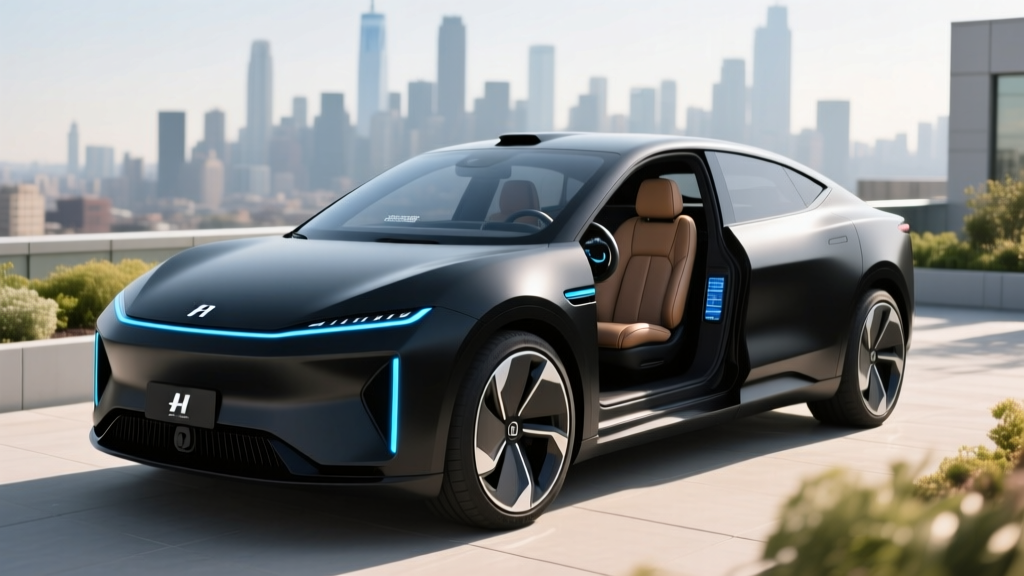
The Lucid Gravity is a three-row, all-electric luxury crossover built on Lucid's proprietary electric platform, sharing core powertrain architecture with the Air sedan. The Gravity targets buyers who want the efficiency and range Lucid is known for, but in a family-friendly SUV form factor that competes directly with the Tesla Model X, Rivian R1S, and upcoming electrified crossovers from legacy automakers.
Lucid initially launched the Gravity in higher-end Grand Touring trim, with the base Pure model following to broaden the lineup's accessibility. The base Gravity Pure is the trim that approaches the $50,000 mark — though as we'll see in the pricing section, the actual out-of-pocket cost depends heavily on options, destination fees, and current federal tax credit rules.
Range, Battery, and Efficiency
Lucid's engineering hallmark has always been class-leading efficiency — extracting more miles per kilowatt-hour than nearly any competitor. The Gravity continues this tradition, though the larger, heavier crossover body naturally reduces the advantage compared to the Air sedan.
EPA Estimated Range: 440 miles (Gravity Grand Touring); approximately 380 miles (Gravity Pure base)
Real-World Highway: Expect 320–350 miles at sustained 70–75 mph. Lucid's efficiency advantage narrows at highway speeds where aerodynamic drag dominates.
Cold-Weather Impact: In sub-32°F conditions, plan for a 20–30% range reduction — bringing real-world winter range to approximately 250–290 miles for the Pure trim. The Gravity includes a heat pump for cabin heating, which mitigates some loss compared to resistive heating systems.
The Gravity uses an NMC (nickel-manganese-cobalt) lithium-ion battery pack. The Grand Touring variant carries approximately 112 kWh of usable capacity, while the Pure trim uses a slightly smaller pack estimated at 88–92 kWh usable. Lucid has not published exact chemistry breakdowns at the cell level, but the pack architecture follows the same modular, liquid-cooled design proven in the Air.
Efficiency figures from fueleconomy.gov place the Gravity Grand Touring at approximately 120 MPGe combined (roughly 28 kWh/100 miles), with the Pure trim expected in the 110–115 MPGe range. These numbers lead the three-row EV crossover segment, where competitors like the Rivian R1S achieve roughly 70–80 MPGe and the Tesla Model X sits around 100 MPGe.
| Specification | Gravity Pure (Base) | Gravity Grand Touring |
|---|---|---|
| EPA Range (est.) | ~380 miles | 440 miles |
| Battery Capacity (usable) | ~88–92 kWh (NMC) | ~112 kWh (NMC) |
| Efficiency | ~110–115 MPGe | ~120 MPGe |
| Drivetrain | RWD (single motor) | AWD (dual motor) |
| Horsepower | ~480 hp | ~800+ hp |
| 0–60 mph | ~5.5 seconds | ~3.5 seconds |
| Max DC Fast Charge | ~200 kW | ~300 kW |
| 10–80% DC Charge Time | ~28 minutes | ~20 minutes |
| Level 2 Home Charging | 19.2 kW (~52 mi/hr) | 19.2 kW (~52 mi/hr) |
| Base MSRP | ~$52,500 | ~$79,900 |
Charging Speed: DC Fast Charging and Home Setup
Charging speed is where Lucid's 900-volt electrical architecture pays dividends. The Gravity Grand Touring supports peak DC fast-charging rates up to 300 kW on compatible chargers, while the Pure trim is expected to peak around 200 kW. Both are competitive, though the Grand Touring's rate places it among the fastest-charging production EVs available.
| Charging Level | Power | Miles Added per Hour | Notes |
|---|---|---|---|
| Level 1 (120V household) | ~1.4 kW | ~3–4 mi/hr | Emergency/trickle only |
| Level 2 (240V home) | Up to 19.2 kW | ~52 mi/hr | Requires 100A circuit; most homes need panel upgrade |
| Level 2 (240V, 48A typical) | 11.5 kW | ~31 mi/hr | Standard home install on 60A circuit |
| DC Fast Charge (Pure) | Up to 200 kW peak | — | 10–80% in ~28 min; tapers above 80% |
| DC Fast Charge (Grand Touring) | Up to 300 kW peak | — | 10–80% in ~20 min; sustained rate ~200–220 kW average |
Real-world charging curve reality: The "300 kW peak" figure applies only at low state-of-charge (roughly 10–25%) and at chargers capable of delivering that power — currently a small subset of Electrify America and Tesla Supercharger V4 stations. Expect average charging rates of 200–220 kW across the 10–80% session for the Grand Touring, and 150–170 kW for the Pure. Above 80% SoC, charging speed drops significantly to protect battery health — a universal EV behavior, not a Lucid limitation.
For home Level 2 charging, the Gravity supports up to 19.2 kW, which is among the highest onboard charger rates available. However, achieving that rate requires a dedicated 100-amp circuit and hardwired EVSE — most residential electrical panels (typically 200A total) cannot support this without an upgrade. A more practical home installation on a 60-amp circuit delivers 11.5 kW (48 amps continuous), adding roughly 31 miles per hour of charging. For a typical overnight charge of 8–10 hours, that's 250–310 miles restored — sufficient for nearly all daily driving.
Performance and Driving Dynamics
The Gravity Grand Touring's dual-motor all-wheel-drive powertrain produces over 800 horsepower and delivers a 0–60 mph time of approximately 3.5 seconds — sports-car acceleration in a three-row family crossover. The Pure trim, with a single rear motor and approximately 480 hp, manages 0–60 in roughly 5.5 seconds, which is still brisk by any family-SUV standard.
Lucid's compact motor design — the same units used in the Air — allows the Gravity to maintain a low center of gravity despite its taller profile. Air suspension is standard on the Grand Touring and available on the Pure, offering adjustable ride height for highway efficiency or rough-road clearance. The Gravity also offers up to 4,500 pounds of towing capacity when properly equipped, though towing will reduce range by 30–50% depending on trailer weight and speed.
Interior, Cargo Space, and Technology
The Gravity seats up to seven passengers across three rows. Second-row captain's chairs are available in place of a bench, reducing capacity to six but improving individual comfort. Cargo volume behind the third row is approximately 26 cubic feet, expanding to roughly 60 cubic feet with the third row folded and over 100 cubic feet with both rear rows down. A front trunk (frunk) adds additional storage.
Infotainment: The Gravity features Lucid's glass cockpit display — a 34-inch curved OLED screen spanning the dashboard — plus a lower touchscreen for climate and secondary controls. Wireless Apple CarPlay and Android Auto are standard. The system runs on Lucid's proprietary software, which has improved significantly since the Air's launch but still trails the polish of Tesla's interface in responsiveness and third-party app integration.
Driver Assistance: The Gravity ships with Lucid's DreamDrive Pro suite, which includes adaptive cruise control, lane-centering, automatic emergency braking, and blind-spot monitoring. This is an SAE Level 2 system — meaning the driver must remain fully engaged and attentive at all times. It is not a self-driving system. Lucid has discussed future higher-level capabilities, but no hands-free or eyes-off features are currently available or approved for consumer use.
Pricing, Tax Credits, and Ownership Costs
The Lucid Gravity Pure's base MSRP of approximately $52,500 (including destination) positions it as a serious contender in the luxury crossover segment — undercutting the Tesla Model X and Rivian R1S while offering comparable or superior range. However, the federal tax credit situation requires careful navigation.
- MSRP Cap: SUVs/crossovers must be under $80,000 MSRP. The Gravity Pure qualifies; the Grand Touring does not.
- Buyer Income Cap: Modified AGI must not exceed $150,000 (single), $225,000 (head of household), or $300,000 (joint filers).
- Battery Sourcing: Critical minerals and battery components must meet escalating domestic-content and free-trade-agreement thresholds. Lucid's supply chain compliance varies by production batch — confirm with the dealer and cross-reference the IRS eligible vehicle list before purchase.
- Point-of-Sale Transfer: Eligible buyers can transfer the credit to the dealer at purchase, reducing the upfront price rather than waiting for a tax refund.
- Credit Amount: Up to $7,500 if both critical-mineral and battery-component requirements are met; $3,750 if only one is satisfied.
| Trim | Base MSRP | Max §30D Credit | Effective Price (Best Case) |
|---|---|---|---|
| Gravity Pure | ~$52,500 | $7,500 | ~$45,000 |
| Gravity Pure (with options) | ~$58,000–$62,000 | $7,500 | ~$50,500–$54,500 |
| Gravity Grand Touring | ~$79,900 | $0 (over MSRP cap) | ~$79,900 |
Battery and Powertrain Warranty: Lucid covers the Gravity's battery pack and drive units for 8 years or 100,000 miles, whichever comes first, with a capacity retention threshold of 70%. This matches the industry standard set by most manufacturers and aligns with NHTSA reporting that modern EV battery packs rarely require full replacement within warranty periods.
Pros and Cons
- Class-leading efficiency (kWh/100mi) in the three-row EV crossover segment
- Up to 440 miles EPA range (Grand Touring) — best in class
- 900V architecture enables ultra-fast DC charging on Grand Touring
- Spacious three-row interior with usable adult-sized third row
- Strong towing capacity (4,500 lbs) for an EV crossover
- Pure base trim eligible for full $7,500 federal credit (if sourcing rules met)
- Lucid's service center network remains limited compared to Tesla or legacy brands
- Infotainment software still maturing — occasional bugs reported by early owners
- 19.2 kW home charging requires expensive electrical panel upgrade
- Grand Touring trim exceeds $80K MSRP cap — no federal tax credit
- No hands-free driving feature currently available (DreamDrive Pro is Level 2 only)
- Resale value unproven — Lucid is a young brand with limited depreciation data
Who Should Buy the Lucid Gravity?
Best for: Families who need three rows and want maximum range for road trips without frequent charging stops. The Gravity's efficiency advantage means fewer and shorter charging breaks on long drives — a tangible quality-of-life improvement over less efficient competitors. Commuters with home charging access will benefit from the low per-mile energy cost (approximately $0.04–$0.06 per mile on residential electricity rates, versus $0.12–$0.15 for a comparable gas SUV).
Consider alternatives if: You need extensive service-center access in rural areas (Lucid's network is concentrated in major metros), you require a proven hands-free highway driving system (GM's Super Cruise or Ford's BlueCruise offer this today), or you frequently tow heavy loads over long distances (towing range loss remains a universal EV challenge).
Choose the Gravity Grand Touring if: You need all-wheel drive, value sub-4-second acceleration, want maximum range for frequent road trips, and are not dependent on the federal tax credit.
Look elsewhere if: You need a robust dealer/service network, require hands-free driving features today, or your budget is strictly under $40,000 after incentives.
Frequently Asked Questions
What is the real-world range of the Lucid Gravity?
The Grand Touring achieves an EPA-estimated 440 miles, with real-world highway driving yielding approximately 350–380 miles in moderate temperatures. The Pure trim's EPA estimate is approximately 380 miles, with real-world highway range around 300–330 miles. Cold weather (below freezing) reduces these figures by 20–30%.
How fast does the Lucid Gravity charge?
The Grand Touring peaks at 300 kW on compatible DC fast chargers, achieving a 10–80% charge in approximately 20 minutes. The Pure peaks around 200 kW with a 10–80% time of roughly 28 minutes. At home on a standard 48-amp Level 2 charger, expect about 31 miles of range added per hour.
Does the Lucid Gravity qualify for the federal EV tax credit?
The Gravity Pure (base MSRP under $80,000) is eligible for up to $7,500 under IRS §30D, provided the buyer meets income caps and the vehicle's battery components and critical minerals satisfy current-year sourcing requirements. The Grand Touring exceeds the $80,000 SUV MSRP cap and does not qualify. Always verify current eligibility on the IRS website before purchasing.
Is the Lucid Gravity worth buying vs. the Tesla Model X or Rivian R1S?
The Gravity offers superior range and efficiency versus both competitors, plus a lower starting price than the Model X. The Tesla wins on Supercharger network access and software maturity. The Rivian R1S offers more off-road capability and a more established adventure-oriented ecosystem. If range and efficiency are your top priorities, the Gravity leads; if charging infrastructure or off-road use matters more, consider the alternatives.
What are the biggest drawbacks of the Lucid Gravity?
Limited service center availability, immature infotainment software, the need for an electrical panel upgrade to achieve maximum home charging speed, and an unproven resale value trajectory are the primary concerns. Additionally, no hands-free driver-assist feature is currently available.
How long will the Gravity's battery last?
Lucid warranties the battery for 8 years or 100,000 miles with a minimum 70% capacity retention guarantee. Based on industry data from similar NMC packs, most owners can expect 85–90% capacity retention at 100,000 miles with normal charging habits (avoiding frequent 100% charges and DC fast-charging exclusively). Full battery replacement costs, if ever needed out of warranty, are estimated at $15,000–$25,000 based on current pack pricing — though costs are expected to decline as the battery industry scales.