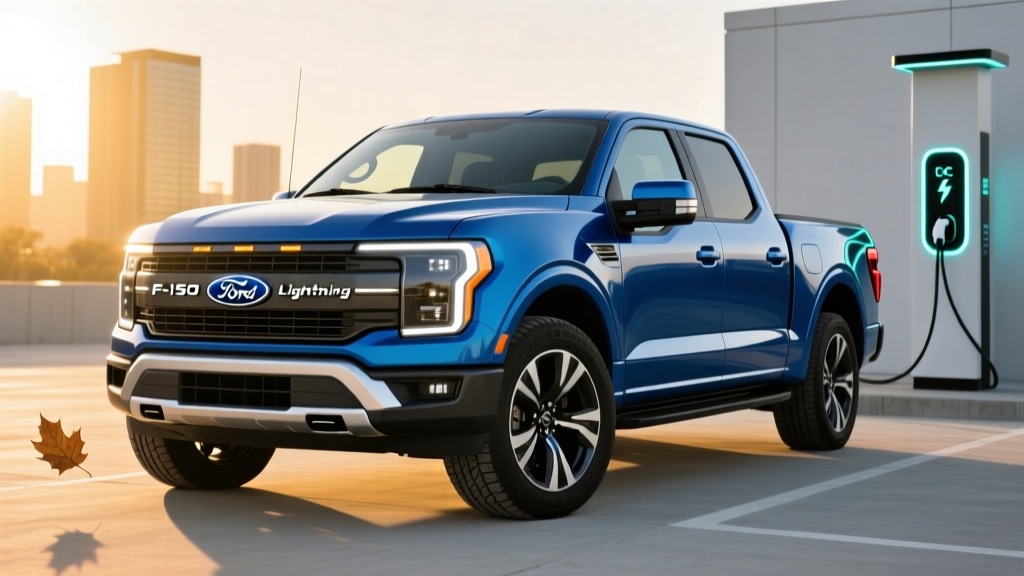
The Ford F-150 Lightning remains one of the most capable electric pickups on the market, blending work-truck utility with surprising straight-line performance. For buyers researching the F-150 Lightning's horsepower, towing chops, and daily-driver practicality, this review covers the exact numbers you need — from EPA range and DC fast-charging curves to federal tax credit eligibility under current IRS §30D rules.
F-150 Lightning Horsepower and Performance Specs
Every F-150 Lightning uses a dual-motor all-wheel-drive powertrain, but output varies significantly depending on which battery pack you choose. The Standard Range battery delivers 563 horsepower and 775 lb-ft of torque, while the Extended Range pack bumps output to 580 horsepower with the same 775 lb-ft. That torque figure is available from zero RPM, which is what makes the Lightning feel so urgent off the line despite its 6,000+ pound curb weight.
| Spec | Standard Range | Extended Range |
|---|---|---|
| Horsepower | 563 hp | 580 hp |
| Torque | 775 lb-ft | 775 lb-ft |
| Drivetrain | Dual-motor AWD | Dual-motor AWD |
| 0-60 mph | ~4.5 sec | ~3.8 sec |
| Battery Usable Capacity | 98 kWh (NMC) | 131 kWh (NMC) |
| EPA Range | 240 mi | 320 mi |
The 580-hp Extended Range variant hits 60 mph in roughly 3.8 seconds — sports-car territory in a full-size crew cab. The Standard Range model's 4.5-second run is still genuinely quick, outpacing most V-8 gas trucks in the same price bracket. Both versions carry an electronically limited top speed of 110 mph.
Real-World Range vs. EPA Estimates
Real-World Expectation: Highway driving at 70-75 mph typically yields 200-220 miles on the Standard Range and 260-290 miles on the Extended Range. In cold weather (below 30°F), expect a 20-30% reduction — bringing the Extended Range pack down to roughly 200-230 miles on the highway. City and mixed driving with regenerative braking set to maximum will get you closer to the EPA sticker.
The F-150 Lightning's aerodynamics work against it at highway speeds. The tall, flat front end and boxy bed create significant drag above 65 mph, which is why efficiency drops noticeably on long interstate runs. According to fueleconomy.gov, the Extended Range model achieves 70 MPGe combined (73 city / 66 highway), translating to roughly 48 kWh per 100 miles. The Standard Range version rates slightly better at 78 MPGe combined.
For context, if your commute is mostly suburban and stop-and-go, you'll land closer to the EPA number. If you're running 80 mph on I-70 in January, plan your charging stops around 200 miles of usable range to stay comfortable.
Charging Speed: DC Fast Charging and Home Level 2
Charging speed is where F-150 Lightning buyers need to pay close attention, because the truck's large battery packs take time to fill — and peak charge rates don't tell the whole story.
| Charging Level | Standard Range (98 kWh) | Extended Range (131 kWh) |
|---|---|---|
| Level 1 (120V, 12A) | ~2 mi/hr | ~2 mi/hr |
| Level 2 (240V, 48A / 11.5 kW) | ~30 mi/hr (~10 hr full) | ~30 mi/hr (~13 hr full) |
| Level 2 (240V, 80A / 19.2 kW) | ~45 mi/hr (~6 hr full) | ~45 mi/hr (~8 hr full) |
| DC Fast Charge (peak) | 150 kW | 150 kW |
| DC Fast 10-80% | ~44 min | ~50 min |
The Lightning's peak DC fast-charge rate of 150 kW is its most debated spec. Competitors like the Rivian R1T and Silverado EV accept higher peak rates, but Ford's charge curve is relatively flat — meaning it sustains close to peak power for a longer portion of the session. In real-world testing at a 350 kW Electrify America station, the Extended Range pack pulls roughly 130-150 kW from 10% to about 55% SoC, then tapers gradually to 50-60 kW above 80%. The 10-80% time of approximately 50 minutes for the big battery is acceptable for road trips, but not class-leading.
At home, the optional 19.2 kW onboard charger (available on Lariat and above, standard on Platinum) is a significant upgrade. It cuts overnight charging time by nearly 40% compared to the base 11.5 kW charger. For a truck with a 131 kWh battery, that difference between 13 hours and 8 hours matters if you're using the Lightning for daily work and need a full charge by morning. Note that 19.2 kW charging requires a 100-amp dedicated circuit — factor in a potential panel upgrade if your home electrical service is 100A or 150A total. A licensed electrician should assess your panel before committing to the higher-amperage wall connector.
Trims, Pricing, and Federal Tax Credit Eligibility
The 2026 F-150 Lightning lineup spans from the fleet-oriented Pro to the luxury Platinum, with meaningful price steps between trims. Here's the current pricing landscape before incentives:
| Trim | Battery | MSRP (est.) |
|---|---|---|
| Pro (Standard Range) | 98 kWh | $52,990 |
| XLT (Standard Range) | 98 kWh | $57,490 |
| XLT (Extended Range) | 131 kWh | $72,490 |
| Lariat (Extended Range) | 131 kWh | $77,490 |
| Platinum (Extended Range) | 131 kWh | $92,890 |
Under current IRS §30D rules, the F-150 Lightning qualifies for up to $7,500 in federal EV tax credits, but eligibility depends on several factors that change periodically. Key requirements include:
- MSRP cap: Trucks/vans/SUVs must have an MSRP at or below $80,000. This excludes the Platinum trim from the credit.
- Income cap: Modified adjusted gross income must not exceed $150,000 (single), $225,000 (head of household), or $300,000 (joint filing).
- Battery sourcing: Critical minerals and battery components must meet phased-in sourcing thresholds from U.S. or free-trade-agreement partners. Ford has worked to qualify the Lightning under these rules, but verify current-year eligibility on irs.gov before purchase.
- Point-of-sale transfer: Qualified buyers can transfer the credit to the dealer at purchase, reducing the out-of-pocket price directly rather than waiting for a tax refund.
With the full $7,500 credit applied at point of sale, an XLT Standard Range drops from roughly $57,490 to about $49,990 — competitive with well-equipped gas F-150 XLT models when you factor in fuel savings. Consult a tax professional to confirm your personal eligibility.
Cargo, Payload, and Towing Capability
The Lightning's party trick beyond horsepower is its Mega Power Frunk — a 14.1 cubic-foot lockable front trunk where the engine bay used to live. It features a powered tailgate, drain plug, and 400 watts of onboard power outlets. Combined with the 5.5-foot bed (52.8 cu ft volume), the Lightning offers more enclosed cargo space than any gas truck in its class.
| Spec | Value |
|---|---|
| Bed Volume | 52.8 cu ft (5.5 ft bed) |
| Frunk Volume | 14.1 cu ft |
| Max Payload | 2,235 lbs (Standard Range) |
| Max Towing | 10,000 lbs (Extended Range, Max Tow Pkg) |
| Rear Legroom | 43.6 in |
| Pro Power Onboard | 2.4 kW (std) / 9.6 kW (opt) |
Towing is where real-world range takes a serious hit. Pulling a 7,000-lb trailer at highway speeds can cut range by 40-50%, meaning the Extended Range model may deliver only 130-160 miles between charges while towing. The available Smart Hitch and onboard scales help manage loads, but electric towing remains a planning-intensive exercise. Ford's BlueCruise hands-free driving system (a Level 2 SAE driver-assist — not self-driving) helps reduce fatigue on long hauls, but you must keep your eyes on the road at all times.
Interior Tech, Driver Assistance, and Standout Features
The Lightning's cabin mirrors the 14th-generation F-150, with the standout upgrade being the available 15.5-inch vertical touchscreen (standard from Lariat up) running Ford's SYNC 4A system. The interface supports wireless Apple CarPlay and Android Auto, over-the-air updates, and Ford Power-Up software enhancements that can add features post-purchase.
Ford Co-Pilot360 2.0 is standard across the lineup, including automatic emergency braking, blind-spot monitoring with trailer coverage, lane-keeping assist, and rear cross-traffic alert. BlueCruise 1.0 is available on pre-mapped divided highways (over 130,000 miles of compatible roads in the U.S.), offering hands-free steering, acceleration, and braking — but this is an SAE Level 2 system that requires active driver supervision.
The 9.6 kW Pro Power Onboard option transforms the Lightning into a mobile generator capable of running power tools at a job site, appliances during an outage, or even a welder. With the available Ford Intelligent Backup Power system and a compatible home transfer switch (professional installation required), the truck can supply up to 9.6 kW to your home during an outage — potentially running essential circuits for up to three days on a full Extended Range battery.
Battery Warranty and Long-Term Ownership
Ford backs the Lightning's battery pack and electric drivetrain with an 8-year/100,000-mile warranty, which is standard across the industry. The warranty guarantees the battery will retain at least 70% of its original capacity during that period. The NMC (nickel manganese cobalt) chemistry in both battery packs offers high energy density but is more sensitive to sustained high states of charge and extreme heat than LFP alternatives.
For long-term ownership, Ford recommends keeping daily charging between 20-80% SoC unless you need full range for a specific trip. The battery's liquid thermal management system actively conditions cells during charging and driving, which helps mitigate degradation. Real-world data from high-mileage Lightning owners suggests roughly 5-8% capacity loss over the first 60,000 miles — well within the warranty threshold.
How the F-150 Lightning Stacks Up Against Competitors
The Lightning's closest rivals include the Rivian R1T, Chevrolet Silverado EV, and the Tesla Cybertruck. Each makes different trade-offs:
- Rivian R1T: More off-road capability and a quad-motor option (up to 1,025 hp), but starts higher and has a smaller bed. Better DC fast-charge speeds (up to 200+ kW).
- Chevrolet Silverado EV: Offers up to 400+ miles of range and 350 kW DC charging, but the crew-cab-only configuration limits fleet/commercial flexibility.
- Tesla Cybertruck: Stainless-steel exoskeleton and 48-volt architecture are novel, but build quality inconsistency and polarizing styling limit its appeal for traditional truck buyers.
The Lightning's advantage is familiarity. It looks, drives, and works like an F-150 — which matters to buyers who need a truck first and an EV second. The Pro Power Onboard system, Mega Power Frunk, and available 10,000-lb towing give it legitimate job-site credibility that no other electric pickup fully matches yet.
Pros, Cons, and Who Should Buy the Lightning
- 580 hp and 3.8-second 0-60 in Extended Range models
- Massive 14.1 cu-ft frunk with power outlets and drain
- 9.6 kW Pro Power Onboard doubles as home backup power
- Quiet, smooth, and refined daily-driver experience
- Up to $7,500 federal tax credit on qualifying trims
- Familiar F-150 ergonomics and dealer service network
- 150 kW peak DC charging is slower than newer rivals
- Range drops dramatically when towing (40-50% loss)
- Extended Range trims push past $80K, losing tax credit eligibility
- Real-world highway range falls 15-20% below EPA estimates
- Heavy curb weight reduces payload vs. gas F-150 variants
Best for: Homeowners with Level 2 charging access who need a daily-driver truck for commuting, light job-site work, and weekend hauling — and who value the frunk and backup-power capability. The XLT Standard Range at ~$50K after tax credit is the value sweet spot.
Look elsewhere if: You regularly tow heavy trailers over long distances, frequently drive in remote areas with sparse DC charging infrastructure, or need maximum payload capacity for commercial use.
Frequently Asked Questions
What is the real-world range of the F-150 Lightning?
The Extended Range model's EPA rating is 320 miles, but real-world highway driving at 70+ mph typically yields 260-290 miles. Cold weather (below 30°F) can drop that to 200-230 miles. The Standard Range version delivers roughly 200-220 highway miles in moderate temperatures.
How fast does the F-150 Lightning charge?
On a DC fast charger, the Lightning peaks at 150 kW and charges from 10-80% in approximately 44-50 minutes depending on battery size. At home on a Level 2 charger (48A/11.5 kW), expect roughly 30 miles of range per hour of charging, or about 10-13 hours for a full charge. The available 80A/19.2 kW home charger cuts that to 6-8 hours.
Does the F-150 Lightning qualify for the federal EV tax credit?
Yes, trims with an MSRP at or below $80,000 can qualify for up to $7,500 under IRS §30D, subject to buyer income limits ($150K single / $300K joint) and battery-sourcing requirements. The Platinum trim exceeds the MSRP cap and does not qualify. Always verify current eligibility at irs.gov and consult a tax professional.
How much horsepower does the F-150 Lightning have?
The Standard Range battery produces 563 horsepower and 775 lb-ft of torque. The Extended Range battery produces 580 horsepower with the same 775 lb-ft. Both use a dual-motor AWD configuration.
Is the F-150 Lightning worth buying over a gas F-150?
If you can charge at home, your daily driving is under 200 miles, and you value the frunk, instant torque, and backup power capability, the Lightning saves significantly on fuel and maintenance over time. If you regularly tow over 5,000 lbs long-distance or operate in areas with limited charging infrastructure, a gas or hybrid F-150 remains the more practical choice.