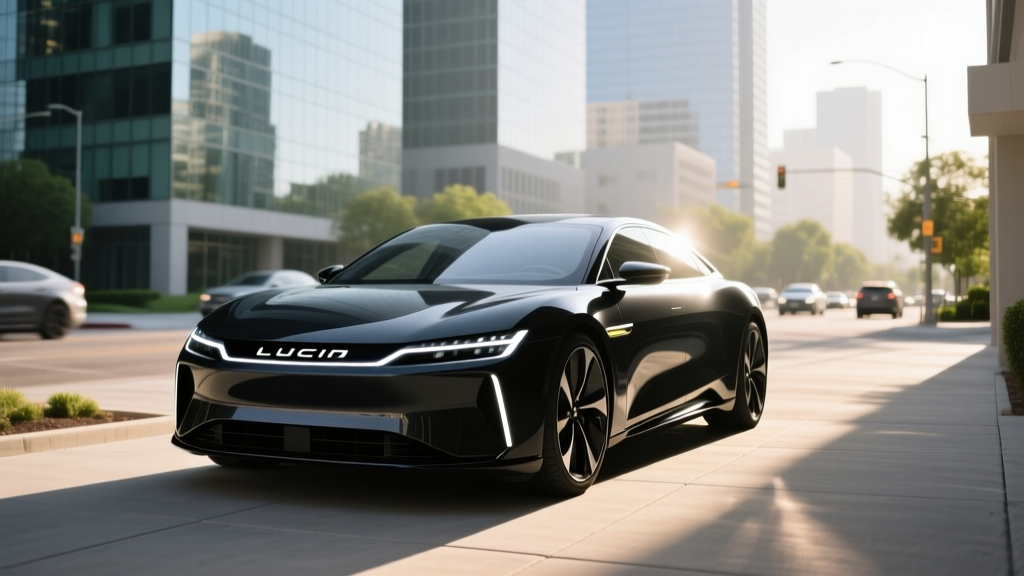
If you've been following EV news, you've likely typed "is Lucid going out of business" into a search bar. The headlines are easy to find: cash burn, production slowdowns, and a market that has cooled on luxury EV sedans. But before you write off the Lucid Air — a car that still holds the efficiency and range crown in its segment — it's worth separating the company's balance sheet from the product's engineering reality.
This review tackles both. We'll put the 2026 Lucid Air through its paces with exact EPA numbers, real-world range data, charging curves, and pricing. Then we'll address the financial elephant in the room: what Lucid's current position means for buyers considering a $70,000+ vehicle from a startup automaker.
The 2026 Lucid Air at a Glance: Specs That Still Lead the Pack
| Spec | Air Pure RWD | Air Touring AWD | Air Grand Touring | Air Sapphire |
|---|---|---|---|---|
| EPA Range | 419 mi | 425 mi | 516 mi | 427 mi |
| Battery (usable) | 88 kWh (NMC) | 112 kWh (NMC) | 112 kWh (NMC) | 118 kWh (NMC) |
| Horsepower | 430 hp | 620 hp | 819 hp | 1,234 hp |
| 0-60 mph | 5.0 sec | 3.4 sec | 3.0 sec | 1.89 sec |
| Drivetrain | RWD (single motor) | AWD (dual motor) | AWD (dual motor) | AWD (tri-motor) |
| MPGe (combined) | 140 MPGe | 131 MPGe | 131 MPGe | 109 MPGe |
| Efficiency | 24 kWh/100mi | 26 kWh/100mi | 26 kWh/100mi | 31 kWh/100mi |
| Base MSRP | $69,900 | $77,900 | $109,900 | $249,000 |
The Air's headline achievement remains its efficiency. At 24 kWh per 100 miles in the Pure RWD trim, the Air sips electrons at a rate that makes even the Tesla Model S look thirsty. This isn't marketing — it's the result of Lucid's miniaturized permanent-magnet motor design, 900-volt electrical architecture, and obsessive aerodynamic work (the Air's drag coefficient sits at 0.197 Cd, among the lowest of any production sedan).
Real-World Range: What 516 EPA Miles Actually Looks Like
EPA Estimate: 516 miles
Real-World Highway (70 mph, 72°F): ~410–440 miles
Real-World Highway (70 mph, 30°F, winter): ~320–360 miles
Real-World City/Mixed (moderate climate): ~440–480 miles
Source: EPA data via fueleconomy.gov; real-world estimates based on independent EV testing and owner-reported data.
The Grand Touring's 516-mile EPA rating is the highest of any production EV sold in the United States. But as with every EV, the sticker number requires context.
On highway road trips at sustained 70-75 mph speeds, expect roughly 15–20% less range than the EPA figure — putting real-world highway range around 410 to 440 miles. That's still enough to drive from Los Angeles to Las Vegas on a single charge, or from Dallas to Houston with over 100 miles to spare. In cold weather (below freezing), lithium-ion chemistry and cabin heating demands can reduce range by 30–38%, dropping the Grand Touring to roughly 320–360 miles.
The Pure RWD trim, with its smaller 88 kWh battery and 419-mile EPA rating, delivers roughly 340–370 highway miles in moderate temperatures — still competitive with long-range versions of the BMW i5 and Mercedes EQS.
Why the Air outperforms most EVs on real-world efficiency: Lucid's 900V architecture means lower current draw for the same power output, reducing resistive heat losses in the motors and wiring. The result is that the Air's highway energy consumption stays remarkably flat compared to 400V competitors, which bleed efficiency at sustained high speeds.
Charging Speed: 900V Architecture in Practice
| Charging Level | Rate | Time / Range Added |
|---|---|---|
| Level 1 (120V household) | ~1.4 kW | ~3–4 mi/hr |
| Level 2 (240V home, 48A) | ~11.5 kW | ~38 mi/hr (~11 hr for 10–100%) |
| DC Fast Charge (peak) | Up to 300 kW | 10–80% in ~20 min (Grand Touring) |
| DC Fast Charge (sustained avg 10-80%) | ~180–220 kW avg | ~200 mi in 10 min (peak conditions) |
The Air's 900V battery architecture allows it to accept DC fast-charge rates up to 300 kW on compatible chargers. On Electrify America's 350-kW stalls or Tesla Superchargers (via Lucid's included NACS adapter, now standard on 2025+ models), the Grand Touring can add roughly 200 miles of range in about 10 minutes under ideal conditions — battery preconditioned, ambient temperature above 60°F, and SoC below 30%.
The charging-curve reality: Like all EVs, the Air does not sustain peak 300 kW for the entire session. The charge rate tapers progressively: you'll see 250–300 kW from roughly 5–40% SoC, dropping to ~150 kW around 60%, and falling below 80 kW past 80%. A 10–80% session averages around 180–220 kW, taking approximately 20 minutes for the Grand Touring's 112 kWh pack. Above 80%, expect another 25–35 minutes to reach 100% — which is why we recommend planning fast-charge stops around the 10–80% window.
For home charging, the Air's onboard charger accepts up to 11.5 kW on a 48-amp Level 2 circuit (requiring a 60-amp breaker). That translates to roughly 38 miles of range per hour of charging, or a full overnight replenishment for most daily driving needs. A typical home Level 2 installation runs $800–$2,000 depending on panel capacity and wiring distance — factor this into your purchase budget.
Performance, Interior, and Daily Livability
The Air's performance envelope is broad. The Pure RWD delivers 430 hp and a 5.0-second 0-60 — brisk by any sedan standard. The Grand Touring's 819 hp and 3.0-second sprint puts it in supercar territory, while the 1,234-hp Sapphire (a limited-production halo model) hits 1.89 seconds, rivaling the fastest production cars ever built.
But the Air's real strength as a daily driver is its interior space. Despite the sloping roofline, the Air offers:
- Front legroom: 45.3 inches
- Rear legroom: 37.6 inches
- Trunk (rear cargo): 32.0 cu ft (with rear seats up)
- Frunk (front trunk): 10.0 cu ft
- Total cargo: 42.0 cu ft — more than many midsize SUVs
The cabin materials on Touring and Grand Touring trims are genuinely premium — Nappa leather, open-pore wood, and aluminum trim that competes with BMW's 7 Series and Mercedes' S-Class. The 34-inch curved glass "cockpit display" spans the dashboard, supplemented by a lower touchscreen for climate and vehicle controls.
Notable drawbacks: The Air's DreamDrive Pro ADAS suite (adaptive cruise, lane centering, automated parking) is competent but not class-leading — it's an SAE Level 2 system that requires continuous driver supervision, and its lane-centering can feel less confident on faded highway markings than GM's Super Cruise or Ford's BlueCruise. The infotainment system, while visually impressive, has drawn owner complaints about responsiveness and the lack of native Apple CarPlay/Android Auto integration (Lucid uses its own proprietary software stack).
Pricing, Tax Credits, and Total Cost
| Trim | Base MSRP | Federal §30D Credit | Effective Price (est.) |
|---|---|---|---|
| Air Pure RWD | $69,900 | $7,500 (if eligible*) | ~$62,400 |
| Air Touring AWD | $77,900 | $7,500 (if eligible*) | ~$70,400 |
| Air Grand Touring | $109,900 | $0 (exceeds MSRP cap) | $109,900 |
| Air Sapphire | $249,000 | $0 (exceeds MSRP cap) | $249,000 |
*IRS §30D eligibility caveats: Under current IRS rules, the full $7,500 federal tax credit requires meeting several conditions simultaneously:
- MSRP cap: Sedans must be priced at or below $55,000. At $69,900, even the Air Pure exceeds this cap — meaning no Lucid Air trim currently qualifies for the new-vehicle §30D credit as of 2026. (Note: The §30D MSRP cap for sedans is $55,000; for SUVs/vans/pickups it's $80,000. Lucid's Gravity SUV may qualify in certain trims.)
- Buyer income limits: Modified AGI must not exceed $150,000 (single), $225,000 (head of household), or $300,000 (joint).
- Battery sourcing: Critical minerals and battery components must meet phased-in domestic/free-trade sourcing requirements that tighten annually.
Point-of-sale transfer: For vehicles that do qualify, the credit can now be transferred to the dealer at purchase, reducing the sale price directly rather than waiting for a tax refund. Always confirm current-year eligibility with your tax professional and the IRS before relying on credit estimates.
Is Lucid Going Out of Business? The Financial Reality for Buyers
This is the question driving searches, so let's address it directly with data rather than speculation.
What's true: Lucid has burned through significant cash since beginning Air production. The company has reported quarterly net losses and has relied on capital infusions — most notably from Saudi Arabia's Public Investment Fund (PIF), which holds a majority stake in Lucid. Production volumes have remained well below the company's installed capacity at its Casa Grande, Arizona factory. In 2024 and 2025, Lucid produced fewer than 10,000 vehicles annually — a fraction of what established luxury automakers move in a single model line.
What provides stability: PIF's continued investment (over $5 billion committed through multiple rounds) has given Lucid a financial runway that most EV startups lack. The launch of the Lucid Gravity SUV (starting around $79,900) targets a higher-volume market segment. Lucid also has a technology licensing and supply agreement with Aston Martin, generating revenue from its powertrain expertise. The company's investor disclosures show ongoing access to capital markets and PIF backing through 2025–2026.
What buyers should consider:
- Warranty coverage is real and backed: Lucid provides an 8-year/100,000-mile battery and powertrain warranty, plus a 5-year/60,000-mile bumper-to-bumper warranty. These obligations are contractual and would likely be honored or assumed in any acquisition or restructuring scenario.
- Service network is limited but growing: Lucid operates mobile service vans and a small number of physical service centers. Coverage in rural areas or smaller metro markets remains sparse compared to BMW, Mercedes, or Tesla.
- Parts availability risk: In a worst-case scenario (production halt, acquisition), proprietary body panels, glass, and drivetrain components could become harder to source. Consumables (tires, brakes, cabin filters) remain standard.
- Resale value uncertainty: Lucid Air depreciation has been steep — 2022–2023 models have lost 40–55% of their MSRP on the used market, outpacing Tesla and Porsche EV depreciation. If you plan to sell within 3–4 years, factor this in.
Bottom line: Lucid is not "going out of business" in any imminent sense as of early 2026, but it remains a financially vulnerable startup dependent on continued PIF support and the commercial success of the Gravity SUV. Buying a Lucid Air today carries more long-term brand risk than buying a BMW i5 or Mercedes EQS — but the product itself is world-class.
Lucid Air vs. Key Competitors
| Attribute | Lucid Air GT | Tesla Model S LR | BMW i5 eDrive40 | Mercedes EQS 450+ |
|---|---|---|---|---|
| EPA Range | 516 mi | 402 mi | 295 mi | 390 mi |
| Battery | 112 kWh NMC | ~100 kWh | 84.3 kWh NMC | 108.4 kWh NMC |
| Peak DC Charge | 300 kW | 250 kW | 205 kW | 200 kW |
| 0-60 mph | 3.0 sec | 3.1 sec | 5.7 sec | 5.9 sec |
| Base MSRP | $109,900 | $79,990 | $66,800 | $104,400 |
| Cargo (total) | 42.0 cu ft | 28.0 cu ft | 17.3 cu ft | 22.0 cu ft |
| Service Network | Limited | Extensive | Extensive | Extensive |
The Air Grand Touring wins decisively on range, efficiency, and interior space. It competes closely on performance. Where it loses is brand stability, service network breadth, and resale value predictability. The BMW i5 costs significantly less and has dealer-backed service everywhere, but can't touch the Air's range. The Model S offers a mature Supercharger network and strong software, but its interior quality and ride comfort lag behind the Air.
✅ Pros
- Best-in-class EPA range (516 mi, Grand Touring)
- Exceptional efficiency (24 kWh/100mi, Pure RWD)
- 300-kW DC fast charging with strong sustained curve
- Massive interior/cargo space for a sedan
- Refined ride quality and cabin quietness
- 900V architecture is future-proof
❌ Cons
- Company financial risk / long-term brand uncertainty
- No federal §30D credit (MSRP exceeds sedan cap)
- Limited service center footprint
- Steep depreciation on used market
- Infotainment lacks CarPlay/Android Auto
- DreamDrive ADAS trails GM/Ford hands-free systems
Who Should Buy the Lucid Air?
The Air is the right car for a specific buyer:
- Long-distance commuters who want to minimize charging stops and value a quiet, spacious cabin for 100+ mile daily drives.
- Efficiency-focused EV enthusiasts who appreciate engineering excellence and want the most range per kWh in the luxury segment.
- Buyers with reliable home charging who can take advantage of the Air's 11.5-kW Level 2 capability and won't rely solely on public DC infrastructure.
- Those who plan to own the car 6+ years and aren't concerned about near-term resale value.
The Air is not the right choice if you need a robust dealer service network in a rural area, if you're highly risk-averse about startup automaker longevity, or if you want the latest hands-free driving system for highway commuting.
Frequently Asked Questions
What is the real-world range of the Lucid Air?
The Grand Touring's EPA rating is 516 miles. In real-world highway driving at 70 mph in moderate temperatures, expect 410–440 miles. In freezing winter conditions, plan for 320–360 miles. The Pure RWD delivers roughly 340–370 highway miles in moderate weather from its 419-mile EPA rating.
How fast does the Lucid Air charge?
On a 350-kW DC fast charger, the Air Grand Touring peaks at 300 kW and completes a 10–80% charge in approximately 20 minutes. At home on a 48-amp Level 2 charger (11.5 kW), you'll add about 38 miles of range per hour, fully charging overnight in roughly 11 hours.
Does the Lucid Air qualify for the federal EV tax credit?
As of 2026, no Lucid Air trim qualifies for the $7,500 §30D new-vehicle credit. The sedan MSRP cap is $55,000, and even the base Air Pure starts at $69,900. The Lucid Gravity SUV, priced differently, may qualify in certain trims — check current IRS guidance. Used Air models under $25,000 may qualify for the $4,000 §25E credit.
Is it worth buying a Lucid Air vs. a BMW i5 or Tesla Model S?
If range, efficiency, and interior space are your top priorities, the Air is the best sedan in the segment — no competitor matches 516 EPA miles or 24 kWh/100mi efficiency. If brand stability, service network access, and resale value matter more, the BMW i5 or Mercedes EQS offer safer long-term ownership propositions at lower entry prices.
What happens to my warranty if Lucid goes under?
In any bankruptcy or acquisition scenario, warranty obligations are typically honored by the acquiring entity or through a successor warranty fund. Lucid's 8-year/100,000-mile battery warranty is a contractual obligation. That said, brand dissolution could impact proprietary parts availability and authorized service access — a genuine risk worth weighing.
Can I charge a Lucid Air at Tesla Superchargers?
Yes. Starting with 2025 model-year vehicles, Lucid includes a NACS charge port adapter, granting access to Tesla's Supercharger network (now open to non-Tesla EVs via the NACS standard). This significantly expands the Air's public charging options, particularly for road trips.