The Quick Answer: Lincoln EV Truck in 2026
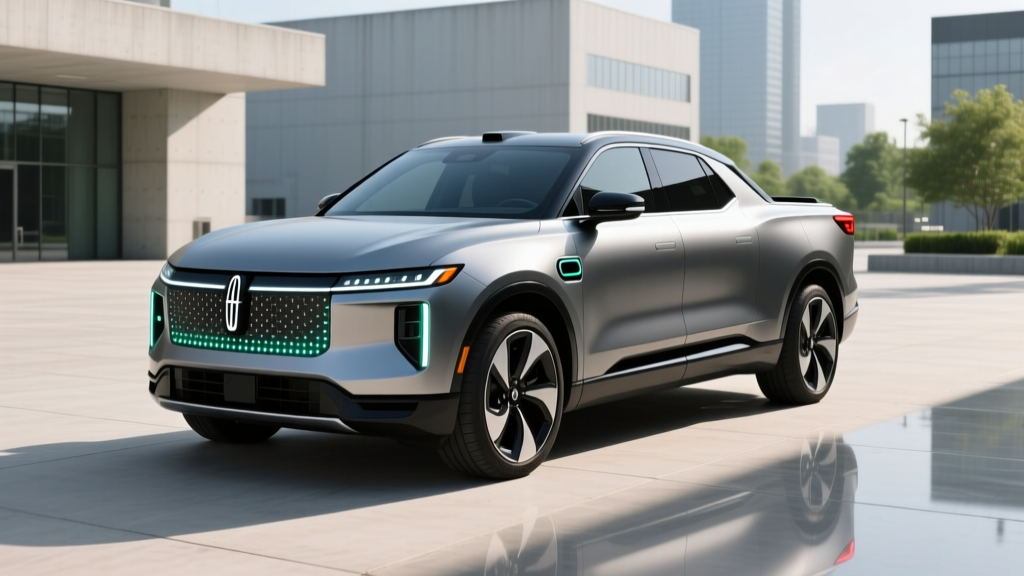
As of early 2026, Lincoln has not yet released a production EV truck. The brand confirmed an electric pickup is in development alongside the next-generation Aviator EV, but no official nameplate, EPA range, pricing, or delivery timeline has been published. Based on the Ford F-150 Lightning platform (Lincoln's parent company), a Lincoln EV truck would likely target 250–320 miles of EPA range, a starting MSRP around $65,000–$75,000, and DC fast charging up to ~150–200 kW. If you need an electric truck today, the F-150 Lightning, Rivian R1T, Chevrolet Silverado EV, and GMC Sierra EV are available now. If you're set on Lincoln luxury, you'll be waiting—likely until late 2026 or 2027 at the earliest.
What We Know (and Don't Know) About the Lincoln EV Truck
Lincoln's electric strategy has centered on luxury SUVs—the brand teased an EV concept in recent years and confirmed battery-electric models are coming. A truck variant has been referenced in industry reports and Ford Motor Company earnings calls, but Lincoln has kept details under wraps. Here's what we can reasonably project based on the Ford F-150 Lightning platform and Lincoln's typical luxury positioning:
| Spec | Estimated Figure | Basis |
|---|---|---|
| EPA Range | 250–320 mi | F-150 Lightning Extended Range achieves 320 mi |
| Battery Capacity | ~98–131 kWh usable | Lightning Standard/Extended packs |
| Battery Chemistry | NMC (likely) | Ford's current truck platform uses NMC |
| DC Fast Charge (peak) | 150–200 kW | Lightning peaks at ~150 kW; Lincoln may upgrade |
| 10–80% Charge Time | ~35–45 min (est.) | Lightning Extended Range: ~41 min at 150 kW |
| Level 2 Charging | ~11.5–19.2 kW | Depends on onboard charger config |
| Horsepower | 563–700+ HP | Lightning Platinum: 563 HP; Lincoln could tune higher |
| 0–60 mph | ~3.8–4.5 sec | Lightning: ~3.8 sec (Performance) |
| Towing Capacity | ~7,700–10,000 lbs | Lightning max: 10,000 lbs |
| Starting MSRP | $65,000–$75,000 (est.) | Lincoln's luxury premium over Ford trims |
| Battery/Powertrain Warranty | 8 yr / 100,000 mi (likely) | Ford EV standard; Lincoln matches or exceeds |
Important caveat: Every number above is an estimate derived from the Lightning platform. Lincoln could adopt a newer Ford EV architecture by launch, potentially improving charge speed or switching to LFP chemistry for lower trims. Until Lincoln publishes official specs, treat these as directional guidance only.
Lincoln EV Truck vs. Gas Truck: Cost and Capability Comparison
If you're cross-shopping a Lincoln EV truck against a luxury gas truck like the GMC Sierra Denali, Ford F-150 Limited, or RAM 1500 Laramie Longhorn, the economics shift depending on your driving profile. Let's compare using realistic 2026 figures:
| Category | Lincoln EV Truck (est.) | Luxury Gas Truck (e.g., F-150 Limited) |
|---|---|---|
| Purchase Price (MSRP) | $70,000 | $82,000 |
| Federal Tax Credit (§30D) | Up to $7,500 (if eligible) | $0 |
| Effective Purchase Price | ~$62,500 | $82,000 |
| Fuel / Electricity (5 yr, 75,000 mi) | $4,500–$7,500 | $12,000–$15,000 |
| Maintenance (5 yr) | $1,500–$2,500 | $4,000–$6,000 |
| Insurance (5 yr avg) | $9,000–$12,000 | $7,500–$10,000 |
| Estimated 5-Year Total Cost | $77,500–$84,500 | $105,500–$113,000 |
Key assumptions: Electricity at $0.14/kWh national average with ~80% home charging; gas at $3.50/gal with 17 MPG combined (real-world truck figure). Insurance is higher for EVs in most states due to repair costs and parts pricing, per IIHS data. Your actual savings depend heavily on local electricity rates, whether you can install a Level 2 home charger, and how many miles you drive annually.
The EV wins on fuel and maintenance—electric motors don't need oil changes, transmission fluid, spark plugs, or exhaust repairs. But insurance premiums and potentially higher tire costs (EVs wear tires faster due to instant torque and heavy weight) narrow the gap slightly.
Real-World Ownership: What First-Time EV Truck Buyers Need to Know
Buying an EV truck isn't the same as buying a gas truck. Here's what changes in your daily ownership experience:
Home Charging Is Non-Negotiable for Most Owners
If you don't have access to a garage or driveway where you can install a Level 2 charger (240V, 32–48 amps, delivering 7.7–11.5 kW), an EV truck becomes significantly less practical. Level 1 charging (120V standard outlet) adds only ~2–3 miles of range per hour—that's 24–36 miles overnight, far less than most truck owners drive daily. A Level 2 installation typically costs $1,200–$3,500 including equipment and electrician labor, potentially more if your electrical panel needs a 200-amp upgrade ($1,500–$4,000 additional).
Real-World Range vs. EPA Sticker
If the Lincoln EV truck achieves a 300-mile EPA estimate, expect ~240–270 miles in real-world highway driving at 70+ mph. In cold weather (below 30°F), range can drop 20–35% depending on cabin heating use and whether the vehicle has a heat pump. Towing cuts range even more dramatically—expect a 40–50% reduction when pulling a 7,000+ lb trailer at highway speeds. This is physics, not a defect: aerodynamic drag and rolling resistance increase exponentially with speed and load.
Charging Curve Reality
When Lincoln (or any automaker) advertises a peak DC fast-charge rate of, say, 200 kW, that's the maximum the battery accepts at a low state of charge (typically 10–20%). The charge rate tapers significantly above 50% SoC and drops sharply above 80% to protect battery longevity. A "10–80% in 40 minutes" spec is more meaningful than the peak kW number alone. On road trips, plan stops around the 10–80% window—charging from 80–100% can take as long as the entire 10–80% session.
Tax Credit Eligibility Is Not Guaranteed
The federal §30D EV tax credit offers up to $7,500, but eligibility depends on multiple factors that change frequently. Per current IRS rules:
- MSRP cap: Trucks/vans/SUVs must have an MSRP at or below $80,000
- Buyer income cap: AGI must not exceed $150,000 (single), $225,000 (head of household), or $300,000 (joint)
- Battery sourcing: Critical minerals and battery components must meet phased-in domestic/free-trade sourcing requirements
- Assembly: Vehicle must undergo final assembly in North America
- Point-of-sale transfer: As of 2024+, you can transfer the credit to the dealer for an immediate price reduction
A Lincoln EV truck at $70,000 MSRP would clear the truck MSRP cap. But battery sourcing rules tighten annually—consult the DOE's fueleconomy.gov credit-eligibility tool at the time of purchase.
What's Available Now If You Can't Wait
If you need an electric truck in 2026 and don't want to wait for Lincoln, here are the production alternatives with real, verified specs:
| Model | EPA Range | Peak DC Charge | 10–80% Time | Starting MSRP |
|---|---|---|---|---|
| Ford F-150 Lightning (Ext. Range) | 320 mi | 150 kW | ~41 min | ~$59,990 |
| Rivian R1T (Dual-Motor, Max Pack) | 410 mi | 200+ kW | ~30 min | ~$83,000 |
| Chevrolet Silverado EV (4WT) | 440 mi (est.) | 200 kW | ~35 min | ~$55,000 |
| GMC Sierra EV Denali | 440 mi (est.) | 200 kW | ~35 min | ~$98,000 |
| Tesla Cybertruck (AWD) | 340 mi | 250 kW | ~25 min | ~$79,990 |
The F-150 Lightning is the most relevant comparison—it shares Ford's EV truck DNA and will likely underpin any Lincoln variant. The Rivian R1T is the most capable off-road but starts well above $80,000, eliminating §30D credit eligibility. The Silverado EV offers the longest range but availability varies by trim.
Common Misconceptions About EV Trucks
| Myth | Fact |
|---|---|
| "EV trucks can't tow." | The F-150 Lightning tows up to 10,000 lbs. Range drops 40–50% while towing, but capability is real. |
| "The battery will need a $20,000 replacement in 5 years." | Modern NMC and LFP packs are warrantied for 8 yr/100,000 mi at ≥70% capacity. Data shows most packs lose only 8–15% over 150,000+ miles. |
| "EVs are worse in cold weather." | Range drops 20–35% in sub-freezing temps, but EVs start instantly (no cold cranking), and preconditioning while plugged in mitigates most losses. |
| "I'll save $7,500 on every EV I buy." | The §30D credit has income caps, MSRP caps, and battery sourcing rules. Many buyers qualify for less or nothing. Always verify on irs.gov before purchasing. |
| "Public charging is unreliable everywhere." | Reliability varies widely. Tesla Superchargers consistently report 95%+ uptime. Electrify America and others have improved but still lag. Home charging eliminates most public-charging dependence. |
Decision Framework: Should You Wait for the Lincoln EV Truck?
Choose the Lincoln EV Truck (Wait) If:
- You're a current Lincoln owner loyal to the brand and want luxury truck features (massage seats, Revel audio, BlueCruise hands-free driving)
- Your purchase timeline extends into late 2026 or 2027
- You don't urgently need a truck and can drive your current vehicle longer
- You want a luxury electric truck but find the GMC Sierra EV Denali ($98,000+) too expensive
Choose an Available EV Truck Now If:
- You need a truck within the next 6 months
- The F-150 Lightning's interior and tech meet your comfort standards (many luxury buyers are satisfied with the Platinum trim at ~$95,000)
- You want to lock in current §30D tax credit eligibility before sourcing rules tighten further
- You can test-drive the Rivian R1T and its 410-mile Max Pack fits your budget
Stick With a Gas or Hybrid Truck If:
- You regularly tow heavy loads over 300+ miles in a single trip (EV range while towing makes this impractical without multiple charge stops)
- You lack home charging access and your area has sparse DC fast-charging infrastructure
- You live in a region with extreme cold and no garage for preconditioning
- Your annual mileage is very low (<8,000 mi/yr), making the fuel savings too small to offset higher EV purchase price
Frequently Asked Questions
Has Lincoln officially announced an EV truck nameplate?
No. As of early 2026, Lincoln has confirmed EV products are in development but has not published a truck nameplate, official specs, or a delivery timeline. Any "leaked" specs from third-party sources should be treated as speculative.
Will the Lincoln EV truck qualify for the $7,500 federal tax credit?
It depends on the final MSRP (must be ≤$80,000 for trucks/SUVs), your adjusted gross income, and battery sourcing compliance at the time of purchase. Lincoln's luxury positioning means some trims could exceed the MSRP cap. Verify eligibility on irs.gov before committing.
How much will home charging cost to install for an EV truck?
A Level 2 (240V, 48-amp) home charger installation typically runs $1,200–$3,500 for the equipment and electrician labor. If your home's electrical panel needs upgrading from 100A to 200A service, add $1,500–$4,000. EV trucks with large batteries (100+ kWh) benefit significantly from a 48-amp circuit, which adds roughly 14–18 miles of range per hour of charging.
Can an EV truck handle worksite use and job hauling?
Yes, with caveats. The F-150 Lightning offers a 2,235-lb max payload and 10,000-lb towing. The onboard Pro Power system provides up to 9.6 kW of 120V/240V outlet power for tools—something gas trucks can't match without a separate generator. However, if your daily route exceeds 200 miles with heavy loads, plan charging stops or consider a PHEV alternative.
What's the difference between kW and kWh?
kW (kilowatts) measures power—the rate of energy flow, like water pressure in a hose. kWh (kilowatt-hours) measures energy—the total capacity stored, like the size of a water tank. A 131 kWh battery stores energy; a 150 kW charger delivers it. Confusing the two is the most common EV spec mistake—always check which unit is being cited.
Is Lincoln's BlueCruise the same as self-driving?
No. BlueCruise is an SAE Level 2 driver-assistance system. It allows hands-free driving on pre-mapped divided highways, but the driver must remain attentive and ready to take over at any moment. A camera monitors your eyes. This is fundamentally different from Level 4 autonomous services like Waymo, which operate without any driver present in geofenced urban areas.