Quick Verdict: Is Leasing the Rivian R1S the Smart Move?
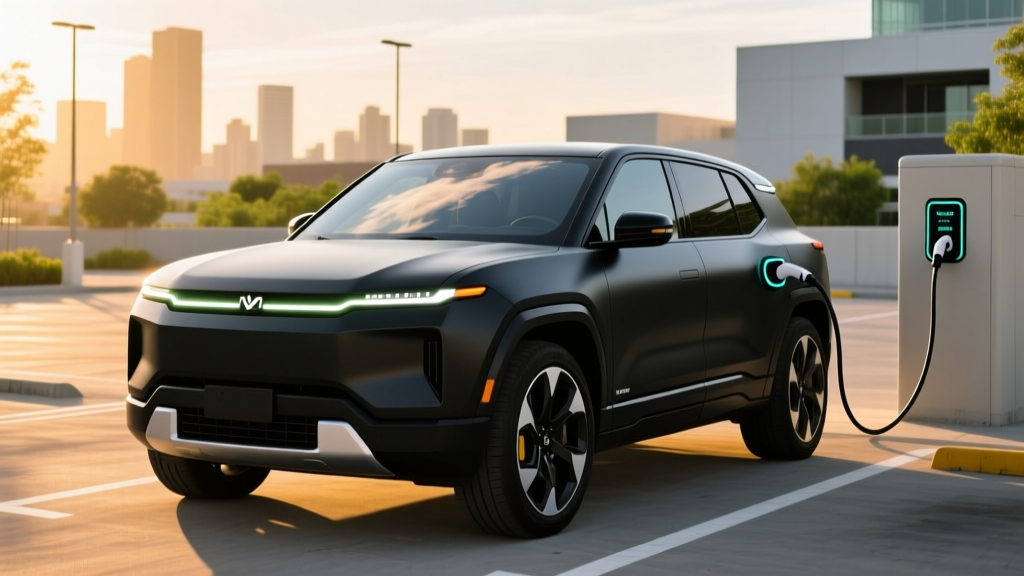
The three-row electric SUV segment remains thin, and the 2026 Rivian R1S still occupies a near-monopoly position as a genuinely capable, body-on-frame electric family hauler with real off-road chops and a 7,700-lb towing rating. If you need three rows, want an EV, and plan to tow or explore beyond paved roads, the R1S is essentially your only serious option alongside the Tesla Model X — and the Rivian is the more practical daily driver of the two.
But leasing the R1S deserves a hard look in 2026 for a specific reason: the IRS §30D federal tax credit rules have tightened battery-sourcing and critical-mineral requirements, and the R1S's MSRP pushes past the SUV cap for the higher trims. A lease, however, can pass through the commercial clean vehicle credit (§45W) via the lessor, potentially preserving a $7,500 incentive that a cash buyer might lose. Let's walk through the numbers.
Range, Battery, and Real-World Efficiency
Rivian offers the 2026 R1S with multiple battery configurations. Here are the EPA figures and what to expect once you leave the test track:
| Battery Pack | Usable Capacity | Chemistry | EPA Range | MPGe (Combined) | kWh/100 mi |
|---|---|---|---|---|---|
| Standard | ~95 kWh | NMC | 270 mi | 74 MPGe | 45 |
| Large | ~119 kWh | NMC | 352 mi | 74 MPGe | 45 |
| Max | ~141 kWh | NMC | 410 mi | 70 MPGe | 48 |
The EPA numbers above assume moderate temperatures and a mix of city/highway driving. In our experience and consistent with third-party highway testing, expect the following reductions:
- Sustained 75-mph highway driving (70°F): ~85-90% of EPA — so the Large pack delivers roughly 290-315 real highway miles.
- Cold weather (below 32°F) with cabin heat: ~65-75% of EPA. The Max pack drops to roughly 270-300 miles. The R1S uses a resistance heater on earlier builds; heat-pump-equipped 2025+ models improve cold efficiency modestly but still lose range.
- Towing (5,000+ lb trailer): Range roughly halves. Budget 140-180 miles between charges with a Large pack and a loaded trailer. This is physics, not a Rivian flaw — every EV SUV suffers similarly.
The R1S is a heavy, boxy vehicle with the aerodynamics of a brick. At highway speeds, efficiency suffers. City driving with regenerative braking recovers more of the EPA estimate.
Charging Speed: DC Fast, Level 2, and the Curve
Charging speed is where the R1S's newer electrical architecture (introduced for 2025, continuing into 2026) pays dividends. Rivian moved to an 800-volt-class system that enables significantly faster DC fast charging than the first-generation 400V platform.
| Charging Level | Power (kW) | Speed / Time | Connector |
|---|---|---|---|
| Level 1 (120V household) | ~1.4 kW | ~3-4 mi/hr | NACS (native) |
| Level 2 (240V home/work) | Up to 11.5 kW (48A) | ~25-30 mi/hr; full charge in 10-14 hrs | NACS (native) |
| DC Fast Charge (peak) | Up to 220 kW (Large/Max) | 10-80% in ~21-25 min (varies by pack) | NACS (native, Tesla Supercharger compatible) |
Charging curve reality: The 220 kW peak applies primarily between roughly 10-30% state of charge. Above 50%, the rate tapers progressively. Above 80%, expect under 50 kW as the battery management system protects cell longevity. If you're road-tripping, plan stops around 10-80% for the fastest throughput — charging from 80-100% adds significant time with diminishing range returns.
The R1S ships with a native NACS (North American Charging Standard) port, meaning direct access to Tesla's Supercharger network — over 20,000 stalls in North America — without an adapter. This is a substantial practical advantage for road-trippers over CCS-only vehicles in 2026.
Performance and Capability
| Configuration | Drivetrain | Horsepower | Torque (lb-ft) | 0-60 mph | Towing Capacity |
|---|---|---|---|---|---|
| Dual-Motor AWD | AWD | 533 hp | 610 | 4.5 sec | 7,700 lbs |
| Performance Dual-Motor | AWD | 665 hp | 829 | 3.5 sec | 7,700 lbs |
| Quad-Motor AWD | AWD (torque-vectoring) | 1,025 hp | 1,198 | 2.9 sec | 7,700 lbs |
The Dual-Motor is the volume configuration and more than adequate for any real-world driving scenario. The Quad-Motor is a party trick — genuinely thrilling and useful for low-speed off-road torque vectoring, but it costs more, weighs more, and slightly reduces range. Most lessees should stick with the Dual-Motor or Performance Dual-Motor.
Ground clearance adjusts via air suspension from 6.4 inches (parking mode) up to 14.9 inches (off-road), with approach/departure/breakover angles that embarrass most body-on-frame SUVs. The R1S can ford 3+ feet of water. This is not a crossover pretending to be rugged — it's genuinely trail-capable.
Interior, Cargo, and Family Practicality
The R1S seats up to seven across three rows. Here's the space breakdown:
- Cargo behind 3rd row: 10.6 cu ft (tight for a family road trip with all seats occupied)
- Cargo behind 2nd row (3rd row folded): 46.7 cu ft
- Cargo behind 1st row (all rear seats folded): 91.6 cu ft
- Front trunk (frunk): 11.0 cu ft — large enough for charging cables, a soft cooler, or groceries
- 3rd-row legroom: 30.4 inches (usable for kids and shorter adults on trips under an hour; tight for full-size adults)
- 2nd-row legroom: 36.5 inches
The third row is the R1S's weakest practical link compared to a minivan or a large ICE SUV like the Chevrolet Tahoe. If you regularly carry six or seven adults, test the third row before committing. For families with younger children in the back, it works well.
The infotainment system runs on a 15.6-inch center touchscreen with Rivian's proprietary OS. Wireless Apple CarPlay and Android Auto are not supported — Rivian uses its own interface exclusively. It's generally responsive, but this is a dealbreaker for some buyers who prefer phone-mirroring. The driver display is a 12.3-inch digital cluster, and a 6.8-inch rear touchscreen controls climate for second-row passengers.
Pricing, Lease Economics, and the Federal Tax Credit
The 2026 R1S pricing structure starts below the IRS §30D MSRP cap for SUVs but climbs past it at higher trims. Here's the landscape:
| Trim / Configuration | Base MSRP | Below $80K SUV Cap? | §30D Purchase Credit |
|---|---|---|---|
| Adventure — Dual-Motor / Standard Pack | $75,900 | Yes | Potentially up to $7,500* |
| Adventure — Dual-Motor / Large Pack | $81,900 | No | Not eligible (purchase) |
| Adventure — Performance Dual / Large | $86,900 | No | Not eligible (purchase) |
| Ascend — Quad-Motor / Max Pack | $99,900+ | No | Not eligible (purchase) |
*§30D credit caveats: Even when MSRP qualifies, the buyer must meet adjusted gross income limits ($300K joint / $150K single for 2026), and the vehicle must satisfy critical-mineral and battery-component sourcing thresholds that phase in annually. Check the latest rules at IRS.gov §30D before assuming eligibility. The credit can be transferred to the dealer at point of sale as a purchase discount.
The lease loophole: When you lease an R1S, the vehicle is technically purchased by the leasing company (Rivian Financial Services or a partner). The lessor may claim the §45W commercial clean vehicle credit — up to $7,500 — which is not subject to the same MSRP caps, income limits, or battery-sourcing requirements as §30D. A reputable lessor should pass this savings through as a capitalized-cost reduction (lowering your monthly payment). Ask explicitly whether the lease quote includes the pass-through credit. This is why leasing an R1S above the $80K MSRP cap can be financially smarter than buying.
Typical 2026 R1S lease terms run 36 months with 10,000-15,000 miles/year. Expect monthly payments in the $900-$1,400 range depending on trim, pack, residual value assumptions, and whether the lessor applies the credit. Rivian's residual values have been volatile — early R1S models depreciated sharply, which hurts lease rates. Check current money factors and residuals carefully.
Warranty Coverage
- Bumper-to-bumper: 5 years / 60,000 miles
- Battery and drivetrain: 8 years / 120,000 miles (battery warranted to retain ≥70% of original capacity)
- Corrosion: 5 years / unlimited miles
- Roadside assistance: 5 years / 60,000 miles
The battery warranty aligns with industry norms. The 70% capacity retention threshold at 8 years is standard — not generous, not stingy. For a lessee on a 36-month term, you'll be well within the warranty window. Rivian's service network has expanded but remains thinner than legacy OEMs in rural areas; check proximity to a Rivian Service Center or certified mobile-service zone before committing.
Driver Assistance and Standout Tech
The R1S includes Rivian's Driver+ suite, which provides adaptive cruise control, lane-centering, and highway assist on divided roads. This is an SAE Level 2 system — it requires continuous driver supervision and does not constitute self-driving. Keep your hands on the wheel and eyes on the road.
Rivian Driver+ is a driver-assistance system, not an autonomous driving system. You remain fully responsible for vehicle operation at all times. Level 4 autonomy (no driver needed) exists only in geofenced robotaxi services like Waymo — not in any consumer vehicle sold in 2026.
Other notable tech:
- Over-the-air updates: Regular software drops adding features, improving efficiency, and refining ride quality
- Camp Kitchen accessory: Available slide-out kitchen system for the gear tunnel (optional, ~$5,000)
- Powered tonneau-style cargo shade and gear tunnel: Useful for keeping cargo organized
- Highway assist with lane-change confirmation: Functional but not class-leading versus Tesla's Autopilot or GM's Super Cruise in hands-free zones
- 360-degree camera and ultrasonic parking sensors: Essential given the R1S's 200+ inch length
Pros and Cons
Pros
- Genuine off-road capability with air suspension and 14.9" ground clearance
- 7,700-lb towing — best in electric SUV class
- NACS native — direct Tesla Supercharger access
- Up to 410 mi EPA range (Max pack)
- Three rows of seating — rare in EVs
- Strong OTA update cadence improving the vehicle over time
- Lease can preserve $7,500 credit even above $80K MSRP
Cons
- Tight third row (30.4" legroom) and only 10.6 cu ft cargo with all seats up
- No Apple CarPlay or Android Auto — Rivian-only infotainment
- Highway efficiency is poor due to boxy aero (~45 kWh/100 mi)
- Cold-weather range loss is significant without a robust heat pump on all builds
- Service network still growing — rural owners may face long tow distances
- Lease residuals can be unfavorable due to volatile EV depreciation
- High insurance premiums typical of high-performance, high-cost EVs
R1S vs. the Competition: Is It Worth It?
The three-row electric SUV market in 2026 remains sparse. Here's how the R1S stacks up against its closest rivals:
| Spec | Rivian R1S (Dual-Motor / Large) | Tesla Model X (Long Range) | Kia EV9 (GT-Line AWD) |
|---|---|---|---|
| EPA Range | 352 mi | 335 mi | 270 mi |
| 0-60 mph | 4.5 sec | 3.8 sec | 5.0 sec |
| Towing | 7,700 lbs | 5,000 lbs | 4,500 lbs |
| Ground Clearance | Up to 14.9" | ~9.0" | 7.8" |
| Base MSRP | $81,900 | $81,630 | $63,900 |
| CarPlay/Android Auto | No | No | Yes (wireless) |
| Charging Connector | NACS | NACS | CCS1 (NACS adapter available) |
Choose the R1S if: You need genuine off-road capability, maximum towing, or the most rugged three-row EV available. You're planning a lease to maximize the credit pass-through on a higher-trim model.
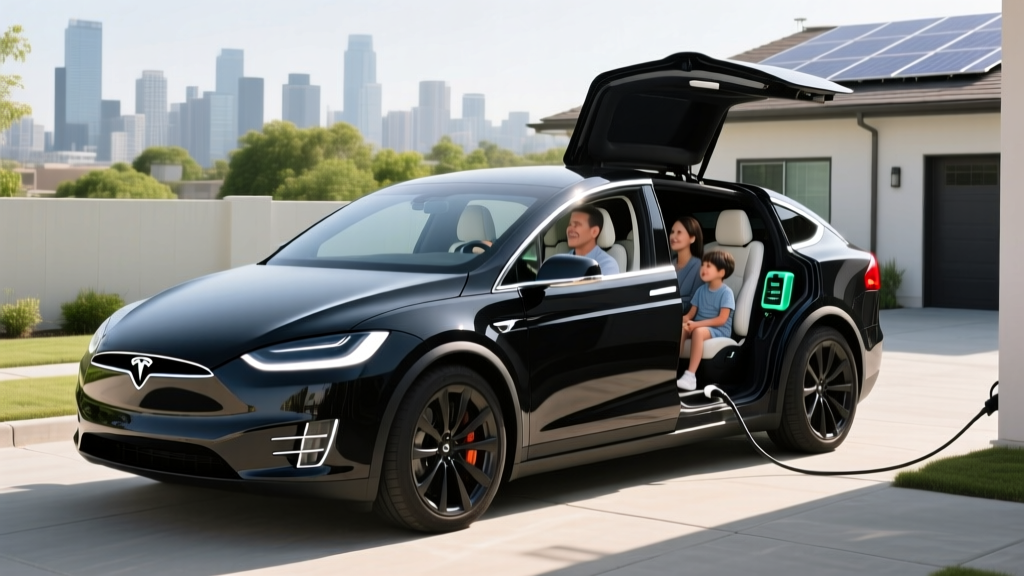
Choose the Model X if: You prioritize Supercharger integration (still the broadest network), falcon-wing doors for curb-side access, or Tesla's software ecosystem. Note that Model X build quality and panel gaps remain inconsistent.
Choose the EV9 if: Budget is a priority. The EV9 is significantly cheaper, offers CarPlay, and is more practical for suburban family duty. It cannot match the R1S on range, towing, or off-road capability, but it's a compelling value at ~$64K.
- You want the Large or Max pack (above $80K MSRP cap) but still want the $7,500 credit via the lease structure
- You plan to keep the vehicle 2-3 years and want to avoid long-term depreciation risk on a volatile EV segment
- You need three rows, towing, and trail capability and no other EV checks all three boxes
- You qualify for the Standard-pack Adventure trim (under $80K MSRP cap) and meet all §30D requirements
- You drive high annual miles (lease penalties for overage add up fast at $0.20-$0.30/mile)
- You plan to keep the R1S 6+ years and can absorb the depreciation curve
Frequently Asked Questions
What is the real-world range of the Rivian R1S?
The EPA rates the 2026 R1S at 270 miles (Standard pack), 352 miles (Large pack), and 410 miles (Max pack). In real-world highway driving at 70-75 mph, expect 85-90% of the EPA sticker. In freezing temperatures, budget 65-75% of EPA. Towing a loaded trailer cuts range roughly in half regardless of pack size.
How fast does the R1S charge at home and on the road?
On DC fast charging, the 2026 R1S peaks at up to 220 kW, reaching 10-80% in roughly 21-25 minutes depending on the battery pack. At home on a 240V Level 2 charger (48A/11.5 kW), expect a full charge in 10-14 hours. The R1S uses a native NACS connector, so it plugs directly into Tesla Superchargers and the growing NACS public network without an adapter.
Does the Rivian R1S qualify for the $7,500 federal EV tax credit?
It depends on the trim, your income, and how you acquire it. The base Adventure Dual-Motor with the Standard pack ($75,900 MSRP) falls under the $80,000 SUV cap and may qualify for up to $7,500 via §30D — provided your adjusted gross income is under $300K (joint) or $150K (single) and the battery meets critical-mineral and component-sourcing rules. Higher trims exceed the MSRP cap and are ineligible for the purchase credit. However, leasing any R1S trim may allow the lessor to claim the §45W commercial credit and pass savings to you as a cap-cost reduction. Confirm current rules at IRS.gov and consult a tax professional.
Is the Rivian R1S worth leasing vs. buying?
Leasing is often the smarter financial move for the R1S in 2026. EV depreciation has been volatile, and a lease insulates you from residual-value risk. More importantly, a lease can preserve a $7,500 credit even on trims above the §30D MSRP cap, since the lessor claims the commercial credit. If you drive under 15,000 miles/year and plan to keep the vehicle 2-3 years, leasing is the stronger play.
How does the R1S compare to the Tesla Model X for families?
The R1S offers more off-road capability, higher towing capacity (7,700 vs 5,000 lbs), and a more conventional SUV interior layout. The Model X offers falcon-wing rear doors (useful in tight parking spots), a slightly quicker 0-60, and Tesla's extensive Supercharger network — though the R1S now accesses the same network via NACS. Neither supports Apple CarPlay. The R1S is the better adventure vehicle; the Model X is marginally more practical for urban family logistics.
What are the biggest drawbacks of the R1S?
The third row is tight (30.4" legroom), cargo space with all seats up is only 10.6 cu ft, there's no phone-mirroring (CarPlay/Android Auto), and highway efficiency suffers due to the boxy design. Service centers are still expanding, so rural owners should verify coverage. Insurance premiums run high given the vehicle's cost and performance.
Sources: EPA Fuel Economy, IRS Clean Vehicle Credits, Rivian R1S Specifications.