Is the Cybertruck Safe in a Crash? The Data Behind the Headlines
If you've searched "cybertruck accident" lately, you've likely seen a polarizing mix of viral crash videos, stainless-steel dent demos, and forum debates about crumple zones. The angular pickup draws attention — and when one is involved in a collision, the footage spreads fast. But headlines aren't engineering data. As of early 2026, the Tesla Cybertruck has been on U.S. roads for over two years, and we finally have enough real-world incident data, manufacturer safety disclosures, and independent testing context to separate physics from hype.
This review examines the Cybertruck's structural safety design, available crash-test context, active driver-assist systems, and — because safety isn't just about surviving a crash — its real-world range, charging practicality, and ownership economics. If you're weighing a purchase and worried about what happens in a worst-case scenario, here's what the numbers actually say.
Structural Design: Stainless Steel Exoskeleton and Crumple-Zone Engineering
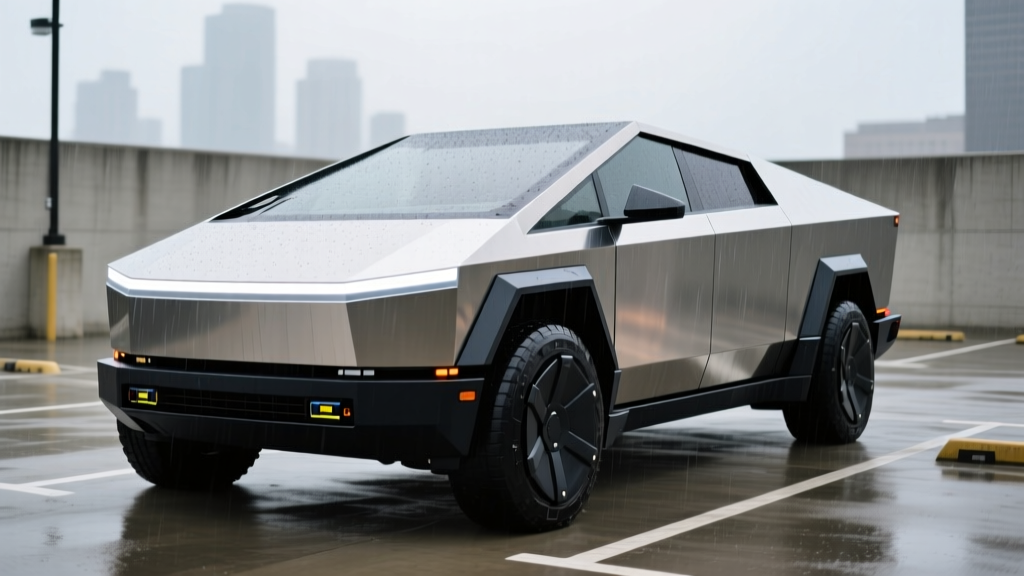
The Cybertruck's most visible feature — its 30X cold-rolled stainless steel exoskeleton — is also its most misunderstood safety element. Tesla engineers have stated that the ultra-hard outer shell serves as a rigid occupant cell, while traditional aluminum and steel crumple zones are engineered into the front and rear subframes beneath the skin. The concept: a hard shell that resists intrusion paired with sacrificial structures that absorb kinetic energy.
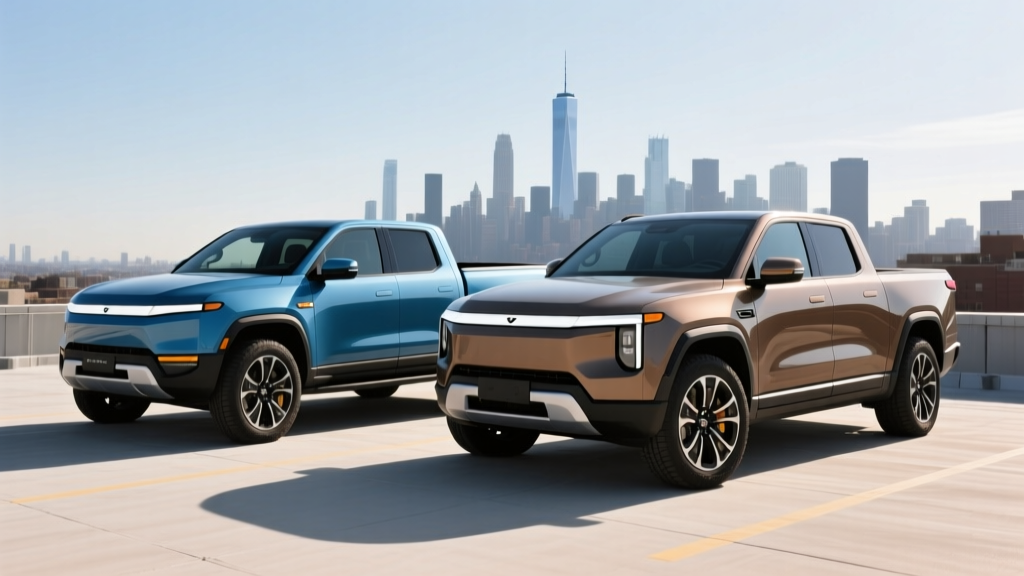
In practice, this creates a different crash-energy-management strategy than a conventional body-on-frame truck like the Ford F-150 or Rivian R1T. The stainless panels themselves are up to 3 mm thick in key areas and resist deformation at low-speed impacts (the source of many viral "demonstration" clips), but the real crash protection comes from the underlying aluminum-intensive structure and the skateboard battery pack, which acts as a rigid floor that lowers the center of gravity and resists rollover.
The battery pack is encased in a structural armor plate — Tesla calls it a "hardened underbody" — designed to resist puncture from road debris and impact forces. This is critical: in any EV, battery integrity during a crash is the difference between a repairable incident and a thermal-event emergency.
Crash-Test Status and Real-World Accident Data
As of model year 2026, the Cybertruck has not received a full crash-test rating from the National Highway Traffic Safety Administration (NHTSA) or the Insurance Institute for Highway Safety (IIHS). This is not unusual for low-volume or newly introduced vehicles — both organizations prioritize high-sales models — but it leaves buyers without the standardized 5-star or Top Safety Pick benchmarks they'd get with, say, a Ford F-150 Lightning or Rivian R1T.
What we do know:
- NHTSA complaint database: A search of NHTSA's vehicle complaint system shows reports spanning minor panel-fit issues, steering calibration concerns, and a small number of collision reports. No systemic battery-fire pattern has emerged specific to the Cybertruck as of early 2026.
- Real-world accident footage: Several documented Cybertruck collisions (side-impact, rear-end, and single-vehicle incidents) show the exoskeleton maintaining occupant-cell integrity at moderate speeds, with airbag deployment functioning as expected. However, the truck's mass (approximately 6,600–6,800 lbs curb weight depending on trim) means it transfers more energy to lighter vehicles in multi-vehicle collisions — a physics reality common to all full-size trucks.
- Pedestrian safety concerns: The Cybertruck's blunt, flat front-end profile has drawn criticism from pedestrian-safety advocates. Without a traditional sloping hood, pedestrian impact forces concentrate differently. European pedestrian-safety standards (which the U.S. does not mandate) would likely penalize this design.
Active Safety and Driver-Assist Systems
The Cybertruck comes standard with Tesla's Autopilot suite, which includes:
- Automatic Emergency Braking (AEB) with pedestrian and cyclist detection
- Forward Collision Warning
- Lane Departure Warning and Lane-Keeping Assist
- Blind-spot monitoring (camera-based, displayed on the central screen)
- Rear cross-traffic alert
Optional Full Self-Driving (Supervised) adds Navigate on Autopilot (automated lane changes and highway on/off-ramp navigation), Autosteer on city streets, and Smart Summon. As of 2026, FSD (Supervised) costs $8,000 as a one-time purchase or $99/month — and it remains a Level 2 system requiring full driver attention.
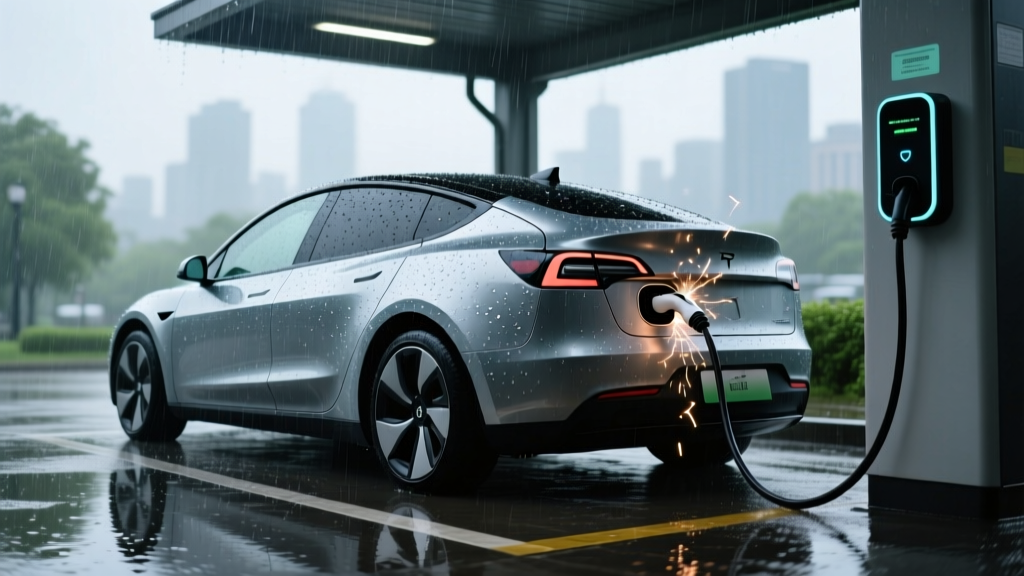
The Cybertruck's camera-only Tesla Vision system (no radar or ultrasonic sensors) has drawn scrutiny. Tesla has iterated significantly on the neural-net processing behind Tesla Vision since 2023, and 2026 models benefit from Hardware 5 (HW5) processing, which offers higher-resolution camera feeds and faster inference. However, the absence of redundant radar means that in heavy rain, fog, or direct sun glare, the system can experience momentary limitations — and the driver must be prepared to take over instantly.
Range, Battery, and Charging: The Practical Safety Net
Safety isn't only about crashworthiness — it's also about not being stranded in extreme weather or remote areas with a depleted battery. The Cybertruck's range and charging capabilities directly affect this.
| Spec | Dual Motor AWD | Cyberbeast (Tri-Motor) |
|---|---|---|
| EPA Range | 340 miles | 320 miles |
| Battery Capacity (usable) | ~123 kWh | ~123 kWh |
| Battery Chemistry | NMC (nickel manganese cobalt) | NMC |
| Max DC Fast-Charge Rate | 250 kW (peak) | 250 kW (peak) |
| 10–80% DC Charge Time | ~30 minutes | ~30 minutes |
| Level 2 Home Charging | 11.5 kW (~37 mi/hr) | 11.5 kW (~37 mi/hr) |
| 0–60 mph | 3.9 seconds | 2.6 seconds |
| Horsepower | 600 hp | 845 hp |
| Drivetrain | Dual-Motor AWD | Tri-Motor AWD |
| Towing Capacity | 11,000 lbs | 11,000 lbs |
| Curb Weight | ~6,600 lbs | ~6,800 lbs |
| MPGe (combined) | 66 MPGe | 64 MPGe |
| Efficiency | 51 kWh/100 mi | 53 kWh/100 mi |
EPA estimates: 340 mi (Dual Motor) / 320 mi (Cyberbeast).
Expect in practice: ~270–290 mi on sustained highway driving at 70+ mph. In cold weather (below 32°F), reduce that by 20–30%, yielding ~200–240 mi of practical range. The Cybertruck's brick-like aerodynamics (estimated 0.38+ drag coefficient) and heavy curb weight are significant efficiency penalties at highway speed. If you tow, expect range to drop to 120–160 mi depending on trailer weight and terrain.
| Charging Level | Power (kW) | Miles of Range Added per Hour | Typical Use Case |
|---|---|---|---|
| Level 1 (120V outlet) | 1.4 kW | ~3–4 mi/hr | Emergency/top-up only |
| Level 2 (240V, 48A) | 11.5 kW | ~37 mi/hr | Home overnight charging |
| DC Fast Charge (V3 Supercharger) | Up to 250 kW peak | ~200+ mi in 15 min (10–50% SoC) | Road trips |
| DC Fast Charge (V4 Supercharger) | Up to 250 kW (CCS-compatible stalls) | Similar to V3; NACS native | Newer Supercharger stations |
Charging-curve reality: The Cybertruck peaks at 250 kW only between roughly 10–35% State of Charge. Above 50%, the rate tapers significantly — expect ~100–120 kW through the 50–80% window, and below 40 kW above 90%. This is normal for NMC chemistry, but it means a 10–80% session takes the full ~30 minutes, not the 15-minute "add 200 miles" marketing headline. For road-trip planning, plan stops around the 20–80% sweet spot to minimize time at the charger.
Pricing, Tax Credits, and Ownership Economics
| Trim | Base MSRP | As-Tested (typical options) | §30D Federal Tax Credit | Effective Price After Credit |
|---|---|---|---|---|
| Dual Motor AWD | $79,990 | $83,000–$88,000 | $0 (exceeds MSRP cap) | $79,990+ |
| Cyberbeast (Tri-Motor) | $99,990 | $103,000–$110,000 | $0 (exceeds MSRP cap) | $99,990+ |
Tax credit reality: Under IRS §30D rules, the federal EV tax credit caps eligible trucks at an $80,000 MSRP. The Cybertruck Dual Motor AWD starts at $79,990 — technically under the cap — but any factory options, destination charges, or trim upgrades push the final MSRP above $80,000, disqualifying it. The Cyberbeast at $99,990 is far above the cap. Additionally, §30D imposes buyer income limits ($300,000 joint / $150,000 single for new vehicles) and battery critical-mineral sourcing requirements that further restrict eligibility. As of 2026, most Cybertruck configurations do not qualify for the $7,500 federal credit. Consult a tax professional for your specific situation.
Cargo, Interior, and Daily Practicality
The Cybertruck seats five across two rows. Rear legroom is approximately 38 inches — adequate for adults but not class-leading versus the F-150 Lightning's more generous back seat. The 6.5-foot bed (with the tonneau-style motorized vault cover closed) offers ~67 cu ft of cargo volume. The front trunk (frunk) provides an additional ~7 cu ft of lockable storage — useful for charging cables and gear you want sealed from the elements.
The interior is minimalist in the extreme: a single 18.5-inch center touchscreen handles all vehicle controls, navigation, media, and climate. There are no physical buttons for wipers, mirrors, or glovebox release — everything is screen-driven or voice-activated. The yoke-style steering wheel (standard on Cyberbeast, optional on Dual Motor) has a steep learning curve and has drawn criticism from owners who prefer a traditional round wheel for low-speed maneuvering.
Notable tech:
- 48-volt electrical architecture (an industry first for a production truck) enabling thinner wiring harnesses and more efficient accessory power
- Steer-by-wire with variable ratio — fewer turns lock-to-lock at low speed, more at highway speed
- Adaptive air suspension with up to 16 inches of ground clearance in Off-Road mode
- Integrated bed power: 120V and 240V outlets for job-site or camping use (up to 11.5 kW continuous V2L-style output)
- HEPA-grade cabin air filtration (Bioweapon Defense Mode)
Warranty and Long-Term Reliability
Tesla provides the following warranty coverage for the 2026 Cybertruck:
- Basic Vehicle Limited Warranty: 4 years / 50,000 miles
- Battery and Drive Unit Warranty: 8 years / 120,000 miles (with a minimum 70% capacity retention threshold)
- Restraint System: 5 years / 60,000 miles
The battery warranty's 70% retention floor is standard for the industry — it means Tesla will repair or replace the pack if it degrades below 70% of original capacity within the warranty period. For an NMC pack of ~123 kWh, that threshold is ~86 kWh usable. Real-world degradation data from 2024–2025 Cybertruck owners (tracked via community telematics) suggests approximately 5–8% loss over the first 50,000 miles, which is within expected NMC behavior. Long-term (150,000+ mi) data is still accumulating.
Pros, Cons, and Who Should Buy
Pros
- Exceptional structural rigidity and low rollover risk (battery skateboard architecture)
- Class-leading 0–60 performance (2.6s Cyberbeast) with 11,000-lb towing
- 250 kW DC fast charging with access to Tesla's Supercharger network (17,000+ U.S. stalls)
- 48V architecture and steer-by-wire represent genuine engineering innovation
- Integrated bed power (120V/240V) eliminates the need for a separate generator
- Over-the-air updates continue to add features post-purchase
Cons
- No NHTSA or IIHS crash-test ratings as of 2026
- Heavy curb weight (~6,600–6,800 lbs) increases energy transfer in multi-vehicle collisions
- Pedestrian-safety design is questionable due to blunt front-end profile
- Efficiency penalty: 51–53 kWh/100 mi is poor versus lighter EVs
- Real-world highway range drops significantly (cold weather + towing = 120–240 mi practical)
- Camera-only Tesla Vision lacks radar redundancy in adverse weather
- Minimalist interior and yoke steering are polarizing; no physical controls
- Most configurations do not qualify for the $7,500 federal tax credit
- Panel gaps, paint inconsistencies, and build-quality variability reported by early owners
Who Should Buy the Cybertruck?
Choose the Cybertruck if: You need a high-performance electric truck with serious towing capacity, value the Supercharger network for road trips, want integrated bed power for job-site or overlanding use, and accept the trade-offs in efficiency, build-quality variability, and the absence of formal crash ratings.
Look elsewhere if: Third-party crash-test ratings are a dealbreaker (consider the Rivian R1T or F-150 Lightning), you prioritize efficiency and real-world range over performance, you need a comfortable highway cruiser with a traditional interior, or you want a vehicle that qualifies for the federal tax credit.
Frequently Asked Questions
What is the real-world range of the Cybertruck?
The EPA rates the Dual Motor AWD at 340 miles and the Cyberbeast at 320 miles. In real-world highway driving at 70+ mph, expect 270–290 miles. In sub-freezing temperatures, that drops to roughly 200–240 miles. Towing a trailer can cut range to 120–160 miles depending on weight and terrain.
How fast does the Cybertruck charge?
On a Tesla V3 or V4 Supercharger, the Cybertruck peaks at 250 kW between 10–35% SoC, achieving a 10–80% charge in approximately 30 minutes. At home on a Level 2 (240V/48A) charger, it adds about 37 miles of range per hour — a full overnight session (8 hours) adds roughly 250–290 miles.
How much does the Cybertruck cost after tax credits?
The Dual Motor AWD starts at $79,990 and the Cyberbeast at $99,990. Due to the IRS §30D MSRP cap of $80,000 for trucks, most configurations — especially with any options — exceed the threshold and do not qualify for the $7,500 federal credit. Your effective purchase price will likely be the full MSRP plus options and destination fees.
Is the Cybertruck worth buying vs. the F-150 Lightning or Rivian R1T?
The F-150 Lightning offers more interior space, better efficiency, formal NHTSA 5-star ratings, and eligibility for the federal tax credit on several trims. The Rivian R1T excels in off-road capability, build quality, and has IIHS testing underway. The Cybertruck wins on raw acceleration, Supercharger network access, and integrated bed power — but it sacrifices efficiency, formal crash ratings, and interior comfort. Your choice depends on which trade-offs you can accept.
Has the Cybertruck been involved in battery fires after accidents?
As of early 2026, there have been no widely documented Cybertruck-specific battery thermal runaway events following collisions in NHTSA's public database. However, the vehicle is relatively new and low-volume, so the statistical sample is small. Tesla's structural battery pack armor is designed to resist puncture, but any EV battery can experience thermal events under extreme intrusion forces.
Does the Cybertruck qualify for the federal EV tax credit?
Generally, no. The IRS §30D credit caps truck eligibility at $80,000 MSRP. The Cybertruck Dual Motor AWD base price of $79,990 is technically under, but destination charges and any options push it over. The Cyberbeast at $99,990 is well above the cap. Additionally, buyer income limits and battery-sourcing requirements further restrict eligibility. Always verify current rules at irs.gov and consult a tax professional.
Is Tesla Autopilot safe in the Cybertruck?
Autopilot is a Level 2 driver-assist system — not self-driving. It can reduce driver fatigue on highways when used attentively, but it requires continuous supervision. Several high-profile Tesla accidents across the fleet have involved driver inattention while Autopilot or FSD was engaged. The Cybertruck's camera-only Tesla Vision system (no radar) can experience momentary limitations in heavy rain or glare. Treat it as a co-pilot, not a replacement for your attention.