The Quick Answer: What Is the Kindred EV Bronco?
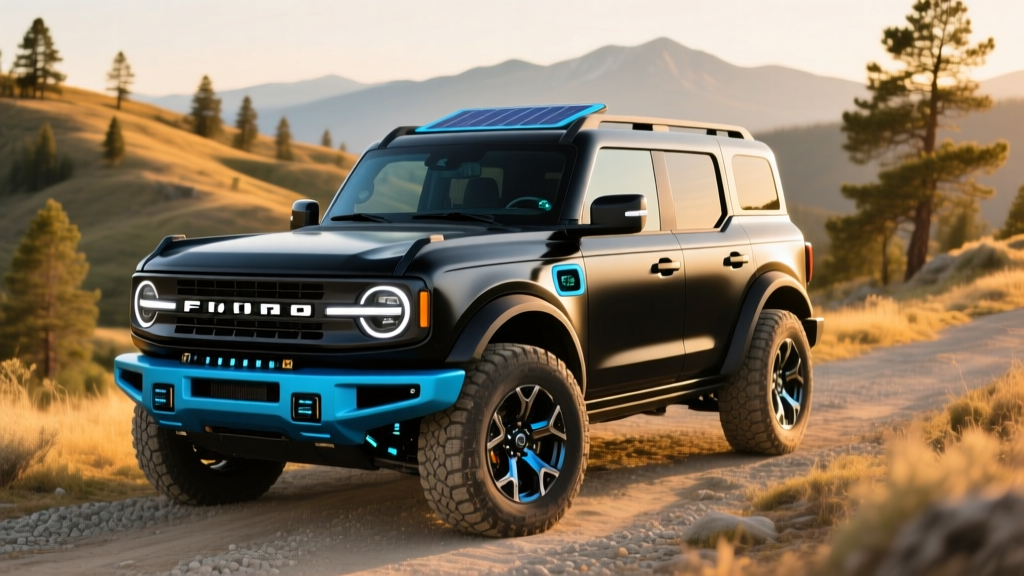
The Kindred EV Bronco is a fully restored classic Ford Bronco (typically 1966–1977 first-generation) converted to an all-electric powertrain by Kindred Motors, a specialty restomod shop. Expect a base price starting around $200,000–$250,000 depending on donor vehicle condition and options, an estimated EPA-equivalent range of roughly 150–200 miles from a ~60–80 kWh battery pack, and DC fast charging capability up to approximately 50–150 kW depending on the build spec. It is not a mass-production vehicle — each is a bespoke, low-volume commission. There is no federal §30D tax credit eligibility because these are not new production vehicles from a qualified manufacturer.
Who Is Kindred Motors and What Exactly Are They Selling?
Kindred Motors (sometimes referenced as Kindred EV) is part of the growing wave of boutique EV conversion shops — alongside companies like Everrati, Lunaz, and Zelectric — that take iconic classic vehicles and replace their aging internal-combustion drivetrains with modern electric motors and lithium-ion battery packs. The Kindred EV Bronco specifically targets first-generation Ford Bronco enthusiasts who want the vintage aesthetic with modern electric reliability and zero tailpipe emissions.
Each build starts with a donor Bronco chassis that is fully restored — body-off, rust remediation, new suspension, updated brakes — before the electric powertrain is installed. The result is a vehicle that looks like a 1970s icon from the outside but drives like a modern EV underneath, albeit with the compromises inherent to converting a body-on-frame truck designed half a century ago.
Kindred EV Bronco: Estimated Specs at a Glance
Because Kindred Motors builds are semi-custom, specs vary by commission. The following table reflects typical configurations reported by the company and EV conversion media coverage. Always confirm final specs directly with Kindred before committing to a build.
| Specification | Estimated / Typical Build |
|---|---|
| Base Vehicle | 1966–1977 Ford Bronco (1st Gen) |
| Battery Capacity | ~60–80 kWh (NMC lithium-ion, estimated) |
| Estimated Range | 150–200 miles (varies by pack size, gearing, driving style) |
| Motor Output | ~200–400 HP (single or dual motor configurations) |
| 0–60 mph | ~5.0–7.0 seconds (configuration dependent) |
| DC Fast Charge (Peak) | ~50–150 kW (CCS connector, build dependent) |
| 10–80% DC Charge Time | ~30–50 minutes (estimated, varies by charger and pack) |
| Level 2 AC Charging | ~7–11 kW (standard J1772/CCS inlet) |
| Level 2 Full Charge Time | ~7–11 hours (overnight capable) |
| Drivetrain | Rear-wheel drive or AWD (build dependent) |
| Starting Price | $200,000–$250,000+ (before donor vehicle cost if not included) |
| Build Timeline | 12–18+ months from commission |
| Federal §30D Tax Credit | Not eligible (not a new qualified manufacturer vehicle) |
| Warranty | Limited shop warranty (confirm terms per build contract) |
Note: These are estimated figures based on typical EV conversion builds in this segment. Kindred Motors may offer different configurations. Always request a detailed spec sheet for your specific commission.
Real-World Range: What to Actually Expect
Estimated range: 150–200 miles — but real-world results depend heavily on how you drive and where you live.
- City/suburban driving (moderate speeds, regen braking active): You may approach or slightly exceed the upper estimate, around 190–210 miles, thanks to regenerative braking recapturing energy at low speeds.
- Highway driving (70–75 mph sustained): The boxy Bronco body is an aerodynamic disaster by modern EV standards. Expect range to drop to roughly 120–150 miles at sustained highway speeds. That flat windshield and upright profile create enormous drag.
- Cold weather (below 32°F): Lithium-ion batteries lose efficiency in cold temperatures, and cabin heating draws significant power. Expect a 20–35% range reduction, potentially bringing real-world range down to 100–140 miles in harsh winter conditions.
- Off-road / low-speed trail use: Range is generally adequate for a day of trail riding, but climbing grades and heavy loads will increase consumption. Plan accordingly.
This is the single biggest ownership reality for any classic EV conversion: the vehicle's original shape was never designed for efficiency. A modern Tesla Model Y or Ford Mustang Mach-E achieves 3+ miles per kWh because of obsessive aero work. A first-gen Bronco will likely deliver closer to 2.0–2.5 mi/kWh, which directly limits how far a given battery can take you.
Charging: What You Need at Home and on the Road
Charging an EV conversion like the Kindred Bronco follows the same principles as any modern EV, but with some caveats specific to the conversion world.
| Charging Level | Power (kW) | Connector | Miles Added per Hour | Use Case |
|---|---|---|---|---|
| Level 1 (120V outlet) | ~1.2–1.4 kW | Standard household plug | ~2–4 mi/hr | Emergency/trickle only |
| Level 2 (240V home) | ~7–11 kW | J1772 / CCS | ~15–25 mi/hr | Daily home charging |
| DC Fast Charge | ~50–150 kW peak | CCS (typical) | ~100–250+ mi/hr (peak) | Road trips, quick top-ups |
Home charging setup: You'll want a dedicated Level 2 charger (240V, 40–48 amp circuit) installed by a licensed electrician. Budget $500–$1,500 for the charger hardware (e.g., ChargePoint Home Flex, Emporia Vue, or Tesla Universal Wall Connector) and $800–$2,500 for professional installation, depending on whether your electrical panel needs an upgrade. A 200-amp panel is usually sufficient; older homes with 100-amp service may need a panel upgrade costing $1,500–$3,000+.
Public DC fast charging: On road trips, you'll rely on networks like Electrify America, EVgo, or ChargePoint. The Kindred Bronco's charge rate (estimated 50–150 kW peak depending on build) means a 10–80% session will take roughly 30–50 minutes. Note that peak charge rate is not sustained — the charging curve tapers significantly above 80% SoC to protect battery health, so charging from 80–100% can take as long as 10–80%.
Cost Breakdown: Purchase, Charging, and Ownership
The Kindred EV Bronco is a luxury collector vehicle, not a commuter appliance. Here's what ownership actually costs:
| Cost Category | Kindred EV Bronco (Estimated) | Gas Restomod Bronco (Comparable) |
|---|---|---|
| Purchase Price | $200,000–$250,000+ | $150,000–$250,000+ |
| Federal EV Tax Credit (§30D) | $0 (not eligible) | N/A |
| Fuel/Energy Cost per Mile | ~$0.04–$0.08/mi (home L2, at $0.13–$0.25/kWh) | ~$0.18–$0.28/mi (gas at $3.50–$4.50/gal, 12–15 MPG) |
| Annual Fuel/Energy (10,000 mi) | ~$400–$800 | ~$1,800–$2,800 |
| Annual Maintenance | ~$300–$600 (tires, brakes, fluids, cabin filter) | ~$1,200–$2,500 (oil, filters, belts, exhaust, transmission) |
| Insurance (Annual) | $2,500–$5,000+ (agreed-value collector policy) | $2,000–$4,500+ (agreed-value collector policy) |
| Home Charger Install (one-time) | $1,300–$4,000 | $0 |
| Battery Replacement (future) | $8,000–$15,000+ (estimated, 10–15+ years out) | Engine rebuild: $5,000–$12,000 |
Key takeaway: The EV conversion saves roughly $1,500–$2,500 per year in fuel and maintenance compared to a gas restomod Bronco. Over 10 years, that's $15,000–$25,000 in savings — meaningful, but a fraction of the vehicle's purchase price. You are not buying a Kindred EV Bronco to save money. You're buying it for the driving experience, the silence, the instant torque, and the novelty of an electric classic.
Kindred EV Bronco vs. Gas Restomod Bronco: Head to Head
| Factor | Kindred EV Bronco | Gas Restomod Bronco (V8) |
|---|---|---|
| Driving Feel | Instant torque, silent, smooth; no gear shifts | V8 rumble, mechanical engagement, manual/auto shifts |
| Range | 150–200 mi (real-world, less on highway/cold) | 250–350 mi (15–20 gal tank, 12–18 MPG) |
| Refueling/Recharging Time | 30–50 min (DC fast, 10–80%); 7–11 hr (home L2) | 5 minutes at any gas station |
| Off-Road Capability | Good (instant torque, low center of gravity from batteries) | Proven (decades of trail heritage, easy field repairs) |
| Reliability | Fewer moving parts; battery degradation over time | Known failure points; easier to source parts for classic V8s |
| Collector/Resale Value | Emerging market; niche buyer pool | Established market; strong enthusiast demand |
| Sound & Emotion | Quiet, futuristic; some find it sterile | V8 exhaust note; visceral, nostalgic |
| Emissions | Zero tailpipe; upstream depends on grid mix | Direct CO2 and NOx emissions |
The honest reality: if you want a Bronco for long-distance road trips, remote off-road adventures far from chargers, or the visceral sound and feel of a classic V8, the gas restomod is the stronger choice. If you primarily drive locally, value instant electric torque, want minimal maintenance, and love the idea of a silent classic cruiser, the EV conversion delivers something genuinely unique.
What First-Time EV Buyers Need to Know About Conversion Vehicles
If you've never owned an EV before and you're considering a Kindred EV Bronco as your entry point, understand that conversion vehicles add complexity beyond a factory-built EV like a Ford F-150 Lightning or Rivian R1S:
- No manufacturer service network. If something goes wrong with the powertrain, you can't drive to a Ford dealer. You're dependent on the conversion shop or specialized EV technicians. Confirm Kindred's warranty terms and post-sale support before buying.
- Battery chemistry and longevity. Most conversions use NMC (nickel-manganese-cobalt) lithium-ion cells. Expect 10–20% capacity degradation over 10–15 years with normal use. LFP (lithium iron phosphate) packs degrade more slowly but are heavier and less energy-dense — a meaningful trade-off in a vehicle with limited battery space.
- No federal tax credit. The IRS §30D credit applies only to new qualified clean vehicles from eligible manufacturers. Custom conversions of classic vehicles do not qualify. Do not let anyone tell you otherwise.
- Insurance requires an agreed-value policy. Standard auto insurers will not properly cover a $200K+ restomod. You'll need a collector-car insurer (Hagerty, Grundy, etc.) that specializes in agreed-value coverage. Premiums for EV conversions may be slightly higher due to the niche nature of the build.
- Resale market is thin. Classic EV conversions are a nascent market. The buyer pool is small, and resale values are harder to predict than established gas restomods with decades of auction data.
Common Misconceptions About the Kindred EV Bronco
| Myth | Fact |
|---|---|
| "It qualifies for the $7,500 federal EV tax credit." | It does not. §30D applies to new vehicles from qualified manufacturers only. Custom conversions are excluded. (IRS source) |
| "Electric means zero maintenance." | EVs still need tire rotations, brake fluid checks, cabin air filters, coolant top-offs, and suspension work — especially on a 50-year-old chassis. Budget $300–$600/year minimum. |
| "The range is fine for road trips." | With 150–200 miles of real-world range and 30–50 minute charge stops, road trips are possible but require planning. This is not a Tesla Model S with 350+ miles of range. |
| "Conversions are as reliable as factory EVs." | Factory EVs benefit from millions of miles of validation testing. Conversions are one-off builds. Reliability depends heavily on the shop's engineering quality and component selection. |
| "I can charge it anywhere." | You can charge at any public CCS station, but DC charge speeds depend on the specific build's onboard charger and battery management system. Confirm your build's peak kW rate before relying on fast-charger maps. |
Decision Framework: Should You Buy a Kindred EV Bronco?
Choose the Kindred EV Bronco if:
- You have home Level 2 charging (garage or driveway with 240V access) and your daily driving is under 100 miles round-trip.
- You want a collector/show vehicle that also functions as a unique daily or weekend driver.
- You value instant torque, silent operation, and the conversation-starter factor of an electric classic.
- You're comfortable spending $200K+ on a vehicle with a thin resale market and no manufacturer service network.
- You live in a mild climate or accept significant winter range reduction.
Choose a gas restomod Bronco instead if:
- You plan to take long road trips or drive in remote areas far from DC fast chargers.
- The V8 sound and mechanical feel are central to why you want a classic Bronco.
- You want a more established resale market and easier access to parts and service.
- You cannot install a Level 2 home charger.
Consider a Ford F-150 Lightning or Rivian R1S instead if:
- You want a modern, practical electric truck/SUV with 300+ miles of range, factory warranty, Super Cruise or driver-assist tech, and a nationwide service network.
- You want to potentially qualify for the §30D federal tax credit (income and MSRP caps apply).
- Your budget is under $100,000.
Frequently Asked Questions
Is the Kindred EV Bronco a new Ford product?
No. Kindred Motors is an independent aftermarket conversion shop, not affiliated with Ford Motor Company. The vehicle is a restored classic Bronco with a third-party electric powertrain installed. Ford does not warranty or service these vehicles.
How long does a Kindred EV Bronco build take?
Typical build timelines for boutique EV conversions range from 12 to 18+ months from commission to delivery, depending on shop workload, donor vehicle condition, and customization level. Confirm current lead times directly with Kindred.
Can I take a Kindred EV Bronco off-road?
Yes, and electric drivetrains offer advantages off-road — instant torque at zero RPM and a low center of gravity from the battery pack. However, range will decrease significantly on steep grades and technical terrain. Plan your trail rides with charging in mind, and remember that if you strand an EV on a remote trail, you can't siphon electrons from a friend's truck.
What happens if the battery degrades?
NMC lithium-ion batteries typically lose 10–20% capacity over 10–15 years with normal use. If the pack eventually needs replacement, budget an estimated $8,000–$15,000+ depending on pack size and cell availability at that time. Battery technology and pricing continue to evolve, so future replacement costs may differ.
Can I charge at Tesla Superchargers?
Only if your Kindred build is equipped with a NACS (North American Charging Standard) inlet or you carry a NACS-to-CCS adapter. As of 2025–2026, Tesla has opened many Supercharger stalls to non-Tesla EVs via the Tesla app, but compatibility depends on the specific connector and vehicle configuration. Confirm with Kindred what connector your build uses.
Is an EV conversion Bronco a good investment?
Classic car investment is speculative regardless of powertrain. Electric conversions are a newer and smaller market segment than gas restomods, which means fewer comparable sales data points. Some EV conversions (e.g., high-profile builds by established shops) have held value well, but this is not guaranteed. Buy it because you want to drive it, not as a financial instrument.