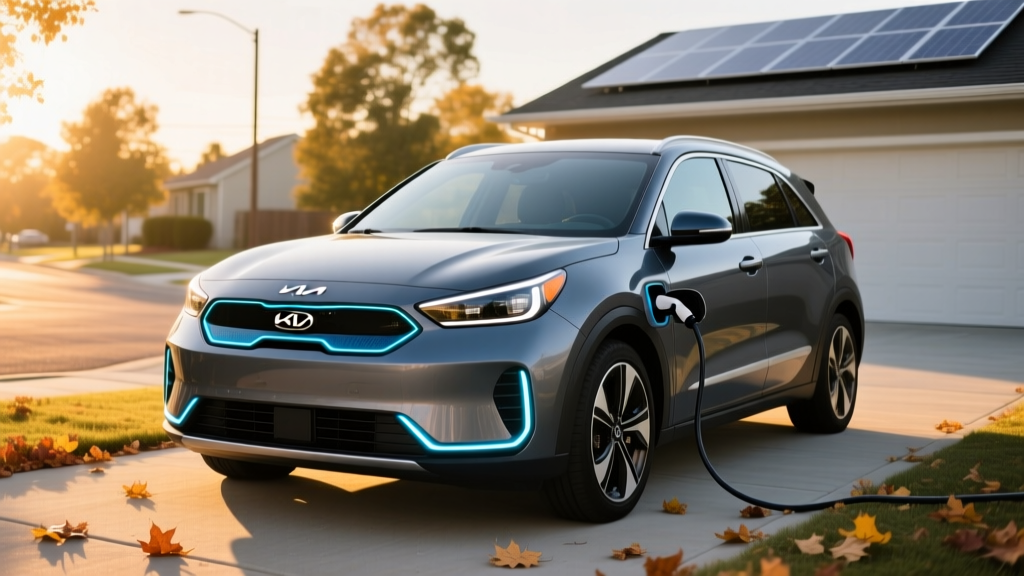
Quick Answer: The 2023 Kia Niro EV delivers an EPA-estimated 239 miles of range from its 64.8 kWh battery pack, with DC fast charging peaking at roughly 85 kW (10–80% in about 45 minutes). Base MSRP started at $40,875 (Wind trim) before incentives. As a used EV in 2026, it qualifies for up to $4,000 under the IRS §25E used-EV credit if you meet income caps and the sale price is under $25,000. Real-world highway range drops to roughly 200–215 miles; cold weather can shave another 15–25%. If you can charge at home and your daily commute is under 100 miles round-trip, the Niro EV remains one of the most practical and affordable entry points into EV ownership.
2023 Kia Niro EV: Core Specs at a Glance
The second-generation Niro EV (SG2 platform) launched for the 2023 model year with a redesigned interior, slightly larger battery, and updated styling. Here are the exact figures that matter for ownership decisions:
| Specification | 2023 Kia Niro EV |
|---|---|
| EPA Range | 239 miles |
| Battery Capacity (usable) | 64.8 kWh (NMC chemistry) |
| Motor Output | 201 hp / 188 lb-ft torque |
| 0–60 mph | ~7.3 seconds |
| EPA Combined MPGe | 113 MPGe |
| Efficiency | 30 kWh/100 mi |
| DC Fast Charge (peak) | ~85 kW (CCS1 connector) |
| 10–80% DC Fast Charge | ~45 minutes |
| Level 2 AC Charge Rate | 11 kW (onboard charger) |
| Level 2 Full Charge Time | ~7 hours (0–100%) |
| Cargo Volume | 22.8 cu ft (rear seats up) / 53.0 cu ft (folded) |
| Original MSRP (Wind / Wave) | $40,875 / $45,875 |
| Battery/Powertrain Warranty | 10 years / 100,000 miles |
Source: EPA fueleconomy.gov, Kia America press materials.
Real-World Range: What the EPA Sticker Doesn't Tell You
The 239-mile EPA estimate assumes a mix of city and highway driving at moderate temperatures. In practice, your mileage will vary based on three factors that every Niro EV buyer should model before purchasing:
EPA Sticker: 239 miles
Real-World Highway (70 mph, 75°F): ~200–215 miles
Real-World Highway (32°F, no heat pump): ~165–185 miles
City/Suburban (moderate climate): ~240–260 miles (regen braking recovers energy)
The 2023 Niro EV does not include a heat pump — a notable omission that Kia addressed in later model years. This means winter cabin heating draws directly from the traction battery via resistive elements, consuming roughly 2–4 kW continuously in cold conditions. On a 30°F highway drive, expect to lose 20–30% of your rated range compared to the EPA sticker.
The Niro EV's efficiency of 30 kWh/100 mi is competitive with the Chevrolet Bolt EUV (31 kWh/100 mi) but trails the Tesla Model Y (28 kWh/100 mi) and Hyundai Ioniq 5 (29 kWh/100 mi). For most owners, this translates to roughly $0.09–$0.14 per mile when charging at home on a national-average residential rate of $0.16/kWh — roughly half the per-mile fuel cost of a 28-MPG gas crossover at $3.40/gallon.
Charging Reality: Home Setup and Public Network Expectations
The Niro EV's charging profile is its most significant ownership consideration — and the area where buyers most often miscalculate.
| Charging Level | Power | Connector | Miles Added/Hour |
|---|---|---|---|
| Level 1 (120V outlet) | ~1.4 kW | J1772 | ~4–5 miles |
| Level 2 (240V, 32A) | ~7.7 kW | J1772 | ~25–28 miles |
| Level 2 (240V, 48A) | 11 kW (max onboard) | J1772 | ~35–38 miles |
| DC Fast Charge | ~85 kW peak | CCS1 | ~140 miles in 30 min (10–50%) |
Home Charging Installation
Most Niro EV owners will want a Level 2 home charger on a 240V circuit. The 11 kW onboard charger means you can take advantage of a 48-amp circuit (60-amp breaker) for the fastest home charging. A typical installation breaks down as follows:
| Component | Cost Range |
|---|---|
| Level 2 Charger (e.g., ChargePoint Home Flex, Emporia Vue) | $350–$700 |
| Electrician labor (240V/50A circuit run) | $500–$2,000 |
| Permit & inspection | $50–$300 |
| Electrical panel upgrade (if needed, 100A→200A) | $1,500–$3,500 |
| Total (no panel upgrade) | $900–$3,000 |
| Total (with panel upgrade) | $2,400–$6,500 |
If your home has a 200-amp panel with spare capacity, expect to pay $900–$2,000 for a straightforward installation. Homes with older 100-amp panels may need an upgrade — consult a licensed electrician for a load calculation before budgeting.
DC Fast Charging Limitations
The Niro EV's peak DC charge rate of ~85 kW is the weakest link for road-trippers. On a CCS-equipped Electrify America or EVgo station, the charge curve holds near 75–85 kW from roughly 10–55% State of Charge, then tapers progressively: ~55 kW by 65%, ~35 kW by 80%. A 10–80% session takes approximately 45 minutes — adequate for a meal stop but noticeably slower than the Hyundai Ioniq 5 (175 kW, ~18 minutes) or Tesla Model Y (250 kW, ~15 minutes).
The Niro EV uses the CCS1 connector. With the industry's shift to NACS (Tesla's connector), Kia has committed to NACS on future models, and adapters are becoming available. For now, the CCS1 network (Electrify America, EVgo, ChargePoint) remains widely available at highway corridors.
EV vs. Gas: The Niro EV Compared to the Niro Hybrid and Gas Crossovers
Many buyers cross-shop the Niro EV against the Niro Hybrid or conventional gas crossovers like the Toyota Corolla Cross. Here's a data-driven comparison:
| Metric | 2023 Niro EV | 2023 Niro Hybrid | 2024 Toyota Corolla Cross (AWD) |
|---|---|---|---|
| EPA Combined Efficiency | 113 MPGe (30 kWh/100mi) | 53 MPG | 32 MPG |
| Fuel/Energy Cost per Mile | $0.045 (home charging) | $0.064 ($3.40/gal) | $0.106 ($3.40/gal) |
| Annual Fuel Cost (12,000 mi) | ~$540 | ~$770 | ~$1,275 |
| Original Base MSRP | $40,875 | $28,015 | $25,060 |
| 2026 Used Price (est.) | $18,000–$23,000 | $22,000–$26,000 | $20,000–$24,000 |
| Annual Maintenance | ~$300–$400 | ~$600–$800 | ~$700–$900 |
| Range / Tank | 239 mi (EPA) | 555 mi (10.6 gal) | 413 mi (12.9 gal) |
Fuel costs based on $3.40/gal national average and $0.16/kWh residential electricity. Source: fueleconomy.gov.
The Niro Hybrid wins on upfront cost and total range, making it the safer choice for drivers without home charging or frequent road-trippers. The Niro EV wins on per-mile operating cost and maintenance simplicity — no oil changes, no transmission fluid, no spark plugs, and regenerative braking extends pad life significantly.
Total Cost of Ownership: 5-Year Breakdown
Buying a used 2023 Niro EV in 2026 shifts the economics dramatically in the EV's favor due to steep first-owner depreciation. Here's a realistic five-year cost model for a buyer purchasing at $21,000 and driving 12,000 miles annually:
| Cost Category (5 Years) | Niro EV (Used) | Niro Hybrid (Used) | Corolla Cross (Used) |
|---|---|---|---|
| Purchase Price | $21,000 | $24,000 | $22,000 |
| Federal Tax Credit (§25E used EV) | –$4,000 (if eligible) | $0 | $0 |
| Net Purchase | $17,000 | $24,000 | $22,000 |
| Energy/Fuel (5 yrs) | $2,700 | $3,850 | $6,375 |
| Maintenance (5 yrs) | $1,750 | $3,500 | $4,000 |
| Insurance (5 yrs, est.) | $7,500 | $6,500 | $6,000 |
| Home Charger Install (one-time) | $1,500 | $0 | $0 |
| Total 5-Year Cost | $30,450 | $37,850 | $38,375 |
| Cost per Mile | $0.51 | $0.63 | $0.64 |
Key assumptions: Insurance premiums for EVs run 10–20% higher than comparable gas vehicles (source: industry data from major insurers). The §25E used-EV credit provides up to $4,000 or 30% of the sale price (whichever is lower) for vehicles priced under $25,000, subject to buyer income caps ($75,000 single / $150,000 joint AGI). Verify eligibility at IRS.gov before purchasing.
Tax Credit Eligibility for the 2023 Niro EV in 2026
As a used vehicle in 2026, the 2023 Niro EV is eligible for the IRS §25E Used Clean Vehicle Credit — not the §30D new-vehicle credit. Here's the checklist:
- Maximum credit: $4,000 or 30% of sale price (whichever is lower)
- Sale price cap: Vehicle must sell for $25,000 or less
- Buyer income limits: AGI ≤ $75,000 (single) / $112,500 (head of household) / $150,000 (married filing jointly)
- Vehicle age: Must be at least 2 model years old (2023 model qualifies in 2026)
- Battery capacity: At least 7 kWh (Niro EV's 64.8 kWh qualifies)
- Dealer requirement: Must purchase from a licensed dealer (private-party sales don't qualify)
- Transfer: Credit can be transferred to the dealer at point of sale for an immediate price reduction
- Frequency limit: One used-EV credit per taxpayer every 3 years
The original §30D new-vehicle credit was unavailable for the Niro EV when new because it was manufactured in South Korea and did not meet North American final-assembly requirements. The used credit (§25E) has no assembly-location requirement, which makes the Niro EV a strong candidate on the used market.
Common Misconceptions: Myths vs. Facts
| Myth | Fact |
|---|---|
| "The battery will need replacing in 5 years and cost $15,000." | Kia warranties the battery for 10 years/100,000 miles against capacity loss below 70%. NMC batteries in similar Kia/Hyundai platforms show ~8–12% degradation at 100,000 miles based on fleet data. Replacement is rarely needed within the warranty period. |
| "239 miles of range isn't enough for daily driving." | The average American drives 37 miles per day (FHWA data). Even with 30% cold-weather loss, the Niro EV provides ~165 miles — over 4× the average daily need. Range matters most for road trips, where DC fast charging covers the gap. |
| "I need a special electrical setup to own an EV." | A standard 120V outlet adds ~4–5 miles per hour of charging — enough for low-mileage drivers. A Level 2 home charger ($900–$3,000 installed) covers virtually all daily needs. Most homes with a 200A panel need no upgrade. |
| "EVs are worse in winter." | EVs start instantly in cold weather (no engine cranking), and cabin preheating while plugged in means a warm car every morning. Range loss is real (15–30%) but manageable with planning. The Niro EV's lack of a heat pump makes this more pronounced than in EVs equipped with one. |
| "Public charging is unreliable and I'll get stranded." | Public DC charging reliability has improved, though it remains inconsistent. The Niro EV's CCS1 connector works with Electrify America, EVgo, and ChargePoint networks. Apps like PlugShare show real-time station status. For daily driving, home charging eliminates this concern entirely. |
Decision Framework: Is the 2023 Niro EV Right for You?
Choose the 2023 Niro EV if:
- You have access to home charging (garage, driveway, or workplace Level 2)
- Your daily round-trip commute is under 100 miles
- You take fewer than 6 road trips over 200 miles per year
- You want low operating costs and minimal maintenance
- You qualify for the $4,000 §25E used-EV credit (income under caps, buying from a dealer under $25K)
- You value a tall-riding crossover hatchback with strong cargo space (22.8 cu ft)
Choose the Niro Hybrid or a gas crossover instead if:
- You live in an apartment or lack reliable access to any charging
- You regularly drive 300+ miles in a single day (the 85 kW charge rate means longer stops)
- You live in a region with extreme cold (below 10°F) and lack a garage — the missing heat pump compounds range loss
- You need AWD (the Niro EV is front-wheel drive only; the Niro Hybrid and gas Corolla Cross offer AWD)
- You tow anything (the Niro EV is not rated for towing)
First-Time EV Buyer Essentials
If the 2023 Niro EV would be your first electric vehicle, here are the ownership realities no brochure covers:
Charging etiquette: At public DC fast chargers, don't plug in above 80% unless the station is empty. Charging slows dramatically past 80% (from ~85 kW down to ~15–20 kW), and you'll block other EVs for minimal range gain.
Preconditioning: The Niro EV does not offer navigation-based battery preconditioning (unlike Tesla or the Hyundai Ioniq 5). In cold weather, your first few miles of DC fast charging will be slower because the battery is cold. Plan to drive 15–20 minutes before arriving at a fast charger in winter to warm the pack naturally.
Tire wear: EVs are heavier (the Niro EV weighs ~3,850 lbs) and deliver instant torque. Expect tire replacement 10–20% sooner than on a comparable gas car. Budget $600–$900 for a set of four all-season tires every 35,000–45,000 miles.
Insurance: Get quotes before buying. EV insurance premiums average 10–20% higher due to repair costs and battery replacement risk. Shop at least three insurers — some now offer EV-specific discounts.
Regenerative braking: The Niro EV offers four regen levels (0–3) plus a "one-pedal" mode at level 3 that can bring the car to a full stop without touching the brake pedal. New EV drivers typically adjust within a week and prefer level 2 or 3 for daily driving.
Frequently Asked Questions
How long will the 2023 Niro EV battery last?
Kia warranties the high-voltage battery for 10 years or 100,000 miles against capacity loss below 70% of original. Based on data from similar Kia/Hyundai NMC battery packs, most units retain 88–92% capacity at 100,000 miles. With proper care (avoiding frequent 100% charges and deep discharges), the battery should last 150,000–200,000 miles before significant degradation.
Does the 2023 Niro EV qualify for any tax credit in 2026?
Yes — the IRS §25E Used Clean Vehicle Credit offers up to $4,000 if the sale price is $25,000 or less and your AGI falls within the income caps ($75K single / $150K joint). The credit can be transferred to the dealer at point of sale for an immediate price reduction. It did not qualify for the §30D new-vehicle credit due to South Korean assembly. Always confirm current rules at IRS.gov.
Can I road-trip in the Niro EV?
Yes, but plan for longer charging stops. The 85 kW peak DC charge rate means 10–80% takes ~45 minutes, compared to ~18 minutes in a Hyundai Ioniq 5 or ~15 minutes in a Tesla Model Y. For trips over 300 miles, expect 2–3 charging stops of 30–45 minutes each. Use PlugShare or A Better Routeplanner to map CCS-compatible stations along your route.
Is the Niro EV good in snow and cold weather?
Traction is adequate with winter tires (FWD with instant torque control), but range loss is significant. Without a heat pump, cabin heating draws 2–4 kW continuously, cutting range by 20–30% in sub-freezing temperatures. If you live in a climate with sustained below-freezing winters and lack a garage for overnight preconditioning, a Niro Hybrid may be a more practical choice.
What does it cost to charge a Niro EV at home?
Charging from 10% to 100% at home uses roughly 58 kWh from the wall (accounting for ~10% charging losses). At the national average residential rate of $0.16/kWh, a full charge costs about $9.30 and delivers roughly 215 real-world miles — approximately $0.043 per mile. Compare that to $0.12/mile in a 28-MPG gas car at $3.40/gallon.
Does the 2023 Niro EV have Apple CarPlay and Android Auto?
Yes. The 2023 Niro EV comes with a 10.25-inch touchscreen with wireless Apple CarPlay and Android Auto on the Wind trim, along with built-in navigation on the Wave trim. It also includes Kia's Highway Driving Assist (HDA), which is an SAE Level 2 driver-assistance system — it controls steering, acceleration, and braking on highways but requires the driver to remain fully engaged and attentive at all times.