The Electric Truck Promise vs. The Towing Reality
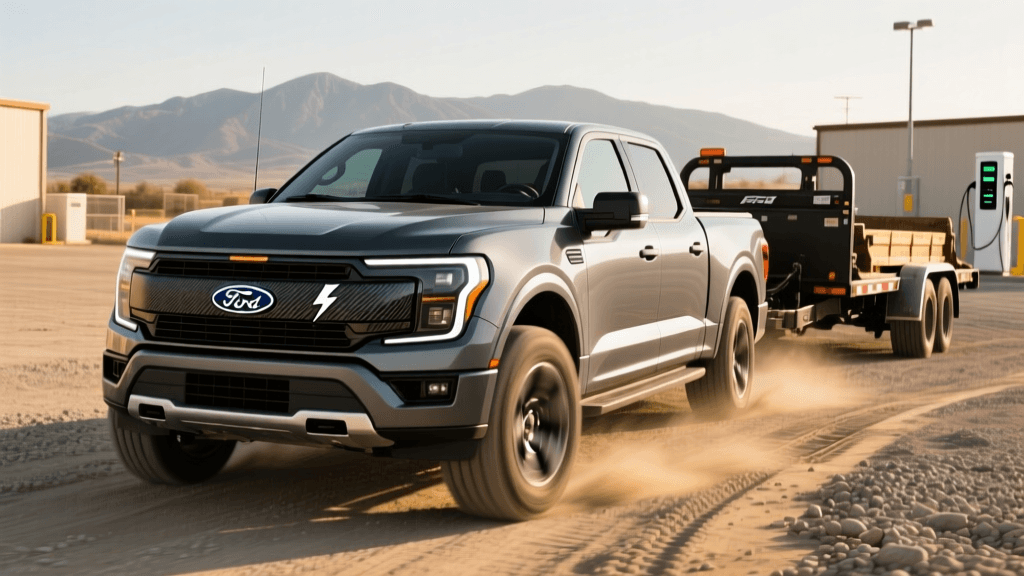
When Ford introduced the F-150 Lightning, it promised to revolutionize the American pickup truck. With massive torque, a spacious front trunk, and the ability to power a home during an outage, the value proposition was undeniable. However, for truck owners who rely on their vehicles for heavy hauling, the ultimate test of any pickup is its towing capability. The intersection of electric vehicle (EV) battery physics and the brutal aerodynamics of towing a trailer creates a unique set of challenges and cost implications. In this comprehensive cost and value breakdown, we analyze the Ford F-150 Lightning's towing capacity, the severe impact on real-world range, and the true financial cost of hauling with electrons versus gasoline.
Ford F-150 Lightning Towing Capacity Explained
Before diving into the economics of towing, it is essential to understand the hard numbers. According to Car and Driver's official specifications hub, the F-150 Lightning's towing capacity varies significantly based on the battery configuration and the presence of the Max Trailer Tow Package.
- Standard Range Battery (98 kWh): Maximum towing capacity of 7,700 pounds.
- Extended Range Battery (131 kWh): Maximum towing capacity of 10,000 pounds (requires the Max Trailer Tow Package and 18-inch wheels).
While 10,000 pounds is highly respectable and sufficient for most recreational boat trailers, campers, and utility loads, it falls short of the gas-powered F-150's maximum limit of 14,000 pounds. For commercial users pulling heavy equipment, this ceiling is a critical factor in the vehicle's overall value proposition. Furthermore, the heavy weight of the Lightning's battery pack (adding over 1,500 pounds to the curb weight compared to its gas counterpart) reduces the available payload capacity, forcing owners to carefully balance tongue weight and cargo.
The Brutal Truth About Range Impact
The most significant hurdle to the Lightning's towing value is the dramatic reduction in driving range. Electric vehicles are inherently less efficient at highway speeds due to aerodynamic drag, and adding a blunt, heavy trailer exacerbates this issue exponentially. Unlike internal combustion engines, which become relatively more efficient under heavy load at steady speeds, electric motors draw massive amounts of current to overcome the combined wind resistance and rolling weight.
Real-world testing by Edmunds and other major automotive publications has consistently shown that towing a mid-sized trailer (around 5,000 to 6,000 pounds) at highway speeds cuts the F-150 Lightning's range by 50% to 60%. An Extended Range Lightning with an EPA-estimated 320 miles of unladen range will realistically achieve only 110 to 130 miles of range while towing at 65 mph. If you are pushing the 10,000-pound maximum capacity or driving into a headwind, that range can plummet below 90 miles. This severe range compression fundamentally alters the cost and time value of long-distance hauling.
Cost & Value Breakdown: Electricity vs. Gasoline
To truly understand the value of the Lightning as a tow rig, we must break down the cost per mile. The economics shift dramatically depending on whether you are charging at home or relying on public DC fast chargers on the highway.
Scenario 1: Home Charging (The Sweet Spot)
If you are towing locally—such as moving a landscaping trailer around town or hauling a boat to a nearby lake and charging overnight at home—the Lightning is an undeniable financial winner. With the national average residential electricity rate hovering around $0.16 per kWh, the energy cost to move heavy loads is a fraction of what a gas truck demands.
Scenario 2: Highway DC Fast Charging (The Premium)
The value proposition flips when you take the Lightning on a road trip. Public DC fast chargers, particularly those operated by networks like Electrify America or Tesla Superchargers, often charge between $0.35 and $0.55 per kWh. Because towing consumes roughly 2.2 to 2.5 kWh per mile, the cost per mile surges.
| Metric | Gas F-150 (3.5L EcoBoost) | F-150 Lightning (Extended Range) |
|---|---|---|
| Max Towing Capacity | 14,000 lbs | 10,000 lbs |
| Estimated Towing Range | ~350 miles (26 gal tank) | ~110 miles (131 kWh battery) |
| Cost per 100 Miles (Local/Home) | ~$45.00 (at 8 MPG, $3.60/gal) | ~$35.00 (at 2.2 kWh/mi, $0.16/kWh) |
| Cost per 100 Miles (Highway/Public) | ~$45.00 (at 8 MPG, $3.60/gal) | ~$99.00 (at 2.2 kWh/mi, $0.45/kWh) |
| Refuel/Recharge Time (100 mi) | ~10 minutes | ~45-60 minutes |
As the data illustrates, highway towing in an EV truck can cost more than double the fuel expense of a gas truck when relying on public infrastructure. The U.S. Department of Energy's EV infrastructure guidelines emphasize that while EVs offer massive efficiency gains in daily driving, heavy-duty towing remains an area where liquid fuels currently hold a distinct logistical and financial advantage for long-haul routes.
The Hidden Currency: Time and Infrastructure Costs
Beyond the literal dollar amount, time is a critical component of the cost and value equation. When towing, the Lightning requires frequent stops to recharge. A 400-mile road trip that requires three fuel stops in a gas truck might require four or five charging stops in the Lightning, each lasting 30 to 45 minutes to reach an 80% state of charge. This turns a six-hour drive into a ten-hour ordeal.
Furthermore, charging infrastructure is rarely designed for truck-and-trailer combinations. Most DC fast chargers are located in standard parking spaces, forcing Lightning owners to unhitch their trailers, park them in a separate lot, charge the truck, and then re-hitch—a massive hidden time cost that severely diminishes the vehicle's utility for commercial contractors or frequent RV travelers.
The Pro Power Onboard Advantage: Reclaiming the Value
Despite the highway towing drawbacks, the Lightning offers a unique value-add that gas trucks cannot match: the Pro Power Onboard system. With up to 9.6 kW of exportable power, the Lightning essentially acts as a mobile, silent generator. For contractors, construction crews, and outdoor event organizers, this feature provides immense financial value.
Running heavy-duty power tools, welding equipment, or site lighting directly from the truck's battery eliminates the need to purchase, maintain, and fuel a standalone gas generator. A crew working at a remote job site can plug directly into the bed outlets, saving hundreds of dollars a month in generator fuel and maintenance costs. In this specific work-site scenario, the Lightning's battery is not just a propulsion system; it is a revenue-generating asset that easily offsets the higher initial purchase price and highway towing inefficiencies.
Actionable Advice for Lightning Owners Who Tow
If you own or are considering purchasing an F-150 Lightning for towing, implementing the following strategies will maximize your efficiency and protect your wallet:
- Manage Your Speed: Aerodynamic drag increases with the square of your speed. Dropping your highway speed from 70 mph to 60 mph can recover up to 15% to 20% of your towing range, drastically reducing the need for public charging stops.
- Utilize Smart Route Planning: Never guess your range. Use specialized software like A Better Routeplanner (ABRP) and input your specific trailer weight, frontal area, and elevation changes to get highly accurate charging waypoints.
- Pre-Condition While Plugged In: Always pre-condition the cabin and battery while the truck is still connected to your home Level 2 charger. This ensures the battery is at optimal thermal temperatures for towing, preserving precious kWh for the road.
- Optimize Trailer Aerodynamics: If you are in the market for a new camper or utility trailer, prioritize models with sloped fronts, aerodynamic teardrop shapes, and lower profiles to minimize the drag penalty.
- Leverage Regenerative Braking: When descending mountain passes, rely on the Lightning's aggressive regenerative braking. Not only does it save your physical brake pads from the wear and tear of heavy towing, but it also feeds valuable energy back into the battery.
Final Verdict: Who is the Lightning For?
The Ford F-150 Lightning is a masterpiece of everyday utility, offering unmatched daily driving refinement, instant torque, and brilliant worksite power capabilities. However, from a strict cost and value perspective regarding long-distance, heavy towing, it requires significant compromises. The severe range impact and the high cost of public DC fast charging make it a poor financial choice for those who frequently tow heavy campers across state lines.
Conversely, for the local contractor, the weekend warrior who tows a boat to a lake 50 miles away, or the homeowner who occasionally moves a landscaping trailer, the Lightning is an exceptional value. By keeping the towing within a 100-mile round-trip radius and relying on cheap overnight home charging, owners can enjoy the silent, torque-rich experience of electric towing while reaping the financial benefits of electrons over gasoline.