The Electric Truck Paradigm Shift
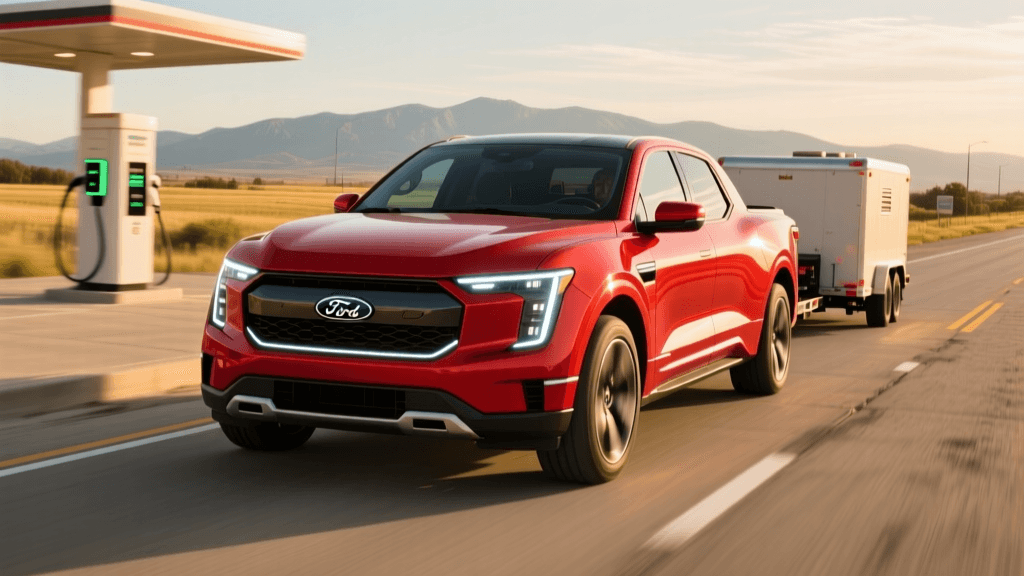
When Ford introduced the F-150 Lightning, it didn't just enter the electric vehicle market; it kicked the door down. By electrifying America's best-selling vehicle, Ford promised a truck that could double as a mobile generator, offer massive front trunk storage, and deliver instantaneous torque. However, for traditional truck owners, the ultimate test of any pickup isn't its zero-to-sixty time or its frunk capacity—it is its ability to tow. When you hook up a boat, a horse trailer, or a travel camper, the physics of aerodynamics and weight take over. In this comprehensive cost and value breakdown, we analyze the Ford F-150 Lightning's towing capacity, the brutal reality of its range impact, and the true financial cost of towing on electrons versus unleaded gasoline.
Official Towing Capacities: Standard vs. Extended Range
To understand the value proposition, we first need to look at the hard numbers. The Lightning is not a single-spec vehicle; its capabilities shift dramatically depending on the battery pack and the tow package equipped. According to Ford's official F-150 Lightning specifications, the truck offers two primary battery configurations. The Standard Range model features a 98 kWh usable battery pack and is rated to tow up to 7,700 pounds when properly equipped. For those needing more capability, the Extended Range model packs a massive 131 kWh usable battery. When paired with the Max Trailer Tow Package, the Extended Range Lightning achieves a maximum towing capacity of 10,000 pounds. This puts it in the same league as many internal combustion engine (ICE) half-ton trucks. However, while the peak towing numbers are impressive, the sustained range while pulling that weight is where the cost and value equation becomes complicated.
The Physics of EV Towing: Why Range Plummets
It is a well-documented phenomenon that electric vehicles lose a significant portion of their range when towing, often dropping by 40% to 50% or more. To understand why, we must look at the factors that dictate energy consumption. The Environmental Protection Agency's EV technology overview notes that EVs are incredibly efficient at converting grid energy to power at the wheels, but they are still bound by the laws of physics. When towing a conventional travel trailer, you are essentially pulling a large, un-aerodynamic brick. Aerodynamic drag increases with the square of your speed, meaning that driving 70 mph with a trailer requires exponentially more energy than driving 55 mph. Furthermore, the sheer weight of a 6,000-pound trailer increases rolling resistance and requires massive energy expenditure to climb inclines. While regenerative braking helps recover some energy on downhill grades or during deceleration, the heavy momentum of a trailer often necessitates the use of mechanical brakes to prevent overheating the regen system, further reducing energy recapture. As a result, an Extended Range Lightning with an EPA-estimated 320 miles of unladen range will realistically see that drop to roughly 150 to 170 miles when towing a 6,000-pound camper at highway speeds.
Cost & Value Breakdown: Electrons vs. Unleaded
This massive range reduction directly impacts the cost of ownership and operation. To evaluate the true value of the Lightning as a tow rig, we must compare the cost per mile of towing with electricity versus a comparable gas-powered F-150. The U.S. Department of Energy's Alternative Fuels Data Center highlights that electricity prices vary wildly depending on whether you are charging at home or using public DC fast chargers. Below is a breakdown of a hypothetical 100-mile towing trip with a 6,000-pound trailer.
| Metric | Gas F-150 (3.5L EcoBoost) | Lightning (Home Charging) | Lightning (Public DCFC) |
|---|---|---|---|
| Estimated Towing Efficiency | 10 MPG | 2.0 Miles / kWh | 2.0 Miles / kWh |
| Energy Required for 100 Miles | 10 Gallons | 50 kWh | 50 kWh |
| Average Cost per Unit | $3.50 / Gallon | $0.16 / kWh | $0.45 / kWh |
| Total Trip Energy Cost | $35.00 | $8.00 | $22.50 |
| Estimated Refuel/Recharge Time | 10 Minutes | 8 Hours (Level 2) | 45-60 Minutes |
Analyzing the Financial and Time Costs
The data reveals a stark dichotomy in the Lightning's value proposition. If you can charge at home overnight at the national average of $0.16 per kWh, the F-150 Lightning is an absolute bargain, costing less than a quarter of what the gas-powered equivalent requires to move the same trailer the same distance. For local contractors, landscapers, or boaters who tow equipment to a job site or lake within a 60-mile radius and return home to plug in, the financial savings are immense. The instant torque also makes merging onto highways with a heavy load remarkably effortless and safe. However, the road trip scenario tells a different story. When relying on public DC fast chargers, the cost savings virtually evaporate, bringing the price per mile close to that of a gas truck. More importantly, you must factor in the time tax. Because the towing range is capped around 150 miles, a 300-mile road trip requires at least one lengthy charging stop. Navigating charging stations that are not designed for pull-through towing, unhitching your trailer to charge, or blocking multiple stalls creates a logistical headache that gas truck owners simply do not face.
Actionable Advice: Maximizing Your Towing Value
If you decide that the F-150 Lightning fits your towing lifestyle, there are several actionable steps you can take to protect your wallet and maximize your range. First, embrace the aerodynamic teardrop trailer. Traditional boxy travel trailers destroy EV range; switching to a sleek, low-profile teardrop or pop-up camper can improve your towing efficiency by up to 30%. Second, strictly manage your highway speeds. Dropping your cruising speed from 70 mph to 60 mph can yield an extra 20 to 30 miles of range when towing, which is often the difference between reaching your destination and being stranded on the shoulder. Third, utilize the truck's built-in Intelligent Range system, which learns your towing habits and factors in trailer weight, weather, and topography to provide highly accurate range predictions, eliminating the anxiety of the guess-o-meter. Finally, precondition your battery while the truck is still plugged into your home charger before you depart. This ensures the battery is at its optimal operating temperature, preserving valuable miles for the road ahead.
Final Verdict: Who is the Lightning For?
The Ford F-150 Lightning is an engineering marvel that redefines what a pickup truck can be, but it is not a universal replacement for an internal combustion tow rig. From a cost and value perspective, it is an unparalleled champion for local and regional towing. The ability to tow 7,700 pounds to a local job site or campground and return home on cheap, home-generated electricity offers a return on investment that gas trucks cannot match. However, if your definition of truck ownership involves regularly towing heavy campers across state lines or navigating remote areas with sparse charging infrastructure, the steep time costs and range anxiety severely diminish the vehicle's value. Ultimately, the Lightning's towing prowess is best viewed as a highly capable, cost-effective tool for the daily grind, rather than a cross-country towing expedition vehicle.