Quick Verdict: The EV6 Remains a Benchmark — and i-Pedal Makes It Better
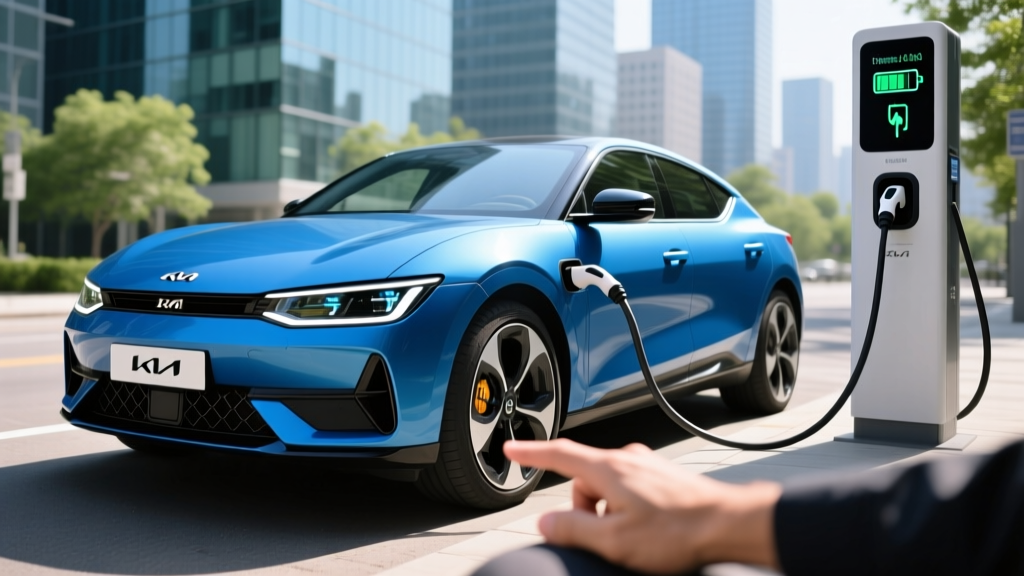
The 2026 Kia EV6 continues to be one of the most complete electric crossovers on the market. Built on Hyundai Motor Group's E-GMP platform with an 800-volt architecture, it delivers class-leading DC fast-charging speeds, a usable real-world range north of 270 miles, and a driving experience that rewards engagement. But the feature that most transforms daily ownership — and the one prospective buyers search for most — is i-Pedal, Kia's one-pedal driving mode. When calibrated correctly, i-Pedal lets you accelerate, decelerate, and come to a complete stop using only the accelerator, dramatically reducing brake wear and smoothing out stop-and-go commutes.
This review covers the full 2026 EV6 lineup — Wind RWD, Wind AWD, GT-Line, and the high-performance GT — with precise specs, real-world range data, charging-curve analysis, and a deep dive into how i-Pedal actually works in traffic, on highways, and in cold weather.
Range, Efficiency, and What You'll Actually See
The 2026 EV6 offers two battery configurations across its trims. The standard-range Wind model uses a 58.0 kWh battery (NMC chemistry), while the long-range trims (Wind, GT-Line, GT) use a 77.4 kWh usable NMC (nickel-manganese-cobalt) pack. NMC offers higher energy density than LFP, which translates to more range in a lighter package — though it requires more careful charging habits to maximize longevity.
| Trim | EPA Range | Real-World Highway (70 mph) | Cold Weather (20°F) |
|---|---|---|---|
| Wind RWD (58.0 kWh) | 232 mi | ~195–210 mi | ~165–185 mi |
| Wind RWD (77.4 kWh) | 310 mi | ~260–280 mi | ~215–240 mi |
| Wind AWD (77.4 kWh) | 282 mi | ~240–260 mi | ~195–220 mi |
| GT-Line RWD (77.4 kWh) | 310 mi | ~260–280 mi | ~215–240 mi |
| GT-Line AWD (77.4 kWh) | 282 mi | ~240–260 mi | ~195–220 mi |
| GT AWD (77.4 kWh) | 206 mi | ~170–185 mi | ~140–160 mi |
Highway driving at sustained 70+ mph reduces range 10–15% vs. EPA combined. Cold weather (below 32°F) can reduce range 15–30% depending on cabin heat usage. The EV6's standard heat pump mitigates some of this loss compared to resistive-heating EVs.
Efficiency on the long-range RWD model is rated at 134 MPGe combined (25 kWh/100 mi) per fueleconomy.gov. That places the EV6 among the most efficient crossovers in its class, rivaling the Tesla Model Y and edging out the Ford Mustang Mach-E and Volkswagen ID.4 in combined efficiency.
How i-Pedal One-Pedal Driving Works in the EV6
Kia's i-Pedal (Intelligent Pedal) system is engaged by pulling the left regen paddle behind the steering wheel and holding it for approximately one second. Once active, lifting off the accelerator triggers aggressive regenerative braking — up to approximately 0.25g of deceleration — that can bring the EV6 to a complete stop without touching the brake pedal.
Here's how i-Pedal performs across real driving scenarios:
- City stop-and-go: Excellent. i-Pedal shines here. You modulate speed entirely with the right pedal, and the EV6 holds itself at a stop on inclines without creeping forward. Brake pad wear drops to near zero in urban driving.
- Suburban commuting: Very good. Moderate lifting of the accelerator slows the car smoothly for stoplights and turns. The transition from regen to friction braking at the final stop is imperceptible in the 2026 model — a notable improvement over the 2022–2023 software.
- Highway driving: Not recommended. i-Pedal's aggressive regen makes coasting impossible and can surprise following drivers. Switch to regen level 1 or 2 (via paddles) for highway cruising, or use the "Auto" regen mode which uses the radar to adjust regen based on traffic ahead.
- Cold weather / wet roads: Reduced effectiveness. Below ~40°F, the battery cannot accept full regen power until it warms up. You may experience reduced deceleration on the first 10–15 minutes of driving. Kia's software blends in friction braking to compensate, but the one-pedal feel is noticeably softer when the pack is cold.
Pro tip: The EV6's regen paddles offer four levels (0–3) plus Auto and i-Pedal. Many owners find Level 2 or 3 with Auto as the sweet spot — strong regen without the full stop-hold behavior of i-Pedal, giving more flexibility on mixed routes.
Charging Speed: The 800-Volt Advantage
The EV6's E-GMP platform supports 800-volt DC fast charging, which is the defining hardware advantage of this vehicle. On a capable 350 kW charger, the long-range EV6 peaks at approximately 240 kW and sustains high charge rates through the critical 10–80% window.
| Charging Level | Power | Speed (Long-Range 77.4 kWh) | Time |
|---|---|---|---|
| Level 1 (120V household) | ~1.4 kW | ~4 mi/hr | ~55 hr (0–100%) |
| Level 2 (240V, 48A home) | 10.9 kW | ~36 mi/hr | ~7.5 hr (0–100%) |
| DC Fast (350 kW station) | Peak 240 kW | 10–80% in ~18 min | ~18 min (10–80%) |
| DC Fast (150 kW station) | Peak ~135 kW | 10–80% in ~28 min | ~28 min (10–80%) |
| DC Fast (50 kW station) | 50 kW | 10–80% in ~65 min | ~65 min (10–80%) |
Charging-curve reality check: The EV6 does not sustain 240 kW for the entire session. Peak rate occurs between roughly 10–40% SoC, then tapers progressively. From 80–100%, expect very slow charging (~30+ minutes) as the BMS protects the NMC cells. For road trips, plan stops around the 10–80% window and skip topping off unless you need the final miles.
The EV6 uses the CCS1 connector for DC fast charging and J1772 for Level 2 AC. With the industry's shift to NACS (Tesla's connector), Kia has confirmed that 2025+ EV6 models include a NACS port on new production, while 2022–2024 models can use a CCS-to-NACS adapter at Tesla Superchargers. Verify your specific model year's port configuration with your dealer.
Performance and Drivetrain Breakdown
| Trim | Drivetrain | Horsepower | Torque (lb-ft) | 0–60 mph |
|---|---|---|---|---|
| Wind RWD (77.4 kWh) | Rear-Wheel Drive | 225 hp | 258 | 7.2 sec |
| Wind AWD (77.4 kWh) | Dual-Motor AWD | 320 hp | 446 | 5.1 sec |
| GT-Line RWD (77.4 kWh) | Rear-Wheel Drive | 225 hp | 258 | 7.2 sec |
| GT-Line AWD (77.4 kWh) | Dual-Motor AWD | 320 hp | 446 | 5.1 sec |
| GT AWD (77.4 kWh) | Dual-Motor AWD | 576 hp | 545 | 3.4 sec |
The RWD models are the efficiency champions and offer perfectly adequate acceleration for daily driving. The AWD models add confidence in rain and snow with a meaningful 0–60 improvement. The GT is a legitimate performance machine — 576 hp with launch control produces supercar-rivaling acceleration, though at a steep range penalty (206 mi EPA).
All trims feature a low center of gravity from the under-floor battery pack, and the EV6's steering and chassis tuning remain more engaging than most electric crossovers. The GT-Line's sport-tuned suspension firms up the ride without becoming harsh.
Interior Space, Cargo, and Daily Practicality
The EV6's crossover profile yields competitive interior dimensions:
- Cargo volume (behind rear seats): 24.4 cu ft
- Cargo volume (rear seats folded): 50.2 cu ft
- Front trunk (frunk): 0.7 cu ft (AWD) / 1.8 cu ft (RWD) — enough for a charging cable, not much more
- Rear legroom: 39.5 inches — generous for adults on longer trips
- Front headroom: 40.9 inches
The flat floor (no transmission tunnel) makes the rear middle seat genuinely usable, a practical advantage over many gas-platform crossovers. The dual 12.3-inch curved displays run Kia's latest infotainment with wireless Apple CarPlay and Android Auto. Physical buttons for climate control remain, which is a usability win over touch-only interfaces.
Notable drawbacks: The frunk is disappointingly small compared to the Hyundai Ioniq 5 or Ford Mustang Mach-E. Rear visibility is compromised by the thick C-pillars and small rear window — the digital rearview mirror option (available on GT-Line and GT) helps. The sloping roofline cuts into maximum cargo height for taller items.
Pricing, Tax Credits, and What You'll Actually Pay
| Trim | Base MSRP | §30D Credit (est.) | Effective Price |
|---|---|---|---|
| Wind RWD (Standard Range) | $42,600 | Up to $7,500* | ~$35,100 |
| Wind RWD (Long Range) | $45,900 | Up to $7,500* | ~$38,400 |
| Wind AWD (Long Range) | $49,900 | Up to $7,500* | ~$42,400 |
| GT-Line RWD | $51,200 | Up to $7,500* | ~$43,700 |
| GT-Line AWD | $55,200 | Up to $7,500* | ~$47,700 |
| GT AWD | $61,600 | Up to $3,750* | ~$57,850 |
*Federal tax credit caveats (§30D, per IRS.gov): The full $7,500 credit requires meeting both critical-mineral and battery-component sourcing thresholds, which shift annually. Buyer income caps apply ($150K single / $300K joint modified AGI). MSRP caps for SUVs/crossovers: $80,000 — all EV6 trims fall under this limit. The credit can be transferred to the dealer at point of sale as an instant rebate. Consult a tax professional to confirm your eligibility. State and local incentives may stack on top — check AFDC's state incentive database for your area.
The GT trim likely qualifies for only $3,750 (partial credit) due to battery-sourcing requirements, while the volume trims (Wind, GT-Line) have historically qualified for the full $7,500. Verify at purchase — these rules change.
Warranty, Ownership Costs, and Who the EV6 Suits
Kia backs the 2026 EV6 with one of the strongest warranty packages in the segment:
- Battery & drive unit: 10 years / 100,000 miles
- Bumper-to-bumper: 5 years / 60,000 miles
- Powertrain: 10 years / 100,000 miles
- Roadside assistance: 5 years / 60,000 miles
The battery warranty guarantees the pack will retain at least 70% of its original capacity over the warranty period. Based on data from 2022–2024 EV6 owners, real-world degradation has been minimal — most reporting 3–5% loss after 30,000–50,000 miles, well within the warranty threshold.
Who Should Buy the 2026 Kia EV6?
- Choose the EV6 Wind RWD if: You want maximum range (310 mi EPA), lowest price, and a comfortable commuter with excellent efficiency. Best for warm-climate buyers with home Level 2 charging.
- Choose the EV6 Wind AWD if: You need all-weather traction, live in a snowy region, and want the 5.1-second 0–60 without paying GT-Line premiums.
- Choose the EV6 GT-Line AWD if: You want the sport-tuned suspension, premium interior materials, and the full tech suite without the GT's range sacrifice.
- Choose the EV6 GT if: Performance is the priority and 206 miles of range is sufficient for your daily needs. This is a thrill machine, not a road-trip optimizer.
- Look elsewhere if: You need maximum cargo space (consider the Ioniq 5 or Mach-E), need 3-row seating (Kia EV9), or want access to Tesla Superchargers natively without an adapter on older model years.
Pros and Cons
Pros
- Class-leading 800V DC fast charging (10–80% in ~18 min)
- i-Pedal one-pedal driving is smooth and well-calibrated
- Strong efficiency: 134 MPGe combined (RWD)
- 10-year/100,000-mile battery warranty
- Engaging chassis and steering for an EV crossover
- Physical climate buttons remain
- Competitive pricing after federal tax credit
Cons
- Tiny frunk (0.7–1.8 cu ft)
- Rear visibility hampered by thick pillars
- GT trim sacrifices significant range (206 mi EPA)
- No third-row option (see EV9 for that)
- Infotainment learning curve with dual-screen layout
- i-Pedal regen reduced in cold weather until battery warms
- CCS-to-NACS adapter needed for older models at Superchargers
Frequently Asked Questions
What is the real-world range of the 2026 Kia EV6?
The long-range RWD EV6 is EPA-rated at 310 miles. In real-world highway driving at 70 mph, expect 260–280 miles. In cold weather (below 32°F), range drops to approximately 215–240 miles. The AWD models rate at 282 miles EPA with a real-world highway expectation of 240–260 miles.
How fast does the EV6 charge at home and on the road?
On a 350 kW DC fast charger, the EV6 peaks at 240 kW and charges from 10–80% in approximately 18 minutes. At home on a 240V/48A Level 2 charger (10.9 kW), it adds roughly 36 miles per hour, fully charging overnight in about 7.5 hours.
How much does the 2026 EV6 cost after tax credits?
With the full $7,500 federal tax credit applied, the EV6 Wind RWD starts at approximately $35,100, and the popular Wind AWD lands near $42,400. The GT trim, likely qualifying for only $3,750, starts around $57,850 after credit. Eligibility depends on income, battery sourcing, and MSRP caps — confirm with your dealer and tax advisor.
Is the Kia EV6 worth buying vs. the Hyundai Ioniq 5 or Tesla Model Y?
The EV6 shares its platform with the Ioniq 5 but offers a sportier driving feel and slightly more range in RWD form. The Ioniq 5 counters with a larger frunk and more upright cargo area. The Tesla Model Y offers more Supercharger access and slightly more cargo space but a firmer ride and less refined interior. If driving engagement and charging speed matter most, the EV6 wins. If cargo versatility and Supercharger convenience are priorities, compare closely with the Ioniq 5 and Model Y.
Does the Kia EV6 qualify for the federal EV tax credit?
Yes — most 2026 EV6 trims are expected to qualify for the full $7,500 §30D credit, subject to buyer income limits ($150K single / $300K joint AGI), battery-sourcing requirements, and the $80,000 MSRP cap for SUVs. The credit can be applied as a point-of-sale rebate at the dealership. Always verify current eligibility on IRS.gov before purchasing, as sourcing rules update annually.
How does i-Pedal one-pedal driving work, and should I use it all the time?
i-Pedal uses aggressive regenerative braking to slow and stop the EV6 using only the accelerator pedal. It's ideal for city and suburban driving but not recommended on highways where coasting is preferable. In cold weather, regen power is reduced until the battery warms, so expect softer deceleration in the first 10–15 minutes of driving. Many owners alternate between i-Pedal in town and Level 2 regen on highways.
Sources: EPA fuel economy data from fueleconomy.gov, Kia Motors America official specifications, IRS Clean Vehicle Credit guidelines at irs.gov, NHTSA safety ratings at nhtsa.gov.